
Beauty & Personal Care
Creative Intelligence Summary
A concise breakdown of Megelin's short-form pain-relief ad, organized by AdsTurbo to help advertisers replicate realistic UGC video creative.
Formula
Pain Trigger Hook + Lived Experience + Ineffective Alternatives + Product Demo + Visual Tech Cue + Low-Friction Recommendation
Hook Shots
- Handheld mobile angle captures a senior male wincing while pushing up from a living room sofa.
- Hard cut to a senior female gripping a staircase railing tightly while stepping down in pain.
- Immediate diagnostic voiceover question qualifies viewers experiencing joint discomfort after work.
Case Teardown: Megelin Pain-to-Relief Creative Framework
Megelin's 18-second ad addresses chronic knee discomfort through a relatable, user-generated content framework. Rather than introducing technical hardware right away, the video leans on micro-moments of daily struggle—struggling off a couch and descending stairs—to build immediate common ground with older adults and their caregivers.
The creative then shifts into a comforting domestic atmosphere where the subjects wear the black joint sleeve while reading and relaxing. Executed via AI-generated actors with tight lip-syncing and a subtle red thermal glow effect, this piece illustrates how personal care brands can depict problem-solving products without heavy production overhead.
Creative Mechanism & Conversion Logic
Immediate Discomfort Recognition
- The opening frames zero in on functional physical limitations, such as difficulty rising from a deep sofa and cautious footing on stairs.
- Visually framing the pain points in everyday domestic environments prevents the creative from feeling like an artificial studio commercial.
- A direct question hook pre-qualifies viewers suffering from evening stiffness before pitching any merchandise.
Dismantling Alternative Solutions
- The copy calls out recurring consumer frustrations, specifically mentioning temporary fixes like topical creams and sporadic massages.
- By acknowledging that common solutions often fall short, the ad positions the wearable sleeve as a dependable everyday intervention.
- Framing the product as an easy routine lowers friction for users who feel fatigued by complex wellness regimens.
Visual Proof Through Functional Cues
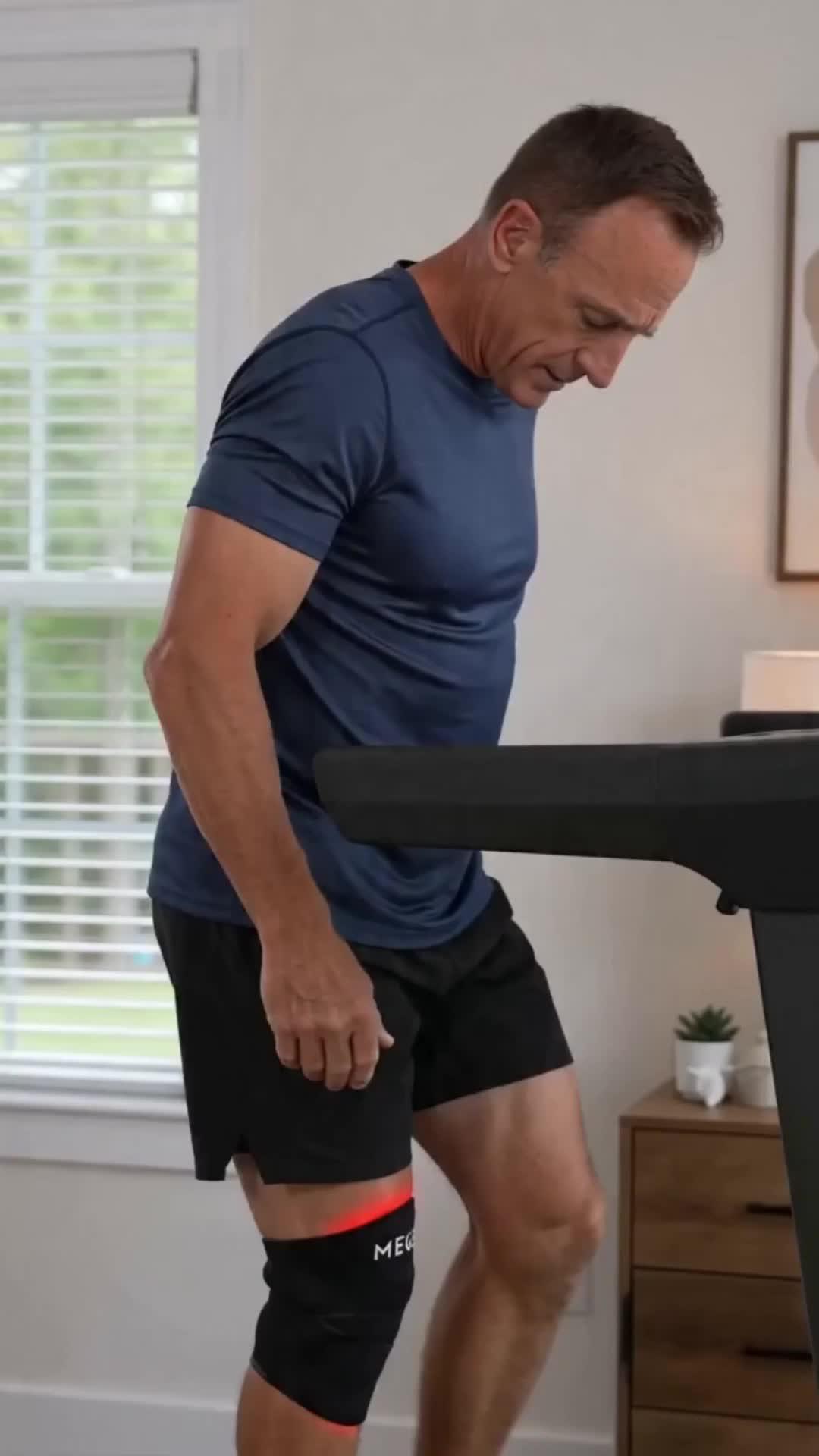
- Rather than presenting dense medical diagrams, the sleeve highlights a dynamic red illumination around the joint to signify active warmth.
- The creative replaces overt promotional pitches with relaxed lifestyle postures, such as leisurely reading a book on the couch.
- The low-pressure closing line, 'It's worth trying,' frames adoption as a minimal-risk personal experiment.
18-Second Video Script Breakdown
Physical Hook
Opens on an older male struggling to stand from a living room couch, establishing the target physical symptom instantly.
Do your knees hurt so bad after a long day that
Shared Empathy
Cuts to an older female cautiously navigating stairs, validating the viewer's end-of-day fatigue and pain.
you just want to sit down and not move That was literally me every night
Competitor Rejection
Addresses common objections by rejecting surface-level remedies like topical balms and temporary appointments.
And I got tired of relying on creams massages and temporary fixes
Product Reveal
Introduces the wearable knee sleeve in a relaxed home setting, displaying the device securely fitted in place.
So I started using this joint luxe ease stiffness and the blackberry drop
Benefit Demonstration
Shows the subject smiling with relief, reinforcing functional comfort and freedom from ongoing joint stiffness.
and helps my knees feel more comfortable And now it just prevents me from
Soft CTA
Features the glowing red heat effect while the user reads calmly, wrapping up with a low-pressure trial suggestion.
constantly feel sore or stiffy It's worth trying
AI Video Generation Prompt Specification
Cast & Wardrobe Styling
A Caucasian male around 60 years old in a dark navy blue t-shirt and an older female with white hair around 60 wearing a black short-sleeved casual shirt. Both appear natural and approachable, wearing comfortable daily home attire appropriate for domestic wellness storytelling.
Physical Motion & Expressions
The male pushes up uncomfortably from a couch, grasping his knees with a visible wince, later seated smoothly touching the fitted sleeve with a calm expression. The female carefully descends wooden stairs gripping the handrail, followed by seated sofa shots reading a book with a relaxed demeanor while precisely lip-syncing English narration.
Framing & Camera Movement
Captured using a handheld smartphone perspective with subtle micro-shakes to replicate authentic mobile UGC. Quick cuts shift between the two characters to sustain momentum, closing on a medium shot highlighting the product overlay with a dynamic red illuminated ring.
Set Design & Atmosphere
Settings include a natural living room with mild clutter and an authentic wooden staircase to maintain unpolished realism. The lighting remains warm, soft, and consistent across shots, steering clear of artificial commercial lighting or disruptive on-screen text overlays.
Cross-Category Creative Applications
- Heated Lumbar Support Belt (Home Office): Hook with an office worker groaning while attempting to stand from an ergonomic chair after long hours, voice alternative frustrations with manual rollers or clinic visits, and showcase the discreet wearable belt warming up.
- Red-Light Scalp Massager (Beauty & Personal Care): Start with close-up frustration over clumps of hair gathered in a brush, acknowledge disillusionment with expensive specialty shampoos, and transition to a comfortable nighttime routine using the handheld red-light device.
- Compression Foot & Calf Massager (Fitness Recovery): Open on a runner or retail worker unlacing shoes while massaging aching arches, dismiss basic ice packs, and demonstrate the wrap-around compression cuffs inflating in a cozy living room setup.
- Thermal Neck Stretcher (Posture & Relaxation): Feature a remote worker repeatedly rubbing a stiff neck during laptop work, highlight failed attempts with manual stretches, and show five minutes of passive cervical traction on the carpet with calm ambient lighting.
FAQ
01Why use AI generation for senior health and wellness ads?
Casting older demographics and shooting authentic home scenes can require high production budgets and extended timelines. AI video workflows allow creators to generate realistic older avatars with synced dialogue, making it easier to test empathetic angles rapidly.
02How does the visual transition establish credibility without clinical claims?
The ad pairs physical discomfort like gripping stairs or sofas with a red dynamic glowing ring around the knee sleeve. This visual cue implies therapeutic heat and technology organically without needing complex medical explanations.
03Why does the script alternate between male and female voices?
Switching narrators across cuts prevents auditory fatigue during short-form playback. It also immediately demonstrates that joint discomfort affects both genders, widening the relevant audience within the first few seconds.
04What makes the opening hook effective on short-form feeds?
Instead of leading with product hardware, the video leads with micro-moments of physical struggle, such as rising from a low couch. Paired with a direct question, it immediately filters and engages viewers dealing with chronic stiffness.