


If you buy media for a living, you already know the bottleneck isn't the buying anymore — it's the creative. Audiences fatigue in days, every platform wants native video, and the only reliable way to keep ROAS up is to test more hooks, more angles, and more variations than any human team can produce by hand.
That's why the AI tools media buyers actually reach for in 2026 fall into two very different buckets. The first is creative generation — software that turns a product URL, a script, or a competitor ad into a finished, performance-ready video you can launch tomorrow. The second is the demand-side platform (DSP) — the system that decides where and to whom those ads run programmatically. You generally need one tool from each bucket; they solve opposite halves of the same job.
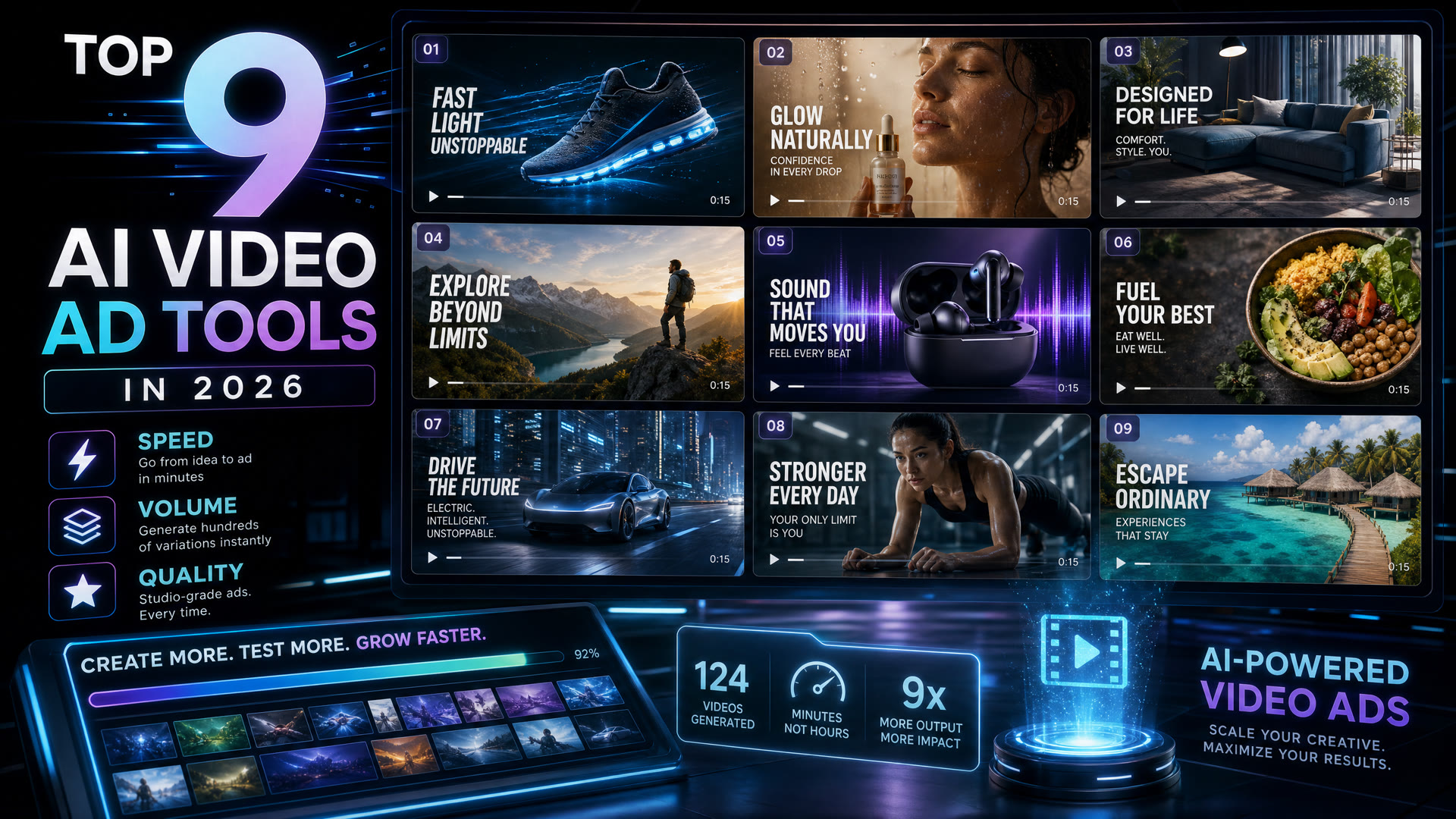
This guide focuses on the first bucket — the AI video ad creation tools that media buyers use to feed their testing pipeline — because that's where the time goes and where AI has changed the math most. We evaluated each tool on four things: how fast it produces ad-ready video, how ad-specific its features are (hooks, CTAs, aspect ratios), how tightly it ties to performance signals like ROAS and CPA, and how it prices at the volume real media buyers run. At the end, we map the DSPs you pair these tools with, so you can see the full stack in one place.
At a Glance: 7 AI Video Ad Tools for Media Buyers
| Tool | Best for | Standout feature | Starting price |
|---|---|---|---|
| AdsTurbo | High-volume video ad testing on Meta, TikTok & Shorts | Ad Clone — recreate winning ads from the Meta Ad Library | $31/mo |
| Creatify | Fast UGC-style product videos from a URL | URL-to-video + AI avatars | ~$33/mo |
| HeyGen | Avatar-led and multilingual spokesperson ads | Realistic digital avatars + dubbing | ~$29/mo |
| Synthesia | Scripted spokesperson and explainer-style ads | 140+ language AI avatars | ~$18–29/mo |
| Runway | Cinematic, high-concept ad visuals and b-roll | Gen-4 text/image-to-video | ~$15–35/mo |
| AdCreative.ai | Conversion-scored creative at volume | Pre-launch performance scoring | ~$29/mo |
| Pencil | Video creative with pre-launch prediction | Predictive performance scoring | ~$99/mo |
Competitor prices are approximate and based on publicly listed plans at the time of writing; check each vendor for current pricing.
Why Creative Is the New Media-Buying Bottleneck
Media buying used to be a game of bids, budgets, and audience targeting. The platforms automated most of that. Meta's own Advantage+ creative documentation describes a system that auto-optimizes creative variations for each viewer — which means the work has shifted upstream, to producing enough raw creative for the algorithm to optimize against in the first place.
The creative arms race is real. When the platform can test dozens of variations automatically, the advertiser who supplies the most viable hooks wins. That's a production problem, and it's exactly what generative AI solves. Tools like Adobe Firefly brought commercial-safe generative media into mainstream marketing workflows, and a wave of ad-specific platforms built on top of that shift — turning a single product page into a dozen testable video angles in minutes instead of weeks.
Two structural forces make this acute for video specifically. First, creative fatigue moves faster than ever: a winning video ad that carried a campaign for weeks a few years ago now decays in days as the same audience sees it repeatedly, so you need a steady supply of fresh angles just to hold performance flat. Second, video is now the default unit across Meta, TikTok, and Shorts — but it's also the most expensive and slowest format to produce the traditional way, with briefs, shoots, and edits. That combination — high decay rate plus high production cost — is precisely the gap AI video tools close.
The practical consequence is that media-buying performance is increasingly a function of throughput: how many distinct, viable creatives you can put into the algorithm's hands per week. A buyer who can ship 20 tested variations will almost always out-perform one shipping two, even with weaker individual assets, because the platform's optimization has more to work with. That's why "which AI tool" is really the question "which tool keeps my testing pipeline full without blowing up my budget or my timeline."
For media buyers, the implication is simple: your edge is no longer just smarter targeting, it's creative velocity. The tools below are ranked by how well they keep that pipeline full.
How We Evaluated These Tools
We looked at four criteria that matter specifically to people running paid media at scale:
- Ad-specific output — does it produce hook → body → CTA video built for the feed, not generic clips?
- Performance focus — does it connect to or optimize for metrics like ROAS, CPA, and CTR?
- Testing & iteration speed — how fast can you generate variations to feed creative testing?
- Integrations & pricing — does it fit Meta/TikTok workflows, and does it stay affordable at volume?
Prices for third-party tools are approximate and reflect publicly listed plans; always confirm current pricing with the vendor.
1. AdsTurbo — Best Overall for High-Volume Video Ad Testing
Best for: Media buyers and growth teams who need to produce and test large volumes of performance video ads across Meta, TikTok, and Shorts.
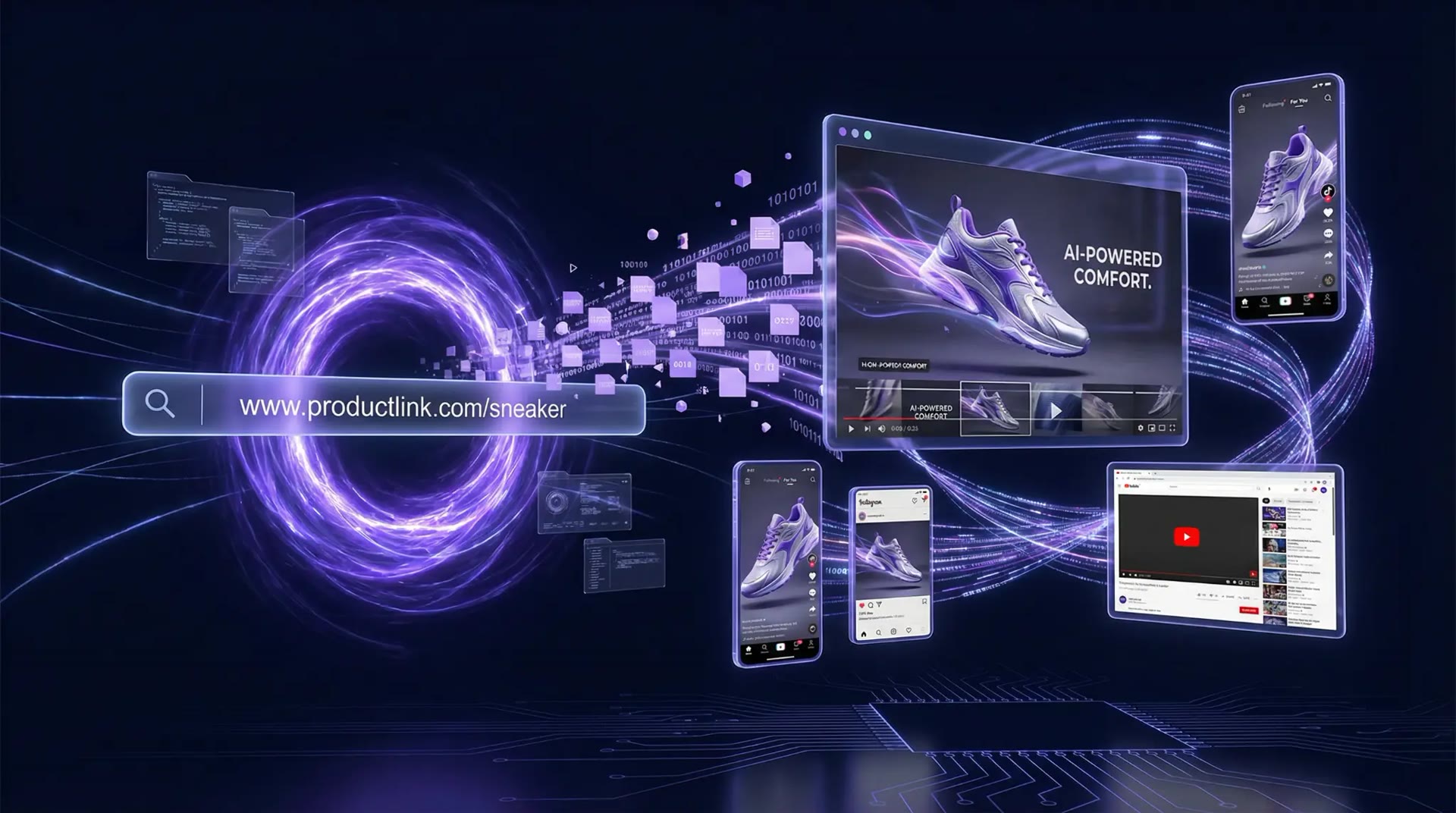
AdsTurbo is an AI video ad engine built for performance marketers — not a general video editor that happens to make ads. You paste a product URL or point it at a winning ad, and it generates a performance-ready video with a hook, body, and CTA, optimized for the placements media buyers actually run.
Where it shines
AdsTurbo closes the gap between "I found a winning ad" and "I have ten variations live." Its standout feature, Ad Clone, lets you recreate the structure of winning ads — including creatives you spot in the Meta Ad Library — and rebuild them for your own brand and product. For a media buyer, that turns competitor research into shippable creative in one step instead of a brief, a shoot, and an edit.
The platform leans hard into the performance-first workflow. Video Analysis breaks down the creative elements of an ad so you can see why something worked before you scale it, and the URL-to-Video engine produces testable angles directly from a product page. Because everything is built around real performance data and direct-response structure, the output is designed to move ROAS and CPA, not just look polished.
It also avoids the single-model trap. AdsTurbo runs on multiple leading generation models — Sora 2.0, Veo 3.1, Kling 3.0, and Seedance 2.0 — so you're not locked into one engine's look at a fixed price point.
Key features
- Ad Clone: Recreate the structure of winning ads (including those in the Meta Ad Library) for your own product.
- URL to Video: Turn any product URL into a performance-ready video ad with hook, body, and CTA.
- Video Analysis: AI breakdown of an ad's creative elements so you can reuse what drives results.
- Multi-model engine: Generate with Sora 2.0, Veo 3.1, Kling 3.0, and Seedance 2.0 from one subscription.
- Motion Control & 300+ AI actors: Add professional camera movement and pick from 300+ natural AI presenters in 35+ languages.
Best for
Performance marketers, agencies, and media buyers who live in creative testing and need volume without an in-house production team. It's especially strong for teams that iterate on hooks and angles weekly and want creative output to keep pace with the algorithm's appetite for variations.
Pricing
Transparent, credit-based plans billed by output: Creator at $31/mo (1,200 credits, billed yearly), Growth at $79/mo (3,300 credits — the most popular plan, with priority queue and bulk processing), and Pro at $239/mo (10,500 credits). Credits are spent by the second of video generated, so costs stay predictable. An Enterprise plan with API access is available. See AdsTurbo pricing for details.
Where it's not the answer: AdsTurbo is a creative engine, not a DSP. It produces and analyzes the video ads you run — it doesn't buy programmatic inventory or launch CTV campaigns. For that, pair it with one of the platforms in the DSP section below.
2. Creatify — Best for Fast UGC-Style Product Videos
Best for: E-commerce media buyers who want UGC-style video ads generated straight from a product URL.
Creatify is an AI video ad generator focused on turning product links into short, UGC-style videos with AI avatars and voiceovers. It's a popular pick for direct-response teams that need a steady stream of social-native creative.
Where it shines
Creatify excels at producing UGC-style ads that closely mimic real spokesperson content, which tends to perform well on TikTok and Reels. Its URL-to-video flow generates multiple hooks and CTAs at once, so you can A/B test angles without briefing a creator for each one.
Key features
- URL-to-video: Generate ads directly from a product page.
- AI avatars: A library of digital presenters for testimonial-style ads.
- Batch generation: Produce multiple hook and CTA variations for testing.
- Script generation: AI-written ad copy tailored to the product.
- Aspect-ratio presets: Export for TikTok, Reels, and Shorts.
Best for
Solo media buyers and e-commerce teams that need UGC volume fast and don't require deep competitor-cloning or multi-model generation. If you're weighing the two, our AdsTurbo vs Creatify comparison breaks down where each fits.
Pricing
Subscription plans start at roughly ~$33/mo (billed annually), scaling with video volume.
3. HeyGen — Best for Avatar-Led and Multilingual Spokesperson Ads
Best for: Media buyers who need talking-head spokesperson ads, especially across multiple languages.
HeyGen is an AI avatar video platform that creates realistic digital presenters who can deliver a script in dozens of languages. It specializes in the talking-head format rather than full direct-response ad structures.
Where it shines
HeyGen's avatars are among the most realistic available, and its dubbing and translation features make it strong for media buyers running the same spokesperson ad across multiple markets. Spin up one script, localize it into 30+ languages, and keep a consistent brand face everywhere.
Key features
- Realistic AI avatars: Lifelike digital presenters for spokesperson ads.
- Multilingual dubbing: Translate and lip-sync into dozens of languages.
- Custom avatars: Create a branded presenter or clone your own.
- Template library: Pre-built layouts for common ad formats.
- Script-to-video: Paste a script and generate a finished clip.
Best for
Brands and agencies running multilingual campaigns or spokesperson-driven creative who value avatar realism over ad-specific automation. For a side-by-side look, see our AdsTurbo vs HeyGen comparison.
Pricing
Paid plans start around ~$29/mo, with higher tiers for more avatars and minutes.
4. Synthesia — Best for Scripted Spokesperson and Explainer-Style Ads
Best for: Teams producing scripted, explainer-style video ads at scale across many languages.
Synthesia is an AI video platform with realistic avatars, built originally for corporate and training video and increasingly used for polished, scripted ad creative.
Where it shines
Synthesia specializes in turning a written script into a clean, professional avatar video in 140+ languages. For media buyers, that makes it a fit when the message is information-dense — feature explainers, B2B value props, or compliance-sensitive verticals where a steady scripted delivery beats fast-cut UGC.
Key features
- 140+ languages: Broadest language coverage among avatar tools.
- AI avatars: Stock and custom presenters.
- Script-driven editor: Slide-style creation from text.
- Brand kits: Consistent fonts, colors, and logos.
- Templates: Pre-built scenes for explainer formats.
Best for
Media buyers and brand teams whose creative leans explainer or B2B, where scripted clarity and language breadth matter more than scroll-stopping UGC energy.
Pricing
Plans start around ~$18–29/mo depending on tier and usage.
5. Runway — Best for Cinematic, High-Concept Ad Visuals
Best for: Creative teams that need original, cinematic footage or b-roll that no stock library can supply.
Runway is a generative AI video tool used for high-concept visuals — text-to-video, image-to-video, and advanced editing — rather than templated ad assembly.
Where it shines
Runway's Gen-4 models generate striking, original footage from a prompt or a still image. For media buyers, it's the tool you reach for when a campaign needs a distinctive visual moment, a surreal product hero shot, or b-roll that makes a feed ad feel premium. It's a creative instrument, not an ad factory — the output often feeds into a direct-response edit rather than shipping as-is.
Key features
- Text-to-video & image-to-video: Generate footage from prompts or stills.
- Gen-4 models: High-fidelity, controllable generation.
- Video-to-video & editing tools: Restyle and refine existing clips.
- Motion controls: Direct camera and subject movement.
- Creative effects: A deep toolkit for stylized visuals.
Best for
Agencies and brand teams with the creative chops to direct AI footage, who want differentiated visuals rather than fast templated UGC.
Pricing
Plans range from roughly ~$15–35/mo for individuals, with higher tiers for teams and more generation credits.
6. AdCreative.ai — Best for Conversion-Scored Creative at Volume
Best for: Performance marketers who want many creative variations, each scored for conversion potential before launch.
AdCreative.ai is an AI creative generation platform that produces conversion-focused ad creatives — primarily static, with video capabilities — and predicts each one's performance before you spend.
Where it shines
AdCreative.ai's signature move is its performance score: every generated creative gets a predicted conversion rating based on patterns from a large ad dataset, so you can prioritize what to test. It also generates in volume and keeps creatives on-brand through brand-kit integration.
Key features
- Conversion-scored creatives: Predicted performance rating per asset.
- High-volume generation: Hundreds of variations quickly.
- Brand kit: Keep colors, fonts, and logos consistent.
- Ad copy generation: Headlines and primary text included.
- Competitor insights: See what's working in your category.
Best for
Media buyers who run heavy static-creative testing and want a pre-launch signal on which assets to back. See our AdsTurbo vs AdCreative.ai comparison for how it stacks up on video specifically.
Pricing
Plans start around ~$29/mo, scaling with downloads and brand profiles.
7. Pencil — Best for Video Creative With Pre-Launch Prediction
Best for: Video-focused media buyers who want generated creative plus a prediction of how it will perform.
Pencil is an AI video ad generator that creates social-ready video and predicts performance before launch, learning from your account's winning patterns over time.
Where it shines
Pencil pairs generation with a predictive layer: it studies the hooks, pacing, and CTAs that have worked in your account and scores new videos against those patterns. It auto-formats for TikTok, Meta, and YouTube, so a single concept ships in every required aspect ratio.
Key features
- AI video generation: Build ads from product assets and brand elements.
- Predictive scoring: Forecast performance before spending.
- Learning algorithm: Improves from your winning ads.
- Platform optimization: Auto-format for TikTok, Meta, YouTube.
- Batch production: Generate multiple variations at once.
Best for
Performance teams running video-heavy testing who want a data-backed shortlist before committing budget.
Pricing
Plans start around ~$99/mo, tiered by generation volume and team size.
Where Media Buyers Actually Buy Media: DSPs to Pair With
The seven tools above generate what you run. A demand-side platform decides where and to whom it runs — buying programmatic inventory across the open web, connected TV, display, and video. These are complementary categories, not competitors: a typical media-buying stack pairs one creative engine with one DSP. As even AI ad platforms acknowledge, creative automation complements a programmatic strategy rather than replacing it.
Here are the DSPs media buyers most often pair an AI creative tool with:
- The Trade Desk — Best for: enterprise agencies buying programmatic CTV and open-web inventory at scale. Its strength is unmatched CTV reach, log-level data transparency, and its Koa AI with adaptive trading modes. Access is via a seat and priced as a percentage of media spend — not a self-serve tool for small budgets.
- Amazon DSP — Best for: e-commerce and CPG brands that want to tie ad spend directly to retail outcomes. Its edge is first-party purchase-intent data and closed-loop measurement through Amazon Marketing Cloud. Managed service typically requires a high minimum spend (often cited around $50,000).
- Google Display & Video 360 (DV360) — Best for: large advertisers already deep in the Google stack. It offers exclusive YouTube inventory and native integration with Google Analytics and Campaign Manager. Access is enterprise-only, via contract or a certified reseller.
- Sovran — an emerging programmatic platform that appears in media-buying tool shortlists. Details and access vary; evaluate it directly against your channel mix and spend level before committing.
The takeaway: pick your creative engine for production velocity, and your DSP for inventory and audience reach. They sit on opposite ends of the same campaign.
How to Choose the Right AI Tool for Your Media-Buying Stack
The right creative tool depends on what you sell and how you test.
| If you are… | Start with |
|---|---|
| An e-commerce media buyer testing high volumes of video | AdsTurbo — Ad Clone + URL-to-Video keep the pipeline full |
| A solo buyer who needs fast UGC from product URLs | Creatify |
| Running the same campaign across many languages | HeyGen or Synthesia |
| Producing scripted, explainer-style B2B ads | Synthesia |
| Needing original, cinematic visuals or b-roll | Runway |
| Doing heavy static-creative testing with a pre-launch signal | AdCreative.ai |
| Video-focused and want performance prediction built in | Pencil |
A practical approach: pick the one tool that removes your biggest bottleneck right now — usually creative volume — and run real campaigns through it before adding others. Most of these platforms offer trials or low entry tiers, so you can validate output against your own ROAS and CPA before committing. The goal isn't to adopt every AI tool available; it's to find the one that multiplies your creative output without adding complexity, then pair it with the DSP that matches your channel mix.
Frequently Asked Questions
What video ad tools do ad buyers actually use in 2026? Media buyers typically combine an AI video creation tool with a demand-side platform. For creative, the most-used options include AdsTurbo, Creatify, HeyGen, Synthesia, Runway, AdCreative.ai, and Pencil; for buying, they pair one of those with a DSP like The Trade Desk, Amazon DSP, or Google DV360. The creative tool produces the hook-body-CTA video; the DSP places it programmatically.
Any good tools for making video ads for my online store? Yes — for e-commerce, AdsTurbo and Creatify both turn a product URL into a ready-to-run video ad, which is the fastest path from a product page to a testable creative. AdsTurbo adds Ad Clone, so you can also rebuild winning ads you find in the Meta Ad Library for your own SKUs.
What's a good tool for auto-creating video ads? AdsTurbo is built specifically for this: paste a product URL and it auto-generates a performance-ready video with a hook, body, and CTA, optimized for TikTok, Meta, and Shorts. Creatify and Pencil also auto-generate video, with Pencil adding a pre-launch performance prediction.
Is there a tool that can turn a product link into a video ad? Yes. AdsTurbo's URL-to-Video and Creatify both convert a product URL into a finished video ad in minutes, generating multiple hooks and CTAs you can test without briefing a creator.
What's a good platform for making UGC-style ads without hiring creators? Creatify and AdsTurbo both generate UGC-style videos with AI avatars and voiceovers, so you can produce testimonial-style creative at volume without booking talent. HeyGen is a strong choice if you specifically need a realistic spokesperson avatar across languages.
Do media buyers need a DSP and a creative tool, or just one? Usually both, because they do different jobs. A creative tool (like AdsTurbo) produces the ad; a DSP (like The Trade Desk or Amazon DSP) buys the inventory to run it programmatically. If you only run Meta and TikTok through their native managers, you may only need the creative tool — the platforms handle placement.
How much do AI video ad tools cost? Entry plans range from roughly $15 to $99 per month. AdsTurbo starts at $31/mo (Creator) with credit-based, pay-by-the-second billing; Creatify and AdCreative.ai start in the ~$29–33 range; Runway and Synthesia have lower entry tiers; Pencil sits higher around ~$99/mo. DSPs price separately, usually as a percentage of media spend.
Can AI video ads actually perform as well as agency-made ads? For direct-response media buying, often yes — because performance is driven by testing volume, not single-asset polish. AI tools let you produce and test far more hooks and angles than an agency cadence allows, and platforms then optimize toward your best performers. The winning approach is to use AI for creative velocity and let your ROAS and CPA data pick the survivors.
Stop Letting Creative Be Your Bottleneck
Media buying in 2026 rewards the team that tests the most viable creative, fastest. AdsTurbo was built for exactly that — clone winning ads from the Meta Ad Library, turn product URLs into performance-ready video, and analyze what's working, all from one credit-based plan.
Start creating with AdsTurbo →
Last updated: May 2026 · Reviewed by the AdsTurbo Performance Team