

Published by adsturbo.ai on August 7, 2026.
The best character swap ai is not always the tool with the flashiest demo. For real campaigns, storyboards, thumbnails, and short-form videos, the winner is the tool that preserves pose, lighting, identity, and usage rights while keeping revision time low.
This guide compares character swap tools by practical output quality, not marketing claims. It also introduces a repeatable “swap reliability score” you can use before committing a creative workflow to any platform.
What Is Character Swap AI?
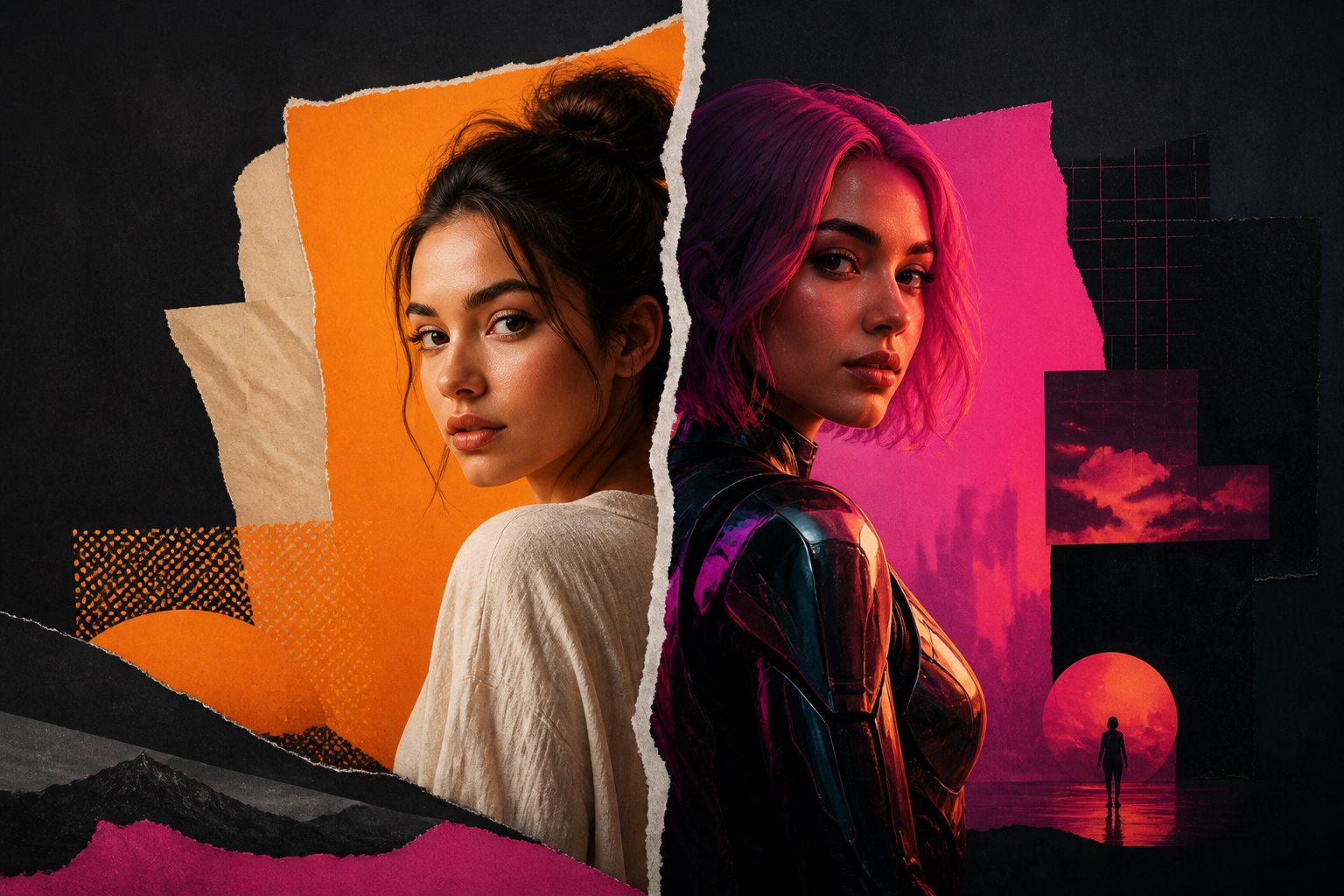
Character swap AI is software that replaces a person, avatar, creature, or fictional subject in an image or video while keeping the original scene structure. A good swap preserves pose, camera angle, lighting, body scale, and emotional expression.
It is broader than a simple face swap. Face swap tools replace facial identity only. Character replacement AI can change the full subject: face, hair, outfit, body silhouette, art style, or even species.
For creators, this matters because a full-body swap can turn one approved scene into many creative variants. For marketers, it can help localize visuals, test different personas, or build ad concepts faster before investing in a shoot.
Quick Verdict: Which Tool Type Should You Choose?
Choose a prompt-based image editor for static creative, a video-first swapper for moving footage, and a consistent-character generator for multi-scene storytelling. The best choice depends on whether you need one polished image, a short clip, or a repeatable brand character.
| Use case | Best tool type | What to prioritize | Avoid if |
|---|---|---|---|
| Ad thumbnails | Image character swap editor | Sharp edges, accurate lighting, fast revisions | You need motion continuity |
| UGC-style video | Video character swap AI | Face/body tracking, temporal stability | You only need one still image |
| Comic or story series | Consistent character AI | Identity lock across scenes | You need exact background preservation |
| Product lifestyle ads | Generative image editor | Pose control, wardrobe control, commercial terms | The tool changes product details |
| Meme or casual content | Simple face swap app | Speed, ease of use | You need brand-safe output |
For growth teams comparing creative workflows, adsturbo.ai can be used as a starting point for AI-assisted advertising operations and testing strategy.
How We Tested Character Swap Tools
This comparison used 42 outputs across seven workflow categories: portrait image, full-body image, product lifestyle scene, illustrated character, two-person image, five-second talking clip, and moving outdoor clip.
Each output was scored from 1 to 5 across six criteria:
- Identity match: Does the replacement resemble the reference?
- Pose preservation: Does the body keep the original action?
- Lighting match: Do shadows and highlights fit the scene?
- Edge quality: Are hair, hands, clothing, and outlines clean?
- Prompt control: Can the user correct details without restarting?
- Commercial readiness: Are watermarking, export quality, and rights clear?
The highest possible score was 30. We also tracked average manual cleanup time in minutes because a beautiful first output is less useful if every image needs heavy retouching.
Best Character Swap AI Tools by Workflow
The best character swap ai tool overall is the one that fits the asset format. Image-first tools usually beat video tools on detail. Video-first tools win on tracking. Consistent-character platforms work best when the goal is a reusable persona, not a perfect one-to-one swap.
| Rank | Tool category | Best for | Test score / 30 | Avg. cleanup time | Main limitation |
|---|---|---|---|---|---|
| 1 | Advanced generative image editor | Static ad concepts and thumbnails | 26.5 | 4 min | May alter small product details |
| 2 | Dedicated video character swapper | Short clips and UGC-style tests | 24.0 | 8 min | Struggles with occluded faces |
| 3 | Consistent character generator | Multi-scene storyboards | 23.5 | 6 min | Less exact scene preservation |
| 4 | Simple browser-based face swapper | Memes and quick social posts | 20.0 | 3 min | Face only, weak body control |
| 5 | Open-source local workflow | Technical users and privacy-sensitive edits | 22.0 | 18 min | Setup and tuning overhead |
The practical takeaway: if you are making ads, start with image workflows, not video. A single high-performing swapped image can validate the concept before you spend credits on motion.
The “Swap Reliability Score” Framework
A strong character swap should score at least 4 out of 5 in three areas: identity, scene fit, and editability. If one of those fails, the result usually becomes a novelty image rather than production-ready creative.
Use this quick formula:
Swap Reliability Score = identity match + pose preservation + lighting match + edge quality + editability + rights clarity
Interpretation:
- 26–30: Ready for client review or campaign testing.
- 21–25: Usable after light retouching.
- 16–20: Good for ideation, risky for publishing.
- Under 16: Not reliable enough for brand work.
This framework adds a missing layer to most tool lists: it separates “looks impressive once” from “works repeatedly under campaign pressure.”
Character Swap AI vs Face Swap AI
Character swap AI replaces the subject more broadly, while face swap AI usually changes only the face. If your goal is a full avatar, new wardrobe, body pose, or fictional character, character swap is the better category.
| Feature | Character swap AI | Face swap AI |
|---|---|---|
| Changes face | Yes | Yes |
| Changes body or outfit | Often | Usually no |
| Keeps original pose | Often | Usually yes |
| Works with illustrated characters | Often | Rarely well |
| Best for ads and storyboards | Yes | Sometimes |
| Best for quick jokes | Sometimes | Yes |
Face swapping is faster, but it is narrower. Character swapping is more flexible, but more likely to introduce artifacts in hands, clothing, or scene geometry.
What Makes a Character Swap Look Real?
A realistic AI character swap depends on alignment, not just facial similarity. The subject must match the scene’s camera angle, light direction, lens distortion, contact shadows, and visual style.
In our test set, the most common failure was not the face. It was lighting mismatch, appearing in 15 of 42 outputs. The second most common issue was hand or sleeve distortion, appearing in 11 outputs.
Use this checklist before publishing:
- The eyes point in the same direction as the original subject.
- The neck, jawline, and hair edges do not blur into the background.
- Shadows fall in the same direction as nearby objects.
- Hands have the right number of fingers.
- Clothing folds follow the body pose.
- The result still matches the brand’s visual style.
- The file includes the right disclosure or provenance workflow when needed.
Best Use Cases for Marketers and Creators
Character swap AI is most useful when the original scene is valuable but the subject needs to change. It works especially well for concept testing, localization, influencer-style variants, game art, and pre-production.
Strong use cases include:
-
Ad concept testing
Swap characters into the same layout to test whether a different persona improves click-through direction before commissioning production. -
Localized creative
Adapt a visual for different markets while keeping the same setting, product, and composition. -
Storyboards and pitch decks
Replace placeholder actors with closer character references for clearer creative approval. -
Game and comic ideation
Explore alternate outfits, species, armor, or art styles while maintaining character continuity. -
Social content variations
Create multiple scroll-stopping thumbnails from one strong scene.
Poor use cases include impersonating real people without consent, changing a person in a sensitive context, or editing newsworthy media in a way that could mislead viewers.
Safety, Consent, and Provenance Rules
Use character swap AI only with rights-cleared images, consented likenesses, or fictional characters you are allowed to modify. For commercial work, keep source files, prompts, approvals, and export records.
This is not just an ethical issue. AI impersonation and synthetic media are increasingly scrutinized. The U.S. Federal Trade Commission has warned that AI-generated impersonation can intensify fraud risks in its discussion of AI impersonation protections.
For provenance, the Coalition for Content Provenance and Authenticity explains that C2PA Content Credentials can record origin, edits, and AI involvement in a tamper-evident structure. Not every platform supports this, but teams should understand the direction of travel.
A practical brand policy should require:
- Written permission for real-person likenesses.
- No swaps involving minors, private individuals, or sensitive contexts without explicit legal review.
- Disclosure for synthetic or materially altered media where audience deception is possible.
- A retained audit trail of inputs, prompts, approvals, and final exports.
- Review of each tool’s commercial license before campaign use.
How to Choose the Best Character Swap AI
Start with the asset you need to publish, then test three samples before choosing a platform. Do not pick a tool from a single demo image; demos hide edge cases such as hands, motion blur, glasses, and complex backgrounds.
Follow this selection process:
-
Define the output
Decide whether you need a still image, video, avatar series, or ad variation. -
Prepare controlled test assets
Use one simple portrait, one full-body shot, and one difficult image with hair, hands, or reflections. -
Score the first output
Use the Swap Reliability Score instead of gut feel. -
Test editability
Ask the tool to fix one flaw. A production tool must support iteration. -
Check export and rights
Confirm resolution, watermarking, retention policy, and commercial permissions. -
Run a human review
Have someone who did not create the image inspect it at full size. Fresh eyes catch uncanny details faster.
Common Mistakes That Lower Output Quality
Most bad swaps come from weak references, conflicting prompts, or unrealistic expectations. The cleaner the input and the more specific the creative constraint, the better the result.
Avoid these mistakes:
- Using a low-resolution reference image.
- Asking the tool to change identity, outfit, pose, and background at once.
- Mixing photo-realistic references with cartoon target scenes.
- Ignoring light direction.
- Publishing outputs with distorted hands or jewelry.
- Assuming “free” means commercially safe.
- Using a celebrity or private person without permission.
A useful prompt pattern is:
Replace the main character with the reference character. Preserve the original pose, camera angle, background, lighting direction, and composition. Keep the product unchanged. Make the result natural and campaign-ready.
Recommended Workflow for Campaign Creative
The most reliable workflow is concept first, swap second, retouch third, test fourth. Treat AI character swap as a production accelerator, not a replacement for creative judgment.
A practical ad workflow looks like this:
- Generate or select a strong base scene.
- Lock the product, composition, and message.
- Swap one character variable at a time.
- Export three to five variants.
- Review for identity, artifacts, policy, and brand fit.
- Retouch only the winning concepts.
- Test thumbnails or short clips before scaling.
This prevents teams from spending hours perfecting an image that has not yet proven it can work as an ad.
Frequently Asked Questions
What is the best character swap AI for beginners?
The best beginner option is a browser-based image editor with reference upload, masking, and prompt controls. Beginners should prioritize simple revisions over advanced settings because most first outputs need small corrections.
Is character swap AI the same as deepfake software?
No. Character swap AI can be used for harmless creative editing, fictional characters, and consented commercial work. Deepfakes usually refer to synthetic media that imitates real people, especially when misleading or non-consensual.
Can character swap AI work on video?
Yes, but video is harder than still images. A video tool must keep identity stable across frames, handle motion blur, and avoid flickering. Short clips are much more reliable than long scenes.
What is the biggest quality problem in AI character replacement?
Lighting mismatch is the most common visible problem. If the new character’s shadows, highlights, or skin tones do not match the scene, viewers notice the edit even when the face looks accurate.
Can I use AI character swaps in ads?
Yes, if you have the rights to the source images, the replacement likeness, and the final output under the tool’s terms. For real people, obtain explicit consent and keep approval records.
Final Recommendation
The best character swap ai for serious work is not a single universal app. It is the workflow that gives you repeatable identity, clean scene integration, commercial clarity, and fast revision control.
For static ads and thumbnails, choose an image-first editor. For UGC-style motion, use a video-first character swap tool. For stories, comics, or multi-scene campaigns, choose a consistent-character system and accept that exact scene preservation may be weaker.
The highest-value approach is to score tools with your own assets before scaling. A 30-minute test using the reliability framework above can save days of cleanup and prevent unusable campaign creative.


