
Ai Cat
Creative Intelligence Summary
Deconstructed breakdown of this 15-second AI-generated snack creative, highlighting visual pacing and prompt engineering.
Formula
Relatable Slice-of-Life Tension + Anthropomorphic Visual Disruption + Native Prop Evidence
Hook Shots
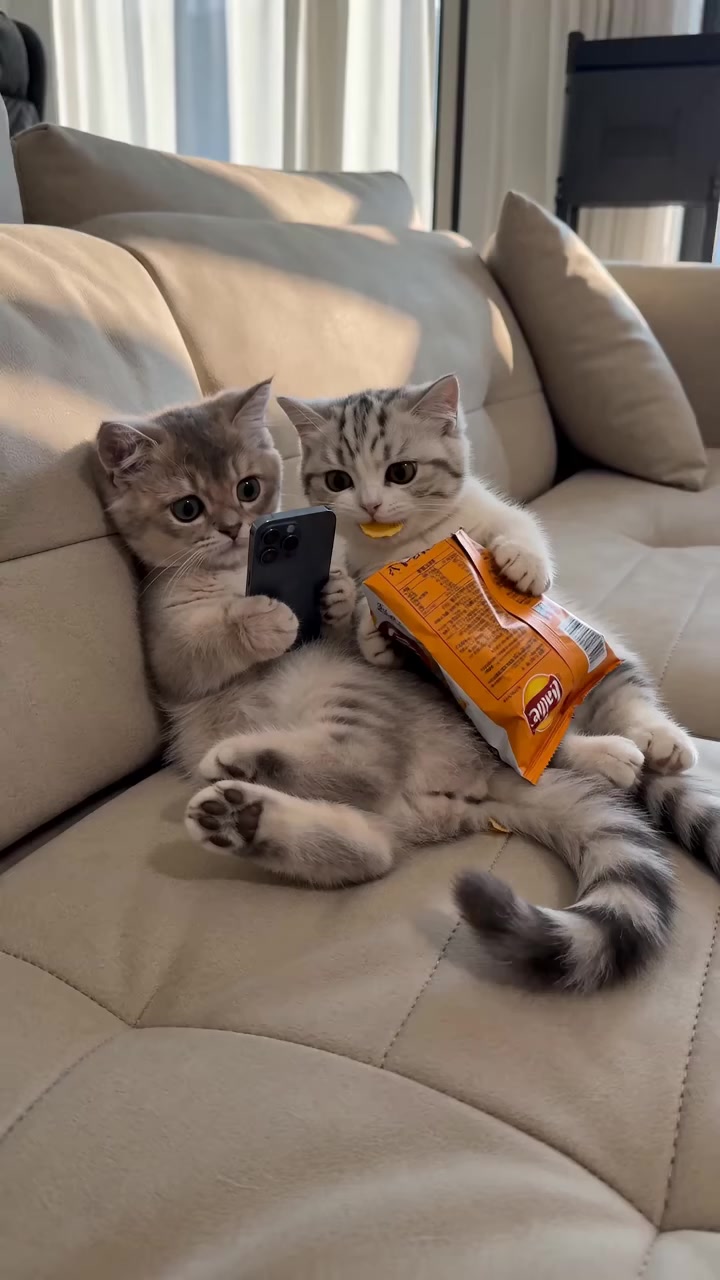
- Immediate visual disruption: A kitten holding a smartphone and eating chips like a human.
- Instant relatable conflict: Late-night secret snacking interrupted by an off-screen knock.
- High visual contrast: Screen glow in a dark bedroom focusing attention on the product prop.
Behind the Creative: Anthropomorphic Narrative Ad
Breaking through short-form video clutter requires unconventional presentation. This 15-second concept bypasses standard snack demonstrations by casting anthropomorphic cats into a universal childhood trope: staying up late, scrolling on a phone, and secretly eating treats under the covers.
By framing the potato chips as the key plot prop rather than an aggressive product pitch, the creative sustains viewer curiosity through a complete four-part narrative arc: setup, intrusion, panic, and exposure.
Core Psychological and Visual Drivers
Visual Disruption and Novelty
- Humanoid posture and hand actions by a pet create immediate thumb-stopping friction in the feed.
- Screen glow and bedroom ambiance establish an intimate, cinematic mood instantly.
- Subtle comedic expression avoids the artificial stiffness common in basic generative assets.
Micro-Paced Narrative Tension
- Compresses setup, disruption, concealment, and consequence into a strict 15-second window.
- Sound cues (knocks, frantic rustling) generate curiosity without relying on voiceover delivery.
- The comedic payoff releases tension right as the ad reaches completion.
Native Product Integration
- Treats the packaging and crumbs as narrative evidence rather than forced product glamour shots.
- High-contrast bed surface makes scattered chips immediately recognizable as the focal point.
- Seamlessly demonstrates product crunch appeal through contextual action.
15-Second Shot Execution
Hook: Secret Snacking
A kitten lounges in bed in the dark, scrolling on a smartphone and munching potato chips.
Inciting Incident: The Intrusion
A sudden knock interrupts the silence; the kitten reacts with wide-eyed panic.
Comedic Beat: Concealment
The kitten hastily shoves the phone and chips beneath the duvet and feigns sleep.
Reveal: Caught Red-Handed
The mother cat jumps onto the mattress and yanks back the covers, exposing the mess.
Resolution: Punchline Payoff
The mother cat meows furiously and delivers a stern paw swat to conclude the comedic narrative.
AI Video Generation Parameters
Subject & Wardrobe
Small domestic kitten displaying expressive, anthropomorphic gestures and posture, accompanied by an adult mother cat with stern, animated facial expressions. Both characters display realistic fur textures without digital distortion.
Action & Movement
The kitten grips potato chips and swipes a smartphone screen using paws, rapidly hides props under bedding, and closes eyes tightly. The mother cat leaps onto the mattress, pulls fabric, and delivers a quick paw tap.
Camera Language
Opens with an intimate medium close-up, cuts rapidly to a tight reaction shot on the knock, widens to capture the mother entering the frame, and finishes on a clear insert close-up of the evidence.
Scene & Lighting
Cozy, dimly lit bedroom setting with low key lighting. Primary illumination stems from the glowing mobile phone display, casting controlled highlights across the fur, duvet folds, and crisp potato chips.
Adaptation Blueprints Across Niches
- Low-Calorie Snacks: Swap out chips for healthy treats, shifting the punchline when the parent cat approves of the nutritional macros instead of delivering a swat.
- Pet Food & Supplies: Position premium cat treats as the hidden treasure, visually reinforcing unmatched pet palatability and appeal.
- Home & Bedding Cleaning: Extend the narrative with the mother pulling out a compact mattress vacuum to effortlessly clean up the scattered crumbs, highlighting product utility.
FAQ
01What product categories work best with this narrative framework?
This comedic sneaking framework fits packaged snacks, soft drinks, pet treats, and home cleaning products. Any item that functions naturally as a source of domestic friction or guilty pleasure can slot into this setup.
02How can advertisers handle complex AI physical interactions like pulling blankets?
Multi-character physical collisions remain challenging for single text-to-video prompts. Split the sequence into distinct shots or use image-to-video workflows where key interaction poses are pre-established.
03Why do anthropomorphic animal concepts perform well on social feeds?
Anthropomorphic characters disrupt user expectations and stop feed scrolling instantly. Combining pet imagery with relatable human situations drives strong natural comments and user sharing without overt sales resistance.
04Where should brand packaging appear in this AI ad structure?
The clearest placement is during the reveal close-up when the bedding is removed. Brand logos can be incorporated into the AI image reference or tracked onto the packaging in post-production for clear legibility.
Resources to recreate this ad
Suggested for recreating this ad in AdsTurbo — not the assets used in the original.
- AI actor
- Kabir
- Video template
- 4s Presenter Phone Close-Up App Showcase Video Template