By adsturbo.ai | Published 2026-10-16 | Updated 2026-10-16
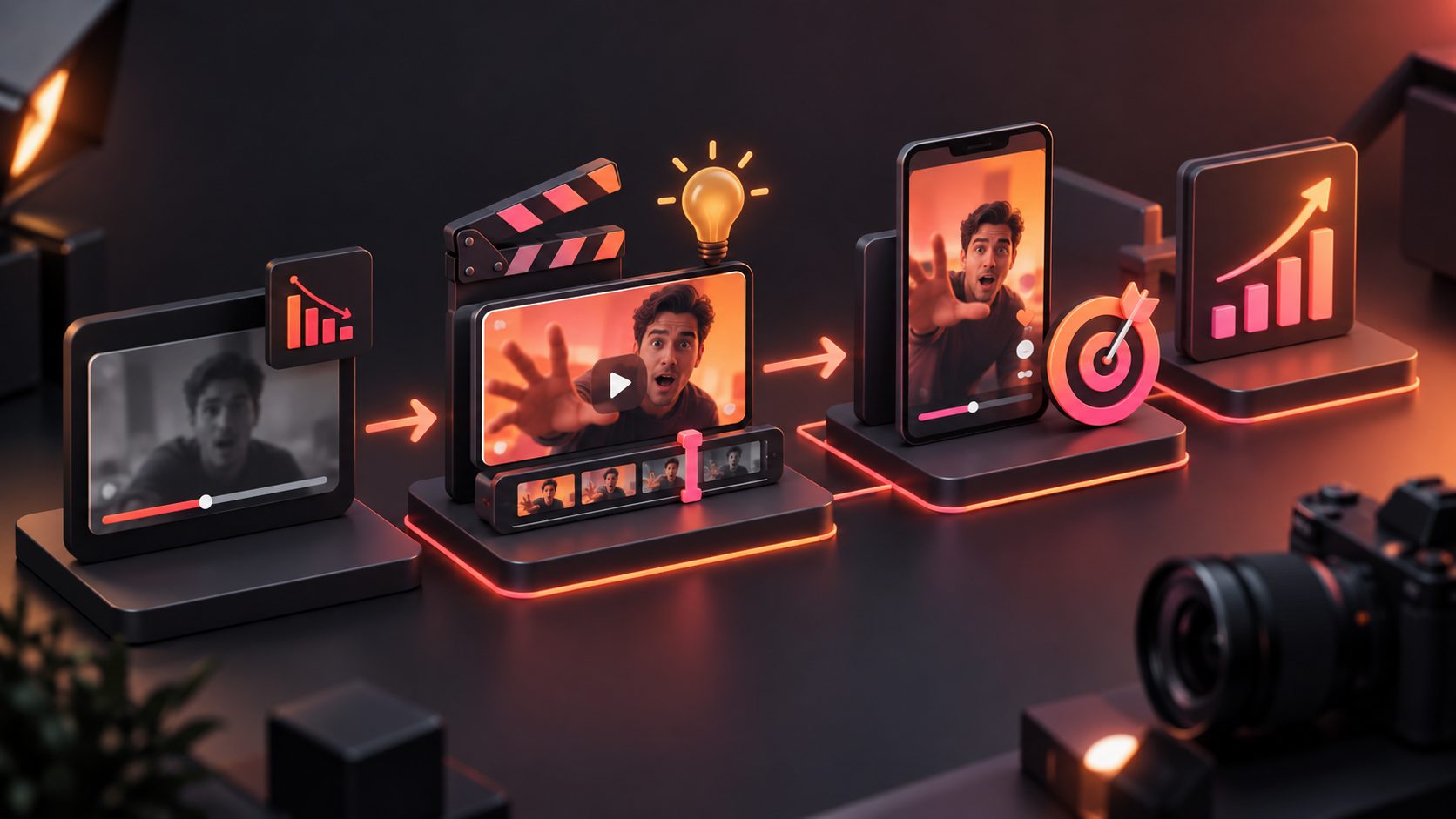
A video ad creative variation generator ecommerce workflow turns one product, offer, or reference ad into multiple distinct creatives for Shopify, TikTok, Meta, and other paid channels. The goal is not to produce many cosmetic edits. It is to test different reasons, presenters, openings, and visual proof while keeping the product and offer accurate.
For ecommerce sellers, the most useful system combines a controlled variation matrix with fast production. This lets a team learn whether performance comes from the hook, the product demonstration, the spokesperson, the offer, or the edit itself.
What is an ecommerce video ad variation generator?
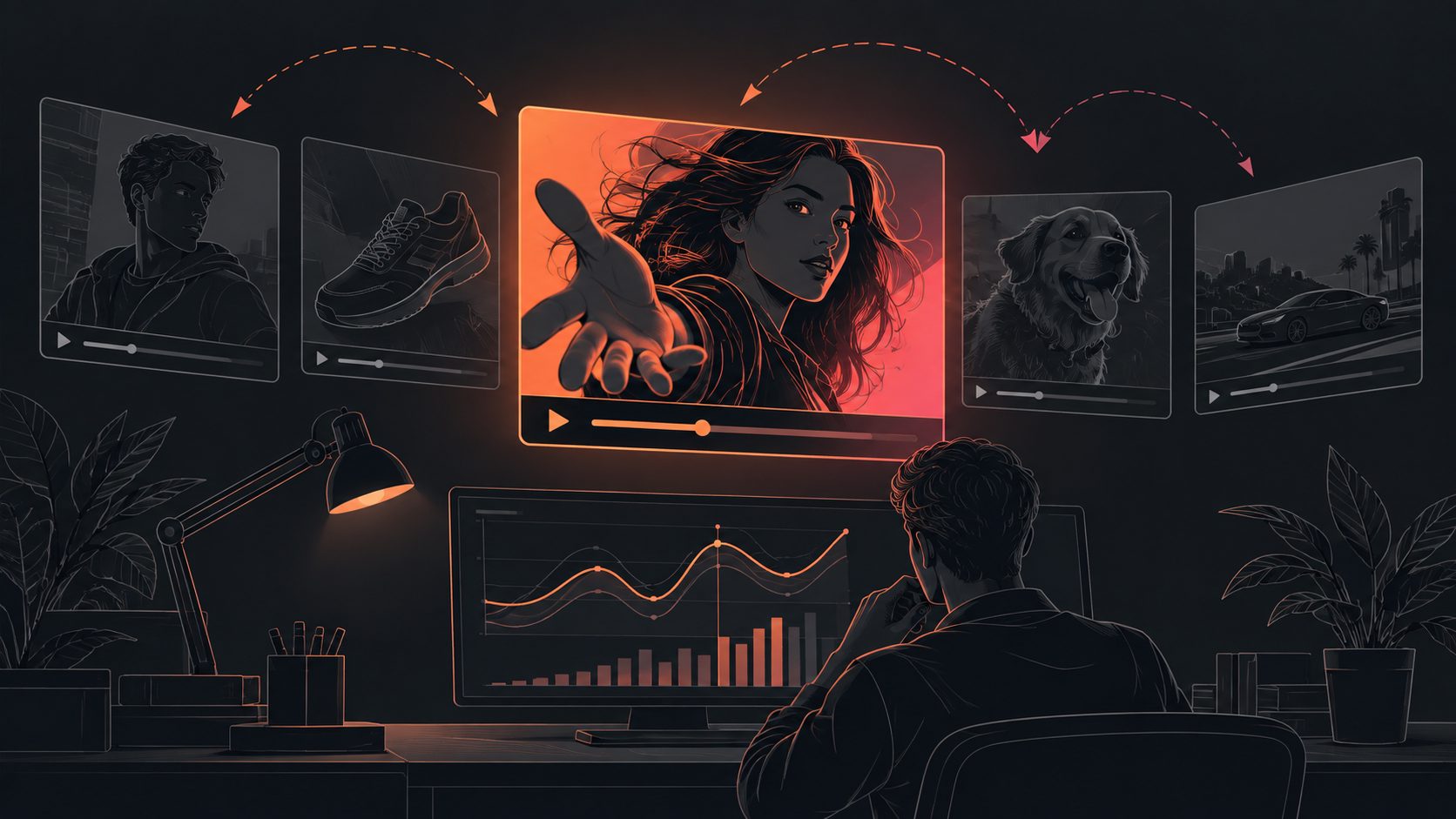
An ecommerce video ad variation generator is a production system that creates multiple versions of a product advertisement from shared source assets. Each version changes a defined creative variable, such as the opening hook, voiceover, presenter, product scene, caption style, pacing, or CTA.
A useful variation is meaningfully different enough to test, but controlled enough to explain. Changing only the background color across ten videos does not create ten new advertising ideas. It creates one idea with ten surface treatments.
A practical rule is:
One variation should answer one marketing question.
Examples include:
- Does a problem-first hook outperform a product-first opening?
- Does a creator testimonial outperform a direct product demonstration?
- Does showing the result before the product increase attention?
- Does a discount CTA outperform a benefit-led CTA?
- Does a localized voiceover improve response in a specific market?
This distinction matters because batch production and experimentation are separate jobs. Guidance from CapCut’s creative testing framework also emphasizes defining the variable and hypothesis before generating multiple videos. (capcut.com)
Why one master video is not enough
A single polished ad can communicate the product clearly and still fail to reveal which part of the creative is limiting performance. If the hook, presenter, offer, music, pacing, and CTA all remain fixed, the team has little room to learn.
The better approach is to create a master structure and then vary five layers:
| Layer | What changes | Example test |
|---|---|---|
| Hook | First claim, question, or visual interruption | “Still struggling with…” vs. “Here is the faster way…” |
| Scene | Product use, unboxing, comparison, or lifestyle shot | Demo-first vs. creator-first |
| Voice | Presenter, tone, language, or delivery | Expert explanation vs. casual recommendation |
| Proof | Review, feature demonstration, result, or objection handling | Close-up proof vs. before-and-after |
| CTA | Offer, urgency, or next action | “Shop now” vs. “See how it works” |
This five-layer model is a practical safeguard against “variation inflation,” where a team reports dozens of creatives but has only one underlying concept.
How to build a five-layer variation matrix
Start with the product’s strongest buying reason, then assign one controlled treatment to each layer. A simple matrix for a Shopify or TikTok campaign might look like this:
| Variant | Hook | Scene | Voice | Proof | CTA |
|---|---|---|---|---|---|
| A | Pain point | Product demonstration | Direct seller | Feature close-up | Shop now |
| B | Curiosity question | Unboxing | Casual creator | First-use reaction | See the difference |
| C | Outcome statement | Lifestyle use | Confident expert | Result sequence | Try it today |
| D | Objection handling | Comparison | Friendly creator | Detail inspection | Get yours |
| E | Offer-led | Product montage | Fast-paced narrator | Discount overlay | Claim the offer |
Keep the product facts, landing page, promotion terms, and required disclosures unchanged. Change the planned creative treatment only.
For larger catalogs, this matrix can be generated per SKU. AdsTurbo Product Video accepts JPG or PNG product images and can produce UGC-style product review, introduction, and demonstration videos. Product images with a clear, solid-color background generally provide the strongest starting point.
How to generate genuinely different video ads
1. Begin with accurate product assets
Use a clean product image, approved copy, and the exact offer that will appear on the landing page. The product should remain visually consistent across variants. A creative test becomes unreliable when AI changes the packaging, color, shape, or product function.
For product-led campaigns, AdsTurbo Product Image can analyze a product’s shape, color, and category. It can also create product visuals in multiple formats for channels such as Amazon, Shopify, TikTok Shop, and Instagram.
2. Create concept-level differences
Do not ask for ten versions that all say the same thing in a different font. Define distinct concepts first:
- Problem-solution
- Product demonstration
- Unboxing
- Social proof
- Comparison
- Seasonal promotion
- FAQ or objection response
Then vary the hook and scene inside each concept. This produces a more useful testing pool than random edits.
3. Use presenters strategically
Different presenters can represent different audiences, but the role should be intentional. A creator for a beauty product might focus on routine and personal experience. A technical product may benefit from a demonstration-led presenter.
AdsTurbo provides more than 300 AI actors and supports character replacement, lip sync, and motion control. Character Swap can use a source video and a target character image to create audience or localization variants while retaining the source movement and scene structure.
4. Localize the message, not just the subtitles
For international ecommerce, translating on-screen text alone may leave the creative feeling unnatural. Adapt the voiceover, examples, pacing, captions, and CTA to the target market.
AdsTurbo supports video translation, multilingual subtitles, and localized product visuals. Its Video Subtitle tool can generate time-synced captions and export either a subtitled video or a separate subtitle file. TikTok’s own creative guidance also treats format adaptation and creative refresh as important parts of an ecommerce advertising workflow. (ads.tiktok.com)
5. Export for the placement
One approved concept may need several layouts:
- 9:16 for TikTok, Reels, and Shorts
- 1:1 for square feed placements
- 16:9 for landscape inventory or video pages
AdsTurbo Ad Clone can analyze a reference video up to 12 seconds, reconstruct its structure, and generate variants in 9:16, 1:1, and 16:9 formats. This is useful when adapting a proven creative idea without copying the original product or branding.
A practical workflow for Shopify and TikTok sellers
A reliable production cycle has six steps:
-
Choose one product and one campaign objective.
For example, test purchases for a new Shopify product rather than mixing awareness and retargeting creatives. -
Write the hypothesis list.
Record what each variant is meant to prove. -
Approve the master structure.
Define the opening, product reveal, proof, offer, and CTA. -
Generate controlled variants.
Change one primary layer per diagnostic test. Use multi-layer changes only when comparing complete creative concepts. -
Run a quality check.
Review product accuracy, caption readability, safe zones, audio clarity, offer terms, and the final landing-page match. -
Feed winners back into production.
Keep the winning hook, then test a new scene, presenter, proof point, or CTA against it.
For catalog-scale production, AdsTurbo supports asynchronous generation with status polling or Webhook completion events. Its higher-level plans also support team workflows, API access, and custom workflows. Developers can combine image generation, Persona, AI actors, ad cloning, video generation, and task processing through six composable API modules.
The important operational insight is to separate creative generation from creative evaluation. A generator can create the files; your campaign data must determine which message deserves more budget.
Common mistakes to avoid
Making every variant nearly identical
Minor changes to color grading or caption position rarely test a new idea. Prioritize changes to the first seconds, narrative angle, proof, presenter, or CTA.
Changing too many variables without a hypothesis
If the hook, scene, voice, music, offer, and CTA all change together, a winner may be difficult to interpret. Use a controlled matrix for learning and broader concept bundles for exploration.
Treating localization as translation only
A translated script can still have the wrong rhythm, cultural reference, or visual emphasis. Rework the hook and proof for the target market.
Scaling production before checking accuracy
AI-generated assets still need product review. Check labels, dimensions, claims, pricing, discount codes, and subtitles before publishing.
Frequently asked questions
How many video variations should an ecommerce seller create?
Create enough variants to test defined hypotheses, not an arbitrary number. A focused first batch might cover five creative angles, with each angle receiving a few controlled treatments. Expand the batch after identifying a promising hook or proof point.
Should Shopify and TikTok use the same video?
They can share the same core concept, but the edit should match the placement. TikTok usually benefits from a faster opening and mobile-first captions, while a Shopify product page may need more product explanation and proof.
What is the difference between a variation and a duplicate?
A variation changes a meaningful creative element such as the hook, scene, presenter, proof, pacing, or CTA. A duplicate only changes the file name, metadata, or a minor visual treatment without creating a new marketing idea.
Can one reference ad generate multiple ecommerce creatives?
Yes. AdsTurbo Ad Clone can analyze the structure of a short reference video and rebuild variants around a different product, message, language, or format. The reference should guide structure and pacing, not justify copying protected branding or unsupported claims.
How can teams manage batch video production?
Use a naming system that records the SKU, concept, hook, presenter, language, format, and version. For larger workflows, asynchronous tasks, Webhooks, API access, and team workflows help separate briefing, generation, review, and publishing.
A strong ecommerce creative system is not simply a high-volume video maker. It is a learning loop: hypothesis → controlled variation → quality review → campaign signal → next iteration. With the right matrix, one product asset can support many distinct ads without losing strategic clarity.
For a deeper catalog workflow, see the guide to bulk SKU video ad generation with AI. You can also explore TikTok Shop affiliate video clip production, AI face swap audience testing, and ecommerce video ad generation API architecture.