

Author: adsturbo.ai|Published: 2026-08-26|Updated: 2026-08-26
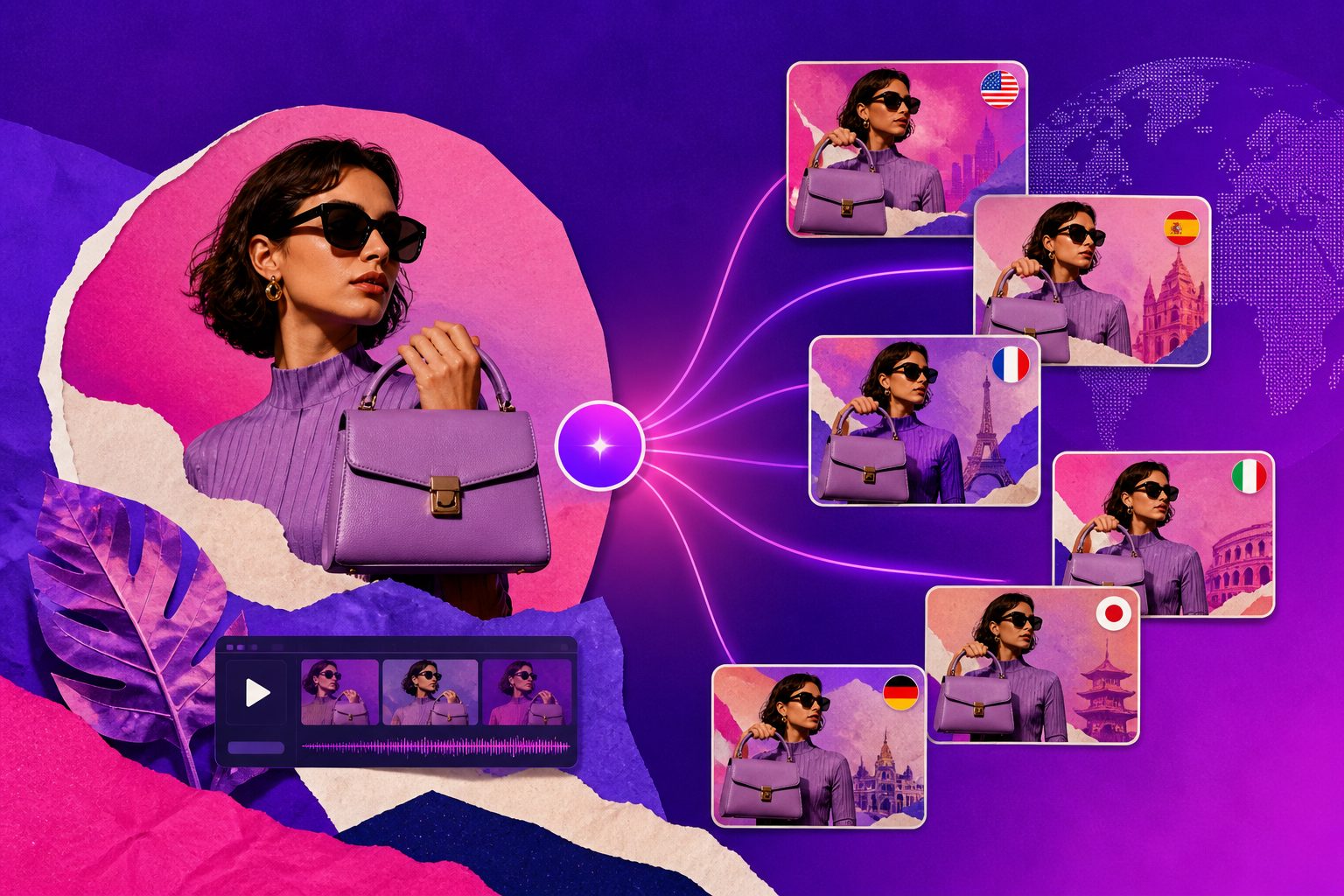
Clone video ads means rebuilding a proven ad’s hook, pacing, and CTA around your own product and audience, then exporting multiple versions for testing. For ecommerce teams, the goal is not to copy the original; it is to turn one reference into a repeatable creative system that can localize, resize, and scale.
What clone video ads actually mean
A clone video ad is a new ad built from the structure of an existing winner. The best version keeps the opening beat, scene order, and conversion logic, but swaps in your product, your offer, and your brand voice. That is very different from simply reusing someone else’s creative.
The practical benefit is speed. Instead of starting from a blank timeline, ecommerce teams can work from a proven pattern and spend their energy on product fit, messaging, and market-specific edits. That usually produces better test velocity than “fresh creative” built in isolation.
What most ranking pages cover—and what they miss
Most pages around this topic explain the same basics: upload a reference video, change the product, keep the hook, and export in a social-friendly format. That content is useful, but it often stops before the real operational questions begin.
| What most pages cover | What they usually omit |
|---|---|
| Upload a reference ad or paste a link | How to judge whether the source is actually cloneable |
| Keep the hook and CTA | How to preserve the winning structure without copying the brand |
| Export vertical, square, or landscape cuts | How to turn one source into a variant family for A/B testing |
| Add basic captions or edits | How to combine subtitles, translation, product visuals, and cleanup |
| General legal cautions | How to build a repeatable ecommerce workflow that scales |
That gap matters. If the reference is too long, too brand-specific, or too complex to swap cleanly, the clone will underperform even if the edit looks polished.
A workflow that works for ecommerce teams
The strongest way to clone video ads is to treat the process like creative engineering, not imitation. A good workflow starts with source selection, then narrows the ad down to the reusable elements that actually drive performance.
1) Choose a reference with a clear hook
Pick ads with a visible opening beat, a simple offer, and a short path to the CTA. If the first few seconds do not make the value obvious, the source is usually weak for cloning.
The best references are easy to deconstruct into parts: hook, proof, payoff, and action. When those parts are visible, they can be reused across new products without losing the original momentum.
2) Reduce the source to its reusable core
For API-driven workflows, the most useful reference is often the first 12 seconds. That window usually contains the hook, the product reveal, and the first conversion cue. AdsTurbo’s Ad Clone API analyzes reference segments up to 12 seconds, which is helpful because it forces the edit to focus on the part that actually earns attention.
This is a useful shift in thinking: the goal is not to preserve the entire ad. The goal is to preserve the mechanism that made the ad work.
3) Prepare product assets before generation
Clean inputs make better clones. For product-led campaigns, clear JPG or PNG product images on a plain background usually perform best. If the ad depends on a presenter, use assets that support face, voice, or motion continuity.
For example, AdsTurbo supports Face Swap, Lip Sync, Character Swap, Motion Control, and AI Upscaling, so the workflow can adapt whether the winning ad is product-only or creator-led.
4) Generate variants, not a single cut
A clone strategy becomes useful when one reference turns into several testable outputs. Build variations around:
- the hook
- the offer
- the language
- the visual style
- the format ratio
AdsTurbo’s AI video ad tools bring Ad Clone, Product Video, Video Translation, Video Subtitle, AI Upscaling, Background Replace, and cleanup tools into one workflow, which makes that variant approach easier to manage.
5) Localize and resize for the channel
A winning concept still needs platform fit. AdsTurbo supports 9:16, 1:1, and 16:9 outputs for clone workflows, so the same reference can be adapted for TikTok, Reels, Shorts, feeds, and in-stream placements.
When the input is a product URL rather than a reference file, the AI product video from URL guide is the most relevant adjacent workflow.
6) Track generation asynchronously
Operationally, this matters for scale. AdsTurbo runs all generation tasks asynchronously and supports completion tracking through polling or webhook callbacks. That means batches of cloned ads can fit into a standard creative ops stack instead of becoming a manual bottleneck.
A simple cloneability scorecard
A strong reference is not the most viral ad. It is the one that survives a product swap. Use this scorecard before generating anything.
| Factor | Score 0–5 | What to check |
|---|---|---|
| Hook clarity | 0–5 | Does the first beat make sense without explanation? |
| Offer clarity | 0–5 | Is the value proposition obvious in a few seconds? |
| Visual swap-ability | 0–5 | Can the product shots be replaced without breaking the story? |
| Localization potential | 0–5 | Can text, voice, and on-screen cues change cleanly? |
| Format flexibility | 0–5 | Will the ad still work in 9:16, 1:1, and 16:9? |
Score guide
- 20–25: strong clone candidate
- 15–19: usable with edits
- Below 15: better as inspiration than as a source
This scorecard is the main information gain many clone video ads pages miss. It turns a vague “good ad” into a repeatable selection rule.
How AdsTurbo fits the workflow
AdsTurbo is built for the full path from reference to output. That matters because ecommerce teams usually need more than one tool: they need cloning, cleanup, translation, and post-production in the same stack.
Best-fit use cases by task
| Need | Best-fit AdsTurbo tool |
|---|---|
| Rebuild a proven reference | Ad Clone |
| Start from product photos | Product Video or Product Image |
| Generate product visuals for campaigns | Product Image or Event Poster |
| Add captions for short-form feeds | Video Subtitle |
| Localize across markets | Video Translation |
| Keep a presenter while changing the face or role | Face Swap, Lip Sync, Character Swap |
| Improve low-resolution source material | AI Upscaling |
| Remove unwanted overlays or marks | AI Eraser |
| Change scene context without manual masking | Background Replace |
A few details make this especially useful for ecommerce. Product Image supports JPG and PNG uploads, and clean product photos on a plain background work best. It can also generate several image types from one product shot, which helps when a winning video needs matching stills for listing pages or paid social.
For localized campaigns, Video Translation supports 40+ target languages, and Video Subtitle can output either embedded subtitles or separate subtitle files. That gives one cloned concept enough flexibility for TikTok, Instagram Reels, YouTube Shorts, and broader cross-border deployment.
For larger teams, higher-tier plans add team workflows and custom workflow support, while API access is available on every plan. The API uses standard Bearer API key authentication, so developers can wire cloning into existing creative systems without changing the rest of the stack.
The biggest mistakes when trying to clone video ads
Most weak clones fail for predictable reasons. The edit may look neat, but the underlying structure is wrong.
- Copying brand style instead of structure. Keep the mechanism, not the competitor’s identity.
- Starting with a long reference. The more sprawling the source, the harder it is to isolate the real hook.
- Changing too many variables at once. Test one meaningful change per variant when possible.
- Ignoring format and subtitles. A good ad can still fail if the delivery format does not match the feed.
- Treating cloning as the final step. Clones are test assets, not finished strategy.
A better rule is simple: preserve the part that creates attention, then adapt everything that makes the ad yours.
When to use clone video ads instead of starting from scratch
Clone video ads are best when a market already proved a pattern. That makes them especially useful for ecommerce sellers launching new SKUs, testing new angles, or localizing a winning concept into another region.
They are less useful when the product category, offer, or brand promise is completely new. In that case, a cloned structure may still help, but the first job is usually building a clear angle rather than copying a format.
The right question is not “Can this ad be copied?” The right question is “Can this structure carry my product into a faster test?”
FAQ
What is the best source for clone video ads?
The best source is a short ad with a clear hook, simple offer, and obvious CTA. If the opening beat is strong and the structure is easy to map, it is usually a better clone candidate than a longer, more complex ad.
Is clone video ads the same as copying a competitor?
No. A proper clone preserves structure, pacing, and conversion logic while replacing the product, brand, and copy. The output should feel inspired by the format, not identical to the original.
What assets are needed to create a clone?
A reference video or URL is the ideal starting point. For product-led workflows, JPG or PNG product images are useful; for presenter workflows, portrait and audio assets help with Lip Sync and Face Swap.
Can one reference create multiple formats?
Yes. AdsTurbo supports 9:16, 1:1, and 16:9 exports, so one reference can become several platform-ready cuts.
Can clone video ads be localized?
Yes. Video Translation supports 40+ target languages, and Video Subtitle can generate timed subtitles for short-form platforms and export them as embedded or separate files.
Is there an API workflow for teams?
Yes. AdsTurbo’s generation tasks run asynchronously, and completion can be tracked through polling or webhook callbacks. That makes batch production and automation much easier for growth teams.
Bottom line
Clone video ads work best when the reference is treated as a blueprint, not a script to copy. The highest-value workflow is to extract the hook, rebuild the structure around your product, and generate enough variants to learn quickly.
For ecommerce teams, that means one winning idea can become a localized, multi-format, test-ready creative family instead of a single ad. That is where clone video ads stop being a tactic and become a production system.