Clothing Try-On Video Ads Reduce Returns: A Practical Ecommerce Framework

Summarize with
Summary
Learn how clothing try-on video ads reduce returns by showing fit, drape, fabric, and movement clearly. Use a practical testing framework to improve buyer confidence.
By adsturbo.ai | Published 2026-10-24 | Updated 2026-10-24
Clothing try-on video ads reduce returns when they make the product more predictable before purchase. Instead of showing only a polished pose, effective videos reveal fit, drape, stretch, fabric texture, movement, and how the garment looks from multiple angles.
For independent fashion stores, this matters because many returns begin with a mismatch between expectation and reality. The shopper may expect a structured jacket but receive a soft one, imagine a slim fit but receive an oversized cut, or choose a color that looks different in natural light.
Why do clothing try-on videos help reduce returns?
Clothing try-on videos reduce uncertainty by showing how a garment behaves on a moving body. A still image can communicate color and general styling, but it usually cannot show whether fabric clings, stretches, folds, swings, or holds its shape.
The most useful video answers four questions quickly:
-
How does the garment fit?
Show the front, side, and back. Include the model’s height and worn size where possible. -
How does the fabric move?
Walk, turn, sit, raise the arms, or stretch the garment naturally. -
What does the material look like up close?
Include close-ups of texture, seams, cuffs, waistbands, zippers, lining, and pockets. -
What should the shopper realistically expect?
State whether the fit is slim, regular, relaxed, cropped, stretchy, lightweight, or structured.
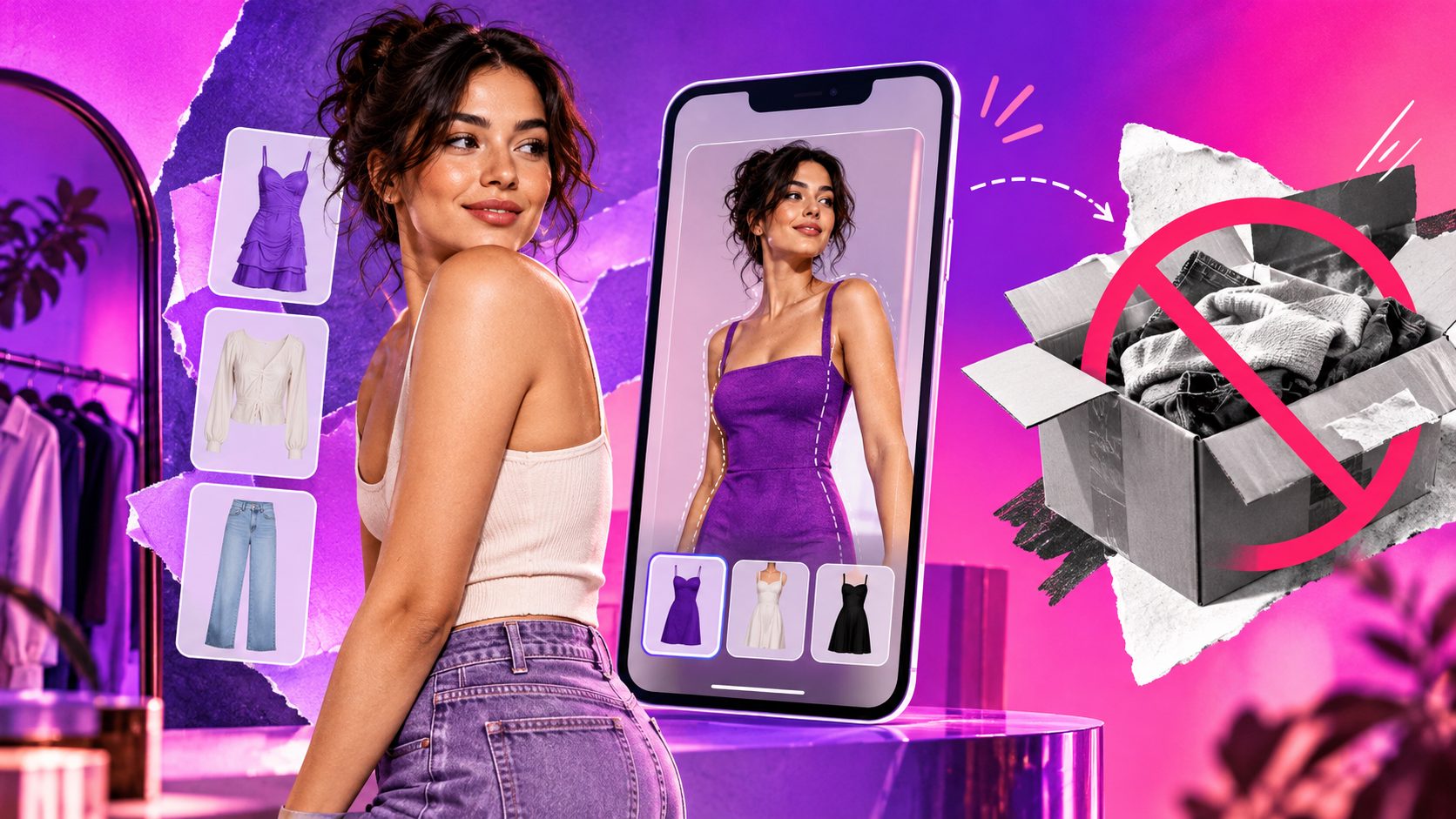
This approach is different from virtual try-on. Virtual try-on helps shoppers visualize a style on themselves, while a try-on video demonstrates the physical behavior of the actual design. The strongest product pages can use both, but neither should replace accurate garment measurements and honest product descriptions.
A controlled case study from Garcia and Faslet reported a 5.54% reduction in returns for shoppers who used virtual try-on, on top of an existing fit recommendation tool. The result shows the value of reducing visual uncertainty, but it should not be treated as a guaranteed outcome for every apparel store. (faslet.me)
What should a clothing try-on ad show?
A high-performing clothing video should prioritize return-prevention information before decorative transitions. A useful 15- to 25-second structure is:
| Time | Visual | Buyer question answered |
|---|---|---|
| 0–3 seconds | Full-body opening shot | What does the outfit look like overall? |
| 3–7 seconds | Front, side, and back movement | How is the cut and silhouette? |
| 7–11 seconds | Walking, turning, or sitting | How does the fabric drape? |
| 11–15 seconds | Close-up of texture and construction | What does the material really look like? |
| 15–20 seconds | Size, height, and fit note | Which size or fit should I consider? |
| 20–25 seconds | Styling or CTA | How can I wear it, and what should I do next? |
This sequence creates an important distinction between selling the look and setting the expectation. A fashion ad should still be aspirational, but the first few seconds should not hide the information most likely to affect a return decision.
For example, a satin skirt should show how it reflects light and moves while walking. A knit sweater should show stretch and recovery. Wide-leg trousers should show the hem, rise, and side profile rather than only a carefully framed front shot.
Which video details reduce fit-related returns?
The best footage depends on the likely return reason for each product. Instead of using one template for every SKU, map the video to the garment’s risk points.
For jeans and trousers
Show the waistband, rise, seat, thigh, leg opening, and hem. Include a seated movement if comfort is a key selling point. On-screen text can state the model’s height, worn size, and whether the item runs small, true to size, or oversized—provided the claim is based on your own product data.
For dresses and skirts
Show the garment from the side and back, then capture how the hem moves while walking. If the material is sheer, lined, clingy, or structured, demonstrate that directly instead of relying on adjectives.
For jackets and structured pieces
Show shoulder width, sleeve length, collar shape, closure behavior, and layering room. A short arm-raise or seated shot can reveal restrictions that a static pose conceals.
For knitwear and stretch fabrics
Show the fabric close to the camera, then demonstrate stretch and recovery without overstating the result. A simple pull-and-release moment can be more informative than a long spoken description.
This garment-specific approach is one of the most overlooked opportunities in apparel video production. The goal is not merely to add motion; it is to choose motion that exposes the feature most likely to cause disappointment.
How can ecommerce sellers test whether videos reduce returns?
Do not judge a try-on video only by click-through rate. A video can increase orders while also increasing returns if it creates excitement without improving product understanding.
Use a return-reason-to-shot framework:
-
Export the top return reasons by SKU.
Separate “too small,” “too large,” “not as expected,” “fabric,” “color,” and “quality.” -
Assign one visual proof to each reason.
For “too large,” show side profile and garment length. For “fabric,” show a close-up and movement. For “not as expected,” show the least flattering but accurate angle. -
Create one control and one video variant.
Keep price, offer, landing page, and audience consistent where possible. -
Measure downstream outcomes.
Track product-page engagement, add-to-cart rate, conversion rate, return rate, return reason, and net revenue after returns. -
Review by product, not only by campaign.
A video may improve results for one cut while hurting another because the shopper’s information needs differ.
A practical decision metric is:
Net contribution after returns = sales revenue − fulfillment cost − return processing cost − refund-related loss.
This prevents a common mistake: declaring a creative successful because it lifts conversion while ignoring the cost of avoidable returns.
How can you create try-on video variations efficiently?
Many independent stores do not need a completely new production for every variation. Start with one accurate base video, then create controlled versions for different platforms, languages, hooks, and customer segments.
A useful variation system includes:
- Fit-first hook: “Here is how this oversized blazer falls from the side.”
- Fabric-first hook: “Watch how the fabric moves before choosing your size.”
- Problem-first hook: “Not sure whether these trousers are stiff or stretchy?”
- Styling hook: “Three ways to wear the same relaxed-fit shirt.”
- Localization variation: Different voiceover, subtitles, or promotional copy for each market.
AdsTurbo supports product video creation from JPG or PNG product images, as well as ad cloning, video subtitles, translation, character replacement, background replacement, and AI upscaling. Its video subtitle workflow can generate synchronized captions and export either a captioned video or a separate subtitle file. These capabilities can help teams adapt a core apparel concept into multiple testable assets without changing the product claim. Create ecommerce product videos from product images and build an automatic caption workflow for ecommerce ads.
For a polished product page, use a calm, information-led edit. For TikTok, Reels, or Shorts, use a faster hook but retain the same fit and fabric evidence. Platform adaptation should change pacing and framing—not the truth of what the garment looks like.
How should try-on videos work with product pages?
A try-on video is most valuable when it sits next to practical sizing information. Place it near the product gallery or size selector, and connect the video to the shopper’s decision rather than hiding it below reviews.
The surrounding page should include:
- Garment measurements by size
- Model height and worn size
- Fit description
- Fabric composition
- Stretch or lining information
- Clear color references
- Customer reviews mentioning fit
- A size guide that uses the same measurement method across products
For international shoppers, subtitles and translated versions can support the same product explanation in different markets. AdsTurbo’s ecommerce video translation workflow can be useful when the core footage remains the same but voiceover or captions need localization.
Try-on content should also be honest about its limits. A video cannot guarantee that every shopper will choose the correct size, and a model’s proportions are not a universal fit reference. The purpose is to reduce avoidable surprises, not to replace measurement data.
Frequently asked questions
Do clothing try-on videos guarantee fewer returns?
No. They can reduce uncertainty, but results depend on video accuracy, sizing data, product quality, traffic source, and the reasons customers return items. Measure return rate and return reasons by SKU before drawing conclusions.
Should the model show multiple body angles?
Yes. Front-only footage hides important information about length, looseness, stretch, and how the garment sits from the side or back. For fit-sensitive products, multiple angles are more useful than extra transitions.
Are UGC-style videos better than studio videos?
Neither style is automatically better. UGC can feel relatable, while studio footage can provide clearer lighting and detail. The deciding factor is whether the video shows the product truthfully and answers the shopper’s main concern.
How long should a clothing try-on video be?
For paid social, 15–25 seconds is a practical starting range. Product-page videos can be longer when they include useful demonstrations, but every second should add evidence about fit, fabric, construction, or styling.
What should be tested first?
Start with products that have high traffic and a clear return problem. Test the visual proof most closely connected to the top return reason, then compare net revenue after returns—not conversion rate alone.