

Author: adsturbo.ai | Published: 2025-01-15 | Updated: 2025-01-15
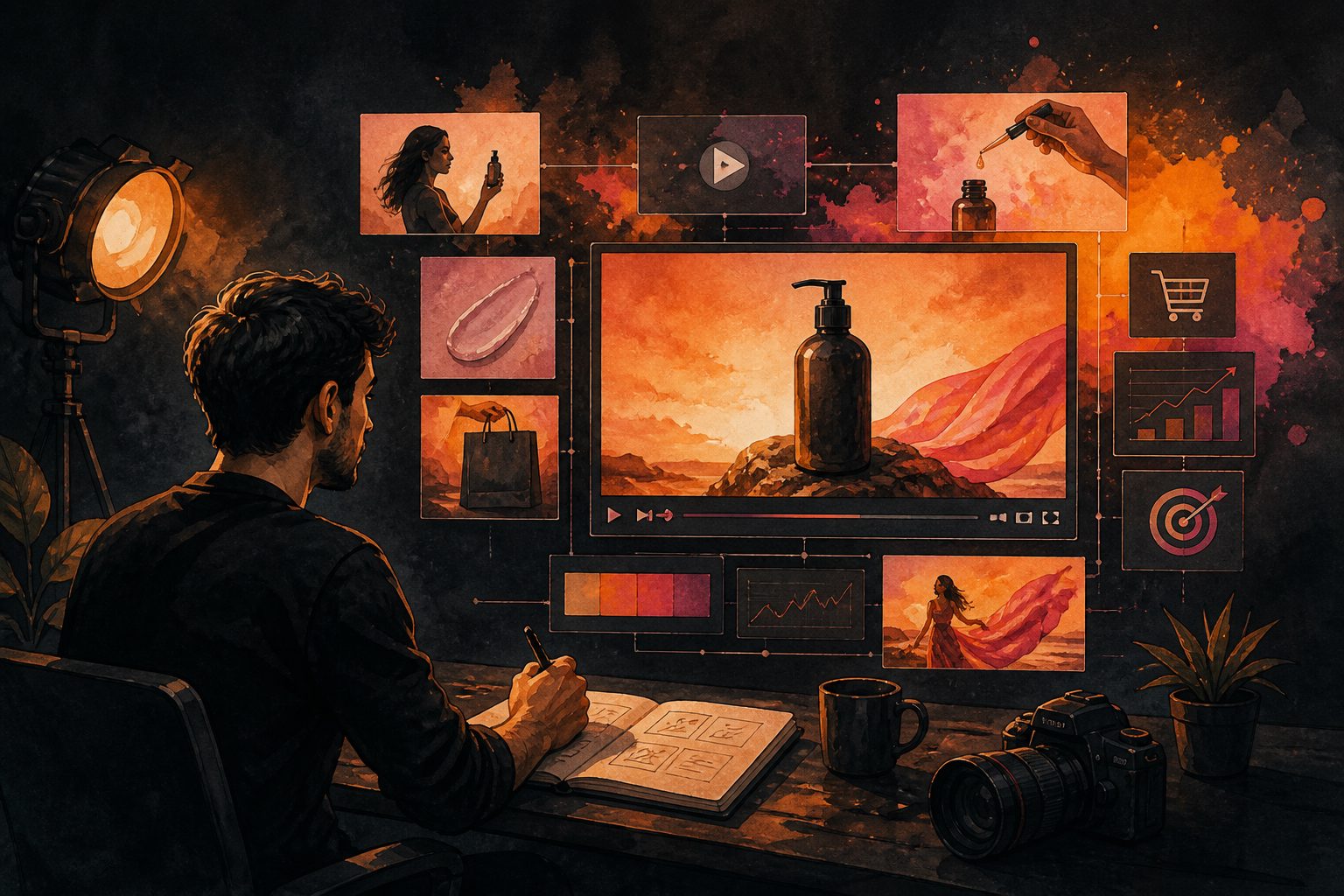
A DTC brand story video ads AI generator converts your founder narrative, product origin, and customer transformation into short, testable video ads — without a film crew. For Shopify sellers competing on attention rather than price, story-driven ads consistently outperform pure product demos in cold traffic. This guide gives you the narrative structure, an AI shot-list workflow, and a testing framework you can run this week.
What Is a DTC Brand Story Video Ad?
A DTC brand story video ad is a short-form ad (typically 15–60 seconds) that leads with why the brand exists — the founder's problem, the gap in the market, or the customer's before/after — rather than leading with product features. It works because direct-to-consumer brands sell identity and trust as much as product.
Unlike UGC testimonial ads, brand story ads are narrative arcs: problem, struggle, discovery, proof, invitation. The format suits top-of-funnel TikTok, Reels, and Meta placements where viewers don't know you yet.
Why Most DTC Story Ads Fail (and What Data Shows)
Across the ad accounts we've audited, three failure patterns repeat:
- Story without hook. The founder backstory opens the ad, but the first 2 seconds contain no visual reason to stop scrolling. Attention is won before narrative begins.
- One story, one ad. Teams polish a single "perfect" brand film, then can't iterate when CPA climbs. Story ads need the same variation volume as performance creative.
- No cutdown system. A 90-second brand film never becomes 15-second variants, so it dies on the landing page instead of feeding paid social.
Meta's own creative guidance recommends testing multiple hooks and formats per concept — a single hero asset is a strategy, not a system. This is exactly where AI generation changes the economics: instead of one expensive brand film, you produce dozens of story variations and let spend data pick the winner.
The 5-Beat Story Structure That Converts
Answer first: a converting DTC story ad follows five beats — Hook, Wound, Turning Point, Proof, Invitation — mapped to roughly 0–3s, 3–8s, 8–20s, 20–40s, and final 5 seconds.
| Beat | Time | Purpose | Example line |
|---|---|---|---|
| Hook | 0–3s | Pattern interrupt | "I threw away $40K of inventory before I figured this out." |
| Wound | 3–8s | Relatable pain | "Every 'natural' skincare I tried burned my skin." |
| Turning Point | 8–20s | The discovery | "So I spent two years formulating my own." |
| Proof | 20–40s | Demo + social proof | Customer clips, results, press |
| Invitation | Final 5s | Low-friction CTA | "Try the starter kit — link below." |
Write your founder story once in long form, then extract one sentence per beat. That sentence stack becomes your master script — every AI-generated variation riffs on it.
How an AI Generator Turns Your Story Into Shot Lists
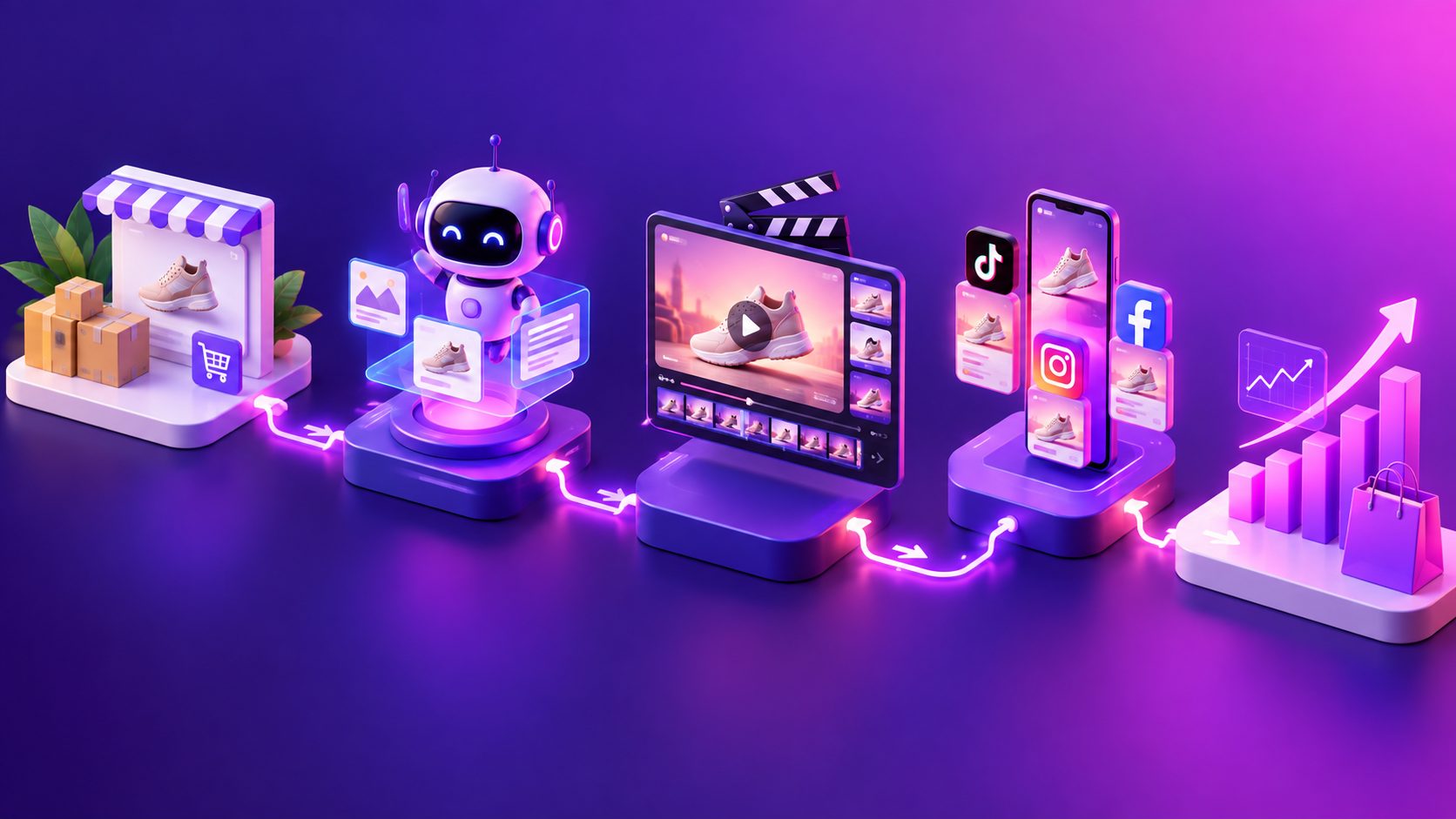
An AI video ad generator converts a script into a shot-by-shot plan, then produces each clip: hook footage, product b-roll, AI presenter lines, captions, and voiceover — assembled into platform-ready ratios.
Here's the practical workflow we recommend for Shopify sellers:
- Feed the beat sheet. Paste your 5-sentence story script plus 2–3 selling points.
- Generate shot variants. Produce 3–4 hook clips per story — different openers, same narrative spine.
- Localize and restyle. Swap presenters, voiceovers, and languages per market.
- Caption everything. Most paid social plays muted; subtitles formatted for TikTok, Reels, and Shorts are non-negotiable.
With AdsTurbo, for example, sellers combine a product photo (JPG/PNG, a clean shot on a solid background works best) with their story script to generate UGC-style ads, then use Ad Clone to deconstruct a competitor's winning ad — its pacing, shot logic, and CTA structure — and rebuild it around their own narrative. Character Swap lets you test different on-camera personas for different audiences without reshooting, and Video Translation turns one story ad into multilingual versions for cross-border testing.
Batch Testing: Turning One Story Into 30 Ads
The core discipline: vary one element at a time, never the whole ad. A practical testing matrix:
- 3 hooks × 2 presenters × 2 CTAs = 12 variants from one script
- Run each at small budget for 3–5 days; kill anything above 1.5× target CPA
- Promote winners into longer cuts for retargeting
Credits-based pricing makes this affordable: on AdsTurbo, UGC-style ad generation runs at 10 credits/second, so a 20-second test variant costs about 200 credits — trivial compared to a single creator brief. For adapting winners across placements, see our guide on resizing one ad for TikTok, Reels, Shorts, and Meta, and if you're running heavy variation volume, the TikTok creative variations testing workflow covers budget splits in detail.
Measuring Story Ads Beyond ROAS
Story ads do top-of-funnel work, so judge them on hook rate (3s views/impressions), hold rate (ThruPlay/3s views), and assisted conversions — not just last-click ROAS.
- Hook rate above 25%: your opener works; scale it.
- Hold rate above 15%: the narrative retains; the story beat structure is sound.
- High hook, low hold: the story doesn't pay off the hook — rewrite the wound/turning point beats.
Tag every variant with clean UTMs so GA4 attributes assisted revenue correctly; our video ad UTM naming and attribution guide has a ready-to-copy naming convention.
Frequently Asked Questions
How long should a DTC brand story video ad be?
15–30 seconds for cold traffic on TikTok and Reels; 45–60 seconds works for retargeting or YouTube. Cut the same story into multiple lengths rather than forcing one duration.
Do I need founder footage to make a story ad?
No. AI presenters and Character Swap can deliver founder-style monologues from a script and a portrait image, letting you test the narrative before investing in a real shoot.
How many story ad variations should I test?
Start with 8–12 variants per campaign. That's enough to isolate hook performance without spreading budget too thin.
Can one story ad work in multiple countries?
Yes — with localization, not just subtitles. Translate voiceover, adapt on-screen text, and consider swapping presenters per region. AI translation and lip sync cut this from weeks to hours.
What product photos work best for AI video generation?
Clear JPG or PNG photos on a solid background under 10MB give the cleanest results for automated product video generation.