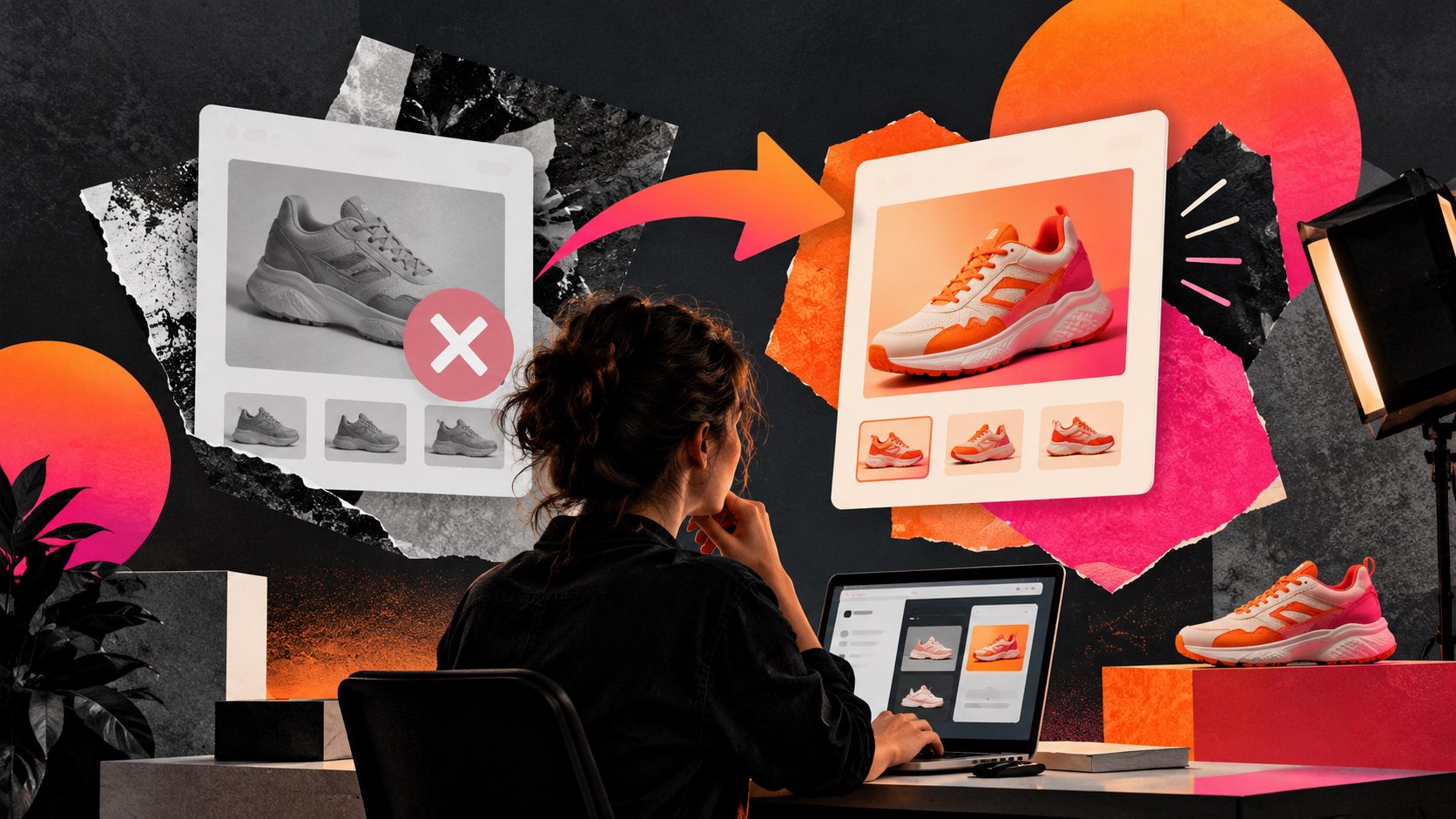
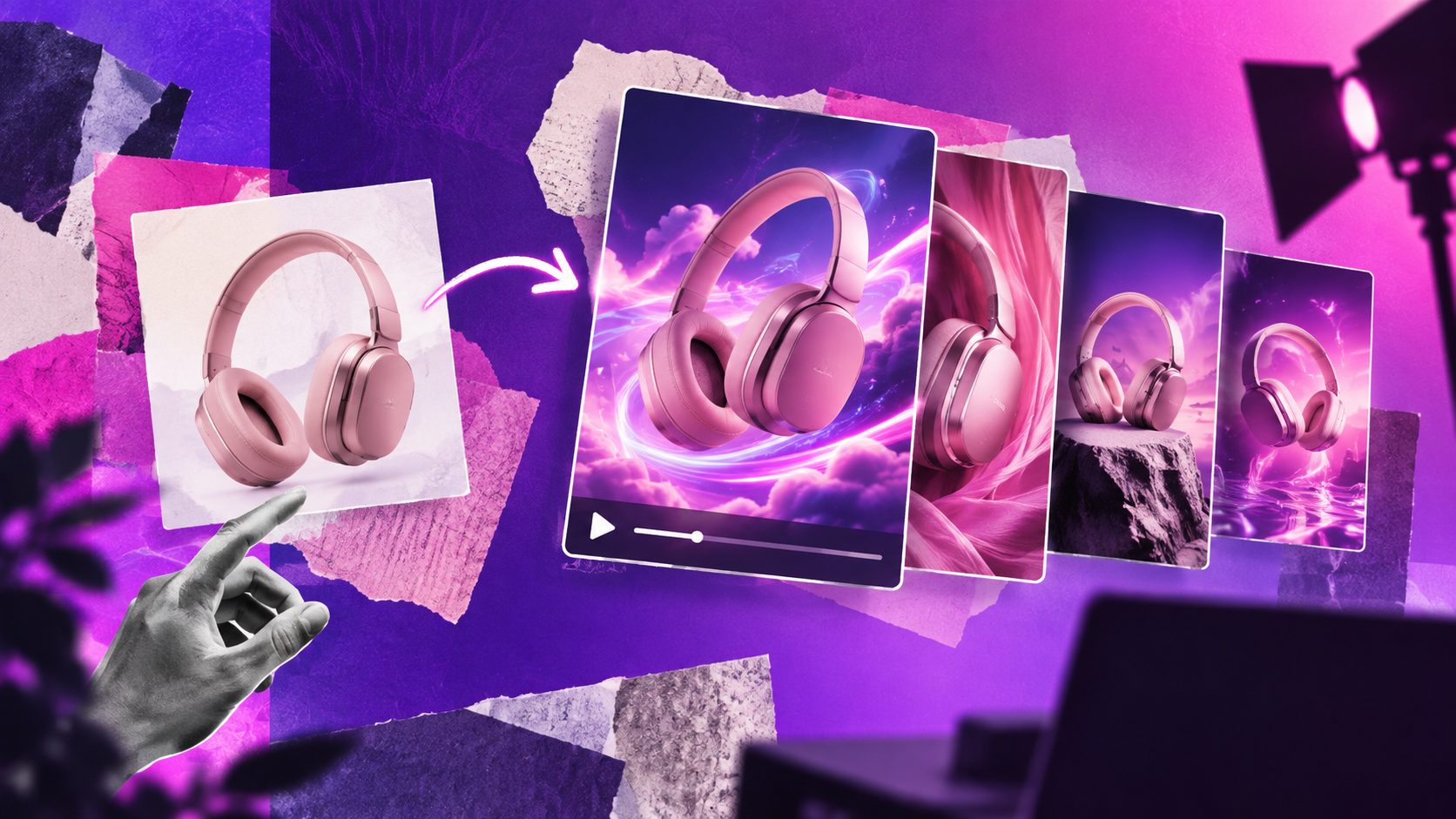
Ecommerce Mystery Box Unboxing Video Ad Script: Q4 Templates and AI Workflow


Summarize with
Summary
Use an ecommerce mystery box unboxing video ad script with timed hooks, reveal beats, trust checks, and an AI workflow for scalable Q4 creative testing. Start building better ads.
By adsturbo.ai | Published 2026-10-22 | Updated 2026-10-22
An ecommerce mystery box unboxing video ad script turns surprise into a structured buying journey: tease the unknown, reveal the contents, prove the product’s value, and finish with one clear offer. For Q4 campaigns, the strongest version combines suspense with practical details such as what arrives, who it suits, and why the promotion matters.
Unboxing content works because it resembles a real customer experience rather than a polished catalog presentation. TikTok’s own seller guidance emphasizes arrival, emotional reaction, packaging, product benefits, and a direct purchase prompt as core stages of an unboxing video. (seller-us.tiktok.com)
What makes a mystery box unboxing ad different?
A mystery box ad is not simply a product demonstration with packaging added. It uses controlled uncertainty to hold attention, then replaces uncertainty with evidence.
A useful structure is:
- Curiosity: What could be inside?
- Tension: Is the box worth opening?
- Reveal: What did the shopper actually receive?
- Proof: What can the product do?
- Offer: Why buy during this campaign?
Search results commonly recommend a five-beat pattern—tease, tension, reveal, payoff, and CTA—but many templates stop at the reveal. The information gap is the trust bridge after the reveal: show the exact contents, scale, use case, and offer conditions before asking for the click. (videoideas.org)
For mystery boxes, that trust bridge is particularly important. Avoid implying guaranteed high-value contents unless the offer genuinely guarantees them. A compelling ad can preserve suspense without creating misleading expectations.
A 15-second mystery box video ad script
Use this version for TikTok, Instagram Reels, YouTube Shorts, and paid social placements where the viewer needs to understand the offer quickly.
| Time | Visual direction | Voiceover or on-screen copy |
|---|---|---|
| 0–2s | Sealed box in hand; show a seasonal sticker or offer card | “We ordered the holiday mystery box—let’s see what’s inside.” |
| 2–5s | Cut tape, lift the lid, pause before the first reveal | “There are [number] surprises in every box, but this one caught my eye.” |
| 5–8s | Reveal the hero item close to camera | “This is [product name], and here’s what makes it useful.” |
| 8–12s | Demonstrate the product in one visible action | “It [solves problem / creates benefit] in just [simple outcome].” |
| 12–15s | Show the full contents, offer, and product page direction | “Shop the Q4 box before this drop ends.” |
Why this version works: the product appears before the final third, but the reveal is not the entire story. The last seven seconds convert curiosity into a reason to purchase.
For a 30-second version, add a scale shot, a second item, a quick comparison, or a customer-use scene. Do not add more product claims merely to fill time.
A 30-second Q4 script for holiday clearance or giftable bundles
This script is designed for a seasonal mystery box, surprise bundle, or end-of-year inventory campaign.
0–3 seconds — Hook
“Would you risk buying a mystery box if you knew every item had to be giftable?”
Show the unopened package immediately. Avoid a logo animation before the hook.
3–8 seconds — Opening tension
“This is the [collection name] holiday box. I’m checking whether the contents feel like a real gift—or random filler.”
Open the box slowly enough to create anticipation, but keep each action moving. A long tape-cutting sequence is usually less valuable than a clear reaction.
8–16 seconds — Reveal and inventory
“First, we have [item one]. Then [item two]. And this is the surprise piece: [hero item].”
Display each item against a consistent background. Include a hand, mug, or familiar object when size may be unclear. Showing scale early is a useful trust signal for ecommerce creative because product photography can make an item look larger or smaller than it is. (makeviral.ai)
16–23 seconds — Use-case proof
“The reason I’d keep this one is [specific use]. Here’s how it looks when [demonstration].”
Choose one proof action rather than listing every feature. For example, show the item being worn, opened, assembled, applied, or used in a seasonal setting.
23–27 seconds — Offer clarity
“The holiday bundle includes [contents or quantity], with [discount, shipping detail, or limited campaign condition].”
Only state details that match the actual product page. If the box contents vary, explain the variation on screen.
27–30 seconds — CTA
“Pick your box and see what arrives—shop now.”
A direct CTA is more useful than a vague ending such as “What do you think?”
Three creative angles to test in Q4
1. The “worth it?” angle
Lead with the buyer’s risk:
“I paid [price] for this mystery box. Let’s see if the contents make sense.”
This works best when the box has a clear value proposition and the ad can show the complete contents. Avoid unsupported price comparisons.
2. The “gift test” angle
Position the unboxing around gifting:
“I’m testing whether this mystery box is actually ready to give.”
Show wrapping, presentation, recipient suitability, and any size or preference limitations. This angle is stronger for holiday shoppers than a generic “look what I got” reaction.
3. The “three boxes, one favorite” angle
Open several legitimate variants and choose a favorite:
“Three mystery boxes arrived. I’m keeping one, gifting one, and explaining the difference.”
This creates a natural comparison without claiming that one box is universally best. It also produces multiple cutdowns from one filming session.
How to create more variations without losing trust
The common mistake in scalable ad production is changing too many variables at once. A better test matrix changes one layer per batch:
| Batch | Keep constant | Change |
|---|---|---|
| Hook test | Same box and reveal | “Gift test” vs. “worth it?” opening |
| Reveal test | Same voiceover | Hero product first vs. full contents first |
| Audience test | Same structure | Collector, gift buyer, or deal seeker |
| Format test | Same edit | 9:16, 1:1, and 16:9 exports |
| Localization test | Same visuals | Translated voiceover and subtitles |
AdsTurbo can support this workflow with product video generation, Ad Clone, video translation, subtitles, character replacement, lip sync, and AI upscaling. Its Ad Clone workflow can analyze a reference video up to 12 seconds and generate advertising variations, making it suitable for extracting a proven opening structure rather than copying a competitor’s brand assets.
For a product-led workflow, start with a clear JPG or PNG product image. AdsTurbo Product Video accepts JPG or PNG product images up to 10 MB and can generate UGC-style product videos. For additional seasonal visuals, Event Poster supports JPG and PNG uploads and can output nine aspect ratios for social, display, email, and print use.
You can also pair this process with an AI UGC video ads workflow for ecommerce or adapt existing footage using an Amazon-to-TikTok aspect ratio workflow.
Mystery box ad QA checklist
Before publishing, verify these five points:
- The first frame shows the box or the reaction, not a title card.
- The reveal happens early enough for short-form viewers.
- Every promised item is visible or the variation rule is explained.
- The product is shown at a believable scale.
- The CTA matches the landing page, including the exact bundle, variant, and promotion.
For sound-off viewers, add readable captions. AdsTurbo Video Subtitle can automatically transcribe speech, generate time-synced captions, and export either a captioned video or a separate subtitle file. Its subtitle styling can be adapted for TikTok, Instagram Reels, and YouTube Shorts.
If the source footage is compressed, an AI video upscaling workflow for ecommerce ads can help prepare a cleaner export. The goal is not to make the video look artificially perfect; it is to keep the reveal, product details, and text legible.
Frequently asked questions
How long should a mystery box ad be?
Start with 15 seconds for a direct paid-social test and create a 25–30-second cut when the contents need explanation. The shorter version should reveal one hero item and one benefit rather than showing every detail.
What should the first line of an unboxing ad say?
Use a question, risk, or specific promise: “Is this holiday mystery box actually giftable?” or “I’m opening the box everyone keeps asking about.” The line should create curiosity without promising an outcome the product cannot support.
Should the product stay hidden until the end?
Usually, no. Hide the hero item briefly, then reveal it early enough to give the viewer a reason to continue. A reveal that arrives too late can turn suspense into frustration.
How can ecommerce teams make many versions?
Keep the product and offer constant while changing one variable at a time: hook, creator, reveal order, subtitle language, aspect ratio, or CTA. AdsTurbo supports asynchronous generation with status polling or Webhook completion events, while higher-tier plans support team workflows, API access, and custom workflows.
Can one unboxing video support multiple markets?
Yes, if the visual proof remains accurate and the spoken message is localized. Use translated voiceover, synchronized subtitles, and market-specific offer text rather than simply placing the same English caption over every version.