TikTok Shop Affiliate Sample Video: Create Better Creator Outreach Before Shipping

Summarize with
Summary
Learn how to create a TikTok Shop affiliate sample video before shipping products, with a practical creator outreach workflow and AI production checklist.
By adsturbo.ai | Published 2026-11-13 | Updated 2026-11-13
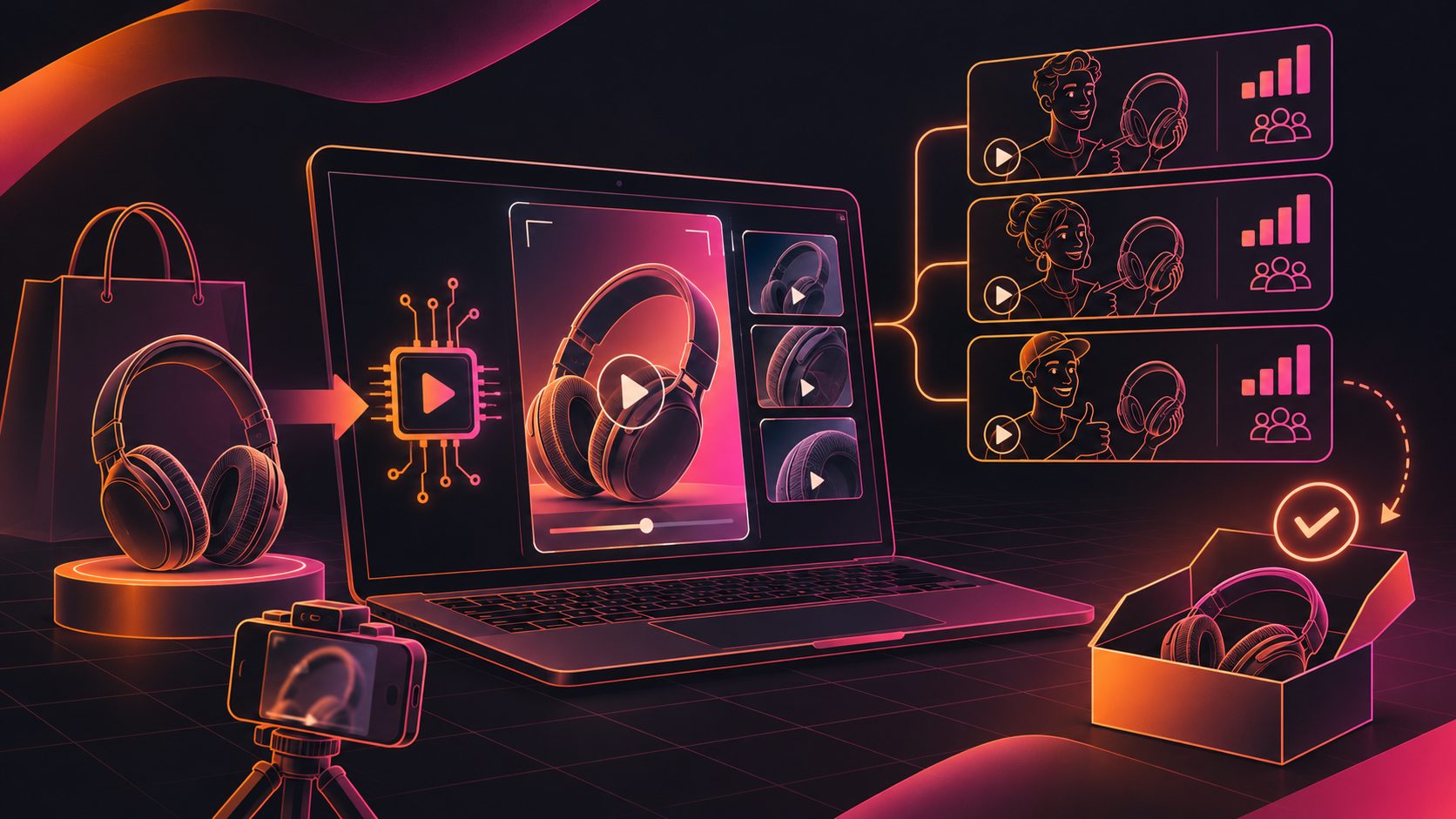
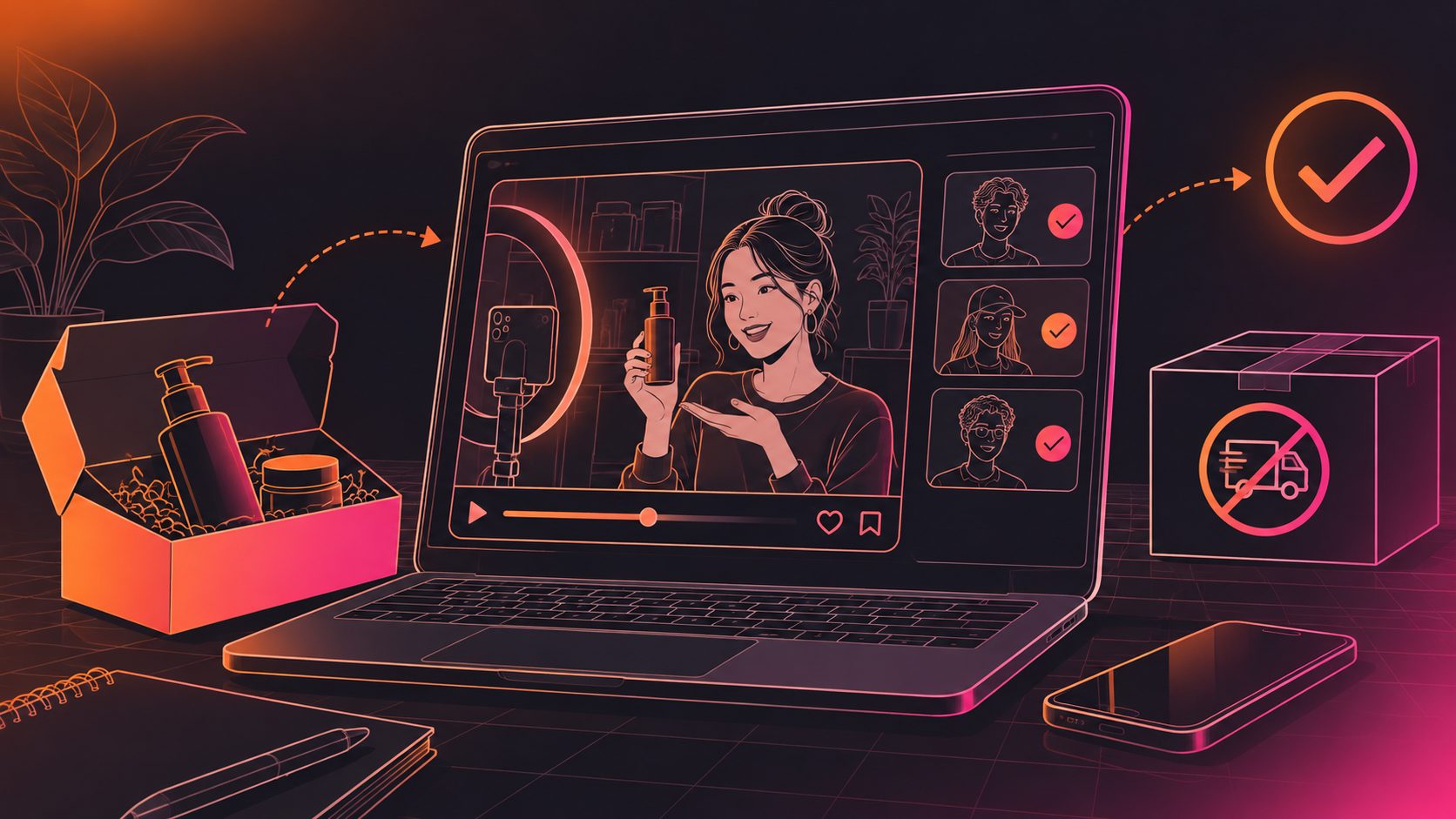
A TikTok Shop affiliate sample video is a short product demonstration a seller creates before shipping samples to creators. It gives potential affiliates a clear idea of the hook, product proof, filming style, and selling angle—so they can decide faster and produce stronger content after receiving the product.
For ecommerce sellers, the goal is not to dictate a creator’s final post. It is to remove uncertainty before sending inventory.
What is a TikTok Shop affiliate sample video?
A TikTok Shop affiliate sample video is a seller-produced reference video used to recruit and brief creators before they receive a product sample. It can show how the product is opened, used, compared, tested, or positioned in a real-life scenario.
The best version is not a polished commercial. It is a visual preview of what a creator could realistically make:
- The first-second hook
- The product’s most demonstrable benefit
- A simple use case
- Suggested close-up shots
- A possible spoken or on-screen CTA
- The intended audience or shopping problem
TikTok’s US seller guidance recommends personalized creator messaging that references a creator’s content, product selling points, commissions, and samples. A reference video strengthens that message because the creator can evaluate the opportunity visually, not just through text. (seller-us.tiktok.com)
Why send a reference video before shipping samples?
A sample costs more than the product itself. It also consumes fulfillment time, creator-management time, and an opportunity to work with another affiliate.
A pre-shipment video helps solve three common problems:
- Low reply rates: Creators can quickly see what makes the product worth testing.
- Weak first drafts: The creator receives a concrete content direction instead of a vague request to “make a review.”
- Mismatched expectations: Sellers can communicate the product angle without demanding a scripted endorsement.
TikTok Shop supports free and refundable sample models, while sellers may approve, reject, or manage sample requests through Affiliate Center workflows. In the US, free-sample content may also have a posting deadline after delivery, making a clear brief useful before the package arrives. (seller-us.tiktok.com)
The important distinction is this: the sample video should clarify the opportunity, not replace authentic creator judgment. Creators still need room to test the product and describe their actual experience.
The three-layer sample video framework
A practical pre-shipment video can be built in three layers: attention, proof, and participation.
1. Attention: show the shopping problem
Open with the problem the product solves, not the brand name.
Examples:
- “If your kitchen counter always looks crowded, try this setup.”
- “I tested this travel organizer before my next flight.”
- “Here is the detail I check before buying a desk lamp.”
Keep the opening visual. Show the product in context within the first few seconds. A creator should immediately understand the intended audience and use case.
2. Proof: demonstrate one measurable or visible benefit
A product sample video becomes more useful when it shows what the creator should film—not just what the product is.
Use one proof mechanism:
- Before-and-after comparison
- Close-up of material or construction
- Setup or installation sequence
- Demonstration under normal use
- Side-by-side feature comparison
- Packaging and included accessories
- A practical limitation or use condition
TikTok’s own seller education emphasizes showing individual product features with close-up shots while also using wider shots to show the complete product. (p16-oec-university-file-ttp-sign.tiktokcdn-us.com)
Avoid stacking every selling point into one short clip. For affiliate recruitment, one clear angle is usually easier for a creator to understand and reproduce.
3. Participation: make the creator’s next step obvious
End with a creator-facing CTA rather than a customer-facing CTA.
For example:
“If this fits your audience, request a sample and test it in your usual review style.”
You can also include:
- Product category
- Commission information
- Sample availability
- Preferred content format
- Whether demonstrations, comparisons, or unboxings are welcome
- Contact or collaboration instructions
The creator should know what happens after watching the video. That reduces back-and-forth messages and helps qualified affiliates self-select.
How to create several sample-video angles from one product
One product does not need one generic recruitment video. Build a small angle matrix before contacting creators.
| Angle | Best for | Suggested opening |
|---|---|---|
| Problem-solution | Practical household products | “This is the small issue that makes…” |
| Demonstration | Products with visible usage | “Watch what happens when…” |
| Comparison | Products replacing an old option | “I compared these two setups…” |
| Unboxing | Giftable or packaged products | “Here is what arrives in the box…” |
| Lifestyle use | Fashion, home, travel, or accessories | “I packed this for…” |
| Proof-first | Products with a clear performance claim | “Here is the part I tested first…” |
This matrix creates a better match between creator style and product angle. A comparison-focused creator may ignore a generic product pitch but respond to a clearly framed test concept.
A useful operating rule is to prepare three to five angles per product, then send each creator the angle closest to their existing content. This is an original planning framework, not a claim that every creator should receive identical instructions.
A practical workflow for making the video with AI
You can produce the reference assets in a repeatable sequence:
- Choose the product promise. Select one customer problem and one visible proof point.
- Write a 15–30 second outline. Use hook, demonstration, creator invitation, and CTA.
- Prepare the product image. A clear JPG or PNG product photo on a plain background generally gives the cleanest starting point for product-image generation.
- Create the visual draft. Generate product scenes, a short product video, or a simple ad-style reference.
- Add captions. Captions should make the hook and requested creator action understandable with sound off.
- Export platform-friendly versions. Prepare vertical video first, then adapt the creative for other placements when needed.
- Send the reference with a personalized message. Mention why the creator’s existing content fits the proposed angle.
AdsTurbo supports product-image generation, product videos, video subtitles, background replacement, ad cloning, video translation, and clip-by-clip editing. Its video subtitle tool can create synchronized captions and export either a captioned video or a separate subtitle file. For footage that needs clearer detail before outreach, an AI video enhancer can improve the working reference without changing the intended content angle.
What to include in the creator message
A concise invitation can follow this structure:
Hi [Creator Name], your videos about [specific topic] make [specific product benefit] easy to understand. We created a short reference showing a [demo/comparison/unboxing] angle for [product]. We would like to invite you to request a sample, with [commission detail] and flexibility to use your usual style. Would this fit your audience?
The message works because it combines personalization, a concrete creative direction, and a clear next step.
Do not send the same generic video to every creator. Match the angle to the creator’s content pattern:
- Demonstration creators receive a proof-first version.
- Review creators receive a comparison or testing version.
- Lifestyle creators receive a scene-based version.
- Live sellers receive a feature sequence they can explain on camera.
TikTok’s creator tools also support product selection, sample handling, and video creation workflows, so the reference video should complement those systems rather than attempt to replace them. (partner.tiktokshop.com)
How to judge whether the sample video is useful
Do not judge the asset only by views. For creator recruitment, track operational signals:
- Reply rate by video angle
- Sample-request rate
- Approval-to-post rate
- Time from delivery to first draft
- Percentage of videos using the intended proof point
- Product clicks and attributed orders after posting
The most valuable comparison is between angles, not between isolated creators. If a demonstration reference generates more qualified sample requests than a generic lifestyle video, use that insight to improve the next outreach batch.
A simple spreadsheet can include: creator handle, niche, angle sent, date contacted, reply, sample status, posting date, views, clicks, orders, and notes. This turns sample seeding into a learning system instead of a one-time shipping exercise.
Common questions
Should the seller’s sample video be fully scripted?
No. Provide a hook, proof idea, and CTA, but leave room for the creator’s own voice. Authenticity is more valuable than forcing every affiliate to reproduce the same ad.
How long should the reference video be?
Use 15–30 seconds for most outreach. The purpose is to communicate the product angle quickly, not to explain every specification.
Can one reference video be sent to multiple creators?
Yes, but adapt the opening message and suggested angle to each creator. A shared product concept with personalized framing is more efficient than either complete customization or a mass generic blast.
What if the product is difficult to demonstrate?
Use a close-up, setup sequence, comparison, or problem-solution scenario. If the benefit is not visible in video, show the context in which the product matters and explain what the creator should evaluate after receiving it.
Can sellers make multiple language versions?
Yes. AdsTurbo supports video translation and multilingual subtitle workflows, which can help sellers prepare localized reference assets for creators in different markets. Always review translated product claims and promotional terms before distribution.
The strongest sample-seeding system is not “send more products.” It is send the right product, to the right creator, with a reference that makes the first video easier to imagine.