
Beauty & Personal Care
In the highly competitive world of beauty and personal care advertising on TikTok, stopping the scroll is half the battle. How can brands stand out from generic product reviews?
Today, we are tearing down a highly effective, UGC-style video ad for a waterproof gel eyeliner by advertiser tepor-co. Combining first-person point-of-view (POV) shots with unmasked, raw macro close-ups, this creative provides a masterclass in driving high conversions.
- The Golden 3-Second Hook: Capturing Attention with Macro Shots
- Script Teardown: Targeting the "Sensitive & Watery Eyes" Niche
- Visual Structure and Pacing Analysis
- AI Video Prompt Deconstruction
- Marketing Value: Why This Creative Converts
- Creative Variations: How to Replicate for Other Products
- FAQ (Frequently Asked Questions)
1. The Golden 3-Second Hook: Capturing Attention with Macro Shots
A TikTok ad's success is determined in its first three seconds. This video employs an aggressive visual hook:
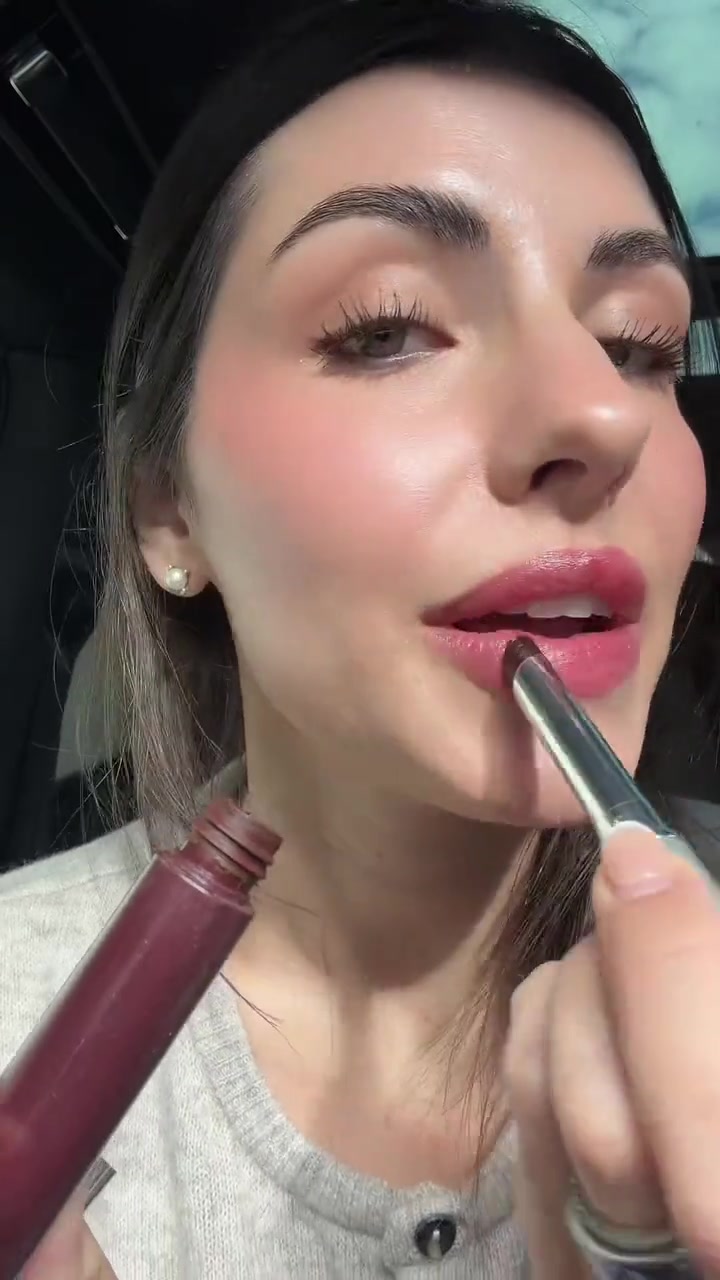
- The Ultra Close-up: The ad opens directly with a tight macro shot of a blue-eyed model applying eyeliner. This high-contrast, intimate framing instantly halts users as they swipe through their feeds.
- Embracing Imperfections (No-Filter Aesthetic): By keeping the natural texture of the skin visible and avoiding airbrushed beauty filters, the brand builds immediate trust. Authenticity is the ultimate currency in modern social commerce.
- The "Satisfying" Action: The precise physical motion of pulling the eyelid and applying eyeliner acts as a visual ASMR hook, triggering curiosity and retaining viewer attention.
2. Script Teardown: Targeting the "Sensitive & Watery Eyes" Niche
An effective ad copy does not just list specifications; it qualifies the audience. The voiceover script is a textbook example of pain-point marketing:
Immediate Problem Identification: Filters out generic audiences and speaks directly to a high-intent niche (those with sensitive, watery eyes).
Feature Backing: Instantly provides the solution to the stated problem—longevity and smudge resistance.
Overcoming Objections: Promotes the "gel" formula to reassure buyers that it won't tug or irritate delicate eye areas.
Call to Action & Trust: Reinforces the payoff (bold looks) and wraps up with an authoritative recommendation.
3. Visual Structure and Pacing Analysis
The visual rhythm of this TikTok ad creative follows a clear three-act structure:
- Proof of Concept (0:00 - 0:03): Extreme close-up of product application. This shows the eyeliner in action, proving it works smoothly without dragging.
- Unboxing & Brand Recall (0:03 - 0:05): A POV shot showing the red-and-gold packaging with the brand name "SNAILGIRL WATERPROOF EYELINER PENCIL" clearly legible.
- Value Add (0:05 - 0:08): The POV hand removes the eyeliner and shows an included sharpener. This signals completeness and added value to the buyer.
The visual style is clean, high-definition, and free of distracting text overlays, allowing the realistic textures to convey premium quality.
4. AI Video Prompt Deconstruction
If you want to recreate this aesthetic using AI video generators (such as Runway Gen-2, Luma Dream Machine, or Sora), here is a breakdown of how to structure your prompts.
Prompt Breakdown:
- POV & Camera Positioning:
First-person POV, mobile phone shooting style, ultra-macro close-up of a female eye - Subject Details & Texture:
A young Caucasian woman with clear blue eyes, natural skin texture with subtle pores visible, refined gold and bronze eyeshadow - Action & Movement:
One hand gently holding the brow bone to pull the eyelid, the other hand holding a dark brown eyeliner pen, carefully drawing along the lower waterline, natural blinking - Lighting & Atmosphere:
Warm side lighting, cinematic textures, realistic skin tone, no smoothing filters, high definition, tight pacing
AI Generation Tip: When prompting for beauty ads, avoid words like "flawless," "perfect skin," or "airbrushed". These terms often prompt AI models to output rubbery, plastic-looking skin. Instead, prompt for "visible pores," "natural skin texture," and "warm directional lighting" to generate convincing, UGC-style assets.
5. Creative Variations: How to Replicate for Other Products
The structural formula of this creative—Pain Point -> Live Product Proof -> POV Unboxing -> Added Value—can be adapted to many other e-commerce niches:
Variation A: Acne-Prone Sunscreen (Beauty & Skincare)
- Voiceover Hook: If every sunscreen breaks you out or leaves a white cast, you need to see this.
- Visuals: A macro shot of a lightweight cream blending seamlessly into skin with visible texture, followed by a POV shot of the bottle and its clean ingredient list.
Variation B: Precision Brow Wax (Beauty & Cosmetics)
- Voiceover Hook: If you're tired of your brow gel flaking by midday, here is the solution.
- Visuals: A close-up showing a spoolie lifting individual brow hairs into a laminated look, followed by a smudge test under running water.
6. FAQ (Frequently Asked Questions)
01Why choose a POV style over a face-cam influencer review?
First-person POV shots place the viewer in the shoes of the creator. It makes the unboxing and application feel personal, like something the viewer is experiencing at their own vanity. This lowers the consumer’s "ad guard" and builds faster trust at a lower production cost.
02What is the biggest challenge when using AI to generate beauty ads like this?
Hand-to-face interactions (like holding a pencil and drawing on an eye) are traditionally difficult for AI video models to render without distortion. To bypass this, generate **separate clean clips**: first, a close-up of the eye blinking, and second, a POV shot of hands holding the packaging. Cut them together in post-production.
03How do you achieve this premium look on a budget?
You don't need studio lighting. Set up your camera setup next to a large window for natural, soft side-lighting. Use the 2x or 3x optical zoom lens on a modern smartphone (to avoid wide-angle facial distortion) and secure it on a tripod to keep the macro shot stable.