
Lingerie & Swimwear
- Case Overview: Why This Shapewear Ad Works
- Creative Mechanism: From "The Struggle" to "Flawless Fit"
- Script & Visual Breakdown: Building Trust Through UGC
- AI Video Generation: How to Replicate This Fast-Paced Creative
- Core Prompt Elements for Outfit Transitions
- Creative Extensions: Adapting the Framework
- Frequently Asked Questions (FAQ)
Case Overview: Why This Shapewear Ad Works
You are looking at a highly representative TikTok UGC video. This short-video ad creative from the lingerie_swimwear industry perfectly hits the core pain points of female consumers—shaping effectiveness and seamless wear—by showing a young woman's entire process of trying on a high-stretch bodysuit.
The reason this case is worth referencing for your product ad scripts is that it breaks the traditional clothing ad mold of flawless models posing perfectly. Instead, it introduces a relatable, slightly difficult "try-on struggle," which paradoxically reinforces the product's core selling point: "high stretch and strong tummy control." Combined with a highly attractive "$5" price tag, it successfully creates a high-converting viral asset.
Creative Mechanism: From "The Struggle" to "Flawless Fit"
The core selling mechanism of this ad can be broken down into three progressive layers, accurately addressing user doubts about shapewear:
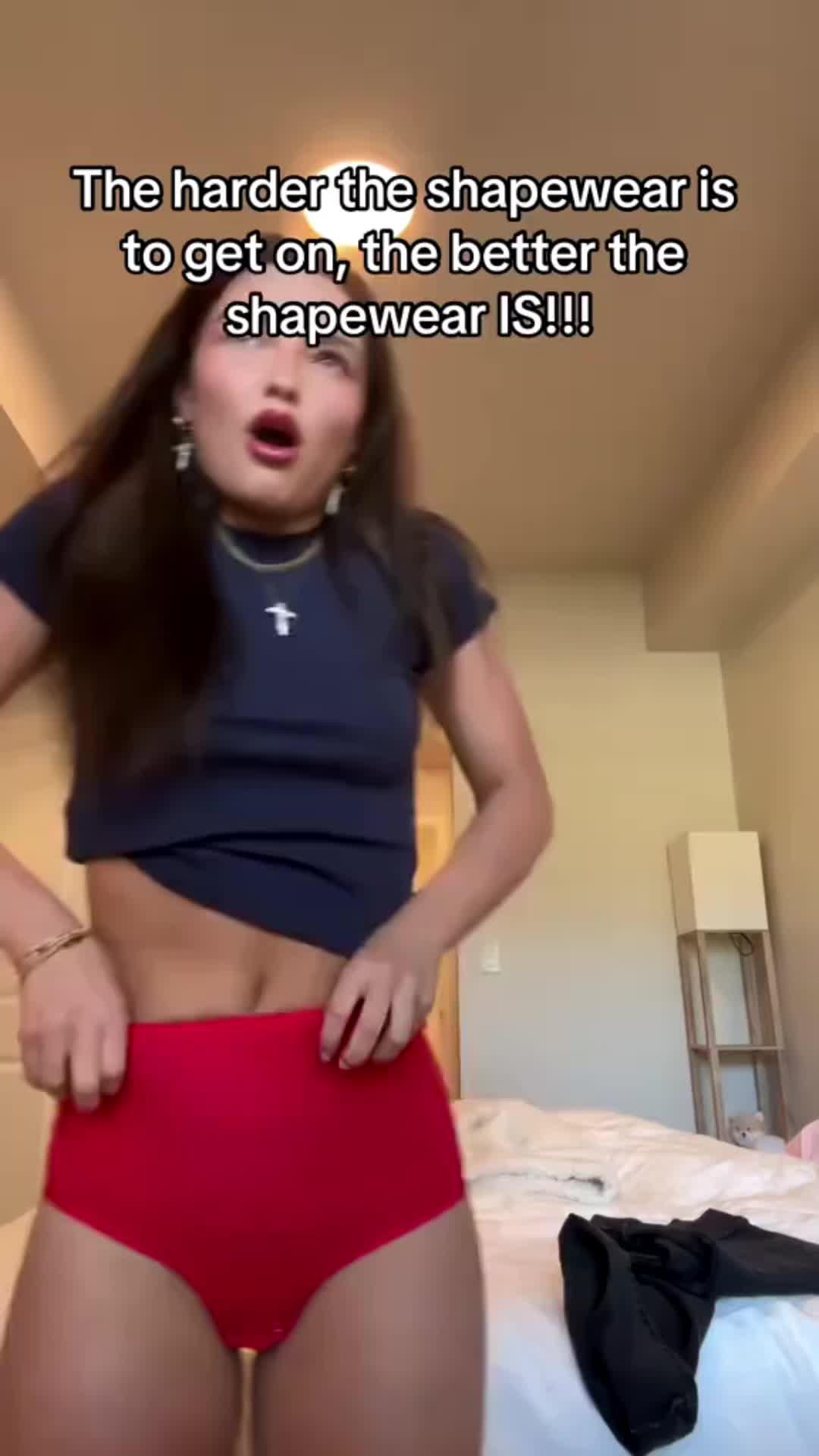
- Creating Authentic Conflict (Proving Stretch & Compression): The video doesn't start with a perfectly styled final look. Instead, it shows the girl struggling to pull the shapewear over her head ("shove this over my head"). This slightly comedic challenge visually proves the garment's tight compression to the user ("definitely sucks you in").
- Direct Benefit Delivery (Price & Value): While demonstrating the tight fit, a text overlay pops up: "$5 SALE ENDS SOON ⚡️". This uses an extremely low barrier to entry to stimulate impulse purchases.
- Ultimate Product Proof (Solving the Seamless Pain Point): The biggest concern with shapewear is whether lines will show under clothing. In the second half of the video, the model puts a tight floral mini dress over the shapewear, turns around, and slaps her butt to prove that the thong bottom design is completely invisible. This "product proof ad" logic is incredibly persuasive.
Script & Visual Breakdown: Building Trust Through UGC
From a marketing perspective, the success of this spoken script lies in its extreme "native" feel.
- The Hook: "Damn. I don't know how I'm gonna fit this on..." This single sentence immediately grabs attention, lowering the viewer's ad defenses. It feels like a best friend sharing her latest shopping haul.
- Visual Guidance: The video uses hard jump cuts to switch rapidly between three outfits (Sports bra -> Shapewear -> Floral dress). This fast-paced visual change aligns perfectly with short-video platform browsing habits, effectively increasing viewer retention.
- Scene Setting: The casual bedroom background, the spinning ceiling fan, and the gradient colors on the TV screen all work together to create an unpolished, real-life environment, making it easier for users to project themselves into the scenario.
AI Video Generation: How to Replicate This Fast-Paced Creative
If you want to use AI video generation tools to replicate this TikTok ad creative, the key lies in controlling character consistency and rapid outfit changes.
- Camera Language: You must maintain a static medium shot and an eye-level angle. Do not let the AI generate complex camera movements; the focus must be locked dead-on the subject's facial expressions and torso movements.
- Lighting Setup: Use soft indoor frontal lighting to avoid harsh shadows. You can utilize the purple/orange ambient backlight from the background TV screen to add color depth, ensuring it doesn't look like a sterile studio shoot.
- Action Continuity: When generating, break the video down into key action segments: touching the chest -> holding up the garment laughing -> smoothing the flat stomach -> turning around to show the back.
Core Prompt Elements for Outfit Transitions
When writing your AI video prompt, the following information is critical:
- Subject Definition: You must clearly define the character's appearance (young woman, tanned skin, long wavy dark brown hair) and the three distinct outfits (Outfit 1: Sports bra + blue shorts; Outfit 2: Beige shapewear; Outfit 3: Floral mini dress).
- Action Directives: The prompt needs to include specific interactive movements, such as "hands touching chest and waist to show the tight fit," and "slaps her butt to demonstrate the seamless thong look."
- Rhythm & Editing: Explicitly request a "Fast-paced social media short video style" and "Hard jump cuts." This dictates the native social media feel of the final render.
Creative Extensions: Adapting the Framework
This "Real Struggle + Effect Demonstration + Extreme Test" structure is highly adaptable to other categories:
- Beauty Ads: Start by showing the frustration of cakey makeup or severe blemishes (the authentic conflict), then apply the foundation, and finally show the flawless base under harsh lighting or a raw camera lens (the ultimate proof).
- Home Product Ads: For a heavy-duty cleaner, start by showing a stubborn stain that won't come off, even using exaggerated tools to scrape it (the comedic challenge). Then spray the product, wipe it away effortlessly, and show the spotless surface under bright light.
- Activewear Ads: Show the embarrassment of leggings slipping down during squats. Then switch to high-waisted compression leggings and perform an intense jumping test to prove their anti-slip and supportive qualities.
Frequently Asked Questions (FAQ)
01What product categories is this ad structure best suited for?
This structure is perfect for functional products where "seeing is believing." This includes shapewear, high-coverage makeup, cleaning supplies, or even certain car accessories (like scratch repair or interior cleaning). As long as your product solves a specific physical pain point, you can apply this logic.
02What is the most important part of the prompt when trying to replicate this?
The most crucial parts are the precise descriptions of the "Outfit transitions" and the "hand-to-product interactions." Don't just write "a girl wearing shapewear." Write clearly: "she is attempting to pull the shapewear over her head, with an exaggerated expression and smiling." The action details dictate the realism of the video.
03If I switch to another product, what should I keep and what should I replace?
You must keep the "initial authentic frustration/complaint" and the "final extreme scenario test" (like testing for seamlessness under a tight dress). You need to replace the specific product props and the testing method. For example, if selling waterproof mascara, the opening could be complaining about smudging, and the final test would be splashing water directly on the face.
04Why does this UGC-style spoken ad increase viewer retention?
Because it shatters the polished feel of traditional commercials. The slightly messy opening action and the friend-like conversational tone create the illusion that "this is a real review, not an ad," making viewers willing to stick around to see if she actually manages to put the garment on.
05How do I prevent the generated video from looking like generic stock footage instead of an ad?
The key lies in the text overlays and a clear Call to Action (CTA). The timely appearance of "$5 SALE ENDS SOON ⚡️" in the case study is what transforms a casual sharing video into a high-converting ad creative. After generating the video, make sure to add urgent promotional copy during the editing phase.