
Lingerie & Swimwear
- Case Overview: Why This Shapewear Ad Works
- Creative Mechanism: The "Thigh-Sized" Visual Hook
- Marketing Psychology: Why the "Struggle" Drives Conversions
- AI Video Generation: How to Replicate This UGC Style
- Prompt & Script Breakdown
- Creative Extensions for Apparel Ads
- Frequently Asked Questions (FAQ)
Case Overview: Why This Shapewear Ad Works
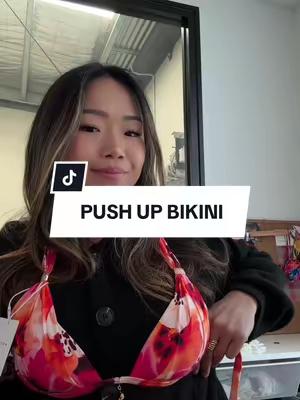
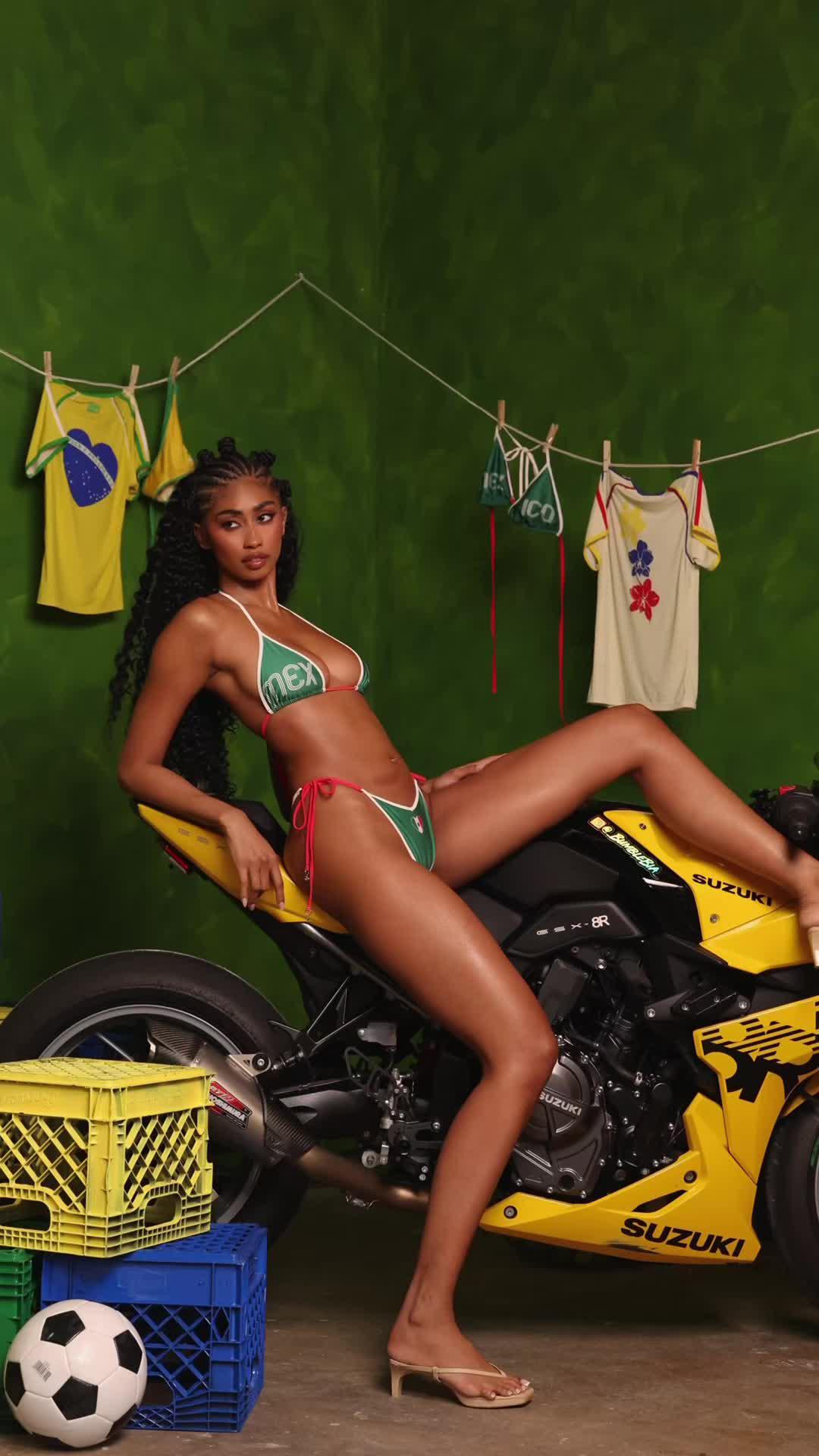
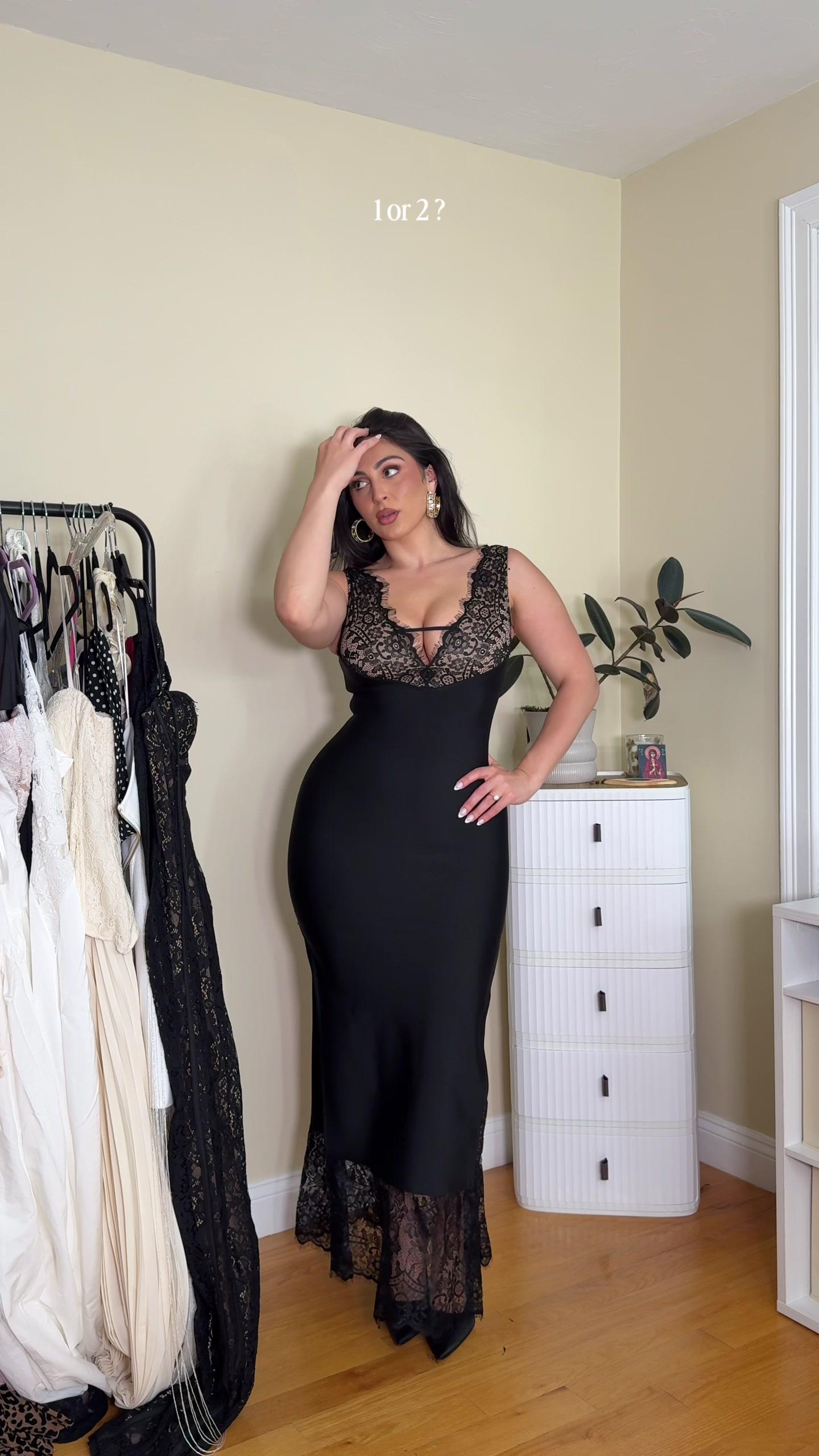
In the highly competitive lingerie and swimwear market, this shapewear ad stands out through its stark visual contrast and authentic try-on experience. Instead of relying on polished, high-end studio shots, it leverages a highly native UGC video format to directly showcase the extreme difference between the product's "tiny unworn size" and its "incredible shaping effect once worn." For cross-border e-commerce teams looking for high-converting TikTok ad creatives or short-form video creatives, this is a textbook advertising case study on turning a product's perceived difficulty into its strongest selling point while building trust through authenticity.
Creative Mechanism: The "Thigh-Sized" Visual Hook
The success of this ad lies in its brilliant visual structuring:
- The 7-Second Static Hook: The video opens (Person 1) outdoors in natural light, featuring a model in a dark brown tight bodysuit, unbuttoning her denim shorts to smoothly reveal the flawless, skin-tight fit. This establishes the "ideal state" of the product.
- The Dynamic Shift at 0:07: A hard cut transitions to an indoor setting (Person 2), where the model holds up a brand-new bodysuit that is literally the width of a thigh. This extreme size comparison immediately grabs the viewer's attention.
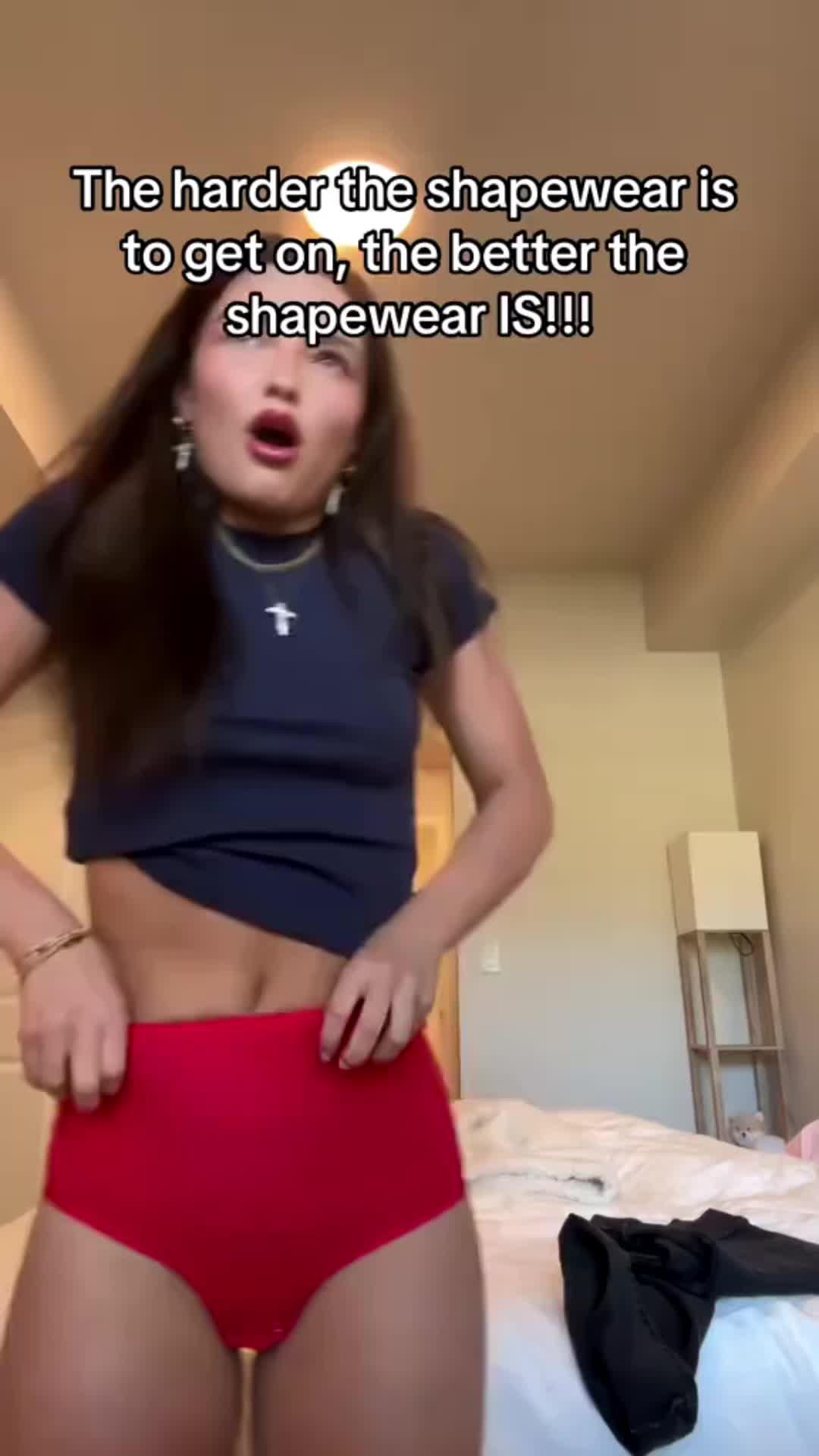
- Visualizing the Core Selling Point: The core selling points are "high elasticity" and "extreme shaping." Instead of using text or data to explain the stretch, the ad provides the most intuitive product proof through the model's physical effort—stretching it with her hands and struggling to put it on (Action & Movement).
Marketing Psychology: Why the "Struggle" Drives Conversions
From a marketing perspective, this video perfectly addresses the user's core doubt: "Will this shapewear actually hold me in?" If the video only showed the perfect body after putting it on, users might assume the model just naturally has a great figure. However, the video spends 40 seconds showing the model struggling to get her legs through and twisting her body ("with all your might"). This slightly comedic "struggle" not only increases the video completion rate but also sends a strong psychological signal: The harder it is to put on, the more hardcore the shaping effect will be. It perfectly resolves the trust crisis regarding product efficacy.
AI Video Generation: How to Replicate This UGC Style
If you want to use AI video generation tools to create similar clothing ads, you need precise control over the scene, action, and rhythm in your prompts. Here are the key dimensions for replicating this video:
- Subject & Action: The AI video prompts must clearly distinguish between the two phases. Phase 1 requires descriptions of "smooth movements" and "showing the tight fit." Phase 2 must emphasize "stretches with hands," "bends down to step both feet into it," and "body twisting." The continuity and physical effort of the actions are challenging for AI, requiring highly detailed action instructions.
- Scene & Environment: The prompt's description of the indoor background is highly slice-of-life (grey sofa, dartboard on the wall, spinning wooden ceiling fan, dog bed on the floor). This slightly cluttered but authentic background is crucial for building trust in UGC videos.
- Camera & Lighting: A medium shot (mid-thigh to top of head) is used throughout, maintaining a static camera with no panning or zooming. The lighting shifts from bright, even outdoor daylight to warm indoor ambient light, enhancing the everyday, at-home feel.
- Rhythm & Timing: The prompt clearly defines a slow pace for the first 7 seconds, followed by a faster pace with large, energetic movements from 7 to 47 seconds.
Prompt & Script Breakdown
When writing product ad scripts and prompts, the following elements are the most critical:
Script Structure Breakdown:
- The Hook: "It literally fits my thigh." Uses an exaggerated comparison to instantly retain viewers.
- Conflict & Authenticity: "I don't know how I'm supposed to put both of my legs through this... with all your might." The spoken script reinforces the physical difficulty of putting the garment on.
- Turning Point & Reassurance: "It took me like a minute to actually put on, and it's not that bad once you get it on." Alleviates the user's fear that the shapewear will be uncomfortably restrictive once worn.
- Proof / CTA: "Look at that. That's crazy." Paired with actions showing off the snatched waist, completing the conversion funnel.
Creative Extensions for Apparel Ads
Once you master this logic, you can easily extend this structure to product proof ads in other categories:
- Jeans / Booty-Lifting Pants Ads: Show a pair of tight jeans that look impossible to fit into. After a sequence of "jumping and wiggling" to get them on, reveal the astonishing lifting effect.
- Plus-Size Clothing Ads: Do the reverse. Show a seemingly tiny garment, then demonstrate its extreme stretchability to easily accommodate different body types.
- Beauty Ads (Concealer): The script could start with, "Even lasers can't get rid of this dark spot," followed by a demonstration of using a tiny amount of concealer to painstakingly but successfully cover it completely.
Frequently Asked Questions (FAQ)
011. What product categories is this ad structure best suited for?
It is highly suitable for products with "strong efficacy" that require visual contrast, such as shapewear, high-stretch activewear, heavy-duty concealers, or home product ads featuring magical storage solutions. The core requirement is a massive contrast between the "before" and "after" states of the product.
022. What are the most critical elements in the AI video prompt when replicating this?
The most important parts are the detailed descriptions of the "Action" and "Environment." Don't just write "model putting on clothes." Write "model forcefully stretching tiny fabric with both hands, bending over and struggling to step into it." Also, keep everyday items in the background (like the ceiling fan and dog bed) to prevent the generated video from looking like fake, polished studio footage.
033. Why does this UGC-style video easily increase watch time?
Because it breaks the "perfect filter" of traditional advertising. When users scroll through short videos, they have a natural defense mechanism against overly polished visuals. A spoken script featuring "struggle," "complaining," and a real-life background makes users feel like they are watching a genuine consumer review, making them willing to stay and see the final result.
044. If I adapt this for another product, what should I keep and what should I replace in the script?
You must keep the "extreme contrast hook" (e.g., "It literally fits my...") and the "authentic difficulty/experience during use." You need to replace the specific product pain points. For example, if selling a non-stick pan, keep a hook like "This pan looks like it can't even fry an egg," show incredibly sticky ingredients, and end with the proof of the food sliding right off.