
Public Service & Nonprofit
Campaign Intelligence Digest
How Patagonia dismantled fast-fashion paradigms in 54 seconds using heritage authority, tactile proof, and planetary purpose.
Formula
Anti-Brand Manifesto & Counter-Intuitive Value Reversal
Hook Shots
- A disarming, chuckling founder directly questioning his own fashionability in a stripped-back room.
- A jarring semantic reversal ('Fashion is none of our business') paired with high-impact outdoor action footage.
- Immediate cognitive dissonance that interrupts typical apparel advertising expectations.
Deconstructing Patagonia's 'Unfashionable' Manifesto
Patagonia's Unfashionable is a masterclass in counter-intuitive positioning. Across 54 seconds, the film completely rejects the standard tropes of apparel advertising—avoiding runways, glamorous models, and seasonal catalogs. Instead, it anchors its narrative in founder Yvon Chouinard's candid provocation, directly challenging the built-in obsolescence and emotional insecurity engineered by the fast-fashion economy.
By interweaving archival climbing roots, precision factory craftsmanship, and real-world planetary impact, the piece transforms quality into an ethical stance. It demonstrates how technical heritage and radical repairability can dissolve consumer price hesitation, establishing a defensible brand moat grounded in longevity rather than momentary trends.
The Strategic Mechanics of Purpose-Driven Storytelling
1. The Disarming Cognitive Opening
- Subverting Genre Codes: The ad immediately violates category norms by opening on an unpolished founder asking if he looks fashionable, instantly invalidating seasonal vanity.
- High-Stakes Origin: By connecting apparel construction to climbing equipment where gear failure meant fatal falls, it elevates functional quality to survival-grade engineering.
- Curiosity Architecture: Declaring that fashion is irrelevant forces the audience to reconcile why an apparel titan would dismiss the core driver of modern clothing sales.
2. Confronting Category Exploitation
- Exposing Manufactured Need: The narrative attacks the fast-fashion cycle directly, diagnosing micro-trends as mechanisms designed to foster insecurity and hyper-consumption.
- Radical Vulnerability: Admitting participation in 'one of the most toxic industries that there is' disarms skepticism, allowing Patagonia to position its manufacturing discipline as an active solution.
- Tactile Evidence: Close-up macro shots of industrial pattern cutting, stitching, and weatherproofing validate durability claims through physical process rather than abstract slogans.
3. Reframing the Economic & Moral Proposition
- Total Cost of Ownership: The creative explicitly reframes premium pricing, explaining that a durable product inherently lowers consumption by lasting decades.
- Ethical Consumer Alignment: Purchasing gear shifts from an act of consumerism into an act of planetary stewardship, turning product longevity into an ecological statement.
- Definitive Brand Stance: Concluding with the foundational mission—saving our home planet—leaves no room for ambiguous lifestyle claims, locking in long-term brand equity.
Scene-by-Scene Narrative & Emotional Flow
The Disruptive Hook
A candid studio interview opens with dry founder self-deprecation before sharply cutting to violent river rapids, shattering conventional fashion tropes.
Fashionable? Do I look fashionable? Fashion is none of our business.
The Heritage Proof
Archival rock and ice climbing visuals establish life-or-death engineering standards as the company's foundational manufacturing baseline.
Early on, we were building climbing equipment. If something broke, it would get you killed. Phenomenal.
The Industry Problem
Transitions from clean workshop drafting tables to industrial runoff and smokestacks, candidly admitting the sector's ecological damage.
Now making clothes is just as serious. Clothes have a huge impact on the planet. We're in one of the most toxic industries that there is.
Confronting Consumerism
Juxtaposes fast-fashion haul culture with textile-choked coastlines, exposing the cycle of disposable consumption.
Because we are in it, we can then clean it up. The industry's goal is to make people feel insecure and to buy things they don't need. Why do we buy so much stuff?
The Logical Inversion
Severe storm sailing and heavy ocean waves illustrate rugged durability, directly reframing high product longevity as environmental preservation.
So what does a quality rain jacket have to do with saving the planet? Building high-quality products means you buy fewer of them. Pretty philosophical, isn't it?
The Core Manifesto
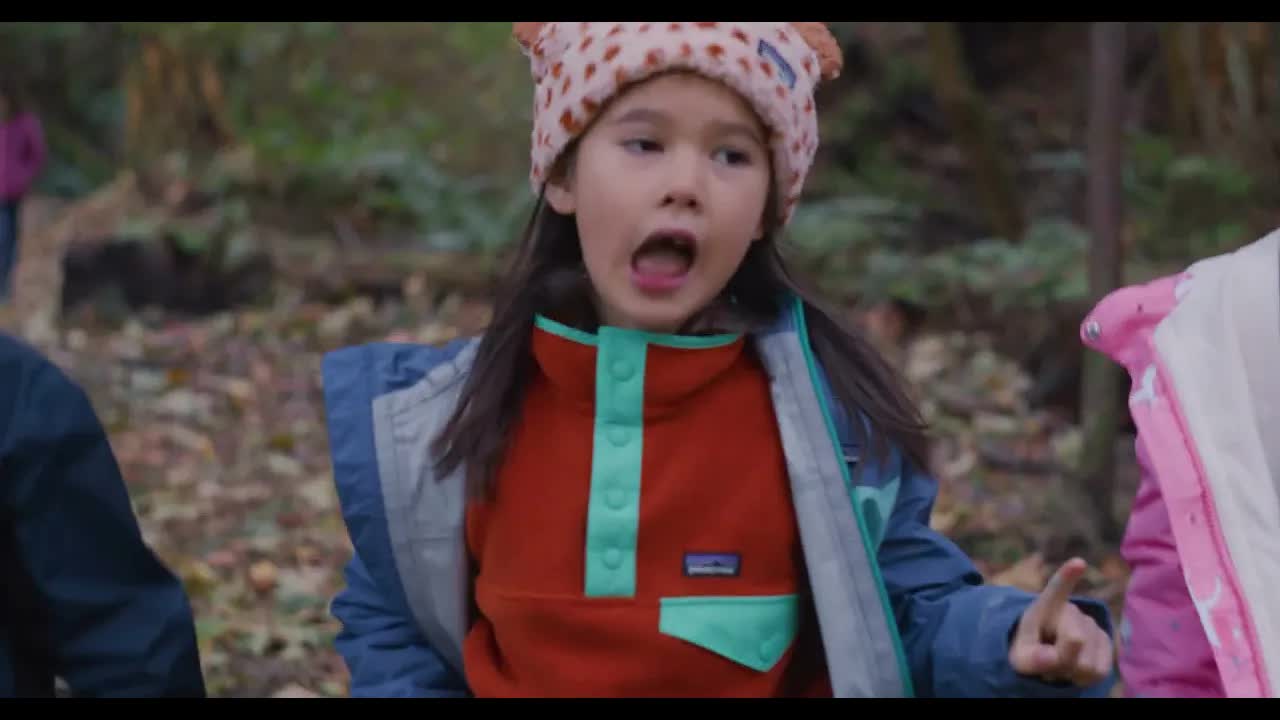
A rhythmic sequence of backcountry athletes and children outdoors resolves into a crisp, minimalist mission statement against pure black.
We care so much about the product that we create, and we care so much about the people we build it for. How do we not build it to last forever? We're in business to save our home planet. Fashion's got nothing to do with it.
AI Video Generation Blueprint
Subject & Wardrobe Realism
An elderly outdoor founder with weathered facial lines, silver-white hair, and a worn flannel plaid shirt, speaking candidly. Diverse athletes wearing technical waterproof shells, climbing harnesses, and high-visibility yellow storm gear, alongside workshop technicians handling technical canvas.
Dynamic Action & Craftsmanship
Natural interview head turns with subtle chuckles, high-speed paddle cuts through violent whitewater, and precision CNC fabric cutting. Mechanical sewing needles penetrating ripstop fabric, fast-fashion unboxing cuts, and athletes navigating stormy seas, backcountry snow, and rugged rock faces.
Cinematography & Framing
A fast-paced documentary edit moving between intimate medium interview angles, expansive drone shots of alpine cliffs, and tactile macro lenses showing stitches and pencil sketches. Employs handheld camera shake and archival film textures, ending on a centered white graphic logo over black.
Set Design & Atmospheric Lighting
A minimal, diffusely lit interview space contrasted with stark alpine daylight, overcast stormy oceans, and gritty industrial hazes with sludge-filled waters. The color grade balances vibrant safety apparel (amber yellow, safety orange) against subdued natural elements like rock, snow, and surf.
Creative Transferability & Vertical Adaptations
- Heritage Workwear & Leather Footwear: Open by stating boots shouldn't be tossed when the sole thins, juxtaposing traditional welt resoling techniques against cracked landfill synthetics.
- Modular Everyday Carry & Hardware: Begin with high-pressure water lab tests on zippers, framing extreme weather durability as insurance for creative livelihoods.
- Culinary Cookware & Cutlery: Reject non-stick disposability by highlighting heirloom iron forging, showing pans that outlive kitchens to position purchase cost as an enduring family investment.
- Short-Form Adaptation (TikTok / Reels): Compress the arc into 30 seconds by opening with an immediate physical torture test, rapid-firing manufacturing proofs, and ending with an unvarnished repair pledge.
FAQ
01What makes an anti-fashion narrative effective for outdoor apparel?
It shifts consumer focus away from seasonal obsolescence and redirects attention toward product longevity and utilitarian function. By openly rejecting trend cycles, the brand builds authority around durability, framing high price points as long-term investments rather than temporary consumption.
02How can brands use founder appearances without sounding promotional?
Use candid, unpolished framing and self-deprecating humor rather than polished corporate statements. When a founder directly addresses industry contradictions and shares personal technical roots, it reads as authentic documentary discourse rather than an executive sales pitch.
03Can AI video generation reproduce mixed documentary brand films?
Yes, by prompting for specific material textures like 35mm film grain, tactile macro garment details, and naturalistic lighting variations. AdsTurbo enables creators to segment scenes between studio interviews, high-octane field footage, and industrial manufacturing environments within a unified visual style.
04How does highlighting industry toxicity build brand credibility?
Acknowledging that your own business is part of a polluting sector creates disarming transparency. Taking responsibility before proposing self-corrective craftsmanship establishes moral leadership and validates the brand's planetary mission without sounding self-righteous.