

Author: adsturbo.ai|Published: August 28, 2026|Updated: August 28, 2026
An AI TikTok ad generator helps ecommerce teams turn product images, offers, scripts, and reference videos into short-form ad creatives for TikTok-style testing. The right workflow is not “make one perfect video.” It is generate structured variations, validate claims, and learn which hook, product proof, creator style, and CTA earns attention.
TikTok rewards ads that feel native: vertical framing, fast context, clear sound, readable captions, product motion, and a direct reason to act. TikTok’s own creative guidance recommends vertical 9:16 video, visible safe-zone design, sound, a strong hook, product selling points, and a CTA; it also suggests testing multiple creatives per ad group rather than relying on one asset (TikTok creative best practices).
For ecommerce sellers, that changes the buying criteria. A useful generator should support the full creative loop: product input, UGC-style scripting, presenter or product demo scenes, subtitles, localization, aspect-ratio exports, and fast variant production.
What Is an AI TikTok Ad Generator?
An AI TikTok ad generator is software that creates short-form video ad assets for TikTok using product inputs, scripts, images, AI actors, voice, captions, or reference ads. For ecommerce, its job is to produce testable creative variations, not just polished brand videos.
A basic TikTok ad maker may resize a video or add text. A stronger AI video ad workflow can help with script extraction, ad cloning, product video generation, lip sync, character replacement, translation, subtitles, and post-production cleanup.
AdsTurbo is built for ecommerce video advertising and provides tools such as Ad Clone, Product Video, Lip Sync, Character Swap, Video Translation, Video Subtitle, AI Upscaling, Background Replace, AI Eraser, product image generation, and API access. It also includes 300+ AI actors and 100+ product ad templates, which matters when a seller needs multiple creative angles for paid testing.
Why Ecommerce Teams Need More Than a One-Click TikTok Ad Maker
A one-click ad can save time, but performance marketing needs controlled variation. The commercial goal is to discover which creative variable changes watch time, click intent, and purchase behavior.
A practical ecommerce workflow separates five variables:
| Variable | What to Test | Why It Matters |
|---|---|---|
| Hook | Problem, curiosity, demo-first, discount, social proof | Determines whether users stop scrolling |
| Product proof | Before/after, unboxing, close-up, use case, comparison | Makes the value proposition believable |
| Presenter | AI actor, product-only, founder, customer-style narrator | Changes trust and audience fit |
| Offer | Bundle, coupon, free shipping, limited-time sale | Gives the viewer a reason to act now |
| CTA | “Shop now,” “Tap the product,” “Try it today,” “See colors” | Converts attention into the next step |
This is where an AI TikTok ad generator becomes commercially useful. If a team can generate 12 variants from one product photo and one winning reference structure, it can test a creative hypothesis instead of debating opinions in a meeting.
The 3×4 Creative Matrix: A Practical Framework for Faster Testing
The 3×4 creative matrix is a simple way to use AI generation without creating random videos. Build three hooks and combine each with four execution styles, producing 12 meaningfully different ads from one product brief.
Use this structure:
-
Three hooks
- Pain-point hook: “Tired of ___?”
- Demo hook: “Watch what happens when ___.”
- Offer hook: “This week only: ___.”
-
Four execution styles
- AI actor testimonial
- Product demo close-up
- UGC unboxing
- Problem-solution explainer
-
One fixed CTA
- Keep the CTA constant in the first round so hook and format differences are easier to interpret.
This matrix is the information gain most teams miss. Many generators promote “hundreds of videos,” but hundreds of uncontrolled variants are hard to learn from. Twelve structured variants are usually more useful than 100 random outputs because each video answers a specific testing question.
AdsTurbo’s Ad Clone workflow can help reconstruct the pacing, opening seconds, shot logic, and CTA structure of a reference ad while adapting it to a seller’s product. For ecommerce teams starting from an existing product page or product imagery, a related workflow is covered in this guide to turning a product page into ad creatives with URL to Video AI.
What Features Should You Look For Before Choosing a Generator?
The best AI TikTok ad generator for ecommerce should support input quality, creative control, localization, and production scale. A tool that only writes captions or creates a talking avatar may be useful, but it may not cover the whole ad production loop.
Look for these capabilities:
- Product-first input: Upload product images, product URLs, offer details, and selling points.
- UGC-style video generation: Create presenter-led, product demo, unboxing, and testimonial-style ads.
- Reference-based generation: Analyze a winning ad’s hook, rhythm, shot order, and CTA pattern.
- Caption control: Generate time-synced subtitles and export either embedded video or separate subtitle files.
- Localization: Translate video, voice, captions, and on-screen text for different regions.
- Post-production repair: Upscale low-resolution footage, remove unwanted overlays, replace backgrounds, and adjust characters.
- API and team workflow: Run asynchronous generation, poll task status, or receive webhook completion events.
AdsTurbo’s higher-tier plans support team workflows and custom workflow support (API access itself is available on every plan). Its API uses Bearer API Key authentication and asynchronous task execution, which is useful for sellers or agencies that generate creative batches programmatically.
How to Make TikTok Ads That Feel Native, Not Overproduced
TikTok-native ads look useful before they look expensive. The creative should open fast, show the product clearly, include sound, and avoid hiding key text under interface areas.
TikTok’s ad guidance emphasizes 9:16 vertical orientation, at least 720p resolution, UI safe-zone visibility, sound or music, and creator-style content. It also recommends prioritizing the hook early and using captions or text overlays for context (TikTok creative best practices).
A practical structure for ecommerce sellers is:
- 0–3 seconds: Show the problem, outcome, or most interesting product motion.
- 3–8 seconds: Demonstrate the product in use.
- 8–15 seconds: Add proof: feature, material detail, use case, review-style claim, or comparison.
- Final seconds: Use a clear CTA and repeat the offer visually.
If the asset uses a product image as the starting point, begin with a clean JPG or PNG on a plain background. AdsTurbo Product Video supports JPG or PNG product images up to 10MB and can generate product review, product introduction, and product demonstration videos. For image-led stores, this pairs well with product visuals such as main banners, lifestyle scenes, close-ups, material detail images, instruction graphics, and brand images through AI product video and ecommerce creative workflows.
How AdsTurbo Fits an Ecommerce TikTok Creative Workflow
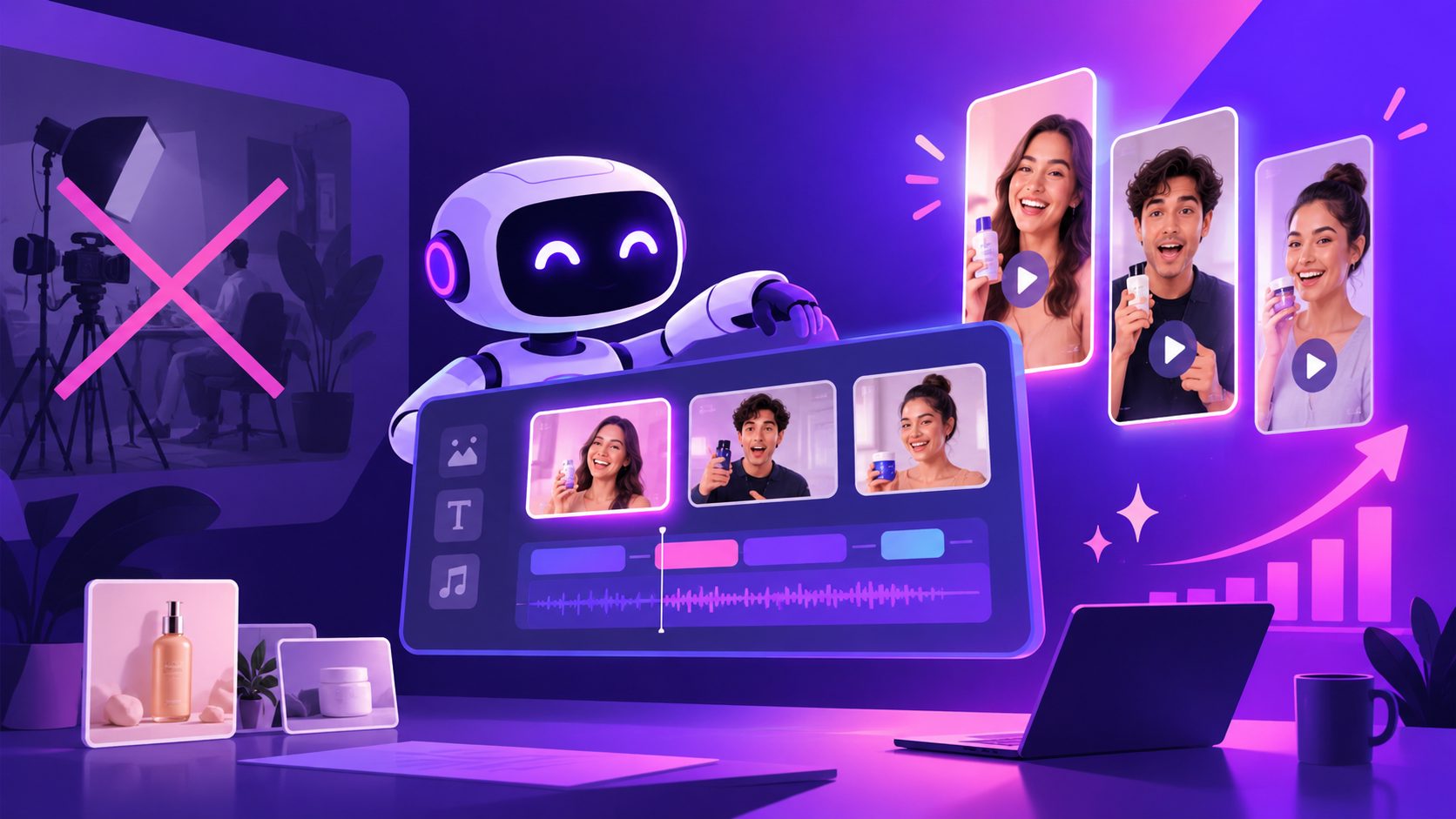
AdsTurbo is an AI video advertising platform for ecommerce sellers that supports product video creation, ad cloning, AI actors, localization, and post-production editing. Its value is strongest when a team wants to create many product-led short-form variations from limited source material.
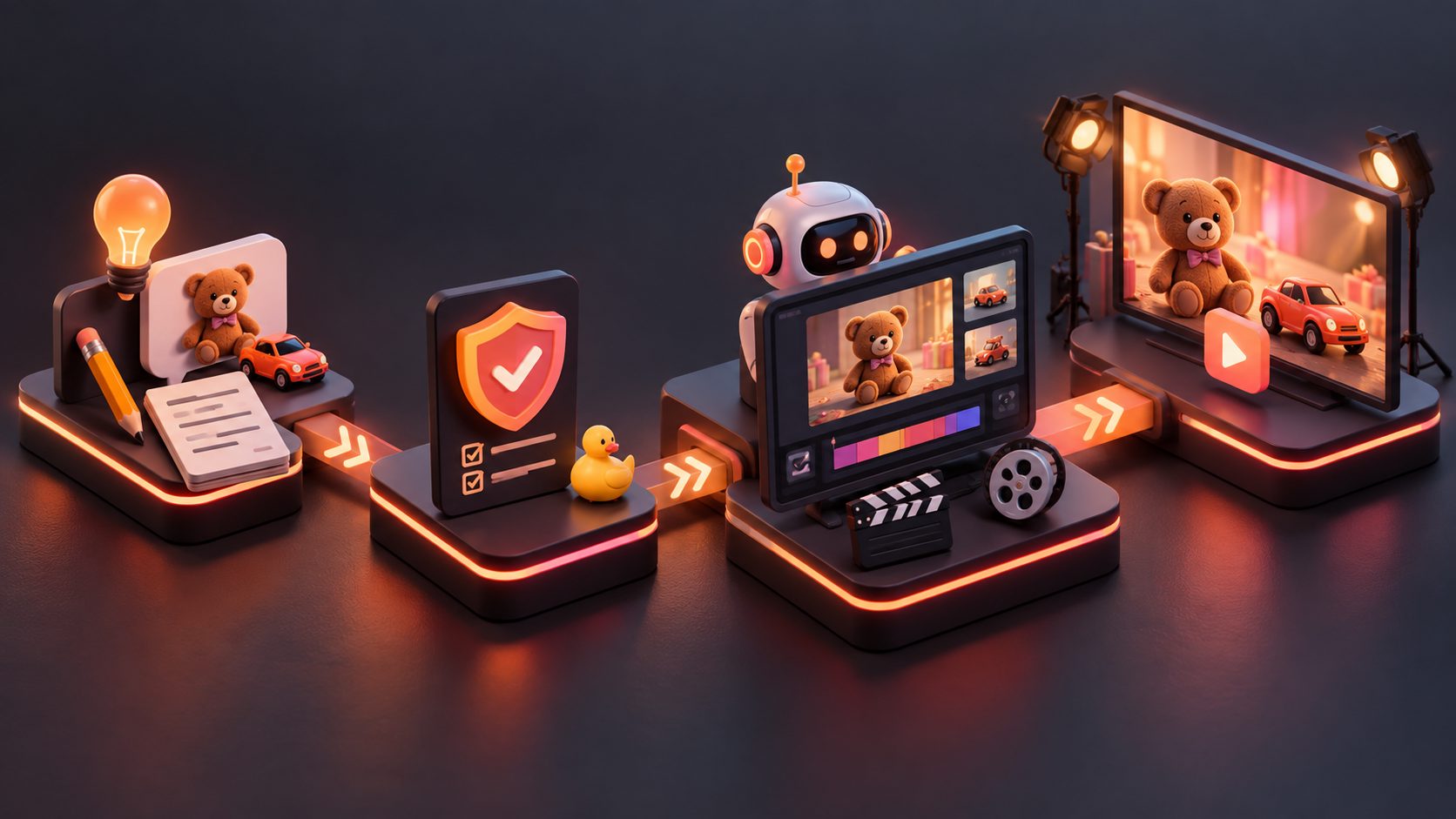
A typical workflow can look like this:
-
Start with product material
- Upload a product image in JPG or PNG.
- Add optional selling points, discount details, or campaign theme.
-
Generate product-led ad variants
- Use Product Video for review, introduction, or demonstration-style creative.
- Use Ad Clone to rebuild a proven structure from a reference video.
-
Adapt the human element
- Use AI actors, Lip Sync, Character Swap, Face Swap, or Motion Control to create audience-specific versions.
- Use Character Swap to test different personas while preserving motion, lighting, and scene realism.
-
Localize for markets
- Use Video Translation to generate translated voice, captions, and localized versions.
- AdsTurbo’s AI video translation supports more than 40 target languages.
-
Finish and export
- Use Video Subtitle for TikTok, Instagram Reels, and YouTube Shorts style captions.
- Use AI Upscaling to improve resolution.
- Use AI Eraser to remove watermarks, logos, subtitles, or text overlays where appropriate.
For static-to-video support, AdsTurbo also offers product image generation, background replacement, white-background processing, event poster creation, and background matching. Sellers that need stronger product photography foundations can use background replacement for ecommerce creative workflows before producing video ads.
Cost Control: Think in Output Seconds, Not Just Subscription Price
AI video cost control depends on how many seconds and variants you generate. Subscription price matters, but ecommerce teams should estimate cost per usable testing cell.
AdsTurbo uses credit-based billing. For example, ad cloning and UGC marketing video generation are charged at 10 credits per output second; video translation, upscaling, frame-by-frame analysis, and watermark removal are charged at 5 credits per output second; Lip Sync and Character Swap are charged at 20 credits per output second; Motion Control is charged at 12 credits per output second, with Motion Control Pro at 18 credits per output second. Image generation uses 5 credits per image, and a custom digital human uses 350 credits.
A simple planning model:
| Testing Plan | Output | Why It Works |
|---|---|---|
| Lean test | 6 videos × 12 seconds | Good for testing two hooks across three styles |
| Standard test | 12 videos × 15 seconds | Best fit for the 3×4 creative matrix |
| Localization test | 4 videos × 3 languages | Useful after one concept shows promise |
| Persona test | 1 script × 5 actors | Helps identify audience fit without rewriting everything |
The key is to avoid generating long videos before the hook is proven. For TikTok-style ecommerce ads, shorter structured variants often create faster learning than one expensive, overproduced 45-second asset.
What Inputs Produce Better AI TikTok Ads?
Better inputs produce better ads because AI generation depends on product clarity, claim accuracy, and visual context. Use clean product assets, concise benefits, and one primary offer.
For product-led generation, prepare:
- A clear JPG or PNG product image.
- A plain or clean background when possible.
- Three concrete selling points.
- One buyer problem.
- One proof element, such as material, size, use case, demonstration, or comparison.
- One active promotion, if applicable.
- A short list of restricted claims to avoid.
Do not ask the AI to invent compliance-sensitive benefits. If your product is in beauty, wellness, finance, supplements, medical, or regulated categories, every claim should be reviewed against platform policy and your own evidence. TikTok’s advertising policies also require ads to meet editorial quality standards, including legible video, clear audio, and acceptable video formats (TikTok ad format and functionality policy).
How to Judge Output Quality Before Spending on Media
A generated ad is not ready just because it looks finished. Score each output against five practical checks before launch.
Use this pre-flight checklist:
- Hook clarity: Can a viewer understand the premise with sound off?
- Product visibility: Is the product shown early and clearly?
- Motion: Does the video avoid feeling like a static slideshow?
- Caption readability: Are captions short, timed, and inside the safe viewing area?
- Claim safety: Are discounts, product benefits, and comparison claims accurate?
- CTA fit: Does the CTA match the landing page or TikTok Shop destination?
- Variant discipline: Does each video change one major variable, not everything at once?
TikTok’s in-feed auction ad specifications list vertical 9:16 as the recommended orientation and provide requirements for formats, dimensions, duration, file size, and safe-zone considerations (TikTok Auction In-Feed Ads specifications). Use those specs as a production guardrail before exporting.
When Should You Use Ad Cloning Instead of Starting From Scratch?
Use ad cloning when you already have a reference video with a strong opening, pacing, scene logic, or CTA structure. Start from scratch when you are still exploring product positioning.
Ad cloning is not the same as copying another brand’s protected creative. In a responsible ecommerce workflow, it means extracting a structure: first three seconds, scene rhythm, proof order, text density, and CTA pattern. AdsTurbo’s Ad Clone workflow supports uploading a reference video or pasting a link, then using AI to deconstruct shots and generate new brand-specific ad variants. Its Ad Clone API can analyze reference videos up to 12 seconds and generate ad variants in parallel.
This is especially useful for TikTok because early pacing matters. A seller can keep the “golden first seconds” pattern, rewrite the on-screen text, change the product, adapt the CTA, and export variants for TikTok, Meta, and Shorts in 9:16, 1:1, and 16:9 formats.
For teams that rely on product-focused videos rather than creator footage, the system described in ecommerce ads video creative planning can help organize scripts, angles, and testing batches.
Common Mistakes With AI-Generated TikTok Ads
The most common mistake is treating AI generation as a replacement for creative strategy. AI can multiply outputs, but it cannot tell you which product promise is legally safe, which audience matters most, or which margin profile can support paid acquisition.
Avoid these mistakes:
- Generating 50 variants with no testing hypothesis.
- Using polished corporate avatar videos that do not fit TikTok’s UGC environment.
- Hiding the product until the end.
- Letting captions cover the product or CTA.
- Translating words without localizing the offer, currency, or buyer concern.
- Testing multiple variables at once and learning nothing.
- Running generated claims without human review.
A better workflow is: analyze winning patterns, build a small variant matrix, generate controlled videos, review compliance, launch small tests, and scale only the concepts that show signal.
Frequently Asked Questions
Can AI-generated TikTok ads actually work for ecommerce?
Yes, AI-generated TikTok ads can work when they are built as structured creative tests. They are most useful for producing hook, presenter, product demo, and localization variants quickly. Performance still depends on offer quality, audience fit, landing page experience, and media buying.
What is the best format for TikTok ad videos?
For most in-feed TikTok ads, vertical 9:16 is the recommended format. TikTok also supports other formats in some placements, but ecommerce sellers should usually design for full-screen vertical viewing first and keep text inside safe zones.
Should I use an AI actor or product-only video?
Use an AI actor when trust, explanation, or testimonial-style delivery matters. Use product-only video when the product has strong visual proof, such as transformation, texture, assembly, fit, motion, or before-and-after use. Many teams should test both.
How many TikTok ad variants should I create first?
Start with 6 to 12 variants. That is enough to test different hooks and formats without losing control of the experiment. The 3×4 matrix—three hooks times four execution styles—is a practical first batch for ecommerce sellers.
Can AdsTurbo generate localized TikTok ad versions?
Yes. AdsTurbo supports video translation, AI lip sync, character replacement, subtitles, and localized creative production. Its AI video translation supports more than 40 target languages, and Video Subtitle can generate time-synced captions for TikTok-style short videos.
Final Takeaway
An AI TikTok ad generator is most valuable when it helps ecommerce teams learn faster. The winning approach is not one-click creativity; it is a repeatable production system that turns product inputs into controlled, TikTok-native ad tests.
Use AI to generate the first 70% faster: hooks, UGC scenes, product demos, captions, actor variations, translations, and edits. Then use human judgment for offer clarity, brand fit, compliance, and test interpretation. That combination gives ecommerce sellers a practical path from one product image or reference video to a scalable TikTok creative pipeline.