


作者:adsturbo.ai|发布日期:2026年9月15日|更新日期:2026年9月15日
Facebook ad video templates work best when they match both the placement and the buying stage. A strong template should make the product clear quickly, leave space for captions, and end with a specific reason to click. For ecommerce sellers, a practical starting point is a 15-second structure that combines a fast hook, product proof, and a direct call to action.
What makes a Facebook video ad template effective?
A Facebook video ad template is a reusable creative structure for arranging footage, product visuals, on-screen text, audio, proof, and a call to action. It is more useful than a decorative layout because it gives each second of the ad a job.
The strongest templates usually include four elements:
- A problem or curiosity hook
- A clear product demonstration
- A benefit, proof point, or objection handler
- A focused CTA
Template libraries often organize designs by visual style, such as sale, product showcase, testimonial, or announcement. That is helpful for getting started, but ecommerce sellers should also classify templates by decision stage:
- Cold traffic: Show the problem and introduce the product.
- Consideration: Demonstrate how the product works and explain its benefit.
- Retargeting: Use reviews, comparisons, guarantees, discounts, or urgency.
- Product launch: Combine a new-product reveal with a strong offer or visual identity.
This distinction prevents a common mistake: using a polished sale template for shoppers who do not yet understand why the product matters.
Which template should you use for Facebook Feed or Reels?
Choose a template according to the placement first, then adapt the creative style. Feed ads need a strong visual even when viewed in a scrolling environment, while Reels ads should feel native to a full-screen, vertical video experience.
| Placement | Recommended creative direction | Best ecommerce use |
|---|---|---|
| Facebook Feed | Product-led square or vertical layout with large readable text | Product education, offers, reviews |
| Facebook Reels | 9:16 vertical video with movement, audio, and safe-zone text | UGC-style hooks, demonstrations, creator-led ads |
| Stories and Reels | Fast cuts, one message per scene, prominent CTA | Flash sales, launches, limited-time promotions |
| Multi-placement campaign | Build a master concept, then create placement-specific versions | Testing one offer across Meta inventory |
Meta recommends building Reels creative with 9:16 video, audio, and key messages inside the safe zone. Its published analysis also reported lower cost per result for native Reels video compared with still-image creative in the tested campaigns. See the official Meta guidance for Facebook and Instagram Reels ads before final export.
Do not simply crop a Feed ad into a vertical format. A horizontal product demo may lose the product, while a centered design may leave too much unused space. A better workflow is to preserve the same offer and hook but adjust the framing, text position, and pacing for each placement.
How do you structure a 15-second ecommerce video ad?
A 15-second ad should communicate one main selling idea, not summarize an entire product page. The following timing framework is designed for fast creative testing.
The 15-second Hook–Proof–Action framework
-
0–2 seconds: Stop the scroll
Lead with a visual change, a customer problem, a surprising result, or a direct question. Example: “Still dealing with tangled cables?” -
2–6 seconds: Show the product
Put the product on screen immediately. Use a close-up, unboxing moment, before-and-after view, or demonstration. -
6–11 seconds: Prove the benefit
Show the product solving the problem. Add one review excerpt, comparison, feature, or use case. Avoid listing several unrelated benefits. -
11–15 seconds: Give a reason to act
End with the offer, discount, product name, URL direction, or CTA. The viewer should know exactly what to do next.
The key insight is that the hook and product reveal should overlap. Many templates spend the first five seconds on branding or abstract animation. For ecommerce, that delays the answer to the viewer’s first question: “What is this, and why should I care?”
For more examples of turning product attributes into scenes, see this ecommerce workflow for converting product features into video ads.
How can AI create multiple Facebook ad variations?
AI is most useful when it expands a proven creative idea into controlled variations. Start with one product, one audience problem, and one offer. Then change only one major variable at a time:
- Hook angle: problem, curiosity, review, comparison
- Presenter: different AI actor or persona
- Product framing: close-up, lifestyle, demonstration
- Voice and language: localized narration and captions
- CTA: shop now, claim the offer, see how it works
- Opening shot: product-first, creator-first, or result-first
AdsTurbo Product Video accepts a JPG or PNG product image, with a maximum upload size of 10 MB, and can generate UGC-style short videos such as product reviews, introductions, and demonstrations. The input image should be clear; product photos against a solid-color background generally produce the best starting material.
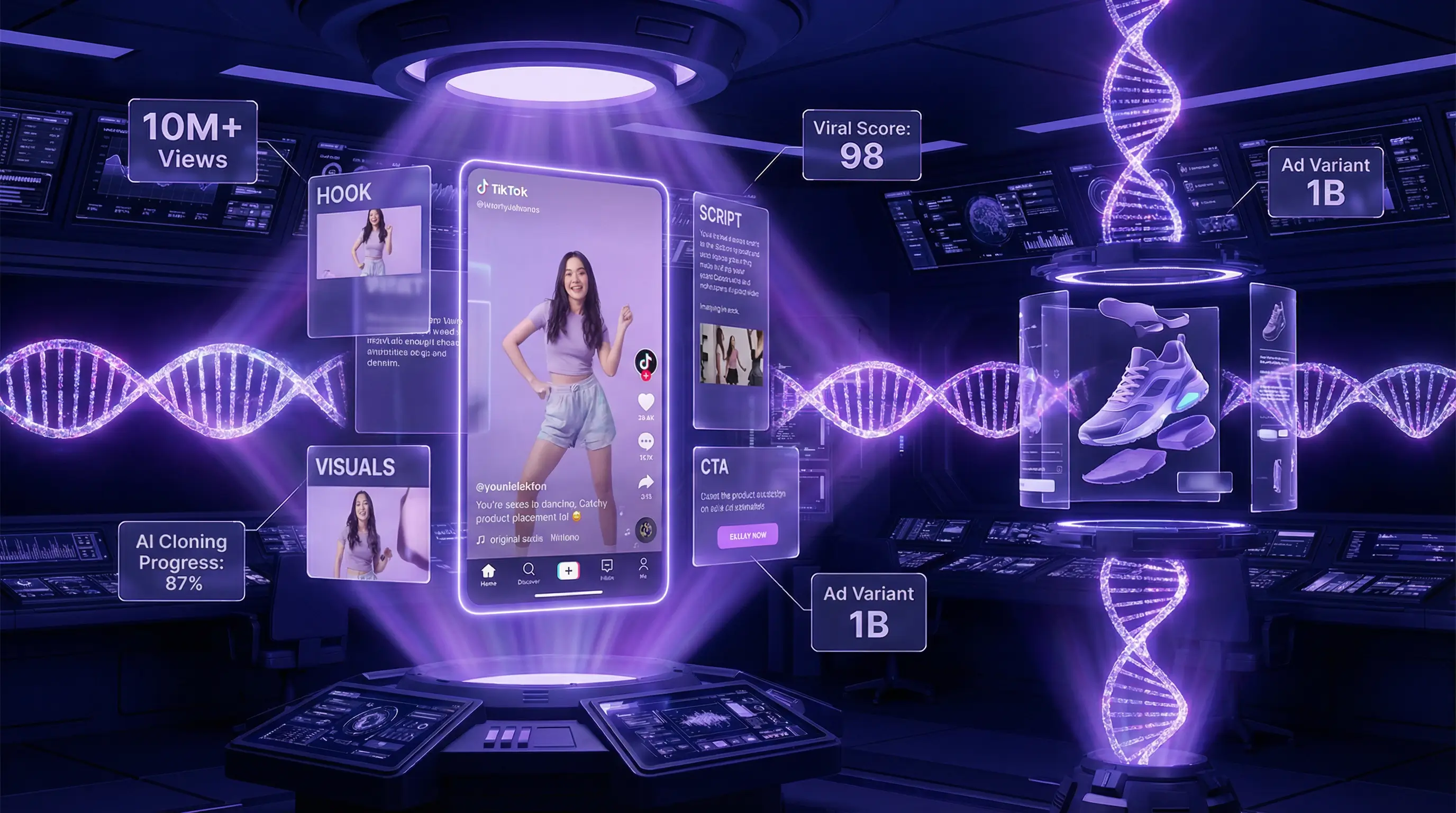
For an existing winning ad, AdsTurbo Ad Clone can analyze a reference video of up to 12 seconds and use its structure to generate advertising variations. The workflow is designed to retain the opening rhythm, shot logic, and CTA structure while adapting the creative for another product or brand. The AI video ad maker comparison for ecommerce sellers provides a broader framework for evaluating this type of workflow.
An original template scorecard for creative testing
Before launching a variation, score it from 1 to 5 on these five criteria:
| Criterion | Question |
|---|---|
| Hook clarity | Can a viewer understand the problem or promise in two seconds? |
| Product visibility | Is the product recognizable without reading the caption? |
| Benefit proof | Does the video demonstrate rather than merely claim the benefit? |
| Placement fit | Does the crop work in Feed, Reels, or both? |
| CTA strength | Is the next action visible and specific? |
A template that scores 4 or higher in every category is usually a stronger testing candidate than a more attractive template with a weak product reveal. This scorecard adds a practical filter that template galleries often omit: creative quality is not the same as conversion readiness.
How should captions and safe zones be handled?
Design every Facebook ad video as if some viewers will watch without relying on audio. Captions should be large enough for mobile viewing, synchronized to speech, and short enough to scan without pausing.
AdsTurbo Video Subtitle can automatically transcribe speech, create time-synced captions, translate them into multiple languages, and export either a video with embedded subtitles or a separate subtitle file. Caption layouts can be adapted for TikTok, Instagram Reels, and YouTube Shorts formats as well as Facebook placements.
Keep the following elements away from the edges:
- Product name and main benefit
- Discount or offer
- Speaker’s mouth and important product details
- CTA and promotional code
For a broader production process, use this guide to automatically add captions to ecommerce video ads.
How can sellers produce placement-ready creative at scale?
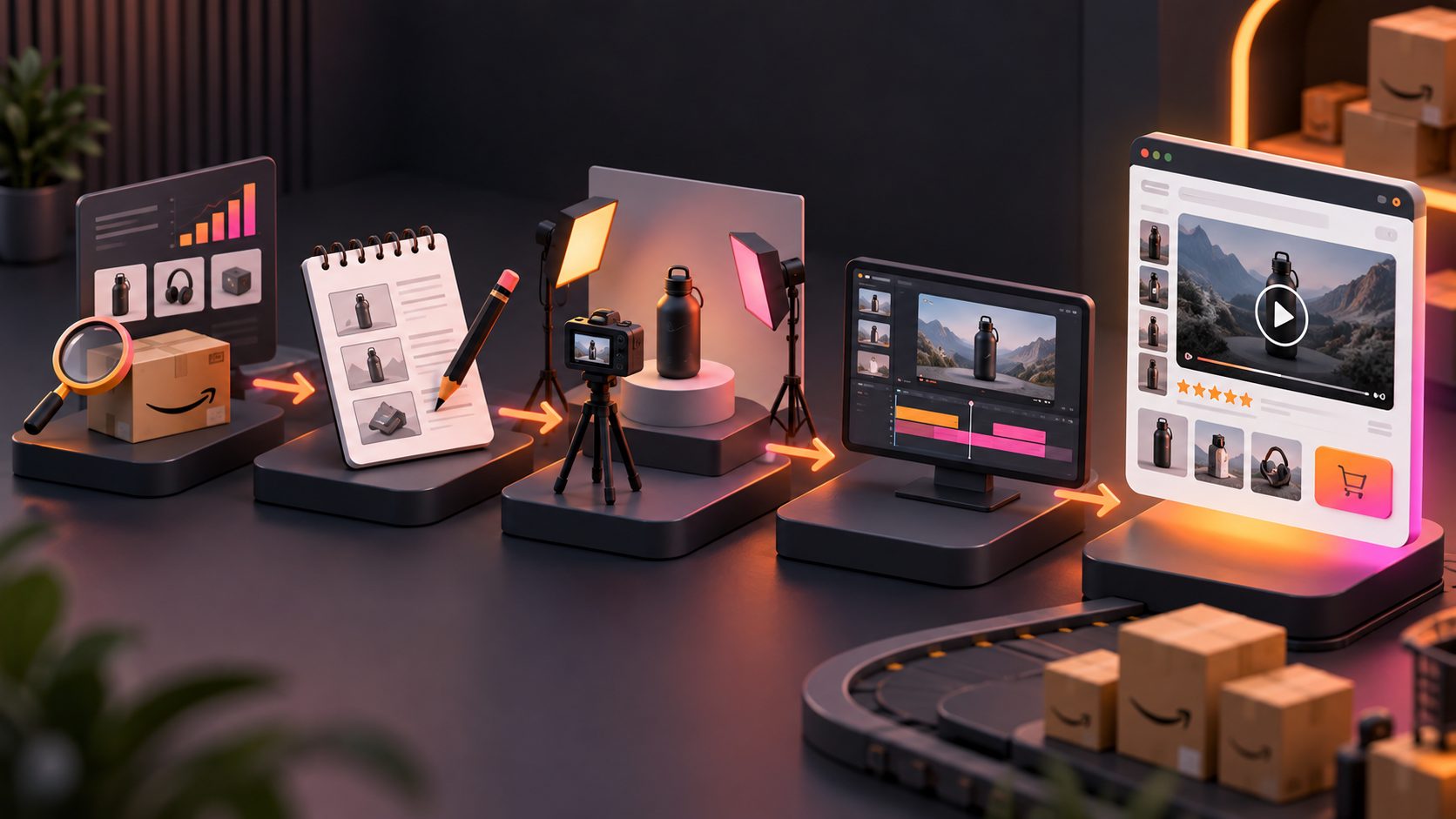
Create a master concept first, then make placement versions rather than forcing one file to fit every surface. A useful production sequence is:
- Choose one product and one customer problem.
- Select a template based on the campaign stage.
- Write a four-part 15-second script.
- Generate one product-first version and one creator-led version.
- Export vertical and Feed-friendly compositions.
- Add captions and check the safe zone.
- Test different hooks before changing the entire concept.
- Retire versions that lose attention or fail to communicate the offer.
AdsTurbo supports clip-by-clip editing, product image generation, background replacement, video translation, AI upscaling, face swap, lip sync, motion control, and watermark removal. Its API uses standard REST architecture with Bearer API Key authentication, while its video generation API includes eight processing endpoints such as shot analysis, lip sync, translation, upscaling, character replacement, motion control, subtitles, and watermark removal.
All AdsTurbo generation tasks run asynchronously. Teams can receive completion events through status polling or Webhooks, which is useful when a workflow needs to create and process many assets without keeping a browser session open. Higher-tier plans support team workflows, API access, and custom workflow support.
Frequently asked questions
Are Facebook ad video templates free?
Some template libraries offer free designs, while others require a subscription or paid export. The more important question is whether the template supports your placement, product category, captions, and CTA without extensive rebuilding.
What is the best length for a Facebook ecommerce video ad?
A 15-second version is a practical starting point for testing because it is long enough to show a product and short enough to maintain a focused message. Longer videos can work when the product requires a detailed demonstration or explanation.
Should I use the same video for Facebook Feed and Reels?
Use the same core concept if it performs well, but create placement-specific edits. Reels usually benefit from 9:16 framing, audio, safe-zone text, and faster visual pacing. Feed versions may need a different crop and larger central product framing.
How many variations should I test?
Start with several controlled variations rather than dozens of unrelated concepts. Test the opening hook first, then presenter, proof point, offer, and CTA. This makes performance differences easier to interpret.
Can product images become Facebook video ads?
Yes. A clear product image can serve as the starting asset for a product showcase, UGC-style introduction, review, or demonstration video. For best results, provide a sharp JPG or PNG image and define the product’s selling points and promotion.