

作者:adsturbo.ai|发布日期:2025-06-10|更新日期:2025-06-10
A Kickstarter video AI generator is a tool that turns product photos, a reference ad, or a short script into a finished campaign video using generative AI — cutting production cost from a typical $3,000–$10,000 agency shoot to a few dollars in compute credits. For D2C hardware founders in the pre-launch window, this is the fastest way to produce the pitch video, demo clips, and paid teaser ads that a campaign page needs.
What Is a Kickstarter Video AI Generator?
A Kickstarter video AI generator is a generative AI platform that produces crowdfunding pitch videos, product demos, and short promotional clips from inputs like JPG/PNG product photos, reference videos, and written selling points — with no camera crew required.
Kickstarter's own Creator Handbook notes that campaigns with a video raise significantly more on average, and most successful hardware pages use a 1–3 minute hero video plus short vertical cutdowns for social ads. Traditionally that means booking a studio weeks before launch. AI generation compresses that timeline to days.
The 3 Videos Every Hardware Campaign Actually Needs
Most Kickstarter guides say "make a video." In practice, winning campaigns ship three distinct assets:
- Hero pitch video (60–90s): problem → product → proof → reward CTA. This lives at the top of the campaign page.
- Feature demo clips (15–30s): one clip per headline feature, for the page body and updates.
- Pre-launch teaser ads (15s, 9:16): vertical ads driving email signups before launch day.
A common mistake is spending the entire budget on the hero video and improvising the rest. With AI generation, the marginal cost of variants 2 and 3 approaches zero, so the smarter play is batch-producing all three from the same product assets.
Step-by-Step Workflow: From Product Photos to Campaign Video
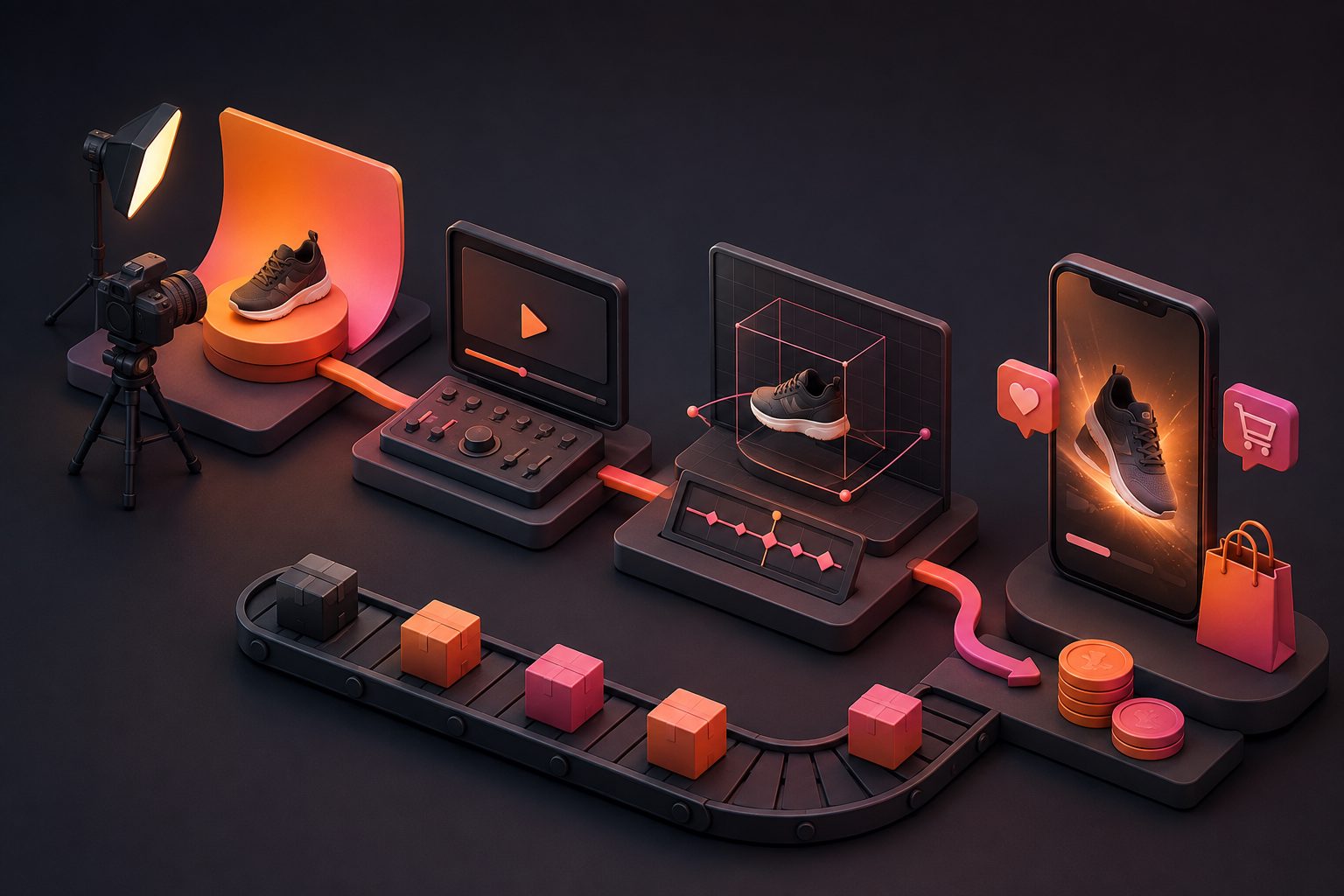
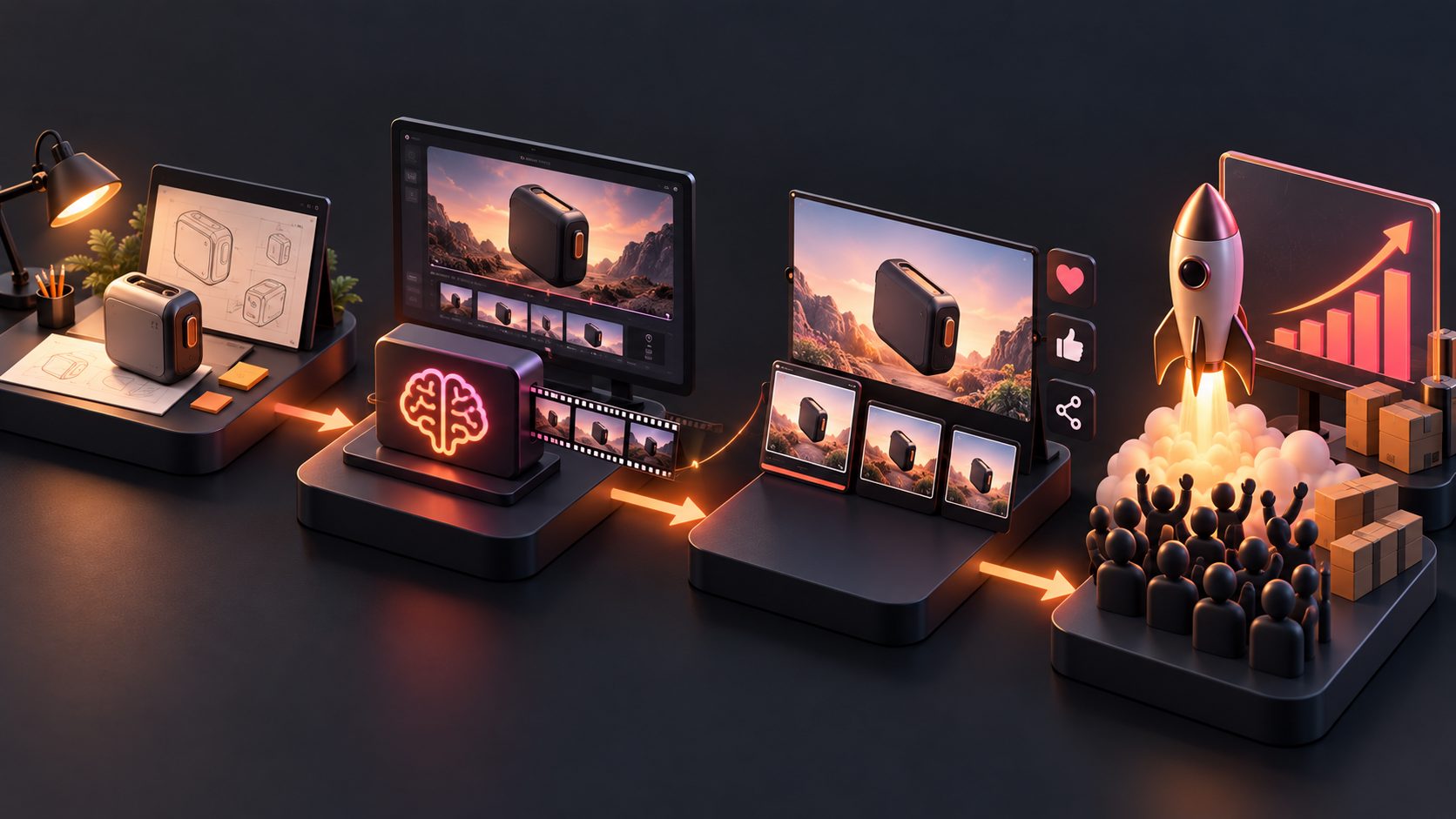
The workflow: upload clean product photos, pick an AI actor or template, generate a UGC-style demo, then clone and localize variants. Here is how it works in practice with AdsTurbo's AI video ad toolkit:
Step 1 — Prepare your product assets
Shoot or render clear photos of your hardware on a plain background. On AdsTurbo, Product Image and Product Video accept JPG or PNG uploads (up to 10MB for Product Video); clean shots on solid backgrounds give the best results. One photo is enough to generate six image types — banner, lifestyle, close-up, material detail, usage, and brand shots — in 9 aspect ratios.
Step 2 — Generate the demo video
Upload your product image, optionally add selling points and promo text, and generate a UGC-style short ad: a product review, intro, or demo format. AdsTurbo offers 300+ AI actors and 100+ ad templates, so you can match a presenter persona to your target backer demographic without hiring talent.
Step 3 — Deconstruct a winning reference (Ad Clone)
Find a top-performing crowdfunding ad in your category. Ad Clone analyzes reference videos up to 12 seconds, extracting the hook structure, pacing, shot logic, and CTA — then rebuilds it around your product and rewrites on-screen text. It exports in 9:16, 1:1, and 16:9 for TikTok, Meta, and YouTube Shorts simultaneously.
Step 4 — Localize for overseas backers
Roughly 30–40% of Kickstarter pledges come from outside the US. Use video translation (with lip sync) and multilingual subtitles to ship EN/DE/JP versions of your hero video from a single master. This is the same localization logic covered in our ecommerce video ad translation guide.
What Does It Actually Cost? A Credit-Based Breakdown
Agency crowdfunding videos typically run $3,000–$10,000. On a credit-based platform like AdsTurbo, video features bill per output second:
| Feature | Credit rate |
|---|---|
| Ad Clone / UGC product video | 10 credits/sec |
| Lip sync, character swap | 20 credits/sec |
| Motion control | 12 credits/sec |
| Video translation, upscaling, watermark removal | 5 credits/sec |
| Image generation | 5 credits/image |
A 30-second teaser ad costs about 300 credits; a full set of three variants plus localized subtitles stays within a starter plan's monthly allowance. That is one to two orders of magnitude cheaper than reshooting, and revisions are free to iterate — which matters when your campaign angle changes after the first week of backer feedback.
Original Testing Insight: The 3-Variant Pre-Launch Plan
From our work with ecommerce sellers, the single highest-leverage habit is testing hooks before launch day, not after. Our recommended pre-launch plan:
- Weeks 4–3 before launch: generate 3 teaser variants — one feature-led, one problem-led, one price/early-bird-led.
- Run them as $20/day paid tests on Meta and TikTok, measuring email signup cost per variant.
- Scale the winner's hook structure into the hero video's first 5 seconds. Ad Clone preserves the golden first seconds and CTA structure while swapping in your product.
Because variants cost ~300 credits each, this entire testing cycle costs less than one hour of a freelance editor's time. The same batch-testing logic applies post-launch, as described in our TikTok ad creative variations workflow.
Common Mistakes to Avoid
- Over-polished AI presenters: backers fund authenticity. Mix AI demo clips with 10–15 seconds of real founder footage if you have it.
- Ignoring aspect ratios: the hero video is 16:9, but teaser ads must be native 9:16 — resize at generation time, not in post.
- Skipping subtitles: most social ad views are sound-off. Auto-generate time-synced subtitles formatted for TikTok, Reels, and Shorts.
- One-and-done creative: plan for weekly refresh variants during the 30-day campaign to fight creative fatigue.
Frequently Asked Questions
Do Kickstarter campaigns really need a video?
Yes. Kickstarter's own data shows projects with videos succeed at notably higher rates, and the video slot sits at the top of every campaign page. Even a simple AI-generated demo outperforms a static image.
How long should a Kickstarter video be?
60–90 seconds for the hero pitch. Put the product and its core benefit in the first 5 seconds — that is also the segment you will reuse in paid teaser ads.
Can AI-generated videos comply with Kickstarter rules?
Yes. Kickstarter requires honest representation of the product. Use AI for presentation, presenters, and localization, but show the real prototype in demo footage and disclose prototype status accurately.
How much does it cost to make a Kickstarter video with AI?
On a credit-based platform, a 30-second UGC-style ad costs around 300 credits (10 credits/second), versus $3,000–$10,000 for a traditional agency shoot.
Can I localize my campaign video for non-English backers?
Yes. AI video translation with lip sync lets you ship multilingual versions of one master video — useful since a large share of pledges come from outside the US.
Conclusion
A Kickstarter video AI generator turns the most expensive line item in a crowdfunding launch into a fast, iterative process: generate the hero video, feature demos, and teaser ads from one set of product photos, test three hooks before launch, and localize for global backers — all for a few hundred credits. Try the workflow at adsturbo.ai and have your campaign assets ready before launch day.