By adsturbo.ai | Published 2026-10-14 | Updated 2026-10-14
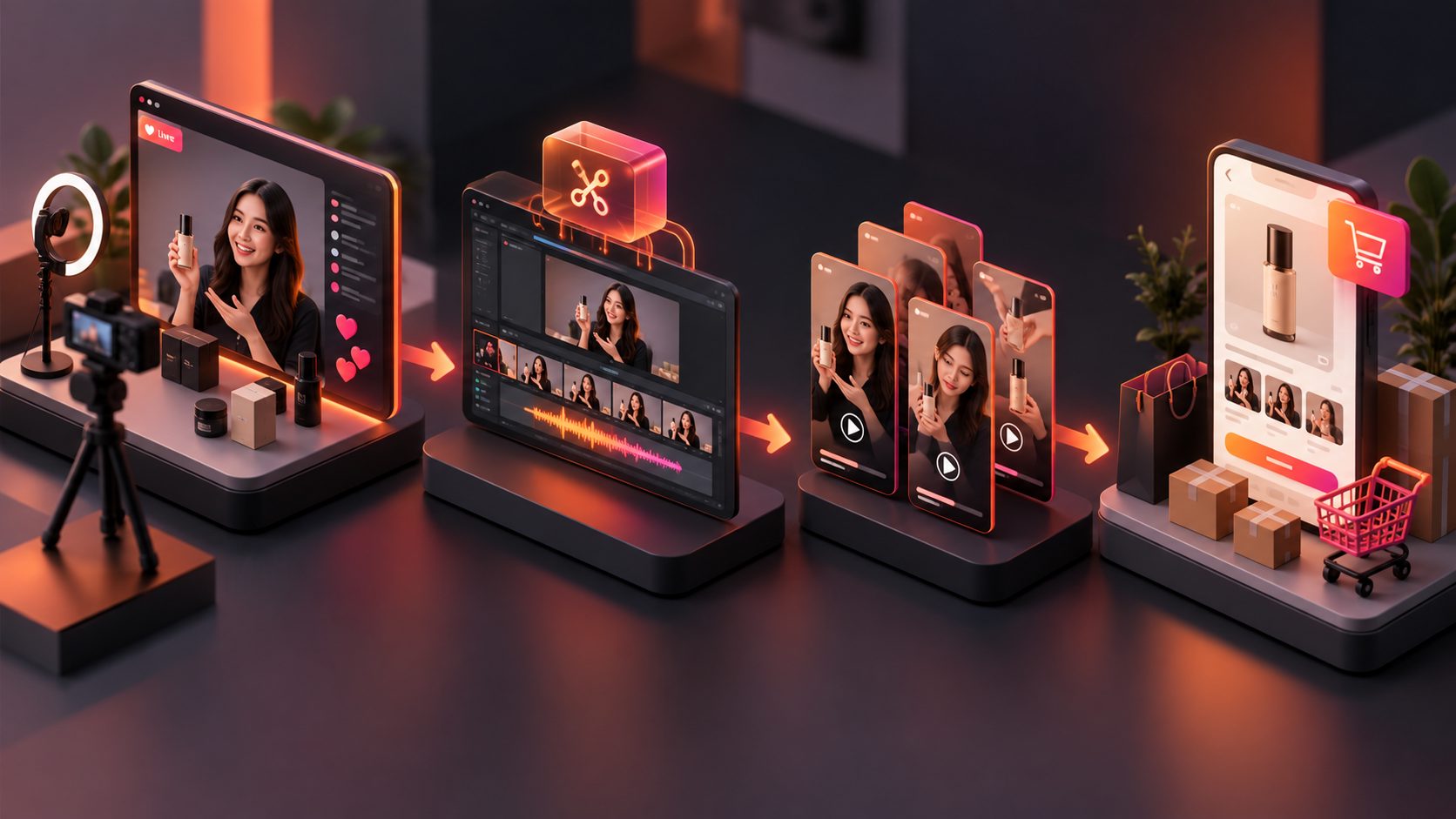
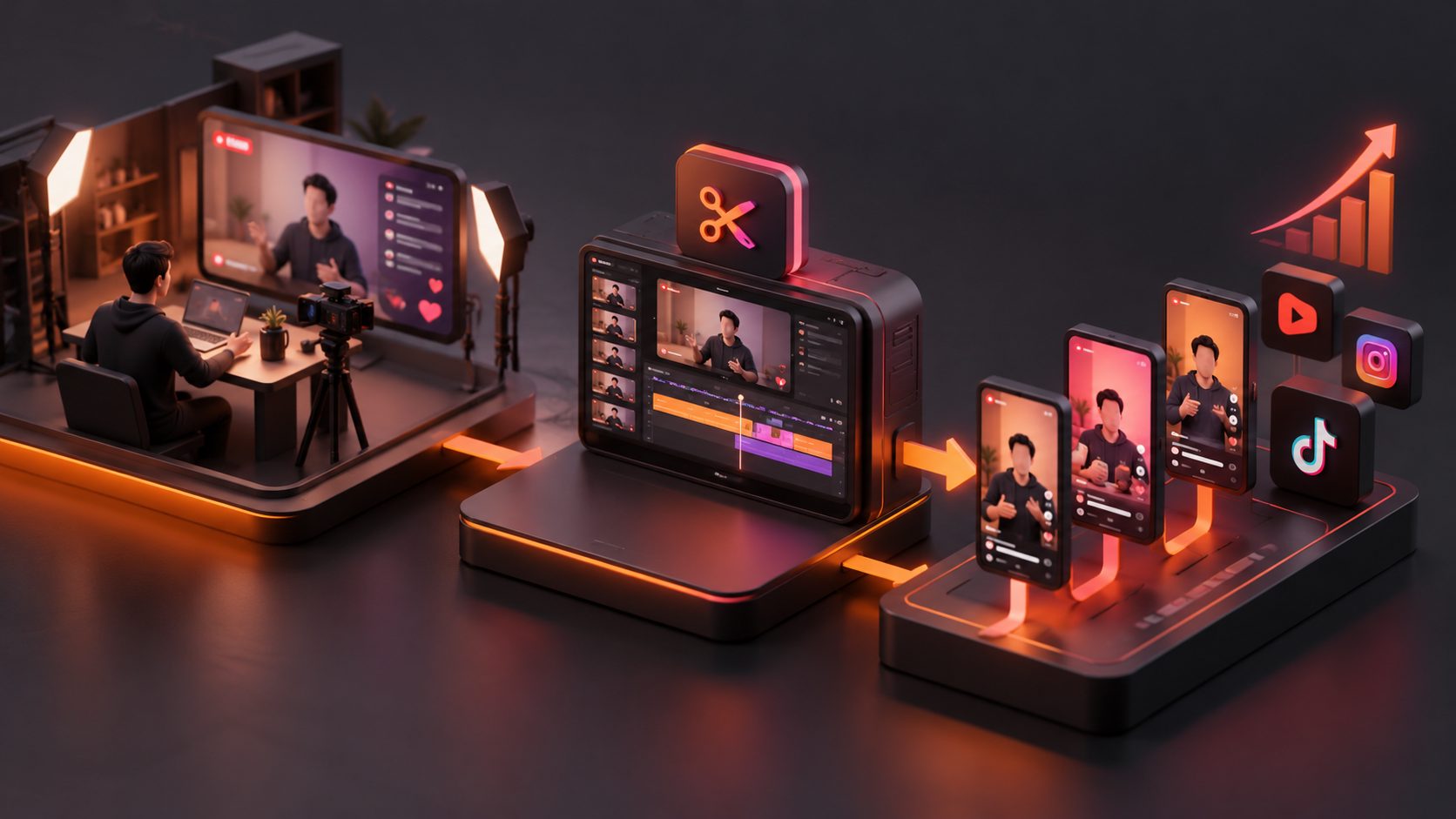
Turning live stream replay to short video ads means rebuilding a recorded product demonstration into a standalone buying argument—not simply trimming entertaining moments. Start with one shopper question, preserve the footage that answers it, and add an offer that remains valid when the ad runs.
TikTok Shop’s seller guidance recommends repurposing livestream moments into short video highlights. For paid creative, this guide adds a stricter framework: evidence selection, traceable scripts, and separate offer management. (seller-us.tiktok.com)
What separates a replay highlight from a usable ad?
A replay highlight preserves an interesting moment. A usable ad must make sense to someone who never watched the broadcast: it identifies the product, answers one buying question, shows relevant evidence, and directs the viewer toward a matching destination. Use that distinction as your editing brief.
Treat these as proposed editorial acceptance criteria:
| Check | Replay-dependent version | Standalone ad version |
|---|---|---|
| Context | “Here’s the one you asked about” | Product named or shown clearly |
| Evidence | Host says it works | Relevant action and result remain visible |
| Offer | “Tonight’s live special” | Verified offer with applicable conditions |
| Action | “Tap the pinned item” | CTA matching the actual destination |
TikTok’s advertising policy prohibits mismatches between an ad and its landing page, including product, price, and discount information. A lively clip is therefore not ready for publication merely because its pacing works. (ads.tiktok.com)
How should you select moments from a long livestream?
Use a three-gate selection framework: rights, evidence, and offer validity. Every candidate must pass the applicable gates before you polish its hook. This original framework prioritizes usable selling evidence rather than assigning a “viral” score to excitement or audience reactions.
- Rights gate: Document permission for footage, host likeness, audio, and intended paid-media use. Obtain clarification before editing uncertain assets.
- Evidence gate: Locate the question, action, and observable result. Reject footage that cannot support the proposed claim without missing context.
- Offer gate: Verify any promotion you intend to retain. If verification fails, remove the offer and consider an evergreen version.
Create a clip ledger containing the source filename, in/out timecodes, SKU, buyer question, proposed claim, and offer owner. Keep rejected candidates with a reason such as “result off-camera.”
For production organization after selection, use the batch-editing workflow for TikTok livestream clips. (adsturbo.ai)
How do you build a proof-first short video script?
Build the script around question → demonstration → bounded takeaway → verified offer → CTA. A 25-second timeline is a useful starting template, not a guaranteed optimum or universal placement requirement. Shorten introductions before shortening the product evidence that makes the claim understandable.
The following is a hypothetical storyboard for a pet-hair remover, not a measured campaign result:
| Timing | Picture | Audio or screen text |
|---|---|---|
| 0–3 seconds | Replay close-up of hair on fabric | “Does it pick up hair on this cushion?” |
| 3–12 seconds | Original demonstration sequence | “Watch the brush pass across this section.” |
| 12–18 seconds | Same cushion area and collected hair | “Here’s the result on the fabric shown.” |
| 18–22 seconds | Separate offer card | Verified offer and required conditions |
| 22–25 seconds | Product and destination cue | “View the product details.” |
Avoid upgrading “worked on this cushion” into “works on every fabric.” If the demonstration requires more time, extend it or narrow the claim.
How do you prevent expired livestream deals from entering ads?
Separate the enduring product demonstration from the temporary promotion. Keep an evergreen proof master without prices or urgency, then attach a replaceable offer card only after checking the destination and checkout. This makes future corrections manageable without rebuilding the demonstration.
TikTok Shop’s price guidance says expired offers should be updated, removed, unlinked, or no longer promoted where possible. It specifically cautions against time-sensitive language such as “today only” and “ends tonight.” (seller-us.tiktok.com)
For each offer version, record:
- Product variant and eligible quantity.
- Discount, coupon code, and minimum purchase.
- Customer or geographic eligibility.
- Start and end time, including time zone.
- Checkout verification and responsible owner.
Check spoken audio, captions, banners, and old livestream overlays—not just the final card. If the host announces an expired deal during essential footage, remove that audio and add accurate narration without attributing new words to the host.
No verified offer means no offer claim.
How should Amazon and TikTok versions differ?
Keep the product evidence consistent, but rebuild the packaging for each destination. An Amazon Live replay is source footage, not proof that the finished cut meets every Amazon advertising format. Likewise, distinguish a TikTok product-purchase ad from creative intended to send viewers into a live session.
Amazon maintains placement-specific advertising specifications. Check the chosen format before deciding on dimensions, duration, text placement, and export settings rather than assuming one vertical master fits everything. (advertising.amazon.com)
Recommended versioning decisions:
- Product destination: Name the correct SKU or variant and direct viewers to its details.
- Live destination: Use a live-specific CTA only when the campaign destination supports it.
- Localized version: Recheck currency, offer eligibility, captions, and translated qualifiers.
- Reframed version: Keep the hands, product contact point, and demonstrated result visible.
For translated assets, use the multilingual subtitle synchronization checklist to organize timing and language checks. (adsturbo.ai)
Where does AdsTurbo fit, and how should variants be evaluated?
Use AdsTurbo for production assistance while keeping claim and offer approval in your review workflow. AdsTurbo supports automatic long-video clipping into captioned short videos, Clip by Clip editing, video translation, and time-synchronized subtitle generation. Its Video Subtitle tool supports embedded-caption downloads or separate subtitle-file exports.
Keep authentic demonstration footage as your evidence master. Do not use generated imagery or altered performance scenes as proof of a real product result. TikTok requires disclosure for significantly AI-modified advertising content, including edits that make a person say something they did not actually say. (ads.tiktok.com)
For an initial comparison, prepare three editorial variants: question-first, demonstration-first, and objection-first. Keep the proof sequence and offer unchanged so the hook is the main difference.
Record spend, clicks, purchases, destination, and attribution settings. Compare cost per purchase alongside click-through rate; do not declare a conversion winner from viewing activity alone.
Create your next video ad with adsturbo.ai.
Frequently asked questions
How long should a livestream replay ad be?
Use the shortest version that preserves a clear question, credible demonstration, and understandable CTA. Start with the 25-second template above, then adjust for the evidence and placement requirements.
Can old Amazon Live footage become a TikTok ad?
Treat it as a candidate source, not automatically approved creative. Complete the rights, evidence, and offer gates, then adapt the CTA and export for the intended destination.
Should audience comments appear in the clip?
Use relevant questions to frame the demonstration. Avoid treating anonymous praise, audience counts, or chat excitement as proof that the product performs as claimed.
What if the strongest demonstration includes an expired discount?
Keep the usable demonstration, remove the outdated promotion from audio and visuals, and publish either an evergreen version or a separately verified offer version.