

By adsturbo.ai | Published 2026-10-10 | Updated 2026-10-10
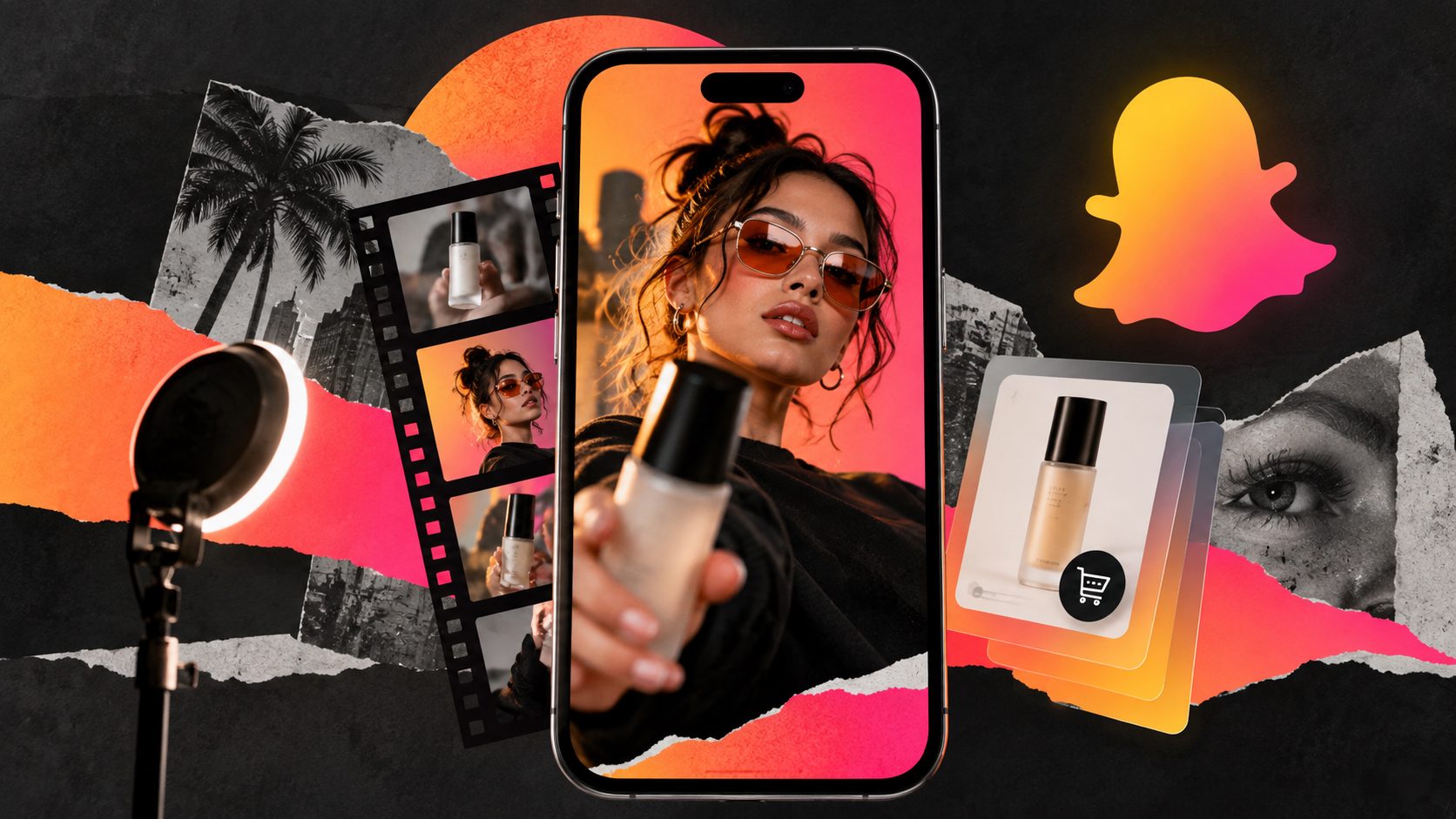
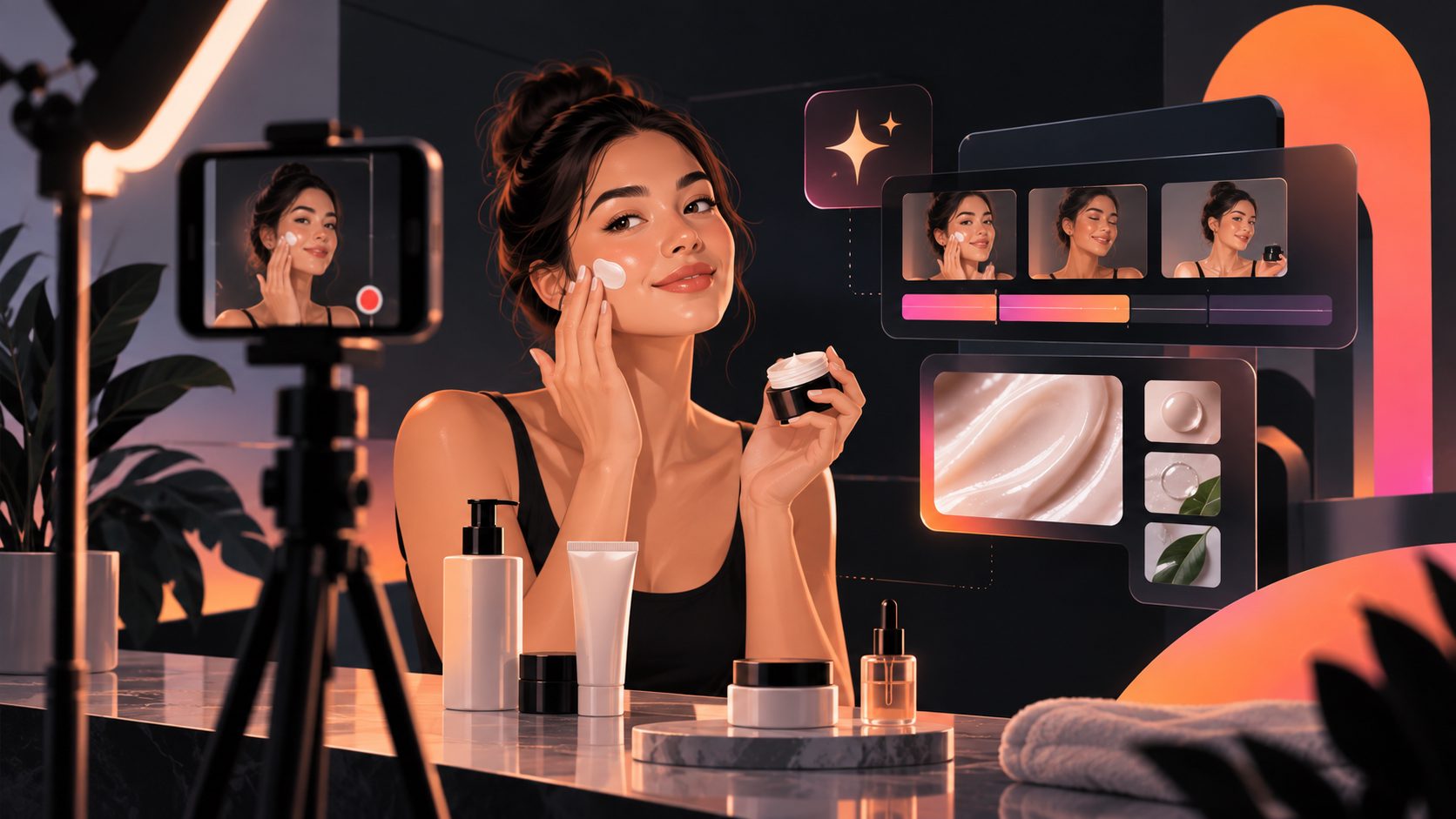
Skincare UGC video ads AI workflows work best when they do not try to make every frame look artificial or perfectly polished. The stronger approach is to combine AI-generated hooks, creator-style delivery, and real product texture footage into one short ad that answers the shopper’s first question: “What will this product actually look and feel like?”
For DTC skincare brands, the goal is not simply to produce more videos. It is to create structured creative variations that test different problems, textures, routines, and objections without losing product accuracy.
What are skincare UGC video ads made with AI?
Skincare UGC video ads made with AI are short, creator-style advertisements that use AI for scripting, actors, voice, editing, localization, or variation generation while keeping the product and offer central to the story.
The most reliable format is a hybrid:
- AI-generated or AI-assisted opening hook
- Close-up proof of the product texture or application
- Plain-language explanation of the product benefit
- Clear offer or next step
Current skincare ad examples commonly emphasize routines, product-in-hand shots, texture demonstrations, ingredient explanations, and talking-head delivery. However, many workflows stop at “generate a realistic creator.” The missing piece is usually proof sequencing: deciding exactly when the viewer sees the bottle, swatch, application, and result-oriented message.
That sequencing is the central operating principle of this SOP.
Why texture should come before polished claims
Skincare is a sensory category. A shopper cannot smell a serum through the screen, but they can judge whether it looks watery, creamy, gel-like, glossy, sticky, or fast-absorbing.
A texture-first ad should show the product within the first few seconds, preferably through a macro shot or a natural application moment. A creator saying “this feels lightweight” is weaker than showing one pump spreading across the fingertips while the caption explains the sensation.
The texture-proof matrix
Use this original four-part matrix to build creative angles:
| Proof layer | What the viewer needs to see | Example angle |
|---|---|---|
| Identity | The correct bottle, jar, or tube | “This is the serum I added to my morning routine.” |
| Texture | The product’s physical appearance | “It looks rich, but spreads like a gel.” |
| Use | How the product fits into a routine | “I use two drops before moisturizer.” |
| Objection | The concern that could stop purchase | “No heavy finish under makeup.” |
A strong 15-second ad does not need all four layers equally. For cold traffic, prioritize identity + texture + one objection. For retargeting, prioritize use + offer + a specific product reminder.
This is more useful than producing ten visually different videos with the same generic “glowing skin” message.
How to structure a 15-second skincare UGC ad
The following structure is designed for TikTok, Instagram Reels, YouTube Shorts, and paid social placements.
0–2 seconds: Lead with a specific tension
The opening should describe a recognizable problem, not make a broad beauty promise.
Examples:
- “Most gel moisturizers leave my skin tight five minutes later.”
- “I wanted a vitamin C serum that did not feel oily.”
- “This is the texture I look for under makeup.”
- “If your cleanser leaves your face squeaky, watch this.”
Avoid opening with the brand name unless the brand already has strong recognition. The first frame should create curiosity through a problem, contrast, or visual action.
2–6 seconds: Show the product and texture
Cut from the creator’s face or hand to a real product image, swatch, drop, foam, or application close-up. This section should visually confirm that the ad is about a real item rather than a generic skincare concept.
If the source image is clean and sharply photographed, AdsTurbo Product Image can help generate product-focused visual variations. JPG or PNG product images work best, especially when the product is photographed clearly against a solid background.
6–11 seconds: Explain the routine fit
The creator should answer one practical question:
- When do I use it?
- What step does it replace?
- What skin-feel does it leave?
- What type of routine is it designed for?
- What makes it different from the product I already use?
Keep the explanation narrow. One ad should not attempt to communicate every ingredient, benefit, certification, and discount.
11–15 seconds: Close with one action
Use one direct CTA:
- “See the full ingredient list.”
- “Try it in your evening routine.”
- “Shop the starter set.”
- “Tap to compare the textures.”
A CTA that matches the proof is more credible than a generic “Buy now.”
How to create hook variations without losing product accuracy
The most efficient testing system changes one variable at a time. Start with one product and create four hook families:
- Problem hook: focuses on dryness, heaviness, pilling, or sensitivity concerns.
- Texture hook: focuses on gel, cream, balm, foam, finish, or absorption.
- Routine hook: places the product in a morning, night, travel, or makeup-prep routine.
- Comparison hook: contrasts the product with a familiar texture or routine frustration.
For each family, create three versions:
- A direct statement
- A question
- A visual-first opening with minimal narration
This produces a 12-variant test set without changing the product, offer, or landing page. The point is not to declare a winner from one impression. The point is to identify whether performance is being driven by the problem, the texture, the creator style, or the edit rhythm.
AdsTurbo supports product video generation from a JPG or PNG product image and optional selling points or promotion information. Its broader workflow also includes ad cloning, motion control, lip sync, character replacement, video translation, AI upscaling, background replacement, and subtitle generation. That makes it practical to preserve a winning structure while testing new voices, characters, languages, or visual treatments.
For teams already working from a proven reference ad, AdsTurbo’s skincare UGC video ads workflow provides a useful starting point for turning the texture-first concept into repeatable variations.
What should be tested in a skincare ad?
Test creative variables in this order:
First, test the message
Compare “lightweight under makeup” with “comfort for a dry-feeling routine.” Do not assume the ingredient list is the strongest selling angle. The winning message is often the one that describes a daily friction point.
Second, test the proof shot
Try a fingertip swatch, cheek application, product pump, foam close-up, or before-routine product placement. The proof shot should support the claim instead of acting as decoration.
Third, test the delivery
Use different pacing, creator personas, voice styles, and caption layouts. Video Subtitle can automatically transcribe speech, generate synchronized captions, and export either a burned-in video or a separate subtitle file for editing.
Fourth, test localization
Translate the script, voice, and subtitles only after the core angle is clear. AdsTurbo supports multilingual video translation and subtitle workflows, allowing a proven concept to be adapted for additional markets rather than rewritten from zero.
A practical internal scorecard should track:
- Hook hold rate
- Three-second view rate
- Click-through rate
- Landing-page view rate
- Add-to-cart rate
- Purchase conversion rate
- Cost per result
Avoid judging a skincare creative by click-through rate alone. A curiosity-heavy hook may generate clicks but fail to communicate product texture or expectations clearly enough to convert.
Skincare ad compliance: avoid fake experience claims
AI-generated creator content should not imply that a fictional person personally used the product or achieved a result they did not experience. If the ad uses an AI character, present the content as a product demonstration or creative advertisement rather than a fabricated customer testimonial.
The FTC’s guidance on endorsements, influencers, and reviews emphasizes truthful endorsements and clear disclosure of material connections. The FDA’s cosmetics claims guidance also explains that claims about treating disease or changing the structure or function of the skin can move a product into drug-claim territory. Keep copy tied to claims your brand can substantiate.
Safer language usually describes:
- Appearance
- Texture
- Finish
- Routine use
- Sensory experience
- Ingredient presence
- Application method
Be more cautious with claims involving acne treatment, disease prevention, permanent changes, guaranteed results, or dramatic before-and-after transformations.
A repeatable AdsTurbo production workflow
A lean production sequence looks like this:
- Upload a clear JPG or PNG product image.
- Define the audience, main objection, product texture, and approved claims.
- Generate three hook directions and one 15-second script.
- Create product-focused footage and creator-style delivery.
- Add captions formatted for vertical social video.
- Produce three hook variations before changing the creator or language.
- Review packaging, hands, text, lip sync, product scale, and claim accuracy.
- Export the strongest versions for paid testing.
For more complex operations, AdsTurbo supports asynchronous generation with status polling or Webhook completion events. Advanced plans also support team workflows, API access, and custom workflows. Its API uses standard REST architecture with Bearer API Key authentication, which can help teams connect generation tasks to internal creative or catalog systems.
The TikTok ads creative production workflow for ecommerce sellers is also relevant when the goal is to turn this process into a weekly testing cadence.
Frequently asked questions
Can AI make a skincare UGC ad from one product photo?
Yes. A clear JPG or PNG product image can be used as the starting point for product video generation, scripts, creator-style scenes, and visual variations. Better source photography usually improves packaging accuracy and product readability.
Should a skincare ad show the product texture?
Usually, yes. Texture is one of the most concrete forms of proof available in a short skincare ad. It helps the viewer understand what the product looks like, how it spreads, and whether it may fit their routine.
How long should a skincare UGC ad be?
Start with 15 seconds for a focused paid-social test. Longer versions can work when the routine or demonstration needs more explanation, but the opening still needs to establish the problem and product quickly.
Can AI UGC content use customer testimonials?
Only when the testimonial is genuine, accurately represented, and used with appropriate disclosures. An AI-generated character should not be presented as a real customer who personally achieved the advertised result.
What is the best first test for a new skincare product?
Test four message families—problem, texture, routine, and comparison—while keeping the product, offer, and landing page constant. This reveals which consumer tension deserves more production investment.