

By adsturbo.ai | Published 2026-10-11 | Updated 2026-10-11
When a Temu seller copies your product, images, or positioning, competing on price usually makes the problem worse. Temu hijacker video ads differentiation gives your brand another route: use distinctive visual assets, product evidence, and a recognizable buying reason that a copycat cannot reproduce quickly.
A hijacker may imitate a product photo or claim a lower price. It is much harder to imitate a complete proof system: branded packaging, specific product details, demonstration footage, customer-use context, warranty language, and a consistent creative identity.
What is Temu hijacking, and why do video ads matter?
Temu hijacking describes unauthorized sellers using copied product assets, brand references, or confusingly similar listings to compete for demand. The problem is not only lost sales. It can also create customer confusion when shoppers cannot tell which seller owns the product, controls quality, or supports the purchase.
Temu’s intellectual property policy distinguishes issues involving the product, packaging, product-detail images, and listing text. That means sellers should document exactly what has been copied instead of treating every dispute as a generic complaint. (temu.com)
Video matters because it can show ownership signals that static listings often hide:
- The product being used in a specific way
- A branded package or insert
- A measurable feature demonstrated on camera
- A distinctive founder, creator, or spokesperson
- A clear explanation of what the buyer receives
- A consistent visual style across product pages and paid ads
The goal is not to make a louder advertisement. The goal is to make the authentic product easier to recognize and harder to confuse with a cheaper substitute.
Which differentiation signals are hardest for a hijacker to copy?
The strongest signals combine identity, evidence, and consequence. A logo alone is weak if it is placed on a generic image. A product claim is weak if the video never proves it. A defensible ad connects both.
1. Identity signals
Use assets that establish who the seller is:
- Branded packaging and inserts
- A recognizable color system
- A consistent opening frame
- A recurring creator or AI actor
- A named product collection
- A specific guarantee or service promise
These signals should appear in the first few seconds, not only at the end card. A shopper scrolling quickly may never reach the final frame.
2. Evidence signals
Show the product doing the work. Depending on the category, this may include:
- Close-up texture or material footage
- Before-and-after comparison
- Size, fit, or capacity demonstration
- Setup and usage steps
- A side-by-side feature test
- Packaging and included-accessory verification
Evidence is especially important when the hijacker can copy the product title but cannot easily reproduce your original demonstration.
3. Consequence signals
Explain why the difference matters to the buyer. “Premium quality” is vague. “Includes the reinforced connector shown in the close-up” is more concrete.
A practical rule is:
Every major product claim should have a visible proof moment, a spoken explanation, or a contextual demonstration.
This framework is more useful than simply adding a watermark because it links brand recognition to purchase confidence.
How should a premium product ad respond to a lower Temu price?
Do not lead with “we cost more.” Lead with the reason a buyer may prefer your offer even when a cheaper alternative exists.
A useful 15-second structure is:
| Time | Creative job | Example direction |
|---|---|---|
| 0–2 seconds | Interrupt the scroll | Show the product in a distinctive branded setting |
| 2–5 seconds | Name the buyer problem | “Looks similar online—but the details matter.” |
| 5–9 seconds | Prove the difference | Demonstrate material, construction, fit, or performance |
| 9–12 seconds | Add ownership evidence | Show packaging, included items, support, or quality check |
| 12–15 seconds | Give the next step | Product name, offer, and direct CTA |
The phrase “looks similar” should be used carefully. Avoid unsupported accusations against a specific seller. Focus on verifiable differences in your own product and customer experience.
For high-consideration products, a longer version can add a comparison sequence. For impulse products, compress the proof into one visually obvious demonstration.
A differentiation scorecard for Temu seller competition
Before publishing a video, score the concept from 0 to 2 across five dimensions:
- Recognition: Can a viewer identify your brand within two seconds?
- Proof: Does the video show at least one concrete product fact?
- Specificity: Could the same script describe a generic competitor?
- Trust: Does the creative clarify what the buyer receives?
- Replicability: Can a copycat reproduce the entire video without your assets?
A strong concept should score at least 7 out of 10. This is an original planning framework, not a platform metric. Its purpose is to expose weak creative before production.
For example, “High-quality organizer for every home” may score well on recognition but poorly on proof and specificity. “Show the reinforced seams, demonstrate the loaded capacity, then reveal the branded insert” creates more defensible content.
How can ecommerce sellers produce these videos without a full studio?
Start with the product image, a reference video, and three verified selling points. A clean JPG or PNG product photo is often enough to begin a product-video workflow, especially when the item is photographed clearly against a plain background.
AdsTurbo supports product video creation from JPG or PNG product images, with optional selling points and promotional information. It also provides product-image generation, background replacement, AI upscaling, subtitles, and video editing functions for turning a single asset into multiple creative versions.
For a more structured workflow:
- Create the visual anchor. Use the authentic product, package, logo, or signature color.
- Select one proof claim. Avoid placing five claims into a 15-second ad.
- Build the first version. Use a product video or AI actor format.
- Create controlled variants. Change one variable at a time: hook, creator, proof shot, language, or CTA.
- Localize only after the core proof works. AdsTurbo supports video translation, lip sync, subtitles, and multiple creative formats.
- Export platform-ready versions. Reframe for vertical, square, and landscape placements when needed.
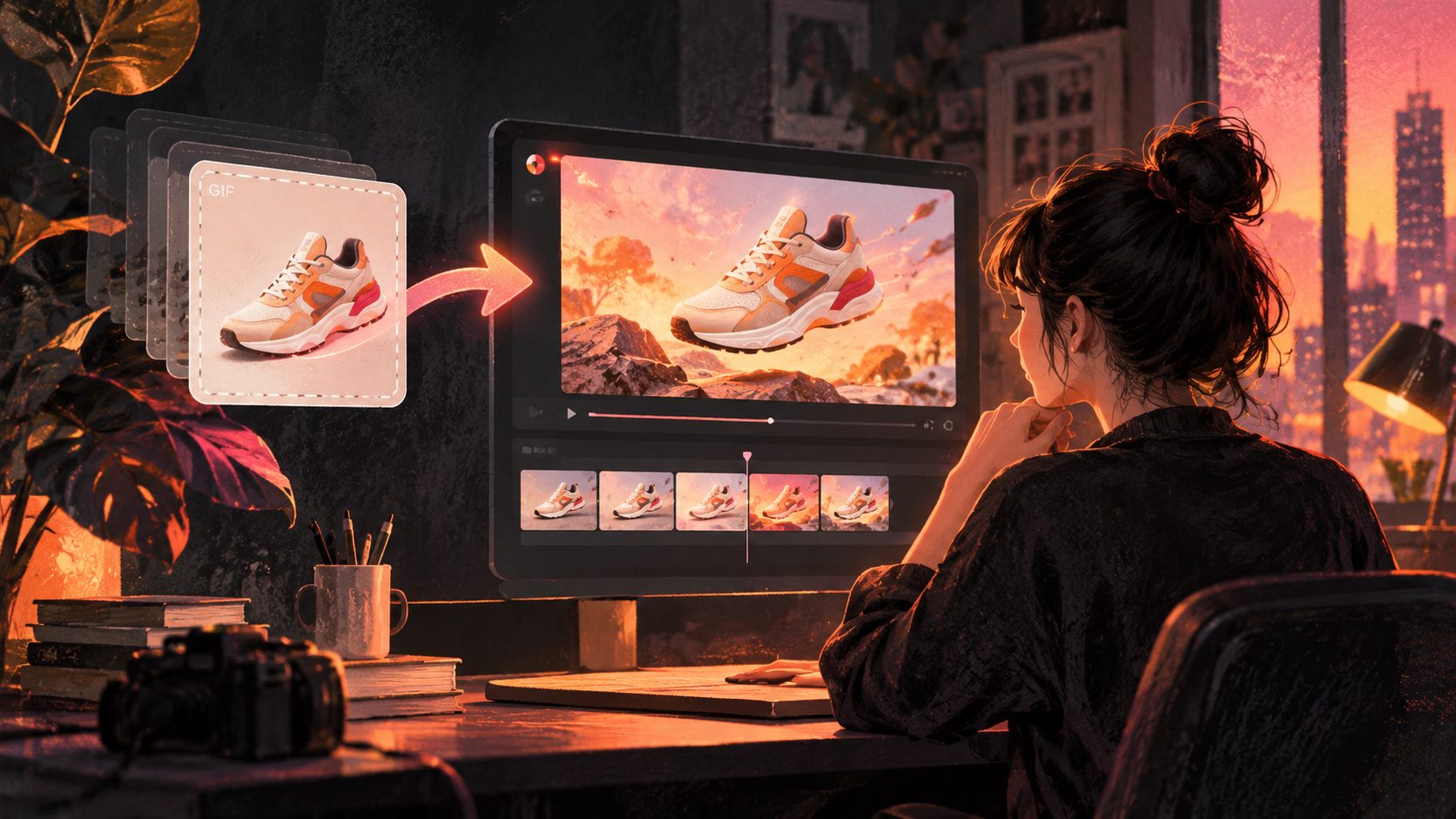
AdsTurbo’s Temu GIF-to-video workflow is useful when the source asset is a product animation or short visual loop. For sellers producing weekly creative, the TikTok ads creative production workflow offers a broader process for recurring testing.
How should sellers combine differentiation with IP protection?
Creative differentiation does not replace enforcement. It supports it by making the authentic offer easier to identify and by creating a stronger record of your original assets.
Keep a simple evidence folder containing:
- Original product photography
- Source design files
- Packaging images
- First publication dates
- Product videos and scripts
- Screenshots of copied images or text
- URLs and timestamps for suspicious listings
When reporting an issue, identify whether the concern involves the product, packaging, image, text, trademark, or another right. Temu’s policy asks rights owners to provide specific infringing product URLs and describe the nature of the infringement. (temu.com)
Temu also describes automated listing screening and an IP database in its transparency materials. However, marketplace monitoring is not a substitute for maintaining your own evidence and watching for new listings. (dl.kwcdn.com)
The U.S. Federal Trade Commission has also emphasized the importance of marketplace transparency and consumer reporting mechanisms for suspicious activity involving third-party sellers. (ftc.gov)
Common questions
Should the ad mention the Temu hijacker directly?
Usually, no. Mentioning a specific seller can create legal, policy, and verification risks. Show the authentic product, explain the measurable difference, and preserve direct allegations for a properly supported platform or legal complaint.
Is a watermark enough to stop copied ads?
No. A watermark may discourage casual reuse, but it does not prove product authenticity. Combine visible branding with product demonstrations, packaging, unique footage, and a consistent message.
What if the hijacker sells a visually identical product?
Move the proof closer to the buying decision. Show construction details, included components, quality checks, usage instructions, support, or fulfillment expectations that are genuinely part of your offer.
How many video variations should be created first?
Start with three to five controlled versions. Keep the product proof consistent while testing different hooks, creators, pacing, subtitles, or CTAs. This makes performance differences easier to interpret than changing everything at once.
Can an existing winning ad be adapted?
Yes, but recreate its underlying structure rather than copying protected footage, branding, or scripts. AdsTurbo Ad Clone can analyze a reference video and help reconstruct its pacing, scene logic, and CTA structure for new product variations.
The central strategy is simple: do not try to out-cheap a hijacker with generic creative. Make the authentic product more recognizable, more provable, and more valuable within the first few seconds.