

作者:adsturbo.ai|发布日期:2026-09-06|更新日期:2026-09-06
A TikTok video ad generator is most useful when it helps ecommerce sellers create many testable video variations, not just one polished clip. The winning workflow is to batch hooks, UGC-style scenes, captions, and CTAs so paid media teams can learn faster from real audience behavior.
What is a TikTok video ad generator?
A TikTok video ad generator is an AI workflow that turns product inputs, scripts, images, reference videos, or selling points into vertical short-form ad creatives for TikTok placements. For ecommerce sellers, the core value is creative testing speed: more hooks, more angles, and more localized versions without reshooting every ad.
Most tools focus on one of three jobs: script generation, avatar-led UGC videos, or full video assembly. A more useful ecommerce workflow connects all three. The seller needs a way to move from product claim to hook, from hook to scene structure, and from scene structure to export-ready video.
For TikTok creative basics, TikTok recommends vertical 9:16 video, sound, at least 720p resolution, and keeping content visible inside safe zones in its creative best practices for performance ads. That means AI output should be evaluated not only for realism, but also for placement fit.
Why AI batching works better than making one “perfect” TikTok ad
Batching works because TikTok creative performance is usually decided by the first few seconds, the product proof, and the CTA clarity. One beautiful ad cannot test enough variables. A structured batch can isolate which hook, creator style, offer, or problem angle deserves more budget.
For a US ecommerce seller, the practical question is not “Can AI make a TikTok ad?” It is “Can AI produce enough controlled variants to identify a repeatable winner?” That requires a system.
A strong AI batch should include:
- 3–5 hook types: problem, curiosity, proof, objection, offer.
- 2–3 UGC formats: talking head, product demo, testimonial-style review.
- 2 CTA endings: shop-now urgency and benefit-led soft CTA.
- Caption consistency: readable subtitles and on-screen product claims.
- Export discipline: 9:16 first, then square or horizontal only if needed.
AdsTurbo supports this kind of production through tools such as Ad Clone, Product Video, Lip Sync, Character Swap, Video Translation, Video Subtitle, Background Replace, and AI Upscaling. For sellers starting from product assets, the one-click ecommerce product video generator workflow is a useful companion to a batch testing plan.
The 24-variant creative matrix for TikTok ecommerce ads
The fastest useful batch is a 24-variant matrix: 4 hooks × 3 UGC scene styles × 2 CTAs. This is large enough to produce learning, but small enough for a seller to review before launch.
| Variable | Options | What it tests |
|---|---|---|
| Hook | Problem, surprise, proof, comparison | Why viewers stop scrolling |
| UGC style | Creator review, product demo, POV use case | Which format feels most native |
| CTA | Direct offer, benefit-led next step | Which ending drives action |
| Caption style | Bold keyword, sentence caption | Which subtitle pattern improves clarity |
| First visual | Face, product close-up, before/after | Which first frame earns attention |
This matrix is the main information gain for sellers who already know AI can generate videos. The point is not volume alone. The point is controlled variation. If every output changes the hook, actor, offer, background, pacing, and CTA at the same time, performance data becomes hard to interpret.
A better first batch keeps the product footage and offer constant. Change only the hook and UGC style. Once a promising pair emerges, generate another batch around proof, objections, and localized language.
How to create AI TikTok ads in a repeatable workflow
A repeatable workflow starts with product truth, not prompts. The AI needs clear product images, selling points, audience pain, and offer details before it can generate useful ad variants.
Use this five-step process:
-
Prepare product inputs
Upload clear product photos, ideally JPG or PNG. AdsTurbo Product Video supports product image uploads up to 10MB in JPG or PNG format, and Product Image works best with a clear photo on a solid-color background. -
Extract the winning structure
Use a reference ad only for structure: opening hook, scene rhythm, proof moment, and CTA flow. AdsTurbo Ad Clone can analyze a reference video and reconstruct script, pacing, shot logic, and CTA structure for new brand variants. -
Generate hook families
Create separate hooks for problem awareness, “I tried this,” comparison, objection handling, and offer urgency. For deeper script planning, see the video ad script analysis workflow for hooks, structure, and CTA. -
Build UGC-style scenes
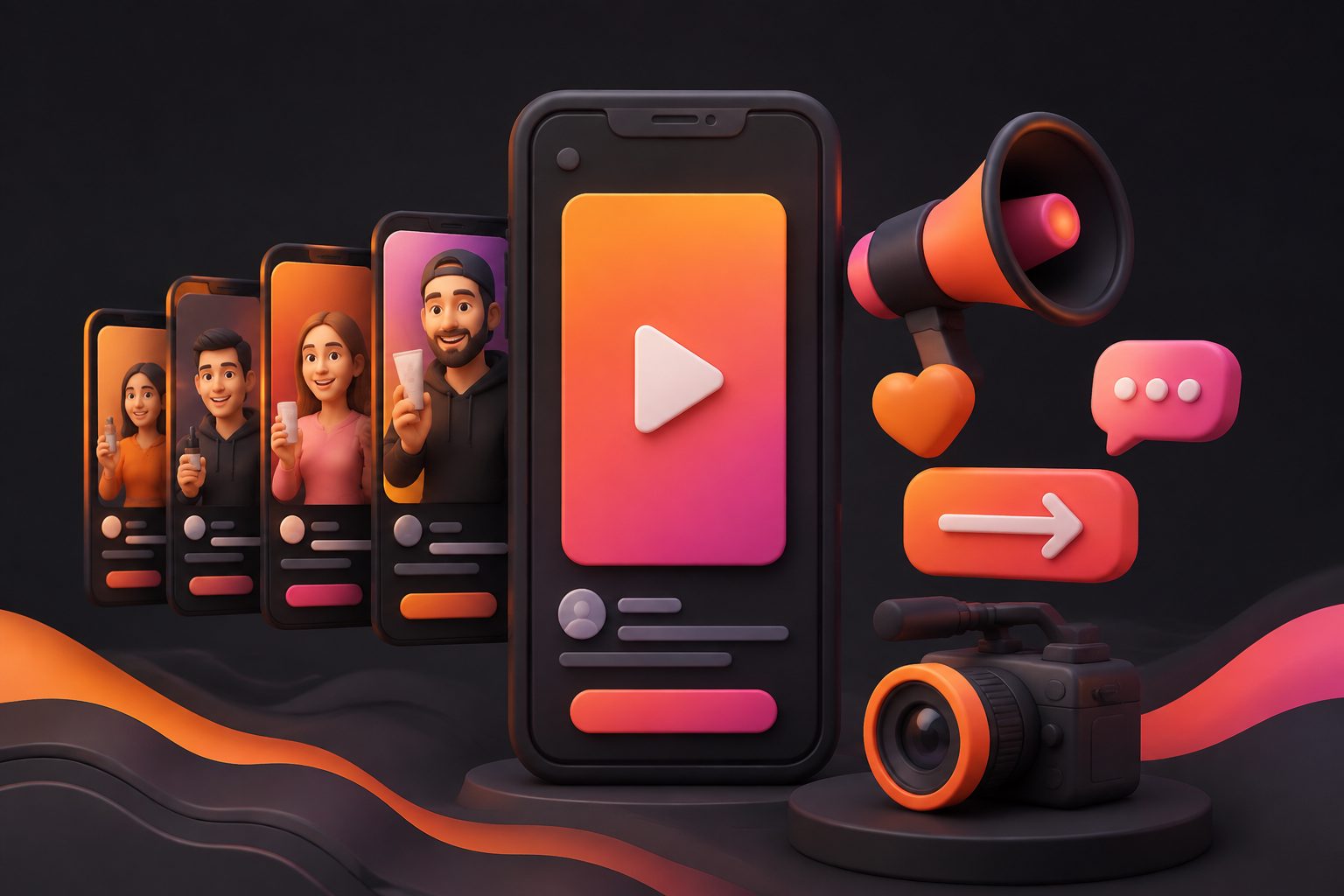
Mix creator-style delivery with product close-ups, demonstrations, captions, and benefit overlays. AdsTurbo offers more than 300 AI actors and 100+ product ad templates, which helps sellers avoid repeating the same face and format. -
Export, subtitle, and localize
Use video subtitles for silent viewing and localized variants when targeting different audiences. AdsTurbo Video Subtitle can automatically transcribe speech, generate time-synced subtitles, and export either embedded-caption videos or standalone subtitle files.
What should a good TikTok ad hook include?
A good TikTok ad hook makes the viewer understand the product problem or payoff in the first few seconds. It should be specific, visual, and easy to verify. Vague hooks like “You need this” usually test worse than hooks that show a concrete use case.
For ecommerce products, use these hook formulas:
- Problem hook: “Still dealing with [specific pain] every morning?”
- Proof hook: “Here is what changed after switching to [product type].”
- Comparison hook: “I stopped using [old solution] for this.”
- Curiosity hook: “This tiny detail is why [result] feels easier.”
- Offer hook: “If you were waiting to try [product], this is the week.”
A TikTok video ad generator should let sellers regenerate hooks without rebuilding the full ad. That one capability saves review time and makes A/B testing cleaner.
UGC, avatars, and product demos: which format should sellers test first?
Most ecommerce sellers should test product demos and UGC-style creator reviews before heavily stylized ads. TikTok’s own guidance emphasizes making creative feel native to the platform and featuring people such as creators, employees, or customers in performance creative.
For a new SKU, start with a product demo if the product is visual or has a clear before/after. Start with a creator review if the product needs trust, explanation, or objection handling. Use avatars or AI actors when the message can be delivered clearly without pretending to be a real customer experience.
AdsTurbo supports AI actors, Persona-related API modules, Lip Sync, Character Swap, and Product Video workflows. Sellers can also use AI UGC ad production guidance for ecommerce sellers to plan creator-style scripts before producing a large batch.
Technical specs and review checklist before launching
A generated ad is not launch-ready until it passes a placement checklist. TikTok’s in-feed auction guidance lists vertical 9:16 as recommended, with file formats including video and image assets depending on creative setup in its TikTok auction in-feed ads documentation.
Before uploading a generated ad, check:
- Aspect ratio: 9:16 for TikTok-first creative.
- Resolution: at least 720p when possible.
- Opening frame: product, face, or result visible immediately.
- Captions: readable on mobile, not blocked by UI.
- Claims: accurate, supportable, and compliant.
- CTA: visible in the final seconds and aligned with the landing page.
- Watermarks: remove irrelevant overlays only when you have the right to edit or reuse the asset.
AdsTurbo includes AI Upscaling, Video Subtitle, AI Eraser, and watermark removal tools. Its video translation, AI upscaling, and watermark removal features are credit-billed by output duration at 5 credits per second, while Ad Clone and promotional video generation are billed at 10 credits per output second.
How AdsTurbo fits a TikTok creative testing system
AdsTurbo is best understood as an AI video advertising toolkit for generating, adapting, and localizing ecommerce creative. It provides Ad Clone, Product Video, Lip Sync, Character Swap, Video Translation, Video Analysis, AI Upscaling, Video Subtitle, Product Image, Background Replace, AI Eraser, and API access.
For TikTok testing, the most relevant combination is:
- Ad Clone to preserve a proven hook, rhythm, shot logic, and CTA structure.
- Product Video to turn product images into UGC-style short video ads.
- Video Subtitle to create time-synced captions for TikTok, Reels, and Shorts formats.
- Character Swap and Lip Sync to adapt presenters without reshooting.
- Video Translation to localize ads for multilingual campaigns.
- API access for teams that need asynchronous generation, task polling, or webhook completion events.
Advanced AdsTurbo plans support team workflows and custom workflow support (API access itself is available on every plan). Developers can use its REST API with Bearer API Key authentication, and the API includes composable modules for image generation, Persona, AI actors, ad cloning, video generation, and task processing.
Common mistakes when using AI for TikTok ads
The biggest mistake is treating AI video generation as a replacement for creative strategy. AI can multiply outputs, but the seller still needs a controlled testing plan.
Avoid these errors:
- Generating 50 random videos with no variable map.
- Using generic hooks that could fit any product.
- Over-editing until the ad no longer feels native.
- Testing multiple CTAs, hooks, offers, and audiences at once.
- Ignoring captions for silent or low-volume viewing.
- Localizing audio without checking lip sync and on-screen text.
- Reusing a reference ad too closely instead of reconstructing its logic.
A good TikTok video ad generator should help sellers learn why an ad works, not simply produce more files.
Frequently asked questions
Can AI-generated videos be used for TikTok ads?
Yes, AI-generated videos can be used for TikTok ads if they comply with TikTok’s ad policies, technical specifications, and disclosure requirements where applicable. Sellers should review claims, rights, likeness usage, subtitles, and landing page consistency before launch.
How many TikTok ad variants should an ecommerce seller create first?
A practical first batch is 12 to 24 variants. That is enough to test several hooks and UGC formats without creating an unreviewable library. Start with controlled variables, then expand the winning angle.
What inputs does AdsTurbo need for product video creation?
AdsTurbo Product Video can use a JPG or PNG product image up to 10MB. Sellers may also add selling points and promotional details. Clear product photos usually lead to better product recognition and cleaner scenes.
Should TikTok ads use subtitles?
Yes. Subtitles help viewers understand the message quickly, especially when sound is low or off. AdsTurbo Video Subtitle can automatically transcribe speech, generate time-synced captions, and export embedded videos or subtitle files.
Is a TikTok video ad generator enough to find winning creative?
No single tool guarantees winning creative. The advantage comes from combining AI production with a disciplined test matrix: hook, UGC style, first visual, CTA, and audience. The tool increases speed; the testing system creates learning.
Final takeaway
A TikTok video ad generator should be judged by how well it supports creative learning, not by how many videos it can output. For US ecommerce sellers, the strongest workflow is a controlled batch: multiple hooks, several UGC styles, clear subtitles, compliant specs, and CTA variants tied to real product benefits.
AdsTurbo supports that system with ad cloning, product video generation, AI actors, subtitles, localization, character replacement, lip sync, upscaling, and API workflows. Used with a 24-variant matrix, it helps sellers turn one product idea into a structured TikTok testing pipeline.