Hardware Tool Torque Test Video Ads: A 30-Second Proof Framework

Summarize with
Summary
Learn how to turn torque test data into hardware tool torque test video ads with a clear 30-second structure, proof visuals, and scalable creative variations.
By adsturbo.ai | Published 2026-11-12 | Updated 2026-11-12
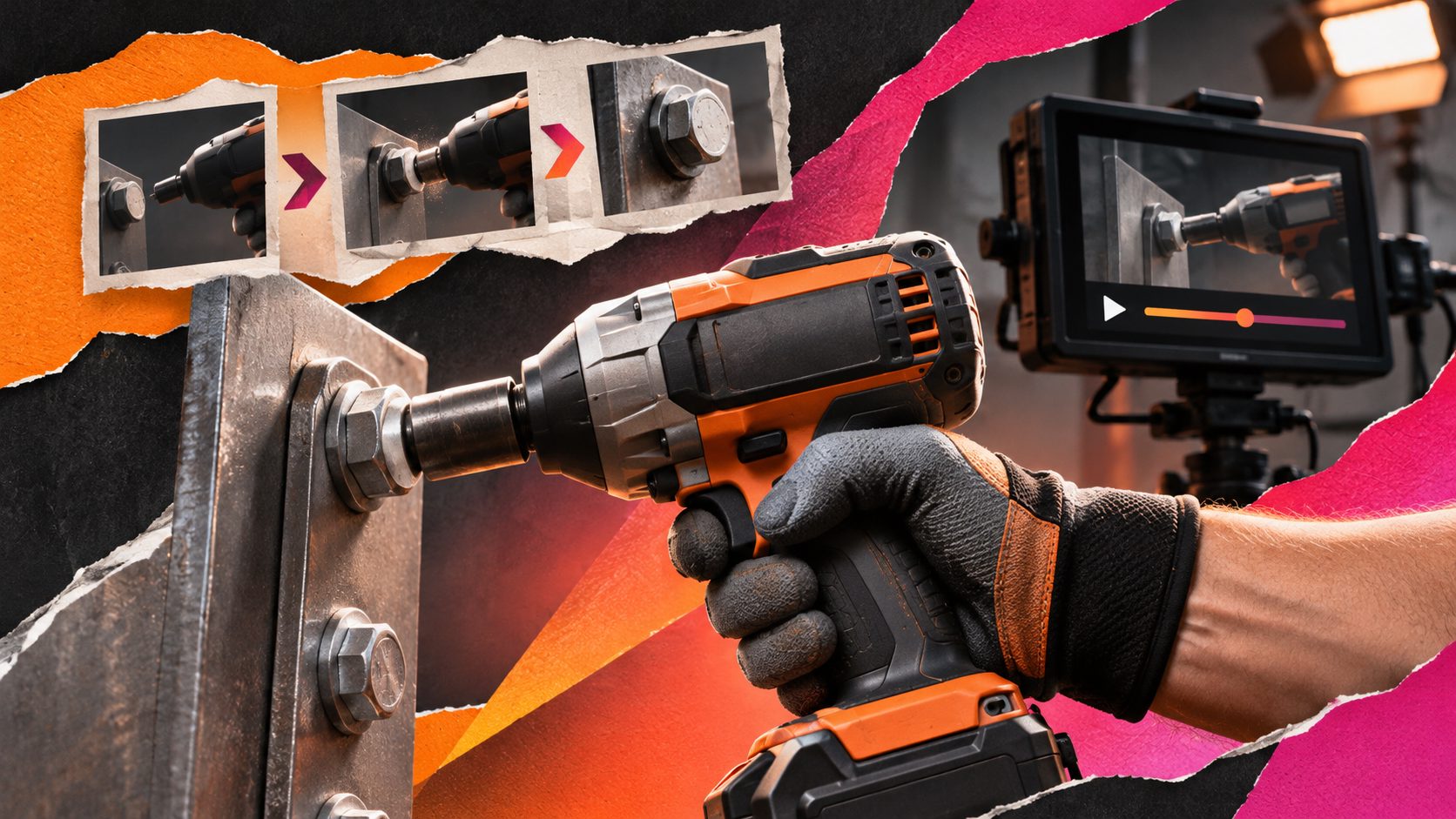
Hardware tool torque test video ads work best when they turn an abstract specification into visible proof. Instead of opening with a product beauty shot, show the tool under load, display the torque reading, and connect the result to a job the buyer already wants to complete.
For ecommerce sellers, the goal is not simply to prove that a tool produces torque. The goal is to make the viewer understand what the number means, why it matters, and why this product deserves a click.
What makes a torque test video ad persuasive?
A torque test video ad is a short product demonstration that uses a controlled test, visible measurement, and practical application to communicate performance. The strongest versions combine test evidence, context, and a clear next action within the first 30 seconds.
A professional torque test commonly uses a transducer, test joint, or torque meter rather than relying only on a visual impression. Atlas Copco’s screwdriver torque challenge, for example, uses a torque transducer and test joint to compare tool output under defined conditions. (atlascopco.com)
That distinction matters because “powerful” is a claim, while a visible reading is evidence. However, a number without context can also confuse shoppers. A better ad answers three questions:
- What was measured?
- Under what test condition?
- How does the result help the user?
This proof-first approach is also consistent with current power tool advertising patterns, where brands frequently lead with a practical job, product benefit, or performance number rather than a long feature list. A 2026 review of power tool ads found that 29% placed a number in the first line, while “Learn More” was the dominant call to action. (sprites.ai)
How should a 30-second torque test ad be structured?
Use a five-part sequence: failure or challenge, setup, test, interpretation, and CTA. This structure gives the viewer a reason to keep watching while preserving enough time for measurable proof.
0–3 seconds: Show the challenge
Open with the moment that creates tension:
- A bolt refuses to move.
- A competitor tool stalls.
- A torque display climbs toward the target.
- A fastener must reach a specified setting.
- The tool is tested against a visibly demanding joint.
On-screen copy should be short and concrete. Examples include:
- “Can it reach 100 ft-lb?”
- “Torque test: same joint, same battery”
- “What happens under load?”
Avoid beginning with a logo animation or a slow product spin. The first frame should communicate a problem that the tool is expected to solve.
3–7 seconds: Establish test credibility
Show the test setup clearly enough that viewers can understand it. Include the tool, fixture, fastener, torque meter, and measurement unit where possible.
Use a small overlay such as:
Test condition: hard joint · 18V battery · 3/8-inch drive
Do not imply laboratory-grade precision unless the setup supports that claim. If the test is an informal demonstration, label it as a demonstration. Clear labeling increases trust and helps prevent a technically impressive video from feeling like an exaggerated sales claim.
7–17 seconds: Capture the measurable moment
This is the core of the video. Keep the camera close to the tool interface and the measurement display. Show the reading rising, stabilizing, or triggering the tool’s stop mechanism.
A useful editorial rule is one test, one number, one visual consequence:
- One test: avoid switching between unrelated fixtures.
- One number: highlight the key torque result.
- One consequence: show the bolt tightening, loosening, or reaching the target.
For a comparison ad, keep the variables consistent. The same fastener, battery state, joint type, and test method make the comparison easier to understand. Torque measurement systems are designed around controlled conditions because joint hardness and test fixtures can affect the output. Norbar describes test rigs that simulate hard and soft joint conditions for power tool measurement. (norbarusa.com)
17–24 seconds: Translate data into buyer value
The viewer does not buy a torque reading. They buy faster assembly, more reliable fastening, less rework, or confidence in a demanding task.
Convert the result into a practical sentence:
- “Reaches the target without repeated passes.”
- “Built for controlled fastening on dense material.”
- “More usable torque for workshop and jobsite tasks.”
- “Check the setting before you start the job.”
Keep the claim proportional to the test. If the video measures peak torque, do not automatically claim superior runtime, durability, or accuracy. Those are different properties and require separate evidence.
Which visuals should appear on screen?
A strong torque demonstration usually needs four visual layers:
| Visual layer | Purpose | Example |
|---|---|---|
| Tool close-up | Identifies the product | Drive, trigger, selector, display |
| Test setup | Establishes credibility | Fixture, fastener, transducer |
| Measurement | Makes performance visible | ft-lb, Nm, target line |
| Application shot | Gives the result meaning | Assembly, repair, installation |
Add subtitles because many social viewers watch without sound. AdsTurbo Video Subtitle can automatically transcribe speech, create time-synced captions, and export either a captioned video or a separate subtitle file. Its subtitle layouts are designed for formats such as TikTok, Instagram Reels, and YouTube Shorts.
For raw or compressed footage, an AI video enhancer can help improve clarity before the measurement display and tool interface are reframed for vertical placements. Enhancement should improve legibility, not change the underlying result.
How can sellers adapt one test into multiple ads?
A single torque test can support a creative matrix rather than one finished video. Create variations by changing the opening and explanation while keeping the core test consistent.
| Variant | Opening angle | Best audience |
|---|---|---|
| Performance proof | “Can it reach the target?” | Technical buyers |
| Versus comparison | “Same joint, different tool” | Consideration-stage shoppers |
| Jobsite use | “Fastening without repeated passes” | Tradespeople |
| Beginner explanation | “What does torque actually mean?” | New DIY buyers |
| Offer-led version | “Tested before the weekend project” | Promotion traffic |
This is where many product videos lose efficiency: they change the entire production instead of changing only the hook, voiceover, or CTA. A modular workflow lets sellers produce several messages from one controlled test.
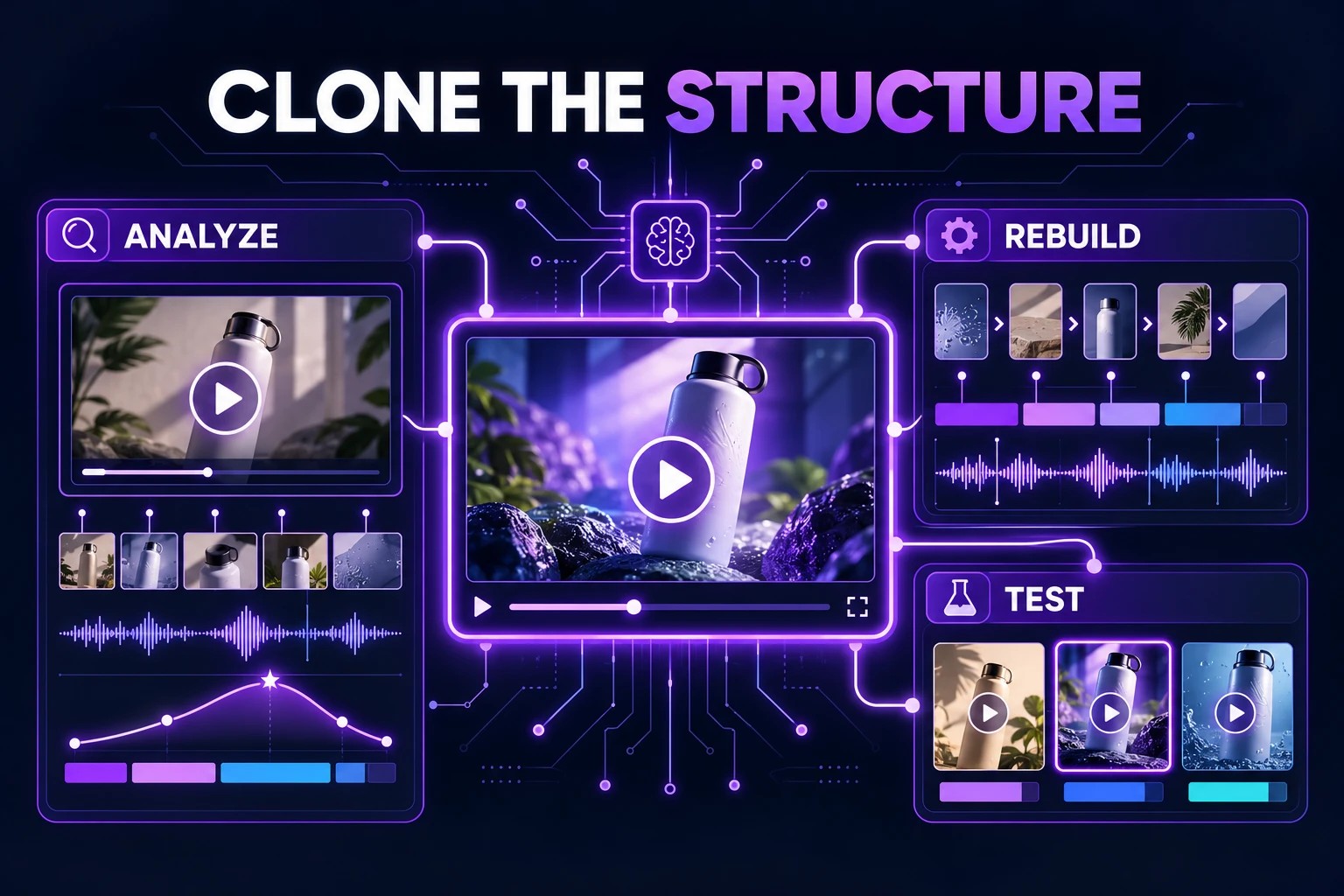
AdsTurbo’s Ad Clone workflow can use a reference ad’s structure, pacing, shot logic, and CTA pattern to create new variants. For ecommerce teams, the useful application is not copying a competitor’s claims. It is rebuilding a proven narrative around your own product, test result, and offer.
A practical batch might include:
- Three opening hooks
- Two proof explanations
- Two CTA endings
- Two aspect ratios
- One consistent test sequence
That creates 12 structured combinations while keeping the evidence stable.
What should the CTA say?
The CTA should match the viewer’s level of certainty. A technical buyer may want specifications, while a general shopper may need a product demonstration or compatibility detail.
Use specific endings such as:
- “See the full torque range.”
- “Compare the tested setup.”
- “Check compatibility before ordering.”
- “Watch the complete product demonstration.”
- “Shop the tool for your next fastening project.”
Avoid unsupported endings such as “strongest on the market” unless the ad includes a defensible comparison and defined test conditions.
For sellers using Amazon, Shopify, TikTok Shop, or paid social, export the same core edit into platform-specific crops. AdsTurbo Product Image supports multiple output ratios for ecommerce platforms, while its video workflows can also support subtitles, translation, upscaling, and clip-by-clip editing.
Common questions about torque test video ads
Should the ad show peak torque or working torque?
Show the measurement that matches the product’s real use case and label it precisely. Peak torque may attract attention, but working torque is often more meaningful for repeated fastening tasks. Do not present one as the other.
Is a torque meter necessary?
A meter or transducer is strongly preferable when the ad makes a numerical performance claim. Without a visible measurement system, the video is better positioned as a demonstration rather than a quantified test.
How long should a hardware tool test ad be?
Thirty seconds is a practical format for showing the challenge, setup, measurement, and application. A shorter 15-second cut can focus on the hook and result, while a longer version can explain test conditions.
Can one test produce multilingual ads?
Yes. The visual test can remain consistent while narration, subtitles, on-screen text, and CTA language change. This is useful for cross-border ecommerce campaigns where the same product proof needs regional adaptation.
What is the biggest creative mistake?
Showing the number without explaining its consequence. A viewer should understand not only what the tool measured, but also what that measurement helps them do.
A high-converting torque test ad is not a product spec sheet compressed into video. It is a controlled proof sequence: establish the challenge, show the measurement, explain the practical meaning, and finish with a relevant action. That structure gives hardware sellers a credible way to turn technical performance into understandable ecommerce creative.