When to Test Black Friday Ad Creatives: A Practical Ecommerce Timeline


Summarize with
Summary
Learn when to test Black Friday ad creatives, how to split your budget, and how to rotate winners before fatigue hurts BFCM performance. Build your testing plan now.
By adsturbo.ai | Published 2026-10-22 | Updated 2026-10-22
When to test Black Friday ad creatives? For most ecommerce brands, the strongest window is four to eight weeks before Black Friday, with concept testing in October and final sale-focused variants launched at least one week before the peak. Testing on Black Friday itself is too late: media costs are higher, learning time is limited, and poor creative decisions become expensive quickly.
For 2026, Black Friday falls on November 27, followed by Cyber Monday on November 30. The practical goal is to enter that weekend with proven creative angles, approved variations, and enough backup assets to manage fatigue.
What is the best time to test Black Friday ad creatives?
The best time is October for concepts and early November for sale messaging. Test the creative idea before adding heavy discount language, then adapt the winning concepts to Black Friday offers once your promotion, inventory, and landing pages are confirmed.
This two-stage approach separates two different questions:
- Does the creative earn attention and communicate product value?
- Does the Black Friday offer create enough urgency to convert?
Testing both questions at the same time makes the result difficult to interpret. A weak performance could come from the hook, the product, the discount, the landing page, or the audience.
Several 2026 BFCM planning guides recommend preparing and testing creative in October, then moving proven assets into sale campaigns before the peak week. Shopify’s holiday advertising guidance similarly places creative testing in mid-to-late October, before competition intensifies. (shopify.com)
A practical testing timeline
| Timing | Primary objective | What to test |
|---|---|---|
| 6–8 weeks before Black Friday | Establish creative direction | Hooks, formats, products, creators, demonstrations |
| 4–5 weeks before | Identify repeatable winners | Opening scenes, proof points, scripts, CTAs |
| 2–3 weeks before | Adapt winners to the promotion | Discount framing, bundles, urgency, gift messaging |
| 7–10 days before | Validate final assets | Sale overlays, landing-page match, subtitles, aspect ratios |
| Black Friday weekend | Rotate and scale | New openings, end cards, products, audiences |
This timeline is especially useful for smaller D2C teams because it creates time to fix production issues without making major changes during the most expensive traffic period.
How much creative should a small ecommerce brand test?
A small brand should test three to five distinct concepts, not dozens of minor edits. Each concept should have a different reason to believe, such as product demonstration, customer problem, comparison, social proof, or gift suitability.
A useful test matrix looks like this:
- Concept A: Product demonstration or before-and-after result
- Concept B: Founder, creator, or UGC-style explanation
- Concept C: Problem-solution hook
- Concept D: Gift guide or seasonal use case
- Concept E: Offer-led urgency with a clear deadline
Within each winning concept, create two or three controlled variations. Change one major element at a time:
- First three seconds
- On-screen headline
- Presenter or AI actor
- Product close-up
- Voiceover language
- CTA or final frame
This is more informative than producing ten videos that all use the same hook and pacing. AdsTurbo’s AI UGC video ads workflow can help ecommerce teams turn a JPG or PNG product image, optional selling points, and promotion details into testable short-form product videos.
What should you test first: the offer or the creative?
Test the creative angle first, then test the offer presentation. Your discount may improve conversion rate, but it cannot reliably repair an ad that fails to explain why the product matters.
A simple sequence is:
- Test product positioning without a heavy Black Friday overlay.
- Keep the top two or three concepts.
- Add the confirmed discount, bundle, or gift incentive.
- Test urgency language such as “ends Monday” or “early access.”
- Match every claim with the landing page and checkout experience.
For example, a skincare seller might first discover that “three-minute nighttime routine” beats “premium ingredients” as the opening hook. The next test should preserve the routine-based structure while comparing “20% off,” “free shipping,” and “bundle savings.” That produces a more useful conclusion than testing entirely different videos with entirely different offers.
Amazon Ads also emphasizes that promotional claims should be accurate, easy to find, and consistent with the landing page. (advertising.amazon.com)
How should you allocate a Black Friday creative testing budget?
A practical starting allocation is:
- 50% to proven evergreen winners
- 25% to new concept testing
- 15% to Black Friday adaptations
- 10% reserved for fatigue replacement and urgent production
The exact split should reflect your account size and conversion volume. Brands with little historical data may need to devote more budget to concept testing. Brands with strong evergreen winners should protect the proven base and use the testing budget to find fresh openings and seasonal framing.
The reserve is important. Many teams spend the entire creative budget before the sale starts, then have no capacity when frequency rises or a top ad stops working. Reserving 10% creates room for a new hook, updated end card, translated version, or product-specific replacement.
A useful decision rule is to fund learning before scale. If a new creative has not received enough impressions, clicks, or purchase opportunities, do not label it a loser simply because it trails a mature ad. Compare it against the role it was designed to perform: attention, product education, conversion, or remarketing.
How do you prevent Black Friday ad fatigue?
Creative fatigue happens when the same audience sees the same promise too often. The solution is not always a completely new video. Often, a new opening, presenter, product angle, or ending can refresh a proven body.
Use a rotation system with three layers:
Layer 1: Keep the proven body
Retain the product demonstration, testimonial, or narrative structure that has already worked.
Layer 2: Change the first three seconds
Test a question, visual reveal, product close-up, customer objection, or seasonal statement. The opening determines whether the rest of the video gets watched.
Layer 3: Change the conversion frame
Use different endings for different moments:
- “Sale starts Friday”
- “Early access is open”
- “Ends tonight”
- “Last chance for holiday delivery”
- “Cyber Monday pricing ends today”
This approach creates variation without discarding the learning embedded in the original ad. It also helps avoid the risky practice of replacing every asset at once during peak traffic. Several BFCM planning sources warn that major edits or new campaigns close to the event can leave platforms learning during the most expensive days. (v4v.ai)
What should be ready before Black Friday week?
By the week before Black Friday, the main creative decisions should be complete. Keep only limited production work for resizing, localization, product substitutions, and fatigue replacement.
Your final checklist should include:
- Approved 9:16, 1:1, and 16:9 versions
- Separate prospecting and retargeting messages
- Accurate discount and eligibility language
- Product availability confirmed
- Landing page and checkout tested
- Captions reviewed on mobile
- Backup hooks and end cards
- Cyber Monday variations
- Localized subtitles or voiceovers where needed
AdsTurbo’s automatic caption workflow for ecommerce video ads supports time-synced subtitles and social-media-friendly styling. For international campaigns, ecommerce video translation workflows can help adapt existing creative into localized versions without rebuilding every concept from scratch.
If your source footage is low resolution, review it before production scales. AdsTurbo provides video upscaling with before-and-after preview and 4K export support, which can be useful when repurposing older product or creator footage.
Frequently asked questions
Is it too late to test Black Friday creatives in November?
Not necessarily, but the testing goal should change. In early November, focus on validating sale overlays, hooks, product priorities, and landing-page consistency. Avoid launching many untested concepts during Black Friday week.
Should Black Friday ads use completely new videos?
Usually not. Start with proven evergreen structures and adapt the opening, offer, end card, or product selection. Completely new concepts are better tested before the peak period.
How many Black Friday ads should a small brand prepare?
Three to five core concepts plus several controlled variations is a practical starting point. Prepare additional backups if your audience is small, your budget is large, or your product has a narrow customer base.
When should Black Friday ads go live?
Sale-specific ads should generally be live seven to ten days before Black Friday if the campaign needs time to stabilize. Keep evergreen ads running earlier while testing the creative angles that will receive seasonal messaging.
Can product images be used to create Black Friday video ads?
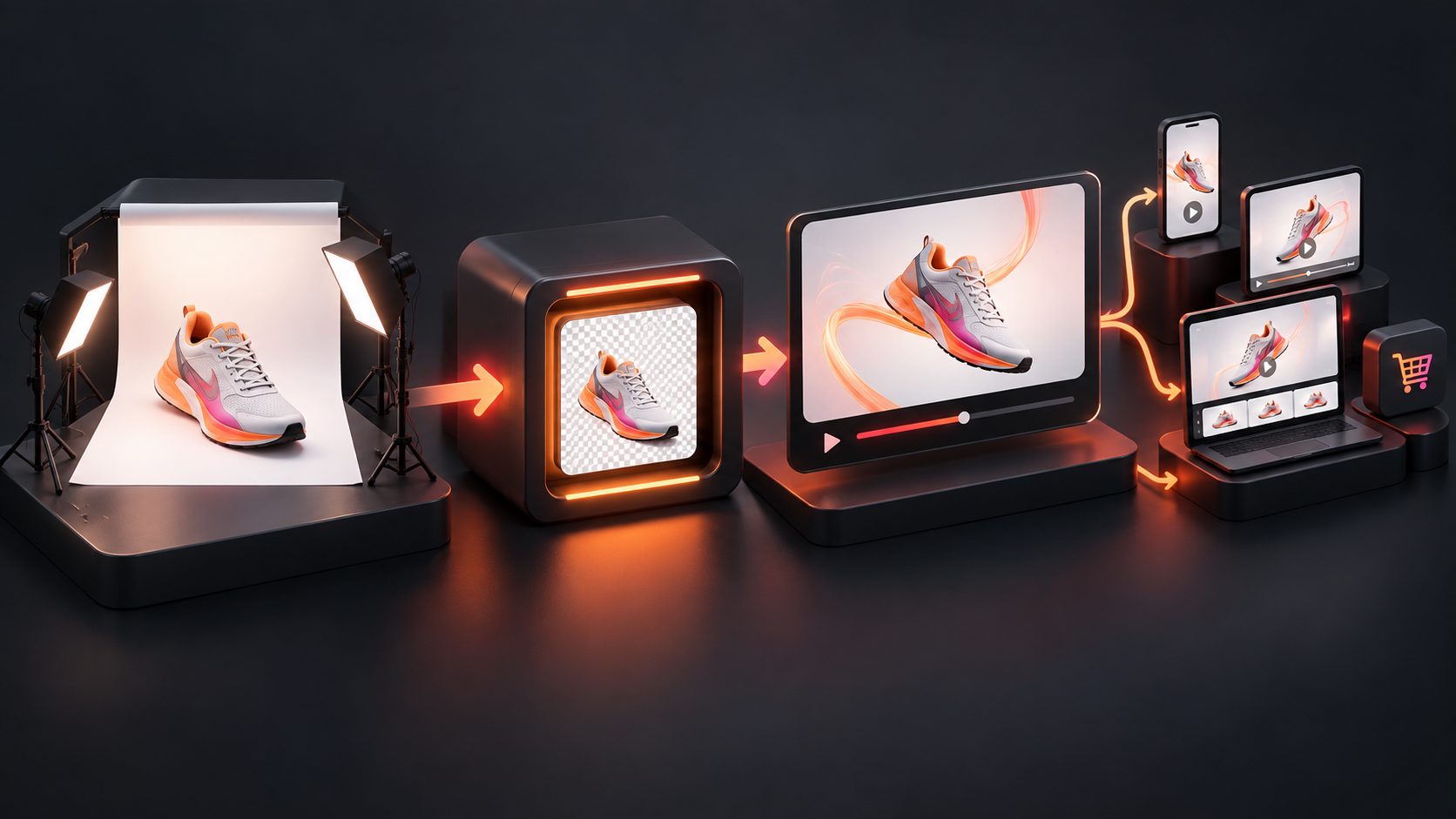
Yes. Product images can support UGC-style videos, product demonstrations, offer-led ads, and short product explainers. AdsTurbo Product Video accepts JPG or PNG product images and can generate product review, introduction, and demonstration videos.