

作者:AdsTurbo|发布日期:September 10, 2026|更新日期:September 10, 2026
AI actors for ads are synthetic or virtual performers used to present a product, explain a benefit, demonstrate a use case, or deliver a direct-response script in a video advertisement. They can look like spokesperson videos, creator-style UGC, or branded presenters, depending on the production workflow.
For ecommerce sellers, the main advantage is not simply avoiding a shoot. It is the ability to produce more combinations of hooks, actors, languages, products, CTAs, and formats without rebuilding every creative from scratch. The best results usually come from treating AI actors as part of a testing system rather than as a replacement for creative strategy.
What are AI actors for ads?
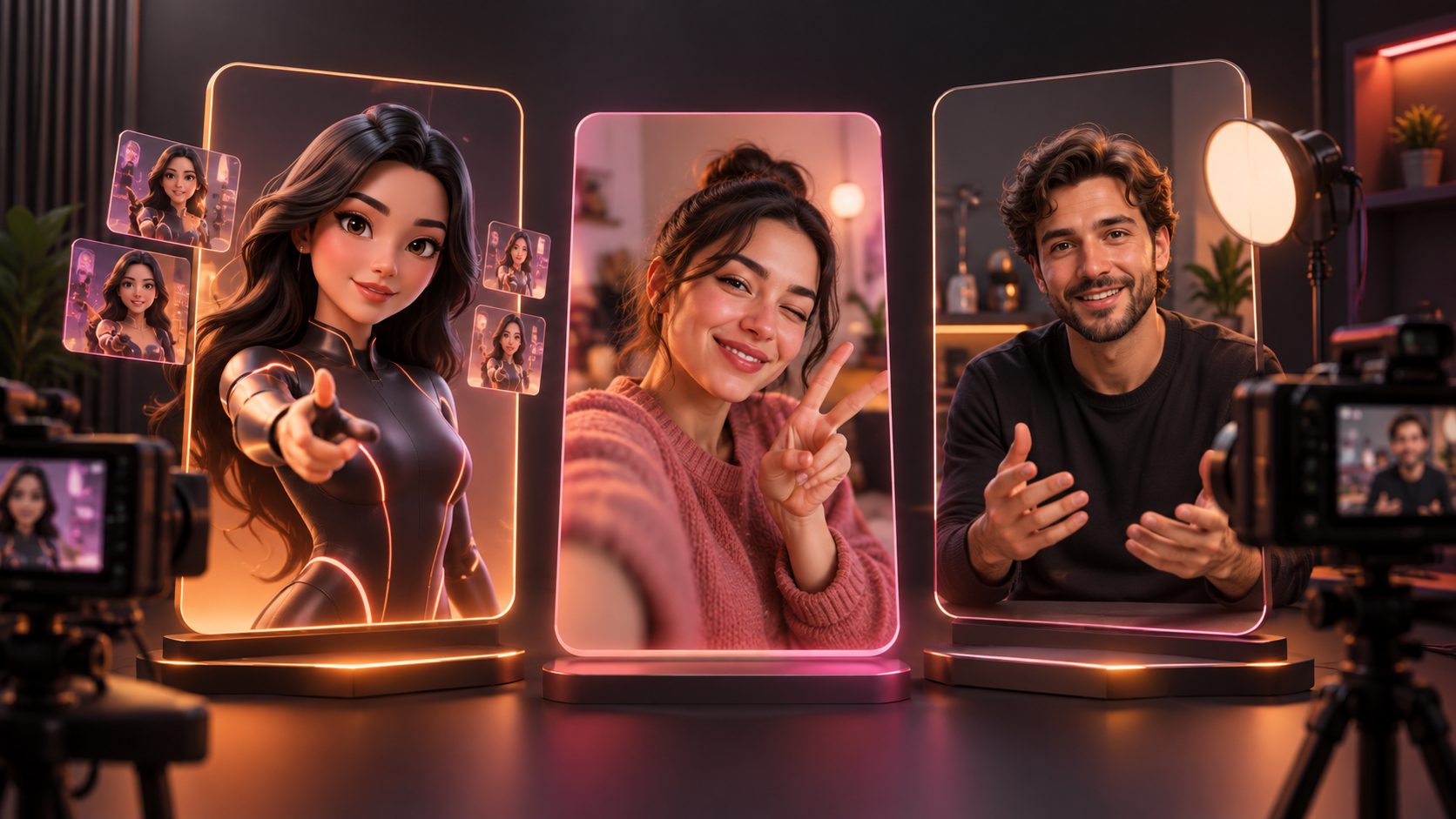
AI actors are digitally generated or digitally represented people who deliver spoken scripts, react to products, or appear in product-focused scenes. Some are prebuilt virtual presenters; others are custom personas created from image and audio assets.
In advertising, an AI actor can support several formats:
- A direct-to-camera product introduction
- A UGC-style testimonial or review format
- A product demonstration with voiceover
- A localized version of an existing ad
- A short-form video built around a problem, benefit, and CTA
- A recurring brand character used across multiple campaigns
The important distinction is between a virtual performer and a genuine customer. An AI actor should not be presented as an actual purchaser or reviewer unless the underlying claim is truthful and properly supported. The FTC’s guidance on endorsements and testimonials emphasizes that advertising claims must be honest and not misleading.
AI actors vs. human creators vs. UGC-style ads
AI actors, filmed creators, and UGC-style ads solve different production problems. Choosing the right format depends on whether the campaign needs authenticity, speed, control, or volume.
| Creative format | Main strength | Main limitation | Best use |
|---|---|---|---|
| Human creator | Natural delivery and genuine product experience | Casting, scheduling, usage rights, and reshoots | Testimonials, founder stories, trust-heavy campaigns |
| AI actor | Fast production, repeatability, persona and language control | May feel synthetic or make unsupported claims if poorly scripted | Hook testing, product explainers, localization |
| UGC-style AI ad | Familiar social format with scalable variations | “Authenticity” can feel artificial without strong direction | TikTok, Reels, Shorts, and performance testing |
| Hybrid ad | Combines real product footage with synthetic presentation | Requires more creative planning | Product demonstrations and high-consideration products |
A human creator remains the strongest option when a real experience is central to the message. For example, skincare, apparel fit, food taste, and physical comfort are easier to communicate credibly through actual users.
AI actors are more useful when the message is controlled and repeatable: “Here are three product benefits,” “This is how the feature works,” or “See how the product fits into a daily routine.” A hybrid approach can be especially effective: use an AI actor for the opening hook, then cut to real product footage, close-ups, packaging, or customer-owned assets.
When should ecommerce sellers use AI actors?
AI actors are most valuable when the bottleneck is creative iteration, not merely video editing. A seller with one winning product concept may need many variations across platforms, audiences, and markets.
Good use cases include:
-
Testing multiple hooks
Build versions that lead with a problem, product benefit, comparison, seasonal offer, or customer objection. -
Creating new-product ads
Combine a product image, selling points, and a reference style to create initial ads before investing in a full production. -
Localizing campaigns
Adapt voice, subtitles, on-screen text, and presenter style for different markets. AdsTurbo supports video translation, lip sync, subtitles, and character replacement workflows for this type of reuse. -
Expanding a winning concept
Keep the same structure while changing the actor, tone, language, CTA, or product angle. -
Supporting catalog-scale production
Sellers with many SKUs can create product-led videos without organizing a separate shoot for every item.
For a product-image-first workflow, AdsTurbo’s AI product video generator can be used as a starting point for turning product assets into testable ecommerce ads. Product images can be uploaded in JPG or PNG format, with clear photos on a plain background generally producing the most reliable results.
A practical framework: Actor, Asset, Angle
A common mistake is to compare AI tools by actor count or visual realism alone. For performance advertising, a better evaluation unit is the usable creative: one version that is clear, compliant, on-brand, correctly formatted, and ready for testing.
Use this three-part framework:
1. Actor
Choose the performer based on the audience and the job of the video:
- Peer-like actor: useful for casual problem-solution or discovery ads
- Expert-style presenter: useful for demonstrations and feature explanations
- Lifestyle persona: useful for fashion, beauty, home, and routine-based products
- Consistent brand persona: useful when the same identity appears across a funnel
The actor should support the product’s positioning. A polished presenter may weaken a deliberately informal TikTok concept, while an overly casual persona may reduce trust for a technical or premium product.
2. Asset
Decide what the viewer must see to believe the message:
- Product close-ups
- Before-and-after visuals, only when substantiated
- Packaging and unboxing
- Product-in-use footage
- Screen recordings
- Customer-provided images or real demonstrations
- Captions and offer details
AI actors cannot compensate for weak product evidence. If the product is small, technical, or visually distinctive, allocate enough screen time to the product itself rather than allowing the presenter to dominate the frame.
3. Angle
The angle is the reason someone should stop scrolling. Examples include:
- A specific customer problem
- A time-saving benefit
- A product comparison
- A new launch
- A seasonal promotion
- A common objection
- A use case for a defined audience
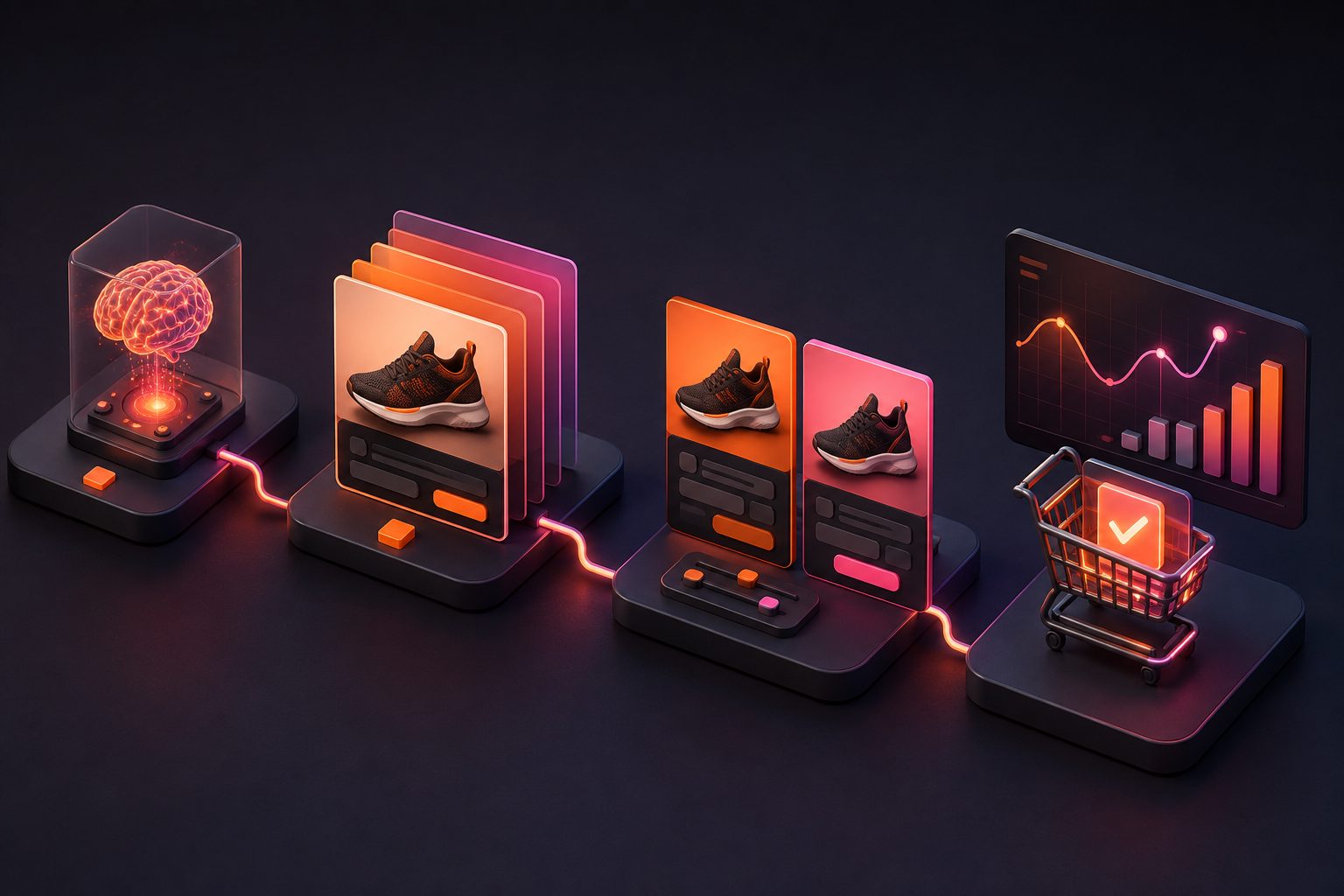
This framework creates a controlled test matrix. For example, keep the angle and product footage constant while changing only the actor. Then keep the actor constant while testing three different opening lines. This makes results easier to interpret than changing every variable at once.
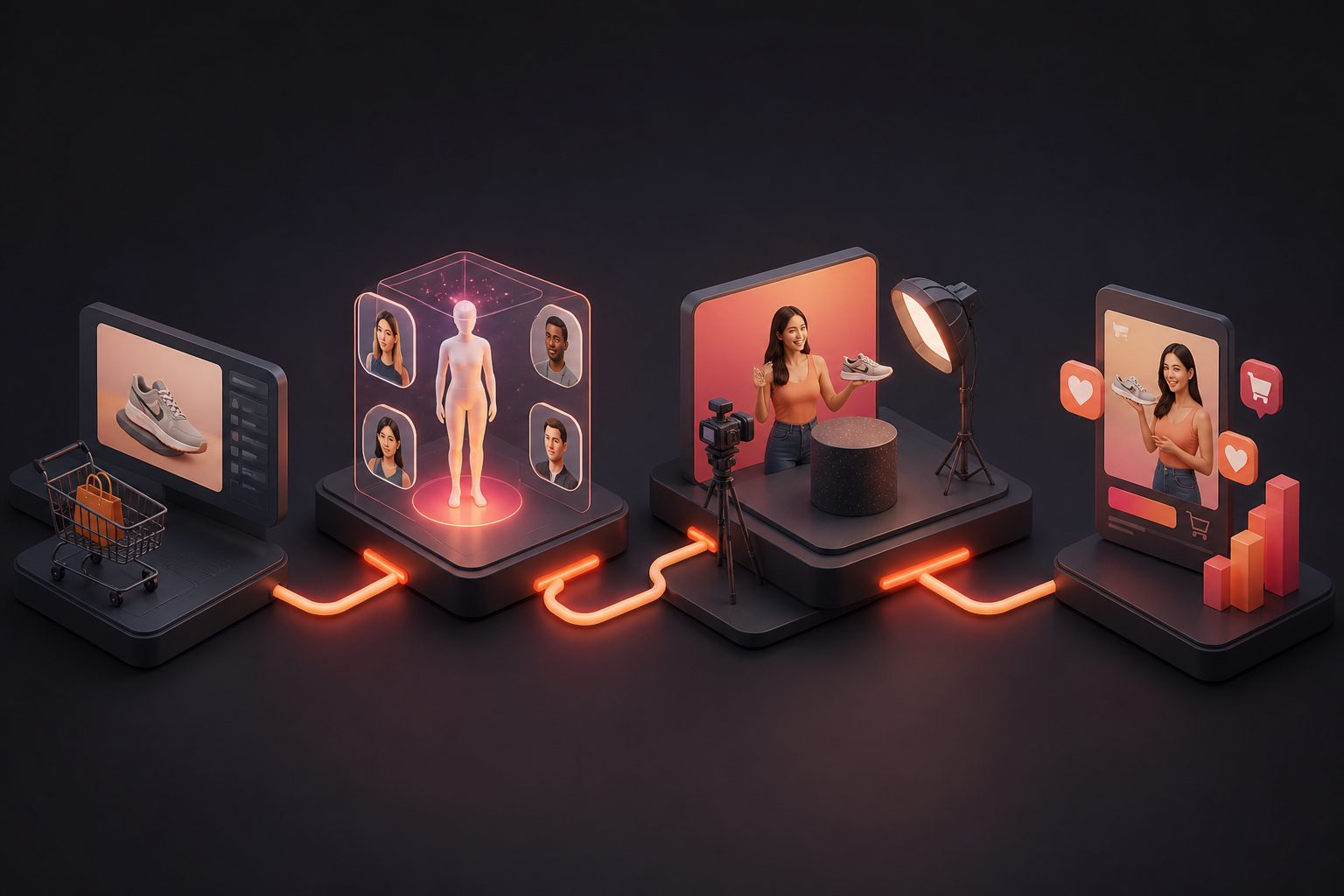
How to build an AI actor ad workflow
A reliable production process separates creative strategy from rendering.
- Define the ad objective. Choose awareness, product education, conversion, retargeting, or localization.
- Write a short script. Start with one problem, one promise, proof or demonstration, and one CTA.
- Select the actor and delivery style. Match age range, tone, visual identity, and audience context to the product.
- Add product evidence. Use product images, demonstrations, screenshots, or real footage where appropriate.
- Generate several opening variations. Test the first two to three seconds separately from the rest of the script.
- Adapt the output format. Prepare 9:16 for short-form vertical placements and additional square or landscape versions when needed.
- Review claims and disclosures. Confirm that the script does not imply personal use, medical outcomes, guaranteed results, or customer experience without evidence.
- Test by variable. Compare hooks, actors, offers, and CTAs in separate groups whenever possible.
AdsTurbo also supports AI ad variation testing workflows, including product-focused creative variations and short-form video production. Its broader toolset includes Ad Clone, Lip Sync, Motion Control, Character Swap, Video Translation, AI Upscaling, subtitles, and background replacement.
Compliance and trust considerations
AI actors are not automatically deceptive, but the surrounding message can be. Do not use a synthetic performer to imitate a real celebrity, customer, expert, or creator without the necessary permission. Do not fabricate a testimonial or imply that the person has personally used the product when that is not true.
The FTC states that AI-generated avatars are not subject to a blanket ban, but their use can still violate advertising law if the presentation is misleading or if a fictional avatar is used to communicate a false testimonial. In addition, New York’s 2026 synthetic-performer disclosure law requires identification when advertisements include AI-generated synthetic performers.
A practical trust policy is to:
- Label synthetic presenters when disclosure is required or would clarify the format
- Avoid “I personally use this” language unless it is accurate
- Substantiate performance, savings, health, and comparison claims
- Secure rights for custom faces, voices, and likenesses
- Keep product visuals consistent with the actual item customers will receive
Frequently asked questions
Are AI actors the same as AI avatars?
The terms overlap, but “AI avatar” often describes the digital representation, while “AI actor” emphasizes the performer’s role in an advertisement. Both may deliver scripts, voiceovers, or product explanations.
Can AI actors replace real UGC creators?
Not completely. AI actors can replace some creator-style production tasks, especially for concept testing and localization. They cannot create genuine customer experience or authentic product feedback where those elements are essential.
What products work best with AI actor ads?
AI actors work well for products with clear benefits, visual demonstrations, simple education, and repeatable use cases. Products that depend heavily on taste, fit, personal results, or physical sensation usually benefit from real-user footage or a hybrid format.
How many versions should an ecommerce seller create?
Start with a focused matrix rather than producing dozens of random videos. Test three hooks, two actors, and two CTAs while keeping the product evidence consistent. This creates 12 interpretable versions before expanding the winning combinations.
Can AdsTurbo support AI actor ad production?
AdsTurbo provides AI video and image workflows including product video generation, ad cloning, lip sync, character replacement, video translation, subtitles, motion control, and upscaling. Higher-tier plans also support team workflows, API access, and custom workflows.