


Author: adsturbo.ai|Publication date: 2026-09-06|Updated date: 2026-09-06
An AI ad variation generator helps ecommerce sellers turn one product, offer, or reference video into multiple testable creative versions. The real value is not “more ads.” It is controlled variation: changing the hook, benefit, proof point, format, actor, language, or CTA while keeping the test readable.
For online sellers, this matters because platforms reward fresh, relevant creative. Google Ads describes ad variations as a way to test different headlines, descriptions, promotions, benefits, and URLs in controlled experiments through Google Ads Help on ad variations. TikTok also recommends maintaining a steady creative supply and refreshing creatives when delivery declines, according to its creative best practices for performance ads.
What is an AI ad variation generator?
An AI ad variation generator is a tool or workflow that creates multiple ad versions from the same product brief, image, landing page, script, or video reference. Each version changes one or more creative variables so marketers can test what actually drives clicks, watch time, add-to-cart behavior, or sales.
For ecommerce, the strongest use case is not generic copywriting. It is structured creative testing. A seller can test a “problem-first” hook against a “discount-first” hook, or a founder-style testimonial against a product demo, without starting every video from scratch.
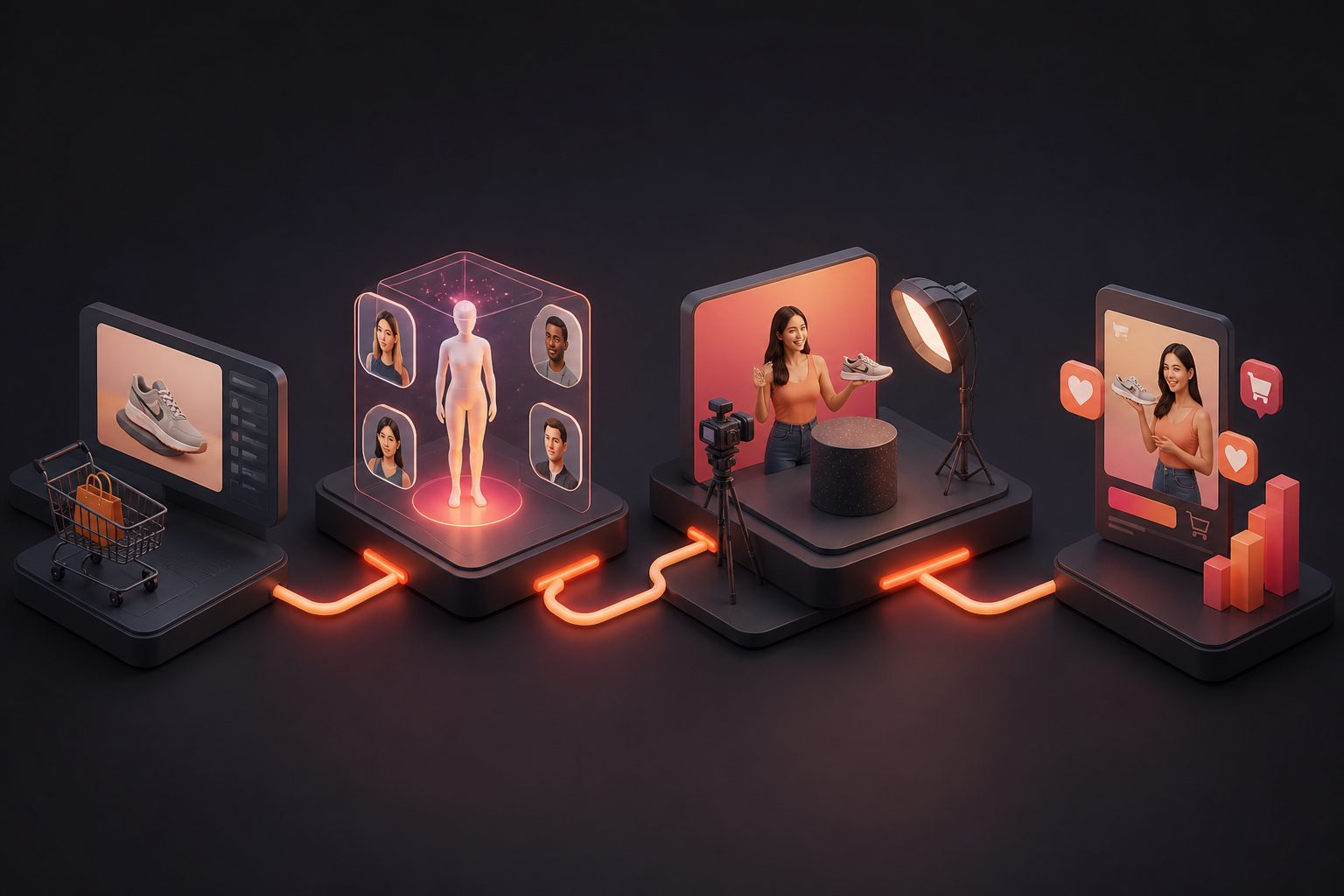
AdsTurbo supports this kind of production workflow with tools such as Ad Clone, Product Video, Lip Sync, Character Swap, Video Translation, Video Subtitle, Background Replace, AI Upscaling, and API access. Its Ad Clone workflow can analyze a reference ad’s structure, pacing, scene logic, and CTA structure, then help rebuild variants for testing.
Why ad variation testing matters for ecommerce sellers
Ad variation testing helps sellers find which message, angle, and creative format deserves more budget. A winning product can still underperform if the first three seconds, offer framing, or CTA fails to match the buyer’s intent.
Meta’s learning resources emphasize creative diversification across images, videos, messages, and formats so ad delivery systems can match ads to different people, as described in Meta Blueprint’s creative diversification lesson. That means sellers need more than one “best” ad.
A practical example: a portable blender may need separate angles for gym users, new parents, office workers, travelers, and gift buyers. The product is identical, but the buying reason changes. AI-assisted variation turns those reasons into hooks, scenes, subtitles, and CTAs quickly enough to test before the trend or season ends.
The 4×3 ecommerce variation matrix
The simplest testing system is a 4×3 matrix: four message angles multiplied by three execution formats. This creates 12 meaningful variations without creating random noise.
| Test layer | Option A | Option B | Option C |
|---|---|---|---|
| Hook | Problem | Result | Curiosity |
| Benefit | Save time | Improve outcome | Reduce friction |
| Proof | Demo | Social proof | Comparison |
| CTA | Shop now | Claim offer | See it in action |
This matrix is the article’s core original framework: change the buyer reason first, then the creative surface second. Many sellers do the opposite. They swap backgrounds, fonts, or captions while keeping the same underlying message. That produces volume, but not learning.
A cleaner test might look like this:
- Keep the same product image and offer.
- Generate three hooks for one audience.
- Pair each hook with one proof style.
- Use the same CTA in the first round.
- Launch, measure, then vary the CTA only after a hook winner appears.
This prevents a common testing mistake: changing five variables and then not knowing why one ad won.
Which variables should an ecommerce team generate first?
Start with variables that affect buyer intent: hook, audience, pain point, benefit, objection, proof, and CTA. Visual polish matters, but early testing should prioritize the message that makes a shopper stop, understand, and act.
Here is a useful order:
- Hook: The opening line, visual, or on-screen text.
- Angle: The reason someone should care.
- Proof: Demo, review, comparison, before-and-after, or use case.
- Offer: Discount, bundle, free shipping, limited drop, or guarantee.
- CTA: The next action the viewer should take.
- Format: UGC, product demo, avatar, slideshow, unboxing, or testimonial.
- Localization: Language, actor, voiceover, subtitles, and cultural context.
AdsTurbo’s video ad script analysis workflow is especially useful before generation because it focuses on hooks, structure, and CTA. Sellers can also use an AI ad script generator for product angles to turn product claims into testable scripts instead of isolated slogans.
A practical workflow from one product to 24 ad variants
A strong AI ad variation generator workflow turns one SKU into a controlled batch. The goal is to make enough variations to learn, but not so many that reporting becomes unreadable.
Use this sequence:
- Choose one SKU and one offer. Do not mix products in the same test.
- Write four buyer angles. For example: problem, aspiration, comparison, and urgency.
- Create three hooks per angle. That gives 12 opening tests.
- Pair each hook with two proof styles. Demo and social proof are a good starting pair.
- Keep the CTA fixed in round one. This isolates hook and proof impact.
- Generate video or image variants. Use consistent ratios such as 9:16 for TikTok and Reels, 1:1 for feeds, and 16:9 where needed.
- Launch in labeled batches. Name files by angle, hook, proof, and CTA.
- Cut losers quickly, then generate second-round variants from winners.
AdsTurbo supports short-form ecommerce workflows such as UGC ad creation, product video generation from JPG or PNG product images, subtitles, and multilingual video translation. For sellers focused on short-form placements, the batch TikTok ad creative matrix offers a related way to organize testing at scale.
Example: 24 variants for a skincare serum
For a skincare serum, an undisciplined AI prompt might ask for “20 high-converting ads.” A better prompt gives the generator a testing architecture.
Product: Vitamin C serum
Audience: Busy women aged 25–40
Offer: 20% off first order
Constraint: No medical claims
Creative formats: UGC demo and close-up product routine
Angles: Dull skin, morning routine speed, giftable self-care, comparison to complicated routines
That structure can become 24 variants:
- 4 angles
- 3 hooks per angle
- 2 proof styles per hook
- 1 CTA held constant
Example hooks:
- “Your morning routine does not need seven steps.”
- “The glow step I stopped skipping.”
- “If your skin looks tired by noon, start here.”
Example CTAs for round two:
- “Shop the 20% launch offer.”
- “See the routine.”
- “Try it before the sale ends.”
The key is sequencing. Round one identifies the message. Round two tests CTA pressure. Round three can test actor, voiceover, language, subtitles, or format.
How AdsTurbo fits into the variation workflow
AdsTurbo is useful when ecommerce teams need to move from script variation to production variation. The platform provides AI video ad generation tools including Ad Clone, Motion Control, Lip Sync, Character Swap, Product Video, Video Translation, AI Upscaling, Background Replace, Video Subtitle, AI Eraser, and product image generation.
For example, a seller can use Ad Clone to reference a short winning ad structure, then create new versions around their own product, offer, and CTA. Product Video supports uploading JPG or PNG product images, with clear photos on plain backgrounds giving the best results. AdsTurbo also offers more than 300 AI actors and over 100 product ad templates.
For localization, sellers can combine translation, subtitles, Lip Sync, and Character Swap to test different regions without reshooting every asset. The AI lip sync workflow for ads is relevant when adapting voice-led creative, while AI UGC ads for ecommerce sellers explains how UGC-style concepts fit paid social testing.
AdsTurbo generation tasks run asynchronously, and completion can be received through status polling or Webhook callbacks. Higher-level plans support team workflows and custom workflow support (API access itself is available on every plan), which matters when a team needs repeatable batch production rather than one-off creative exports.
How to measure AI-generated ad variations
Measure AI-generated ad variations by matching each test stage to one primary metric. Do not judge every creative by ROAS on day one; early creative signals often appear in watch time, click-through rate, thumb-stop rate, or cost per landing page view before purchases accumulate.
A simple scorecard:
| Test stage | Primary question | Metric to watch |
|---|---|---|
| Hook test | Does the ad stop the viewer? | 3-second view rate or hold rate |
| Message test | Does the viewer understand the value? | CTR or outbound click rate |
| Offer test | Does the shopper show buying intent? | Add-to-cart rate or checkout start |
| Scale test | Can it spend profitably? | CPA, ROAS, contribution margin |
Do not overread tiny samples. A hook that gets cheap clicks but no carts may be curiosity without purchase intent. A lower-CTR ad with stronger conversion rate may be better for bottom-funnel profit.
Common mistakes when generating ad variants
The most common mistake is making cosmetic variants instead of strategic variants. A new color, caption style, or background is not a meaningful test if the buyer promise stays identical.
Avoid these errors:
- Changing too many variables at once. You cannot learn what caused the result.
- Testing only hooks. Hooks win attention, but proof and offer win action.
- Ignoring platform context. TikTok, Reels, Shorts, Meta feed, and Amazon placements reward different pacing.
- Using vague CTAs. “Learn more” may underperform when the offer needs urgency.
- Over-automating brand voice. AI output still needs product accuracy, claim review, and compliance checks.
- Stopping after one winner. Winners fatigue; turn winning angles into families of variants.
For ecommerce teams, the best use of an AI ad variation generator is creative throughput with learning discipline. The tool should increase test velocity without destroying naming, reporting, or message clarity.
Frequently asked questions
How many ad variations should an ecommerce seller test?
Most small ecommerce sellers should start with 6–12 controlled variations per product. Larger accounts with more spend can test 20–40, but only if each variation is labeled by hook, angle, proof, and CTA.
Should AI generate the whole ad or only the script?
Use AI for both, but separate strategy from production. Generate hooks and scripts first, approve the message, then turn the winners into videos, subtitles, translations, or actor variants.
What is the difference between A/B testing and multivariate testing?
A/B testing compares two versions, while multivariate testing compares combinations of multiple variables. For most ecommerce sellers, staged A/B/n testing is easier to interpret than changing hook, actor, CTA, and offer all at once.
Can AI ad variants replace real creators?
AI variants are best for speed, localization, and early learning. Real creators may still be valuable for high-trust categories, founder stories, or content that needs lived experience and original product use.
What should the first AI ad variation test focus on?
Start with the hook and buyer angle. If the opening message does not match the shopper’s problem or desire, better editing and prettier visuals rarely fix the ad.