
Cat Proof Leather Couch Scratch Test Video Ads

Summarize with
Summary
Build credible cat proof leather couch scratch test video ads with macro close-ups, honest scoring, and conversion-focused scripts. Create testable ad variations with AdsTurbo.
By adsturbo.ai | Published 2026-11-07 | Updated 2026-11-07
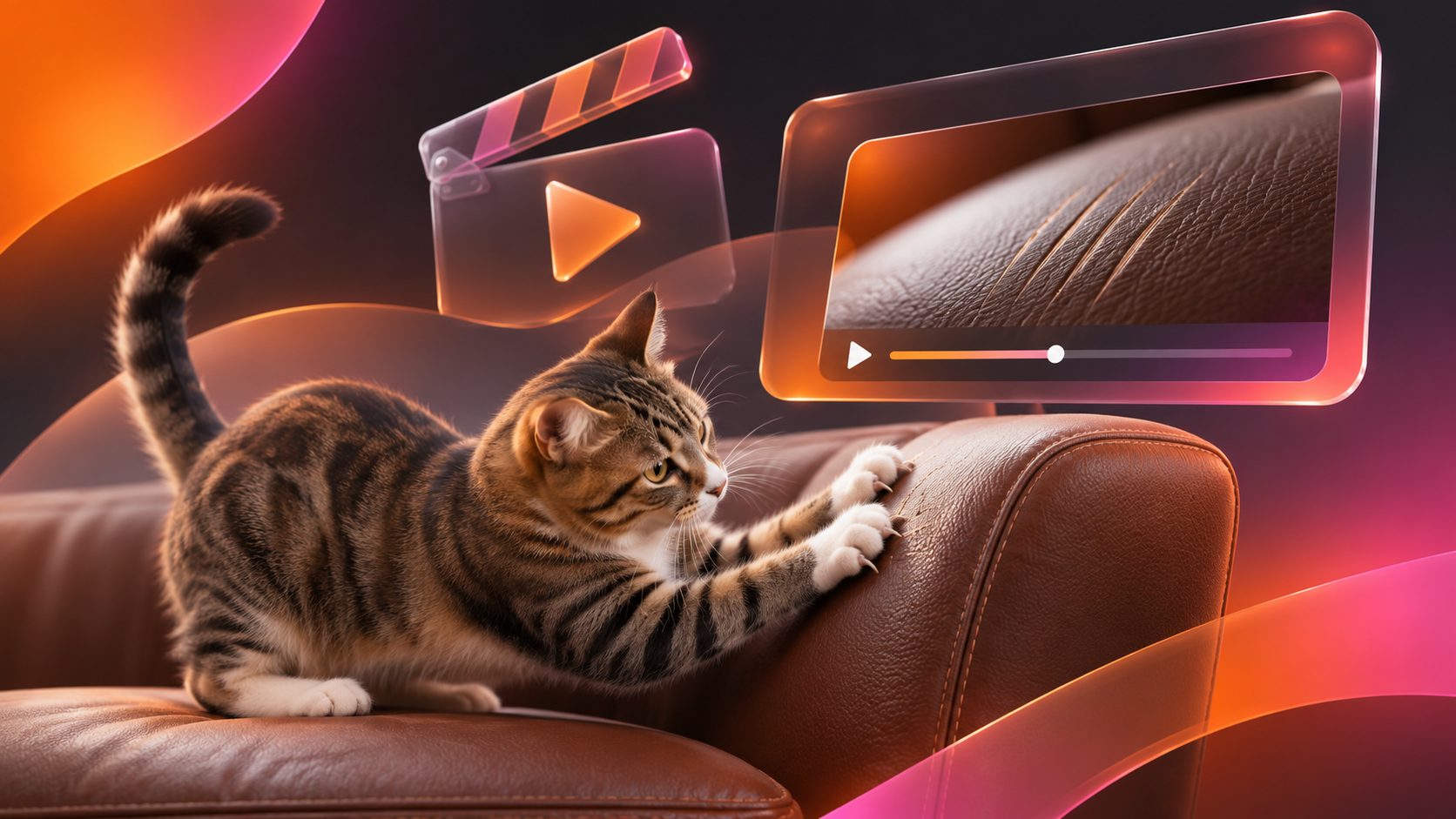
For high-ticket furniture brands, cat proof leather couch scratch test video ads should not rely on the phrase “pet friendly” alone. The stronger approach is to show exactly what happens when claws contact the leather, how visible the mark is, and whether the surface recovers after wiping or conditioning.
A good scratch-test ad turns an abstract durability claim into observable evidence. That matters because leather may resist snagging better than loose-weave upholstery, but it is not automatically claw-proof. Recent sofa guides commonly distinguish between fewer pulled fibers and visible punctures or scuffs, while veterinary behavior guidance explains that scratching is a normal feline behavior rather than a simple material preference. (tollbit.forbes.com)
What should a cat scratch test video prove?
A cat scratch test video should prove three separate things: surface resistance, mark visibility, and cleanup or recovery. Combining all three makes the demonstration more credible than showing a cat sitting calmly on a sofa.
Use this evidence sequence:
- Identify the material and finish. Show the leather grain, coating, color, seams, and high-contact areas.
- Show the baseline. Film an untouched section in macro detail before testing.
- Show controlled claw contact. Use the same pressure, duration, and location across every sample.
- Reveal the result. Hold the camera still so viewers can inspect scuffs, punctures, discoloration, or lifted finish.
- Demonstrate recovery. Wipe the area with a suitable cloth, then show the same section again.
- State the limitation. Explain whether the result applies to light contact, repeated scratching, or deliberate clawing.
The key distinction is between “claws do not catch” and “claws cannot damage the surface.” Those are different claims and should never be presented as interchangeable.
How do you design a fair leather couch scratch test?
A fair test needs a repeatable setup rather than a dramatic one-off clip. For a DTC furniture brand, use three matching leather swatches or three visually comparable sofa areas: one untreated baseline, one test area, and one recovery area.
Recommended test protocol
| Test variable | Recommended setup |
|---|---|
| Camera | Locked macro or close-up angle |
| Lighting | Same side lighting before and after |
| Contact area | Arm edge, seat front, or another high-risk zone |
| Test duration | Use a consistent short interval for every sample |
| Comparison | Film untreated and tested areas in the same shot |
| Recovery step | Wipe or condition only if the care instructions permit it |
| Scoring | Mark visibility, surface damage, and cleanup result separately |
Do not edit out the contact moment. A quick cut from “before” to “after” may look polished, but it removes the most important proof. Leave enough frames for viewers to see the claw approach, contact, and withdrawal.
A useful scoring model is:
- 0 — No visible change
- 1 — Light scuff visible only in angled light
- 2 — Clear surface mark, no tear
- 3 — Puncture, lifted coating, or visible indentation
- 4 — Tear, split seam, or structural damage
This is an editorial testing framework, not a universal industry standard. Its value is consistency: the same scale can be reused across leather colors, finishes, and product variations.
Which visuals build trust in furniture ads?
The most persuasive creative usually combines a wide shot for context with a macro shot for proof. Product pages and general sofa roundups often discuss material type, maintenance, pet hair, and furniture style; a scratch-test ad should go further by making the damage threshold visible. (tollbit.forbes.com)
Use this five-shot structure:
- Pattern interrupt: A claw moves toward the sofa arm.
- Material close-up: Show the leather grain and finish before contact.
- The test: Capture the scratch without covering it with captions.
- The inspection: Rotate the leather under light to reveal subtle marks.
- Decision frame: Show the final condition beside the original baseline.
For darker leather, angled lighting is especially important because fine scratches may appear only when the surface reflects light. For lighter or distressed finishes, use a neutral background so the audience can distinguish natural patina from fresh damage.
Avoid using a cat as a prop without explaining the test conditions. A calm cat sitting on a couch proves comfort or appearance, not scratch resistance.
What should the 15-second ad script say?
A proof-first script should make the claim narrower as the evidence becomes clearer. Here is a practical structure for a 15-second version:
0–2 seconds — Hook
“Will cat claws mark this leather couch?”
2–5 seconds — Baseline
“Here is the untouched surface before testing.”
5–9 seconds — Contact
“Same area. Controlled claw contact. No cutaway.”
9–12 seconds — Inspection
“Now check the finish under direct light.”
12–15 seconds — Qualified CTA
“See the full material test before choosing your sofa.”
For a longer 30-second version, add the leather type, care instructions, a second contact angle, and a comparison with a tightly woven performance fabric. Do not promise that any couch is completely cat-proof. Even sources that recommend leather or tightly woven fabrics note that determined cats can still leave marks, and that texture, finish, and behavior all affect the result. (cozecats.com)
How can furniture brands create multiple test variations?
One test can become a structured creative matrix instead of a single ad. Change one variable at a time:
- Hook test: “Cat claws vs. leather” versus “Can this armrest survive daily use?”
- Proof test: Macro scratch result versus wipe-clean recovery.
- Audience test: Cat owners, multi-pet households, or design-conscious buyers.
- Format test: 9:16 for TikTok and Reels, 1:1 for feeds, and 16:9 for landing pages.
- Offer test: Warranty explanation, swatch request, or product-page CTA.
- Narrator test: Founder voice, demonstrator, or AI actor.
AdsTurbo supports ad cloning, product video creation, subtitles, video translation, AI actors, and multiple editing controls. Its Ad Clone workflow can analyze a reference video up to 12 seconds and generate advertising variations, which is useful when a brand wants to preserve a successful opening rhythm while changing the material proof or CTA.
For a broader testing system, combine the scratch demonstration with an ecommerce ad creative variation workflow. If the original footage is long, a long-video repurposing workflow for short ads can help turn the inspection, commentary, and result sections into separate creatives.
How should the result be localized for international campaigns?
Localization should change more than subtitles. Different markets may respond to different proof points:
- The United States: emphasize daily living, pet ownership, and easy inspection.
- Japan: emphasize finish quality, cleanliness, and careful testing.
- Germany: emphasize method, limitations, and material transparency.
- Southeast Asia: emphasize humidity-conscious maintenance and everyday practicality.
AdsTurbo Video Subtitle can automatically transcribe speech, generate synchronized captions, and export either a captioned video or a separate subtitle file. Its video translation and subtitle workflows can help adapt the same evidence sequence without reshooting every market version.
Keep the test result identical across languages. Translate the explanation, not the evidence.
Common questions about leather couches and cats
Is any leather couch completely cat-proof?
No. Leather may reduce snagging compared with loose woven fabric, but claws can still create scuffs, punctures, or finish damage. A responsible ad should use “scratch-resistant,” “easier to clean,” or a similarly qualified phrase only when the footage supports it.
Should the test use a real cat?
A real cat can make the ad relatable, but behavior is inconsistent. For repeatable product evidence, use controlled contact across matching areas and clearly label the conditions. Do not imply that one cat’s behavior represents every household.
What part of the couch should be tested?
Test the areas most likely to receive contact: outer arms, front corners, lower side panels, and exposed seams. Testing only the center of a seat may produce a less useful result because cats often target vertical edges.
Is a before-and-after photo enough?
A still image helps, but video is more persuasive because it shows the contact event and camera conditions. Use both: video for process, still macro frames for comparison.
How can a brand avoid overclaiming?
Show the test method, disclose the result, and state what was not tested. “No visible tear after this controlled test” is more defensible than “cats cannot scratch this couch.”
A practical production checklist
Before publishing the ad, confirm that it includes:
- A visible baseline surface
- A continuous or understandable contact moment
- Consistent lighting and camera distance
- A close-up inspection after testing
- A clear distinction between scuffing and tearing
- A qualified claim rather than an absolute guarantee
- Captions readable in vertical format
- A CTA connected to a swatch, product page, or full test
For premium furniture, the strongest creative is not the one that hides every mark. It is the one that makes the material’s behavior easy to judge. That transparency can turn a skeptical pet owner into a more confident buyer.