

作者:adsturbo.ai|发布日期:2026-08-30|更新日期:2026-08-30
Character replacement is the fastest way to change who appears in a working ad without rebuilding the whole shot. For ecommerce teams, that usually means one proven product demo can become a new spokesperson, market variant, or seasonal offer with far less production overhead than a full reshoot.
What character replacement means in practice
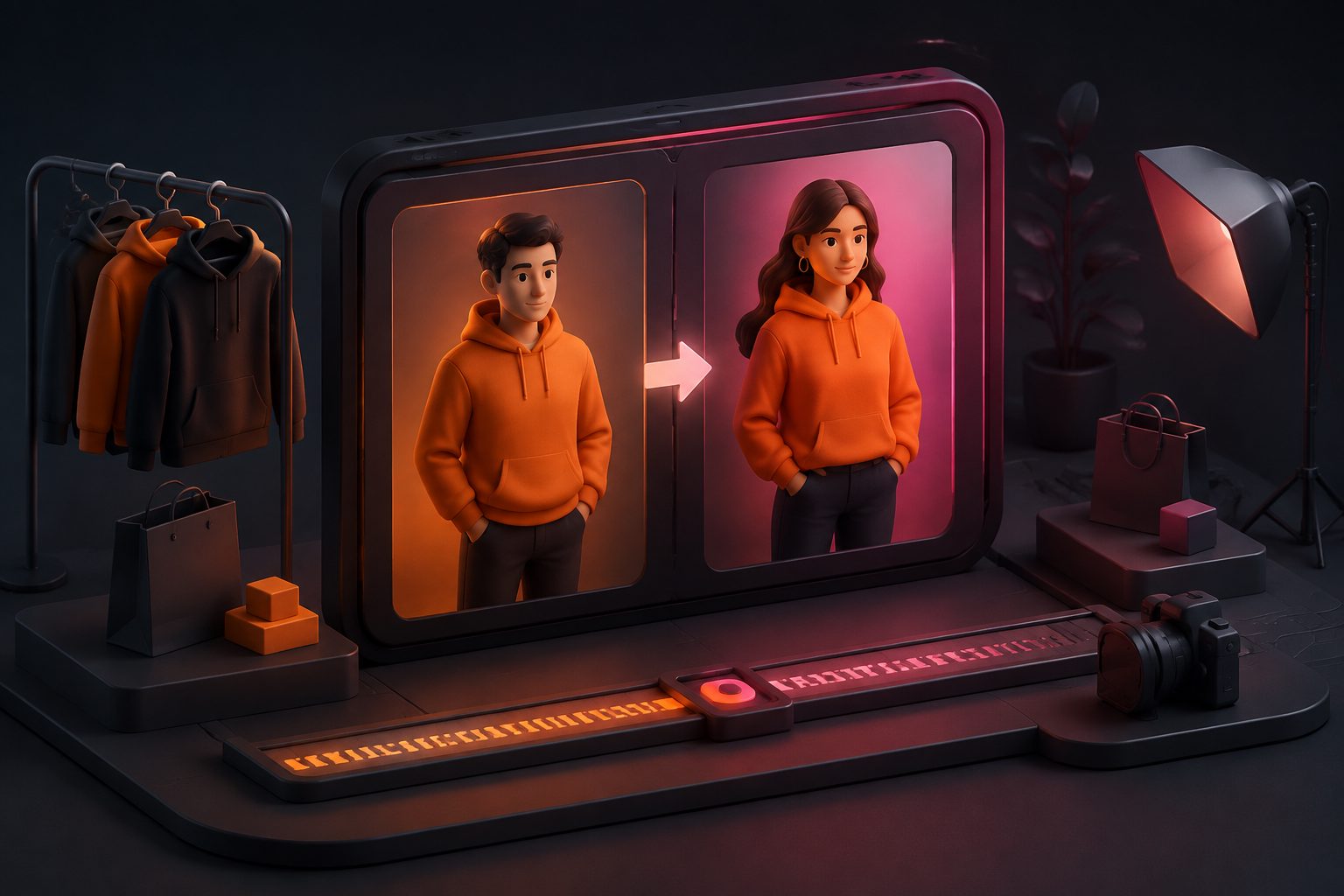
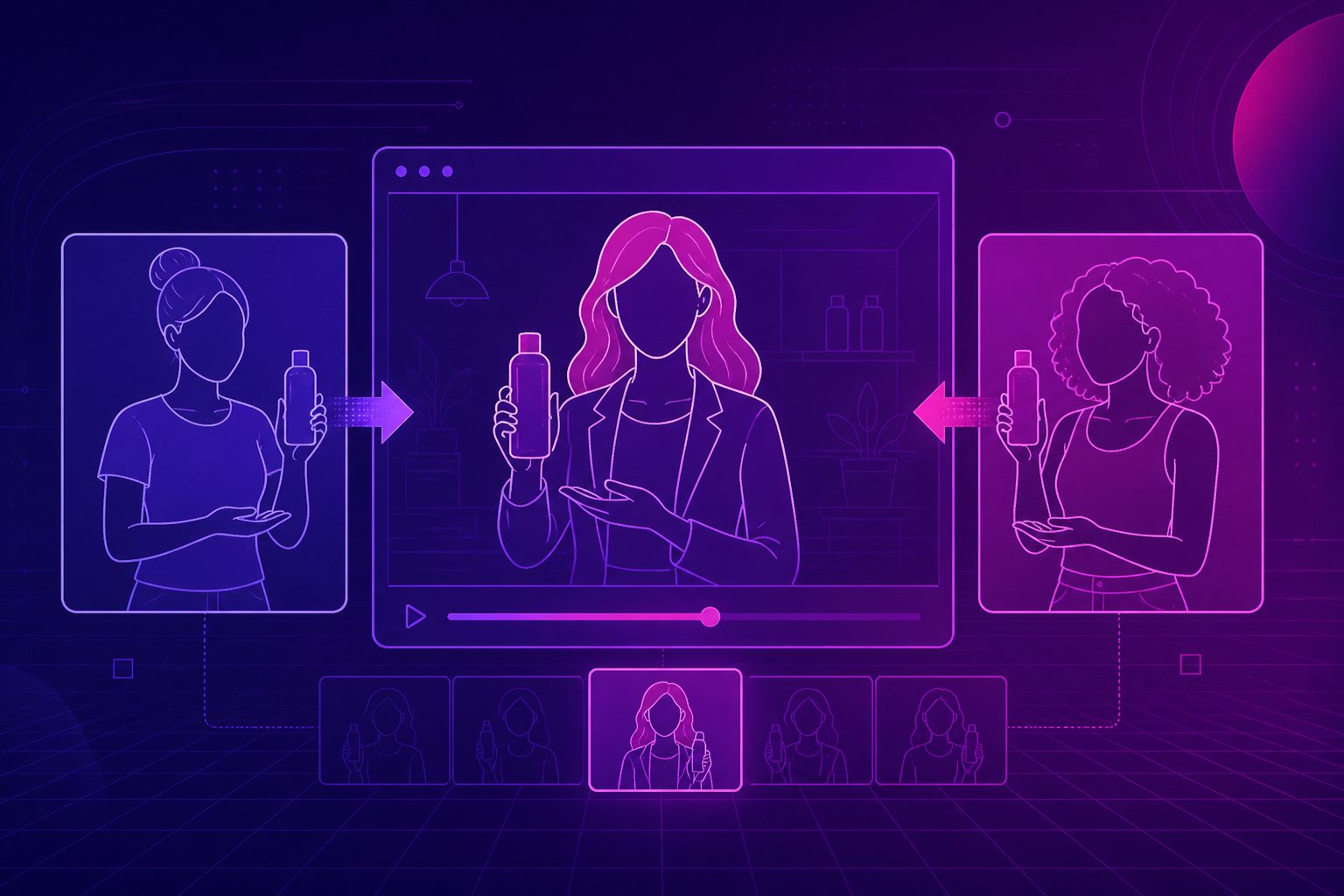
Character replacement means replacing the visible person or character in an existing video while keeping the motion, framing, lighting, and scene logic intact. In plain terms, the shot stays the same; the cast changes. That makes it different from generating a brand-new video from text, where the whole scene must be invented again.
For ecommerce sellers, this matters because the winning part of the creative is often not the actor’s face. It is the hook, product handling, pacing, and CTA structure. If those elements already work, character replacement can let you reuse the shot while updating the performer, persona, or local market fit.
Character replacement vs face swap vs motion control vs ad clone
Most top-ranking guides explain the mechanics well, but they often blur the real production choice. The useful question is not “can AI swap a character?” It is “which workflow preserves the part of the ad that already converts?”
| Workflow | Best for | Main limitation | Ecommerce use case |
|---|---|---|---|
| Face swap | Changing only the face in a clip | Body, wardrobe, and hands stay the same | Quick presenter refresh |
| Character replacement | Replacing the visible person or persona | Needs a clean source clip and careful QA | New creator, model, or market variant |
| Motion control | Reusing the motion of a reference clip | May create a new scene instead of preserving the original one | Rebuilding a concept from a performance reference |
| Ad clone | Reconstructing the structure of a winning ad | Less useful if only the cast needs to change | New variants based on a proven opening, rhythm, and CTA |
For a broader creative stack, see AI Ads Actors: a practical guide for ecommerce video ads and Control Motion in AI Video Ads: A Practical Guide for Ecommerce Creative Teams.
A simple framework for deciding whether to replace or reshoot
A practical decision rule is the Replacement Fit Score. Score each item 0 or 1:
- The clip already has a strong hook.
- The product interaction is simple and stable.
- The camera move is light or static.
- The message needs a new persona, not a new scene.
- The same concept will be reused across several variants.
Score 0–2: reshoot is usually cheaper than fixing a weak base clip.
Score 3–4: character replacement may work if the changes are mostly identity or language.
Score 5: the clip is a strong candidate for character replacement.
This is where many SERP pages stop too early. They tell you how the tool works, but not whether the clip deserves the workflow in the first place.
When ecommerce teams should use character replacement
Character replacement is strongest when the product already has a valid visual story and only the on-screen person needs to change. Common cases include:
- swapping a creator-style spokesperson for a different audience
- localizing a winning ad into another market
- updating an outdated model, outfit, or persona
- testing multiple cast variants against the same offer
- rebuilding a promo around a seasonal or regional angle
A useful rule: if the ad depends on a delicate hand movement, precise product interaction, or regulated claim, a reshoot may still be safer. If the ad depends on the opening hook, visual rhythm, and CTA, character replacement can save time and preserve the structure that already works.
For a deeper workflow breakdown, see Replace Character in Video AI: A Practical Guide for Ecommerce Ads.
What most guides miss: the real production bottlenecks
The biggest bottlenecks are usually not the swap itself. They are speech, subtitles, background consistency, and versioning. A clip can look fine for three seconds and still fail if the mouth, product contact, or end card feels off.
That is why character replacement should sit inside a larger ad system, not as a one-off novelty edit. In ecommerce, the winning workflow is usually:
- keep the proven structure,
- change the cast,
- localize the message,
- publish multiple variants,
- learn from performance.
This is also where Background Replacement for Ecommerce Creative Workflows becomes relevant. Background changes, cast changes, and motion changes work best when they are planned together rather than patched together after generation.
A practical workflow for scaling character replacement
The most reliable workflow starts with a clip that is already clean, short, and easy to read.
1) Choose the right source video
Pick a clip with one clear subject, stable lighting, and minimal occlusion. Avoid fast pans, mirrors, heavy crowd scenes, and small product details that will be hard to preserve. If the clip already has a strong CTA and clear product framing, it is a better candidate than a flashy but confusing edit.
2) Prepare the replacement character
Use a clear target character image that matches the framing of the source clip. The more consistent the pose, silhouette, and lighting relationship, the easier it is to keep the replacement believable.
3) Keep speech aligned
If the source clip talks, pair character replacement with lip sync rather than hoping the mouth will match automatically. AdsTurbo provides AI Face Swap, Lip Sync, and Character Swap workflows, so the visual identity and speech can be handled as separate production steps when needed.
4) Localize the output
If the ad is going to multiple regions, pair the replacement with subtitles or translation. AdsTurbo’s Video Subtitle tool can auto-transcribe speech and generate time-synced captions, while Video Translation supports MP4, MOV, WEBM, or linked sources and can localize into more than 40 target languages.
5) Automate review and delivery
For teams producing many variants, the key advantage is not just generation. It is orchestration. AdsTurbo runs generation tasks asynchronously and supports status polling or webhook callbacks, which makes batch testing easier than waiting on a manual render-by-render loop. Higher-tier plans also support team workflows and custom workflow support (API access itself is available on every plan).
If a campaign needs a full creative system rather than a single swap, E-commerce ads video: a practical creative system for online stores is the better adjacent starting point.
How AdsTurbo fits this workflow
AdsTurbo is built for ecommerce creative teams that need more than one isolated edit. Its Character Swap workflow supports uploading a source video or image and a target character image while preserving motion, lighting, and scene realism.
That matters when the goal is to replace the presenter, not rebuild the entire ad. AdsTurbo also provides:
- Ad Clone for rebuilding winning ad structure around new products or personas
- Video Translation for multilingual localization
- Video Subtitle for time-synced captions and subtitle export
- AI Upscaling for improving output resolution
- AI Eraser for removing watermarks, subtitles, logos, and text overlays
- Background Replace for swapping scenes without manual masking
- Product Video and Product Image workflows for ecommerce assets
This combination is what turns character replacement from a visual trick into a scalable production system.
What to check before publishing
Before any ad goes live, check these points:
- Does the replacement still feel like the original shot?
- Do the hands, clothing edges, and product contact look natural?
- Does the voice, mouth, and subtitle timing match?
- Does the CTA still land with the same rhythm?
- Does the new persona create any rights, disclosure, or endorsement risk?
If the answer to any of those is uncertain, revise before launch. Character replacement can reduce production friction, but it does not remove the need for creative QA.
Common questions about character replacement
Is character replacement the same as face swap?
No. Face swap changes the face while leaving the rest of the performer mostly intact. Character replacement aims to replace the whole visible persona, including body, clothing, and overall on-screen identity.
When should an ecommerce brand reshoot instead of using character replacement?
Reshoot when the product interaction is complex, the scene depends on precise hand movement, or the claim context is sensitive. If the creative only needs a different presenter or market-specific version, character replacement is a better fit.
What kind of clip works best?
A short clip with one clear subject, simple motion, stable lighting, and visible product interaction usually gives the cleanest result. The simpler the shot, the easier it is to preserve realism.
Can one ad be localized into multiple markets?
Yes. Character replacement becomes much more useful when paired with subtitles, translation, and variant-based delivery. That is how one proven concept can become a global creative set instead of a single finished ad.
How does AdsTurbo help teams scale this?
AdsTurbo supports asynchronous generation, webhook callbacks, team workflows on higher plans, and API access for custom automation. That makes it easier to run batch tests, collect outputs, and move fast across variants.
The bottom line
Character replacement works best when the shot already performs and the cast is the variable. For ecommerce ads, that makes it a practical way to localize, test, and scale proven creatives without rebuilding everything from scratch.
The real advantage is not just swapping a person in a video. It is turning one strong concept into a repeatable production system.