By adsturbo.ai | Published 2026-10-11 | Updated 2026-10-11
When you need to remake reported video ads ecommerce campaigns depend on, do not merely crop, mirror, or recolor the removed file. Preserve ownership evidence, appeal incorrect reports, and rebuild every disputed creative layer from assets you own or license. The objective is a genuinely distinct ad—not a superficial attempt to bypass copyright detection.
This guide presents an evidence-first recovery workflow plus an original 12-point Creative Collision Audit for deciding whether a replacement is different enough for production review.
Important: Creative rebuilding does not eliminate a valid copyright claim. Consult qualified counsel when ownership, licensing, or a DMCA counter-notification is disputed.
What Is a Reported Video Ad Rebuild?
A reported video ad rebuild is the production of a new advertisement after an earlier version was removed or restricted following an intellectual-property complaint. A defensible rebuild uses owned or licensed product footage, models, music, scripts, graphics, and brand assets while creating a materially different audiovisual execution.
First identify what actually happened. A copyright report is different from a routine ad rejection, trademark complaint, music mute, account restriction, or product-policy violation. The platform notice normally identifies the affected asset and available response route.
Meta says eligible users may submit an appeal or, in certain US cases, a DMCA counter-notification. TikTok also permits appeals when users believe content was incorrectly removed, but expects supporting evidence rather than unsupported explanations. (facebook.com)
Do not delete project files or the removal notice while an appeal is pending. Keep the original export, source footage, contracts, invoices, timestamps, creator releases, music licenses, and platform correspondence together.
Should You Appeal, Rebuild, or Do Both?
Appeal when you can prove authorization; rebuild when disputed elements are replaceable; do both when downtime threatens revenue but ownership evidence remains strong. These tracks solve different problems: an appeal challenges the removal, while a rebuild restores creative supply.
| Situation | Recommended action | Evidence to collect |
|---|---|---|
| Every element was created in-house | Appeal and prepare a backup rebuild | Raw footage, project history, dated exports |
| A creator produced the ad for your brand | Verify contract rights, then appeal | Agreement, usage scope, payment record |
| Music came from an uncertain source | Replace audio before relaunch | New commercial license and invoice |
| Supplier or competitor footage was reused | Stop using it and rebuild completely | Only assets you independently own |
| The report appears mistaken or retaliatory | Appeal factually and preserve records | Notice ID, URLs, timestamps, ownership chain |
Under the US DMCA process, a valid counter-notification contains legally significant statements, including a good-faith assertion under penalty of perjury. The US Copyright Office explains that eligible material may be restored after 10–14 business days unless the claimant reports filing a court action. Counter-notifications should therefore never be used casually. (copyright.gov)
How Do You Rebuild the Ad Without Carrying Over the Risk?
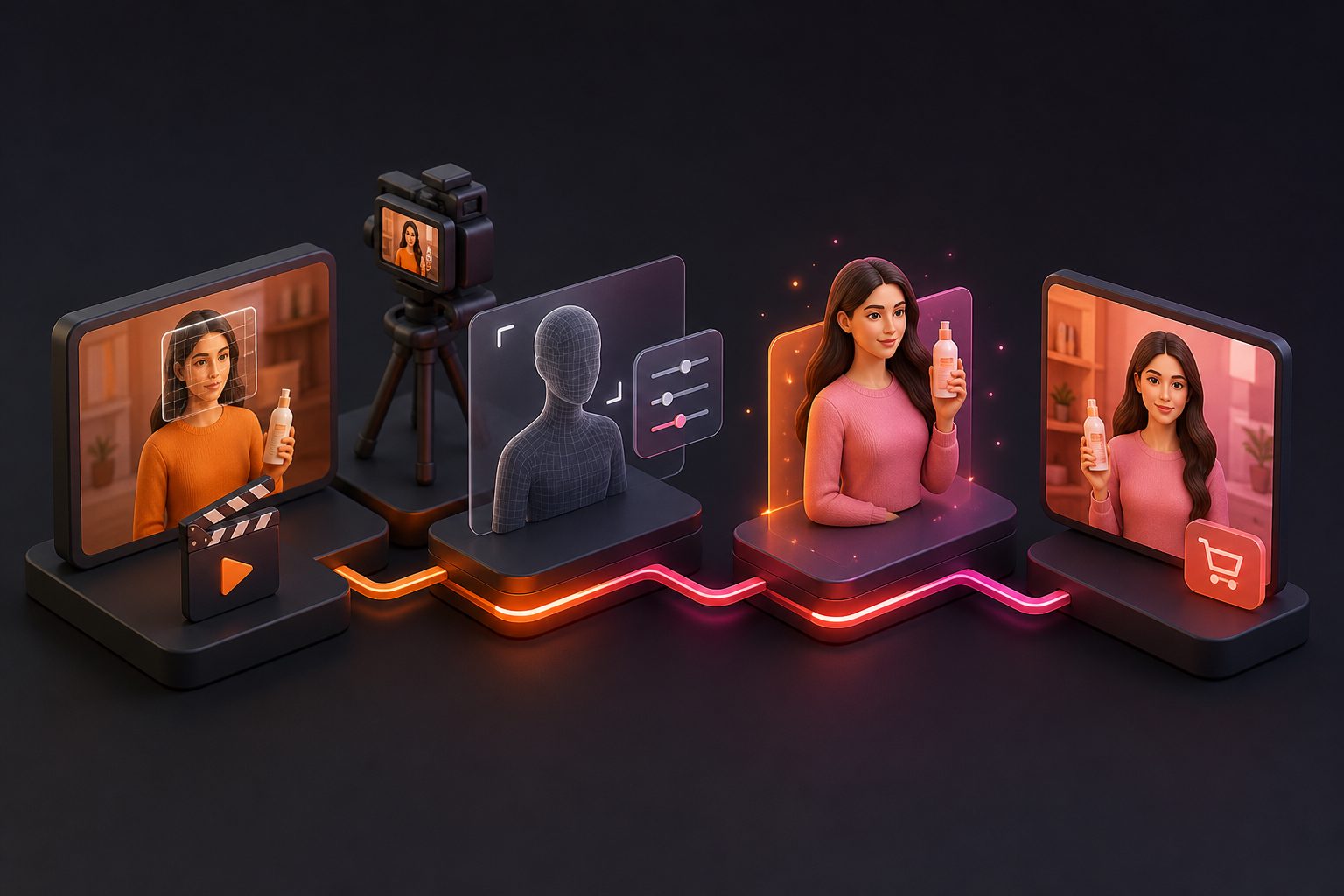
Rebuild from the rights layer outward: replace questionable source media first, then change the presenter, environment, script, audio, edit pattern, and product demonstration. Preserving only the commercial insight—such as “show texture before the offer”—is safer than copying its exact expression.
- Freeze the removed version. Save the URL, notice, campaign ID, thumbnail, export, and editing timeline. Do not overwrite the evidence.
- Map every asset to an owner. Audit footage, model likeness, voice, music, typefaces, logos, screenshots, claims, and stock elements.
- Remove uncertain components. Treat missing licenses or unclear creator agreements as unresolved risk, not implied permission.
- Replace the person and environment. Use a newly authorized performer or generated persona, plus a different setting, wardrobe, framing, and lighting direction.
- Rewrite the expression. Create a new hook, voice-over, captions, shot order, transitions, and CTA rather than paraphrasing line by line.
- Export a clean master. Remove embedded platform marks, metadata inherited from third-party files, and unlicensed audio.
AdsTurbo supports Character Swap, Background Replace, Clip by Clip editing, Lip Sync, subtitles, translation, and resolution enhancement. These controls can accelerate reconstruction, but the seller remains responsible for the rights attached to uploaded and generated materials.
For broader production planning, combine this SOP with a repeatable weekly TikTok ad creative workflow rather than waiting for a takedown to create backups.
What Is the 12-Point Creative Collision Audit?
The Creative Collision Audit is an original production heuristic that scores six expressive layers from 0 to 2. A higher score indicates a more substantial rebuild, but it is not a legal test, platform guarantee, or substitute for permission.
Score each layer as 0 = unchanged, 1 = modified, or 2 = independently rebuilt:
| Creative layer | Questions to ask | Maximum |
|---|---|---|
| Presenter identity | New authorized model, voice, styling, and likeness? | 2 |
| Scene design | New background, props, lighting, and composition? | 2 |
| Verbal expression | New hook, script, captions, and CTA language? | 2 |
| Sound design | New licensed music, voice-over, and effects? | 2 |
| Temporal structure | New shot order, durations, transitions, and rhythm? | 2 |
| Product proof | Newly filmed or generated demonstration angles? | 2 |
Use 8/12 as an internal review threshold, with no zero in the specific layer named by the complaint. This benchmark is intentionally conservative: changing five details cannot cure one unlicensed video clip that remains in the export.
Teams confronting copied marketplace creative can also apply the proof-led methods in this guide to differentiating ecommerce ads from hijacker listings.
What Does a Material Rebuild Look Like in Practice?
A material rebuild keeps the validated sales idea while changing its audiovisual expression. The product benefit may remain factual, but the people, script, scene, sound, demonstration, and editing choices should come from a new production plan.
Consider a 15-second skincare ad removed after a disputed creator-footage report. The original opens with a bathroom selfie, cuts to a texture close-up, shows application, and ends with a discount.
A stronger replacement would use:
- a newly authorized presenter with different styling;
- a daylight vanity scene instead of the original bathroom;
- a macro product shot created from owned product imagery;
- a rewritten problem-first hook;
- newly licensed music and a different voice;
- an application demonstration from another camera angle;
- reordered proof and offer segments;
- new captions, typography, and CTA timing.
This example scores 12/12 under the audit because all six layers are independently rebuilt. It preserves the marketing logic—problem, texture, demonstration, offer—without reproducing the original execution.
For localization, review voice timing and pronunciation separately using an AI video dubbing and lip-sync QA process. Translation alone does not create sufficient differentiation if the visual sequence remains substantially unchanged.
How Can Sellers Prevent the Next Creative Shutdown?
Maintain a rights ledger and at least two independently produced creative routes for every important offer. Redundancy reduces the chance that one complaint, music issue, expired license, or creator dispute pauses the entire campaign.
Record the following for each export:
- source-file owner and storage location;
- creator, model, and voice permissions;
- permitted channels, countries, and usage period;
- music and stock-license documentation;
- script and claim approver;
- first publication date;
- campaign IDs and final file hash;
- alternate presenter, background, and audio versions.
Platform policies reinforce this ownership-first approach. Meta advises posting content you created or have permission to use, while TikTok Ads prohibits unauthorized third-party clips and brands. (facebook.com)
Before relaunch, run both intellectual-property and category-policy checks. Products involving sensitive imagery may also benefit from a dedicated Facebook ad compliance preflight.
Frequently Asked Questions
Can changing the model and background remove a copyright problem?
Not automatically. Those changes reduce visual overlap, but unlicensed music, footage, scripts, graphics, or product demonstrations may remain. Audit every layer and remove the disputed material completely.
Is mirroring, cropping, or speeding up a reported ad enough?
No. These are superficial modifications that preserve most of the original expression. They also create a weak shopper experience and should not be treated as a rights-clearance strategy.
Can I relaunch while an appeal is pending?
You can prepare an independently sourced replacement, subject to platform rules and legal advice. Do not repost the same disputed file under a new filename or account merely to evade enforcement.
Can AdsTurbo rebuild every part of the advertisement?
AdsTurbo provides tools including Character Swap, Background Replace, Ad Clone, Lip Sync, subtitles, translation, product video generation, and Clip by Clip editing. Input rights, licenses, claims, and final approval remain the advertiser’s responsibility.
What should I do if the complaint appears fraudulent?
Preserve the notice and ownership evidence, use the platform’s official appeal channel, and avoid making unsupported accusations in public. Seek legal advice before submitting a DMCA counter-notification or pursuing a misrepresentation claim.