
By adsturbo.ai | Published 2026-10-09 | Updated 2026-10-09
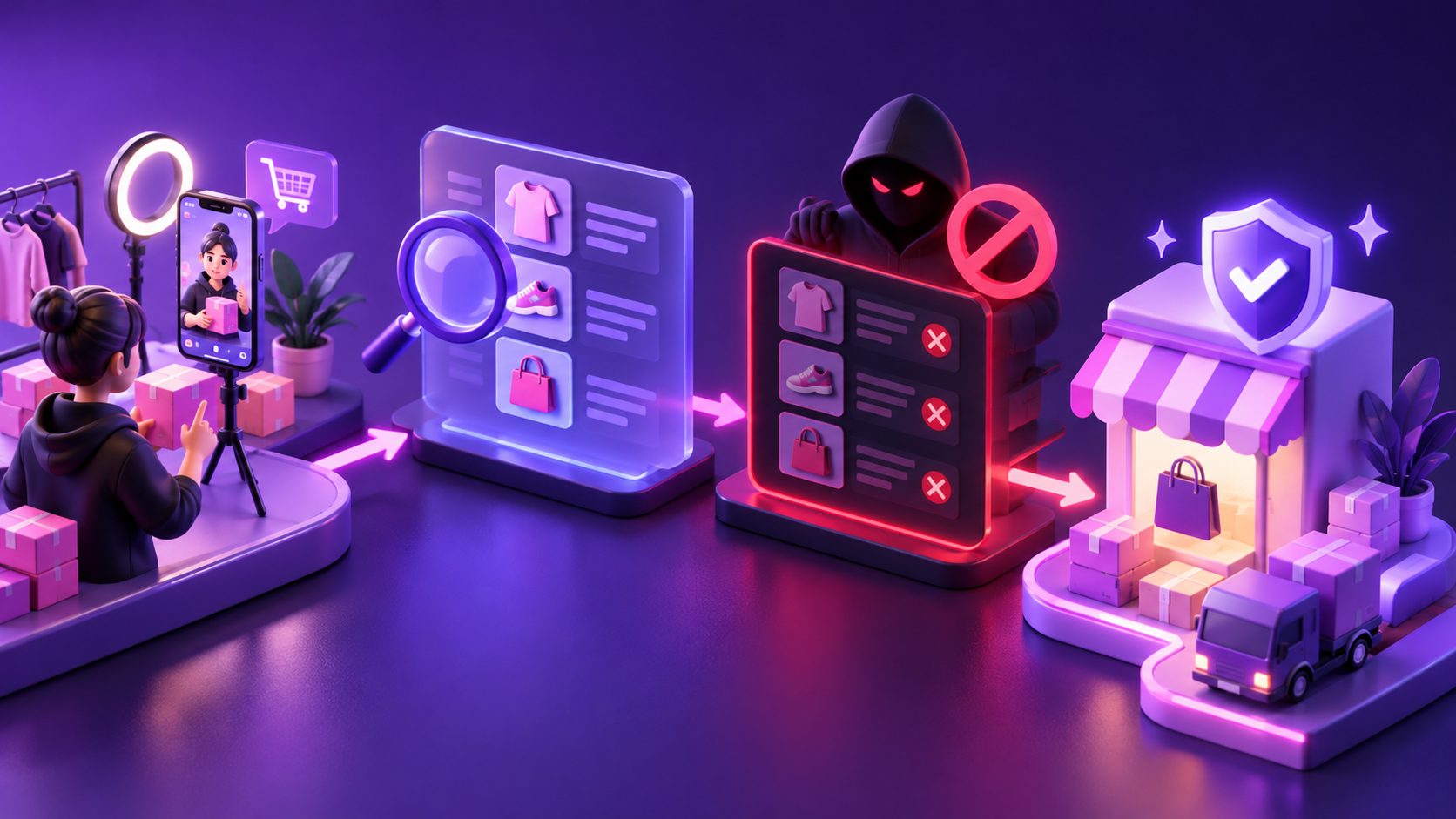
TikTok Shop creator blacklist sample scam prevention works best as a documented do-not-send system, not a public list of alleged scammers. Screen creators before approval, record objective fulfillment failures, separate poor performance from misconduct, and maintain backup product videos so one missed collaboration never stops your campaign.
What Should a TikTok Shop Creator Blacklist Actually Track?
A creator blacklist should be an internal risk register based on observable behavior. It should record what happened, when it happened, the supporting evidence, and whether the creator may be reconsidered later. Avoid emotional labels such as “thief” or “fraudster” when the evidence only shows a late or ineffective post.
Track these fields:
| Field | What to record |
|---|---|
| Creator identity | Handle, creator ID, profile URL, and primary niche |
| Sample details | SKU, unit cost, shipping cost, and delivery date |
| Commitment | Agreed format, deadline, product link, and disclosure requirements |
| Outcome | Posted, late, incomplete, canceled, unreachable, or disputed |
| Evidence | Messages, tracking records, content URL, and screenshots |
| Reason code | A standardized code rather than a subjective accusation |
| Review date | Permanent block or date for reconsideration |
| Owner | Team member responsible for the decision |
Keep this list private and accessible only to people managing creator partnerships. A public name-and-shame spreadsheet is harder to verify, encourages duplicate or malicious reports, and creates disputes without improving your internal shipping decisions.
Which Behaviors Are Scams, and Which Are Merely Poor Performance?
A missed sales target is not automatically a scam. Creator performance depends on audience fit, content quality, timing, price, inventory, and the product page. Your risk system should distinguish deliberate deception from a collaboration that simply failed to convert.
Use behavior-based reason codes:
- NP14 — No post: No qualifying content after the required period and any documented extension.
- GHOST — Unresponsive: No reply after two follow-ups through approved communication channels.
- FALSE-ID — Identity mismatch: Conflicting account, shipping, or representation details.
- OFFPAY — Off-platform payment request: A demand for unexpected fees or payment outside the agreed workflow.
- MISREP — Product misrepresentation: Content materially changes or falsely describes the item.
- RIGHTS — Unauthorized reuse: The creator republishes content or assets without permission.
- LOWFIT — Weak results: Content was delivered properly but generated little engagement or revenue.
Only the first six codes justify a risk review. LOWFIT belongs in a performance tier, not a misconduct blacklist. This distinction prevents sellers from rejecting honest creators merely because one video did not sell.
How Can Sellers Vet Sample Requests Before Shipping?
Effective vetting combines account legitimacy, audience relevance, delivery history, and unit economics. No single metric—follower count, views, or GMV—can reliably predict whether a creator will produce useful content.
Use this original 100-point Sample Approval Score as an operational model, not as an official TikTok metric:
| Category | Weight | Approval question |
|---|---|---|
| Product-audience fit | 25 | Does the creator regularly cover this category and customer problem? |
| Recent shoppable content | 20 | Are there recent, original product demonstrations with working links? |
| Collaboration reliability | 20 | Is there evidence of completed sample obligations and consistent posting? |
| Content quality | 20 | Can viewers clearly see the product, use case, benefits, and limitations? |
| Sample economics | 15 | Can the expected value justify product, fulfillment, and support costs? |
Use 75–100 for free-sample approval, 55–74 for a refundable sample, discounted unit, or lower-cost SKU, and below 55 for rejection. Apply an immediate hold if identity details conflict or the creator requests unusual off-platform transactions.
TikTok Shop’s current U.S. guidance states that sellers can approve or reject free-sample requests and track content through Affiliate Center. It also says qualifying free-sample content generally must be posted within 14 days of delivery; a video must remain public for at least three days, or the creator must run a qualifying LIVE for at least 10 minutes. (seller-us.tiktok.com)
What Is the Safest Sample Approval Workflow?
The safest workflow limits inventory exposure before expanding a creator relationship. It creates a clear record at every stage and gives reliable creators better access over time.
- Set a loss ceiling. Define the maximum product and shipping cost you can risk per creator and per week.
- Review recent evidence. Examine the creator’s latest shoppable posts, category consistency, product presentation, and audience comments.
- Score the request. Apply the same approval model to every creator rather than relying on follower count.
- Choose the sample type. Reserve free samples for stronger candidates and use lower-risk arrangements for unproven accounts.
- Confirm the brief. Document the SKU, required product link, key facts, prohibited claims, disclosure, and deadline.
- Track delivery and content. Record carrier delivery, follow-up dates, post URL, public duration, and final status.
- Close the record. Mark the collaboration completed, performance-only, reconsider later, or do not send.
The FTC treats free or discounted products as a material connection that should be clearly disclosed when the creator endorses the product. Sellers should therefore include disclosure expectations in the brief rather than treating them as an optional creator detail. (ftc.gov)
How Should a Seller Handle a Failed Sample Collaboration?
Start with evidence and escalation, not public accusations. A creator may be late because of delivery damage, an incorrect variant, product delisting, illness, or a platform review. Give the creator one structured opportunity to explain the issue before assigning a permanent block.
Use this escalation sequence:
- Day 0: Save proof of delivery and calculate the expected content deadline.
- First follow-up: Ask for a status update and a specific publication date.
- Second follow-up: Restate the agreed deliverable and request evidence of any product or account issue.
- Deadline review: Check whether content exists, links the correct product, and satisfies the agreed format.
- Final classification: Complete, extended, performance-only, temporary hold, or do not send.
- Platform action: Use available rating, review, support, or reporting tools when the documented situation qualifies.
TikTok Shop allows sellers to rate eligible free-sample collaborations after completion and, under specified conditions, after an incomplete collaboration. The platform’s seller guide also identifies exceptions such as seller-caused cancellations, stock problems, and unresolved appeals, which is why automatic blacklisting is unreliable. (seller-us.tiktok.com)
How Can AI-Made UGC Reduce Dependence on Samples?
AI-made backup creative gives sellers a controlled alternative when creator content arrives late or never arrives. It should function as brand-produced advertising, not as a fabricated customer testimonial or an imitation of a real creator.
With AdsTurbo Product Video, a seller can upload a JPG or PNG product image of up to 10 MB and generate product review-style, introduction, or demonstration videos. Sellers can then add time-synchronized captions with Video Subtitle, localize approved scripts, or produce additional creative variants for testing.
A practical backup sequence is:
- Photograph the real product on a clean, solid-color background.
- Write a script using only verified listing facts and supported benefits.
- Generate a short product demonstration or presenter-led concept.
- Compare every visible detail with the shipped SKU.
- Add captions, disclosure labels, and the correct product link.
- Export separate hooks instead of publishing near-identical duplicates.
The weekly TikTok ecommerce creative workflow can help organize testing, while the no-filming video ad production SOP provides a contingency process for small teams. When replacing creator footage whose usage permission has ended, follow a rights-safe expired UGC remake workflow.
TikTok Shop permits responsible AI-generated content but prohibits false endorsements, unauthorized impersonation, fabricated product effects, and visuals that change the item’s actual size, color, material, quantity, features, or performance. Significantly AI-generated or altered content should also be clearly labeled. (seller-us.tiktok.com)
Frequently Asked Questions
Should sellers share a TikTok creator blacklist with other brands?
Usually not. Maintain a private, evidence-based risk register. If another business asks for information, share your vetting process and objective criteria rather than publishing unverified accusations or personal shipping data.
How many missed posts should trigger a block?
One unexplained failure can justify a temporary hold. A permanent block is more appropriate when evidence shows repeated non-delivery, false identity information, unauthorized content use, or attempts to move payments outside the agreed process.
Should creators with low GMV be rejected?
No. Low GMV may reflect a new account, poor product fit, or limited posting history. Reduce risk by offering a lower-cost SKU, using a refundable sample, or approving a small test before expanding the partnership.
Can AI video replace all creator partnerships?
No. AI video is best used for backup production, controlled product explainers, localization, and creative testing. Real creators can still contribute audience trust, original demonstrations, and customer-language insights that brand-produced content may not capture.
What is the most important blacklist rule?
Record behavior, evidence, and dates—not opinions. A reliable internal system should help your team make consistent sample decisions without turning disappointing performance into an unsupported fraud allegation.