

By adsturbo.ai | Published 2026-10-07 | Updated 2026-10-07
A remake expired ugc video ad tool should help a DTC brand preserve an ad’s conversion logic without continuing to use the creator’s expired footage, voice, likeness, or endorsement. The safe objective is not to disguise a copy. It is to extract the hook, pacing, proof sequence, and CTA, then produce a genuinely new advertisement from authorized assets.
This guide presents a practical workflow for doing that while separating platform authorization, contractual usage rights, and copyright considerations.
What Does It Mean to Remake an Expired UGC Ad?
Remaking an expired UGC ad means rebuilding its marketing concept with newly authorized scripts, performers, audio, and visuals after the original creator license ends. It does not mean downloading the old video, replacing a face, and continuing to run substantially the same creative.
Three different permissions may be involved:
- Platform authorization: Permission to promote a creator’s post, such as through TikTok Spark Ads.
- Contractual usage rights: The agreed channels, regions, editing permissions, and license period.
- Copyright and likeness rights: Permission covering the video, script, performance, voice, image, music, and other protected elements.
TikTok documentation shows that video-code authorization periods can include 7, 30, 60, or 365 days. However, a platform code does not replace the terms of the brand’s creator agreement. (ads.tiktok.com)
When either permission is unclear, pause the old creative and request renewal or legal review.
Which Parts of an Expired Ad Can You Keep?
Keep brand-owned facts and abstract advertising logic; replace creator-specific expression. The distinction matters because changing colors, captions, or a face does not automatically create an independently usable advertisement.
The following original Rights Reset Map gives ecommerce teams a fast first-pass audit:
| Asset layer | Examples | Default action after expiration |
|---|---|---|
| Red: creator identity | Face, voice, performance, username, testimonial, raw footage | Stop using unless renewed |
| Amber: creative expression | Exact wording, shot order, jokes, music, distinctive transitions | Review ownership; substantially re-author |
| Green: brand inputs | Owned product images, approved claims, price, offer, product facts | Reuse if current and properly owned |
| Green: abstract logic | Problem–solution arc, fast hook, demonstration, CTA category | Use as strategic direction, not as a frame-by-frame copy |
The U.S. Copyright Office explains that copyright owners hold the right to authorize derivative versions, and merely changing someone else’s work does not automatically solve the rights issue. (copyright.gov)
Practical rule: If viewers could reasonably identify the original creator or advertisement from the remake, the transformation probably needs to go further.
How Do You Rebuild the Ad Without Reusing the Creator?
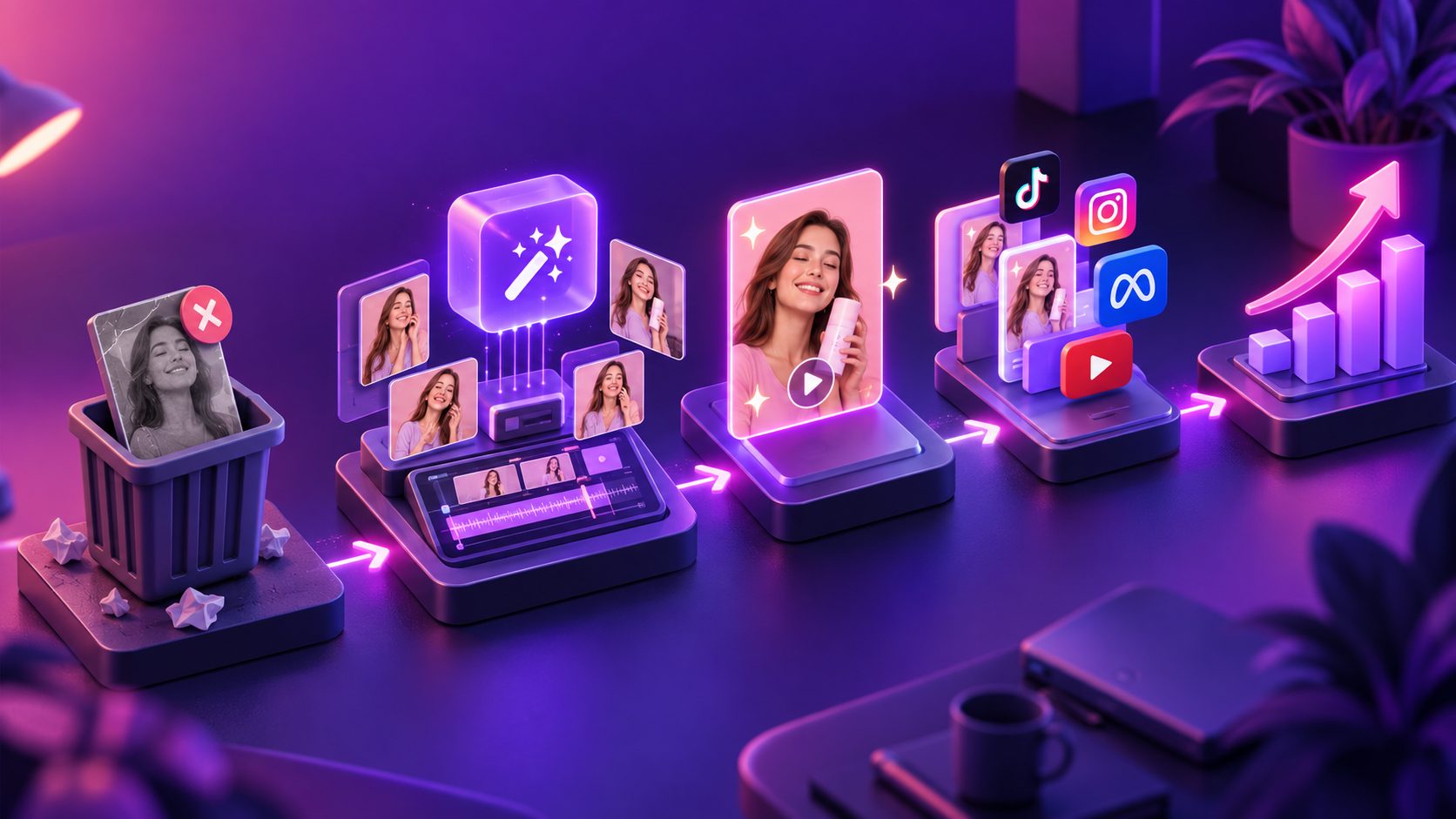
Convert the old advertisement into a performance brief, then create every expressive layer again. The new version should use fresh wording, a new visual plan, authorized talent, brand-owned product media, and independently selected audio.
- Freeze the expired asset. Pause campaigns, disable automated reuse, and preserve reporting data for analysis.
- Record the rights boundary. List the license end date, channels, territories, edit permissions, music rights, and creator identity restrictions.
- Extract conversion logic. Note the opening promise, objection, proof device, scene tempo, product reveal, and CTA.
- Rewrite from product truth. Build a new script from approved claims rather than paraphrasing every original sentence.
- Design a different shot plan. Change locations, framing, demonstrations, scene order, captions, and visual metaphors.
- Use authorized production assets. Select a new actor, synthetic persona, hands-only presentation, or product-first format.
- Run a final identity check. Confirm that the output does not imitate the creator’s appearance, voice, signature phrases, or testimonial.
AdsTurbo Ad Clone can analyze a reference ad’s structure, rhythm, shots, and CTA pattern before generating new brand-oriented variants. Its Product Video and library of more than 300 AI actors provide alternatives when fresh filming is unavailable. For a broader production method, use this no-filming AI UGC ad testing playbook.
What Should an AI Remake Change?
A defensible remake should change identity, expression, and evidence—not merely surface styling. Preserve the commercial hypothesis being tested, but rebuild how that hypothesis appears on screen.
Consider an 18-second skincare ad with this structure:
- 0–3 seconds: creator states a discomfort-based hook.
- 3–8 seconds: close-up product application.
- 8–14 seconds: personal result claim.
- 14–18 seconds: discount CTA.
A stronger remake might use a hands-only routine, a question-led hook, an ingredient demonstration, approved product benefits, and a comparison CTA. The business logic remains hook → demonstration → proof → action, while the performance and expression become new.
For controlled testing, create a 4 × 3 × 2 matrix:
- Four original hooks
- Three substantiated proof devices
- Two CTA treatments
That produces 24 concept combinations before changing actors or languages. Use the controlled creative-variation matrix to isolate variables instead of generating random versions.
When Is Character Replacement the Wrong Choice?
Character replacement is the wrong default when the source video’s usage rights have expired. Replacing the person may leave the original performance, camera work, timing, setting, audio, and other protected expression embedded in the output.
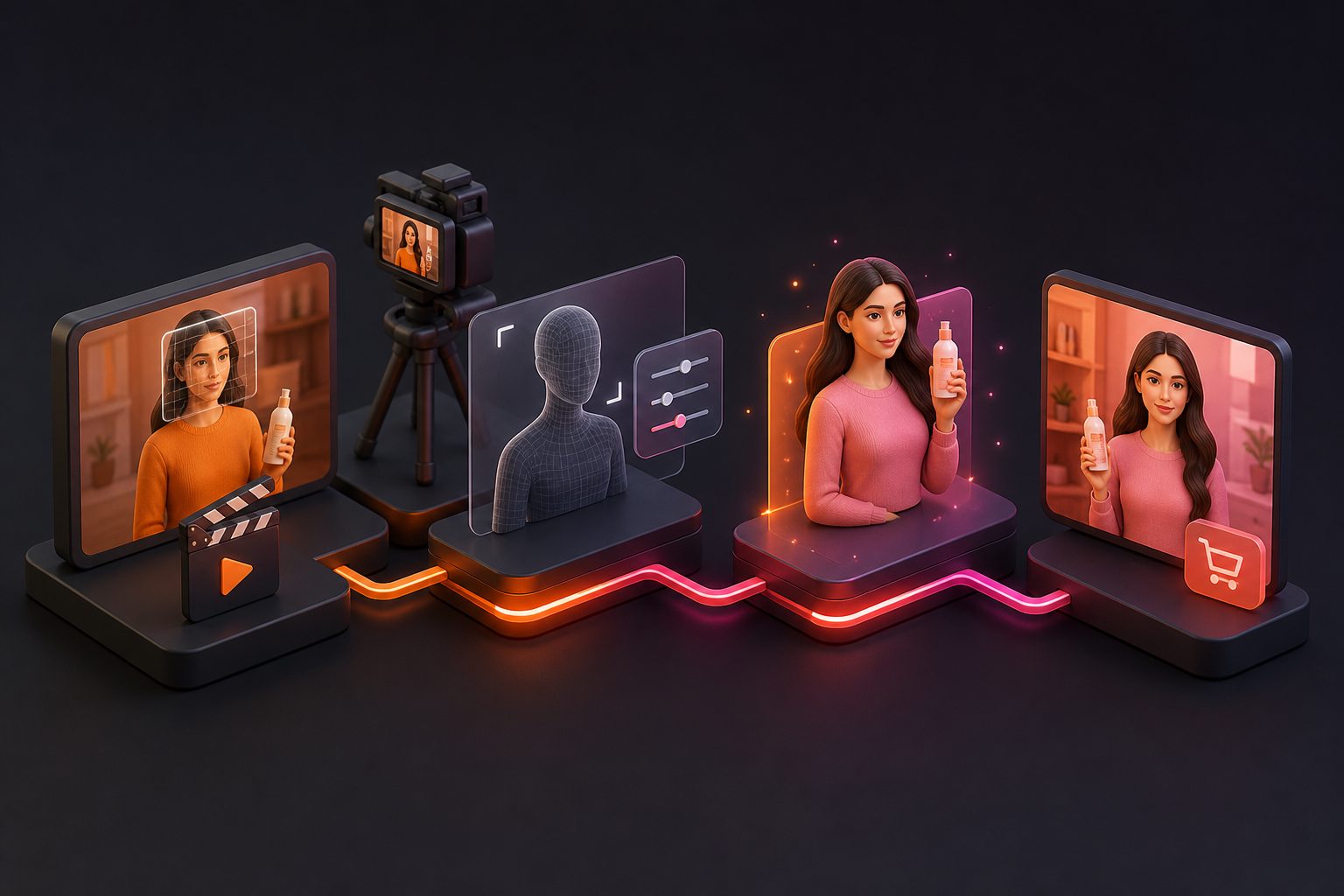
AdsTurbo Character Swap is designed to replace a person while preserving motion, lighting, and scene realism. That makes it useful when the brand has permission to process the source video and permission for the target character image. It does not independently grant rights to expired source material.
Use a fresh generation workflow instead when:
- The license prohibits derivative edits.
- Raw footage rights were never transferred.
- The creator’s gestures or delivery remain recognizable.
- The original music or voiceover is not licensed.
- The agreement covers only Spark Ads or a limited paid-media term.
When both source and target assets are authorized, follow a documented rights-safe character localization workflow.
What Compliance Checks Belong Before Launch?
Before launch, verify asset ownership, truthful claims, disclosure requirements, and AI labeling. A technically new video can still create risk if it implies a false testimonial or makes the synthetic actor appear to be a real customer.
As of October 7, 2026, TikTok requires disclosure for ads containing significantly AI-generated or manipulated media. Its policy also prohibits misleading identity use and making a person appear to say something they did not say. (ads.tiktok.com)
Use this launch checklist:
- Confirm the expired creator video is no longer running.
- Archive the contract and authorization dates.
- Verify every product claim against current evidence.
- Do not present an AI actor’s scripted statement as an actual customer experience.
- Add applicable AI-generated or manipulated-media labels.
- Keep sponsorship disclosures clear and difficult to miss.
- Review captions, landing pages, prices, and offers for consistency.
- Save source files, approvals, prompts, scripts, and export dates.
The FTC states that endorsements must be honest and that material brand relationships should be disclosed clearly and conspicuously. (ftc.gov) If a revised creative is rejected, use a four-layer video ad compliance review before submitting another version.
Frequently Asked Questions
Can a brand keep running a UGC ad after creator authorization expires?
Not without another valid basis for use. Pause the campaign and compare the platform authorization with the creator contract. Renew the relevant permissions if the brand wants to continue using the original asset.
Is changing the creator’s face enough?
Usually not. Face replacement may retain the original performance, audio, scene composition, and editing. A safer remake generates new expressive elements from a brand-owned brief.
Can the original hook still be used?
The underlying angle may be reusable, but distinctive wording should be rewritten. Retain the customer problem or commercial hypothesis, then develop multiple independently written hooks.
What should a remake expired ugc video ad tool analyze?
It should identify the hook, pacing, scene purpose, product reveal, proof mechanism, objection handling, and CTA. These findings should become a production brief rather than instructions for a frame-for-frame duplicate.
Does AI generation eliminate creator-rights concerns?
No. AI is a production method, not a license. Brands still need permission for reference footage, uploaded faces, voices, music, logos, testimonials, and other protected assets.