


作者:adsturbo.ai|发布日期:2026-08-31|更新日期:2026-08-31
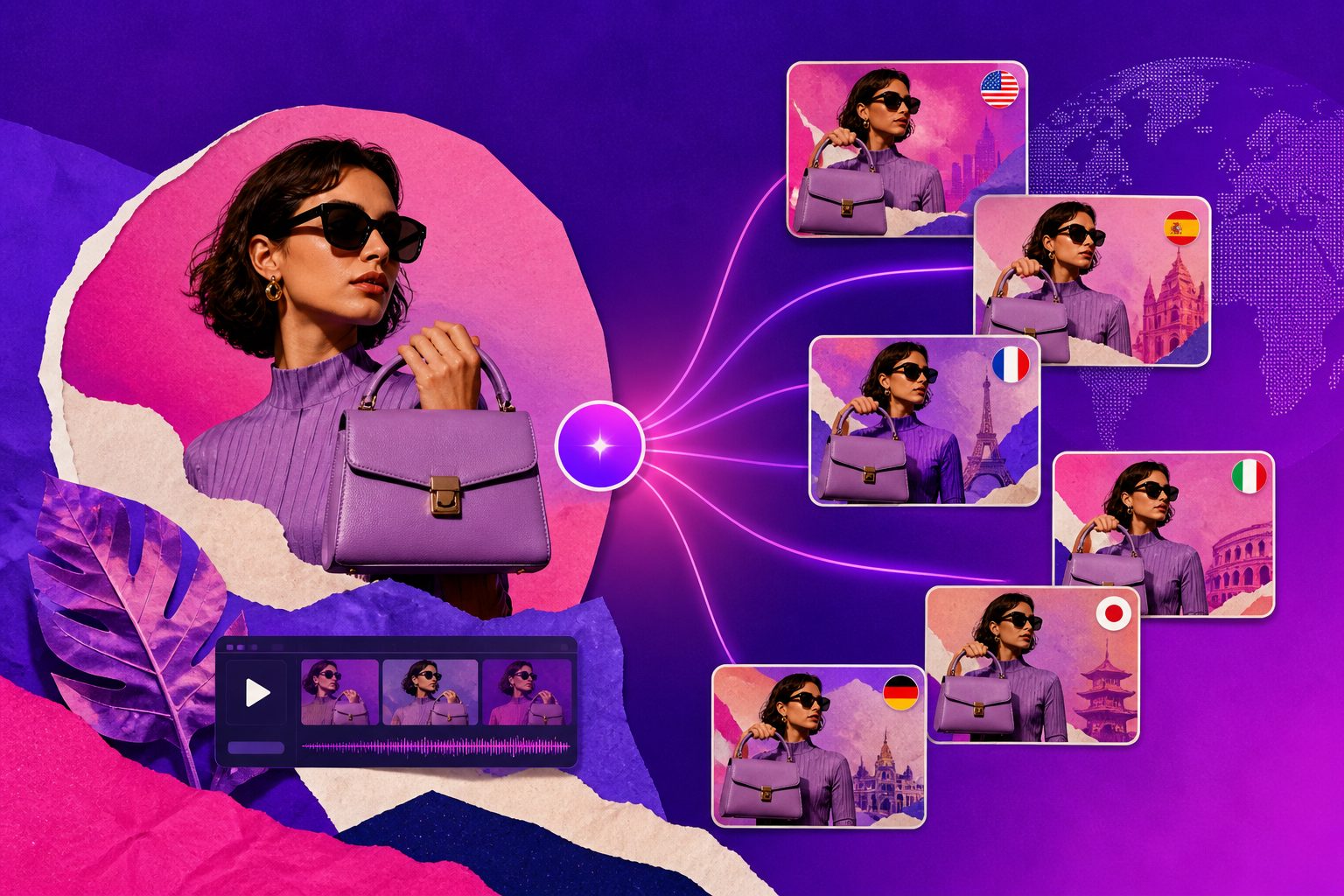
Character swap is the process of replacing the person or visible performer in a video while preserving the original motion, scene rhythm, camera timing, and commercial structure. For ecommerce teams, it is most useful when a winning video concept needs new talent, new markets, or more creative variations without another shoot.
This guide explains where AI character replacement works, where it fails, and how to use it responsibly in paid social creative. The focus is practical: product demos, UGC-style ads, creator licensing, localization, and A/B testing.
What Is Character Swap in AI Video?
Character swap is a video editing workflow that replaces an on-screen person with another approved character, model, or AI ad actor while keeping the source clip’s action and timing. It is broader than face swap because it can involve the body, outfit, pose, hair, and sometimes the surrounding interaction with the product.
In ecommerce advertising, the source clip is usually a short UGC-style video, product demo, try-on, unboxing, or testimonial-style scene. The replacement character may be a licensed creator, an internal brand persona, a localized presenter, or an AI actor designed for a specific audience.
The key creative advantage is reuse. A team can keep the hook, gesture, prop handling, and call-to-action structure of a video that already performs, then test a different performer profile. AdsTurbo’s AI Character Swap for Ecommerce Video Ads explains the narrower execution layer; this article covers the upstream strategy and decision process.
Character Swap vs Face Swap vs Character Replacement
Face swap changes identity mainly at the face level; character replacement changes the visible person more broadly; character swap sits between creative editing and full video regeneration. Choosing the right term matters because each workflow has different creative risk.
| Workflow | What changes | What usually stays | Best ecommerce use case |
|---|---|---|---|
| Face swap | Face identity | Body, pose, scene, outfit | Minor talent variation when the original body and wardrobe fit |
| Character swap | Person identity, visible styling, sometimes outfit | Motion, timing, framing, product action | UGC ad localization and audience testing |
| Full AI video generation | Scene, character, motion, script | Only the prompt or product idea | Net-new concepts when no source performance exists |
| Manual reshoot | Everything captured live | Brand brief and shot plan | Premium campaigns, hero product launches, regulated claims |
A simple rule: use character swap when the original motion is valuable. If the script, camera angle, or product handling is weak, replacing the person will not fix the ad.
When Should Ecommerce Teams Use Character Swap?
Use character swap when a video already has a strong structure but the actor, language, audience fit, or licensing window needs to change. It is not a shortcut for strategy; it is a way to scale proven creative patterns.
The strongest use cases are:
-
Regional localization
Replace the presenter with a character who better fits a target market, then pair it with translated captions or voiceover. -
Audience-segment testing
Test different personas for the same product: busy parent, skincare expert, student, fitness buyer, office worker, or gift shopper. -
Creator asset extension
When licensing allows derivative use, a brand can produce variants without asking the creator to reshoot every angle. -
Seasonal refreshes
Keep the winning demo sequence but update the visible character, wardrobe tone, or campaign context. -
Product catalog scaling
Apply the same performer motion to multiple SKUs when hand movement, product framing, and scene context still make sense.
For teams building a broader video production system, character replacement should sit beside scripting, product image generation, subtitles, localization, and format adaptation. AdsTurbo’s UGC video ad generator playbook covers the surrounding UGC production workflow.
A Practical MOTION Score for Choosing Source Clips
The best source clip for character swap is short, stable, well-lit, rights-cleared, and built around one clear product action. The MOTION score below is an original preflight framework for deciding whether a clip is worth replacing or should be reshot.
| Factor | Question | Score 0 | Score 1 | Score 2 |
|---|---|---|---|---|
| M — Motion clarity | Are body movements readable? | Fast blur | Some blur | Clear gestures |
| O — Occlusion | Do hands, hair, props, or text cover the person? | Frequent | Occasional | Minimal |
| T — Talent fit | Does the replacement persona fit the product claim? | Mismatch | Neutral | Strong fit |
| I — Interaction | Is the product interaction simple and believable? | Complex | Mixed | Clear |
| O — Output use | Is the target platform known? | Unknown | One format | Multi-format plan |
| N — No-risk rights | Are consent and usage rights documented? | No | Partial | Yes |
A clip scoring 9–12 is a strong candidate. A clip scoring 6–8 can work with edits, cropping, or a shorter segment. A clip below 6 is usually better rebuilt as a new replace character in video AI workflow or reshot.
This scoring system adds discipline to creative testing. It prevents teams from wasting generation credits on clips where the original footage is too chaotic to preserve.
How to Build a Character Swap Workflow for Ads
A reliable character swap workflow starts with rights review, then source-clip selection, character reference preparation, generation, QA, localization, and performance testing. Skipping the early checks usually creates more rework than it saves.
-
Confirm rights and consent
Verify that the source performer, replacement character, voice, likeness, and music can be used for the planned ad channels. -
Select the shortest useful clip
Start with 6–12 seconds when possible. Shorter clips reduce continuity problems and make A/B testing easier. -
Prepare the replacement character
Use a clear front-facing image when required. Avoid extreme filters, heavy shadows, or images where the face is partially blocked. -
Preserve the winning structure
Keep the hook, gesture, pacing, product reveal, and CTA logic that made the original clip worth adapting. -
Generate controlled variants
Change one variable at a time: character, language, background, subtitle style, or CTA. -
Run visual QA before media buying
Check hands, eyes, product contact, text overlays, shadows, and frame-by-frame identity drift. -
Localize for platform and market
Add subtitles, translate voiceover where appropriate, and export vertical, square, or landscape formats.
AdsTurbo Character Swap supports uploading a source video or image with a target character image, while preserving motion, lighting, and scene realism. For broader production, AdsTurbo also provides Lip Sync, Video Translation, Background Replace, Video Subtitle, and API-based workflows.
What Makes a Swap Look Believable?
A believable swap keeps the replacement character consistent while respecting the source video’s physics: lighting direction, camera distance, body proportion, product contact, and motion speed. Most bad results fail because the character looks separate from the scene.
Use this QA checklist before launch:
- Hands: Do fingers wrap around the product naturally?
- Eyes: Does gaze direction match the original intent?
- Mouth: If there is speech, does lip timing match the audio?
- Edges: Are hair, shoulders, and clothing boundaries stable?
- Lighting: Does the face match the scene’s color temperature?
- Scale: Does the new person fit the chair, room, product, or countertop?
- Continuity: Does identity drift between frames?
- Claims: Does the character appear to personally endorse something they did not experience?
For speech-heavy ads, character replacement may need lip sync or video translation after the visual swap. AdsTurbo provides Lip Sync and Video Translation features, and its Video Subtitle tool can automatically transcribe speech and generate time-synced subtitles for TikTok, Instagram Reels, and YouTube Shorts-style formats.
Consent, Disclosure, and Brand Safety
Character swap should be treated as synthetic advertising content that needs consent, rights documentation, and truthful claims. The technology is useful, but misuse can create legal, platform, and reputation risk.
In the United States, advertisers should be especially careful with endorsements, testimonials, and impersonation. The FTC’s updated Endorsement Guides address issues such as virtual influencers and clear disclosure, as summarized in the FTC announcement on updated advertising guides. The FTC’s Consumer Reviews and Testimonials Rule Q&A also notes that fake or misleading testimonials can be deceptive depending on the facts.
A practical compliance checklist:
- Get written permission for source footage and replacement likeness.
- Do not make a real person appear to endorse a product without approval.
- Avoid celebrity, public figure, employee, or customer likeness unless rights are explicit.
- Keep substantiation for claims shown on screen.
- Disclose material connections where influencer or testimonial rules apply.
- Keep generation records, approvals, and final exported files.
NIST’s Generative AI Profile recommends considering disclosure in relevant contexts based on risk, audience, and use. For ecommerce teams, that means synthetic content policy should be part of the creative brief, not an afterthought.
Character Swap for Creative Testing: A Simple Experiment Design
The cleanest test changes only the visible character while keeping the offer, product, first three seconds, caption style, and landing page constant. This makes the result easier to interpret.
A useful ecommerce test plan:
| Variable | Control version | Test version | Why it matters |
|---|---|---|---|
| Character | Original actor | New approved AI ad actor | Measures persona fit |
| Hook | Same first line | Same first line | Avoids confusing actor effect with script effect |
| Product shot | Same clip | Same clip | Keeps product evidence constant |
| CTA | Same CTA | Same CTA | Keeps conversion prompt constant |
| Format | 9:16 only | 9:16 only | Removes placement noise |
| Market | Same country | Same country | Avoids language and culture overlap |
Do not declare a winning persona after one small spend window. Character-driven ads are sensitive to audience, placement, offer, and product category. Treat the first test as a signal, then run a second round with two or three related personas.
AdsTurbo provides more than 300 AI actors and 100 product ad templates, which can help teams create structured variation sets. For teams comparing characters with generated product scenes, the AI ads actors guide explains how to think about persona, credibility, and audience match.
Where Character Swap Fails
Character swap fails when the source video asks the model to solve too many hard problems at once: fast motion, heavy occlusion, complex hand contact, moving mirrors, low resolution, or unclear rights. The fix is usually better input, not more prompting.
Common failure patterns include:
- Hands melting into the product during close-up demos.
- Face drift when the actor turns sharply or leaves frame.
- Unnatural shoulders or clothing in fast dance or sports footage.
- Product scale errors when the replacement person has different proportions.
- Lighting mismatch in outdoor-to-indoor swaps.
- Ethical mismatch when a synthetic person appears to give a real testimonial.
For ecommerce, the highest-risk category is testimonial-style creative. If a character says “I used this for 30 days,” the brand must be able to support that claim. A safer approach is to write the ad as a product demonstration, not a personal experience, unless the testimonial is genuine and authorized.
How AdsTurbo Fits Into a Character Swap Production Stack
AdsTurbo is built for ecommerce video ad production, so character swap can be combined with product video generation, ad cloning, lip sync, translation, subtitles, upscaling, and background replacement. This matters because ad teams rarely need just one edit.
Relevant AdsTurbo capabilities include:
- Character Swap: replace a person in a video or image using a source asset and target character image.
- Ad Clone: analyze a reference video’s structure, pacing, shot logic, and CTA pattern to create new brand variants.
- Product Video: upload a JPG or PNG product image, optionally add selling points and promotion details, and generate UGC-style short ads.
- Lip Sync: align mouth movement with audio.
- Video Translation: localize video with translation, dubbing, and subtitles across more than 40 target languages.
- Video Subtitle: automatically transcribe speech and export embedded subtitles or standalone subtitle files.
- Background Replace: automatically identify subject edges and match lighting, angle, and color temperature.
- API access: available on every plan, while advanced plans add team workflows and custom workflow support.
For scale, AdsTurbo’s API uses Bearer API Key authentication and asynchronous generation tasks. Teams can receive completion events through status polling or Webhook callbacks, which is useful for bulk creative pipelines.
A Decision Framework: Swap, Reshoot, or Generate New?
Choose character swap when the source performance is valuable; choose reshooting when authenticity or complex product interaction is critical; choose new AI generation when the concept itself needs to change. The right option depends on what must stay fixed.
| Scenario | Best choice | Reason |
|---|---|---|
| Winning hook with the wrong audience persona | Character swap | Keeps proven timing while testing identity |
| Complex skincare application close-up | Reshoot or manual edit | Hands, texture, and claims need realism |
| New product launch with no footage | Product video generation | No source performance exists |
| One ad needs five languages | Swap plus translation | Persona and language can be localized together |
| Old low-resolution clip still converts | Upscale, then swap carefully | Better input improves output stability |
| Celebrity-style likeness request | Avoid unless licensed | High consent and impersonation risk |
This framework helps creative teams avoid treating every video as a generation task. Sometimes the fastest path is a tighter edit, better subtitles, or a new product image rather than replacing the person.
Common Questions
Is character swap the same as deepfake video?
Character swap can use deepfake-like techniques, but the business use case should be authorized synthetic editing, not deception. The difference is consent, truthful context, and proper rights. Brands should avoid making real people appear to say or endorse things they did not approve.
Can character swap be used for TikTok and Meta ads?
Yes, if the content follows platform policies, advertising law, and brand safety requirements. The creative should be rights-cleared, non-deceptive, and formatted for the placement. Vertical 9:16 is usually the first format to test for TikTok, Reels, and Shorts.
What input assets work best?
Short, stable clips with one visible person, clear lighting, minimal occlusion, and simple product interaction work best. A clear target character image also helps. Avoid source videos where hands cover the face or where the actor turns away for long periods.
Does character swap replace the need for creators?
No. It changes how creator assets can be extended when licensing allows it. Human creators still provide taste, performance, credibility, and audience insight. AI replacement is most useful for approved variation, localization, and production scale.
How is character swap different from motion control?
Motion control transfers movement from a reference clip to a character, while character swap focuses on replacing the person in an existing scene. In practice, the two workflows often overlap when a team wants the new character to keep the original pose and action.
Conclusion
Character swap is most valuable when it is treated as a creative testing system, not a novelty effect. Ecommerce teams can use it to localize ads, test AI ad actors, refresh winning clips, and scale persona variations without rebuilding every video from scratch.
The best results come from strong source clips, clear rights, disciplined testing, and honest presentation. Start with one proven ad, score it with the MOTION framework, create a small set of approved character variants, and compare performance before scaling.