By adsturbo.ai | Published 2026-10-12 | Updated 2026-10-12
A crowdfunding pre-launch video script no prototype workflow should sell the problem, intended outcome, and development journey—not pretend a finished product exists. Use clearly labeled concept visuals, invite viewers to join a waitlist, and treat sign-ups as evidence about demand rather than proof that the product works.
Can You Promote a Crowdfunding Project Without a Prototype?
You can test interest before building a physical prototype, but you must separate concept validation from a live crowdfunding pitch. A pre-launch teaser can collect emails, survey preferences, and identify promising messages. It cannot honestly demonstrate performance that has not been built or tested.
Platform choice also matters. As of October 12, 2026, Kickstarter’s rules for Design and Technology projects require prototype demonstrations to reflect the product’s current state. CGI or special effects cannot be used to demonstrate functionality that does not yet exist. Kickstarter also states that creators should disclose how AI is used. (kickstarter.com)
Therefore:
- Off-platform waitlist: Use labeled sketches, wireframes, non-photorealistic CAD, and concept animation.
- Kickstarter pre-launch page: Follow Kickstarter’s presentation rules and avoid visuals that imply unbuilt functionality.
- Live Kickstarter campaign: Wait until the core product functions can be demonstrated.
- Indiegogo campaign materials: Renders and AI-generated assets may be used when they are clearly disclosed to backers. (support.indiegogo.com)
What Should a 30-Second Pre-Launch Video Accomplish?
A 30-second teaser should answer four questions: Who has the problem, what outcome is being designed, what stage is the project in, and what should the viewer do next? Its job is not to explain every specification. Its job is to earn one measurable action.
Kickstarter reports that pre-launch followers are more likely to become backers than people who discover a project after launch. Its published 2025 guidance cites average pledge rates of 32% for pre-launch followers versus 17% for post-launch followers. (updates.kickstarter.com)
That makes the CTA critical. Choose only one:
- Join the early-access list.
- Follow the upcoming campaign.
- Vote for the most important feature.
- Apply for prototype testing.
Do not combine “join,” “share,” “comment,” “follow,” and “preorder” in the same 30-second creative. Multiple requests make it difficult to determine which message generated genuine intent.
The 30-Second Crowdfunding Pre-Launch Script
This template uses a six-scene structure: problem, consequence, concept, mechanism, transparent status, and CTA. At a conversational 120–140 words per minute, the voiceover should contain approximately 60–70 words.
| Time | Visual direction | Voiceover or on-screen copy |
|---|---|---|
| 0–4 sec | Show the frustrating real-world moment | “Still dealing with [specific problem] every time you [task]?” |
| 4–8 sec | Emphasize one visible consequence | “Existing options are [pain point], leaving you with [cost or frustration].” |
| 8–14 sec | Reveal a labeled sketch or concept model | “We’re developing [product name], a new concept designed to [primary outcome].” |
| 14–20 sec | Use a wireframe, exploded view, or simple diagram | “The planned design combines [mechanism A] and [mechanism B] to make [task] simpler.” |
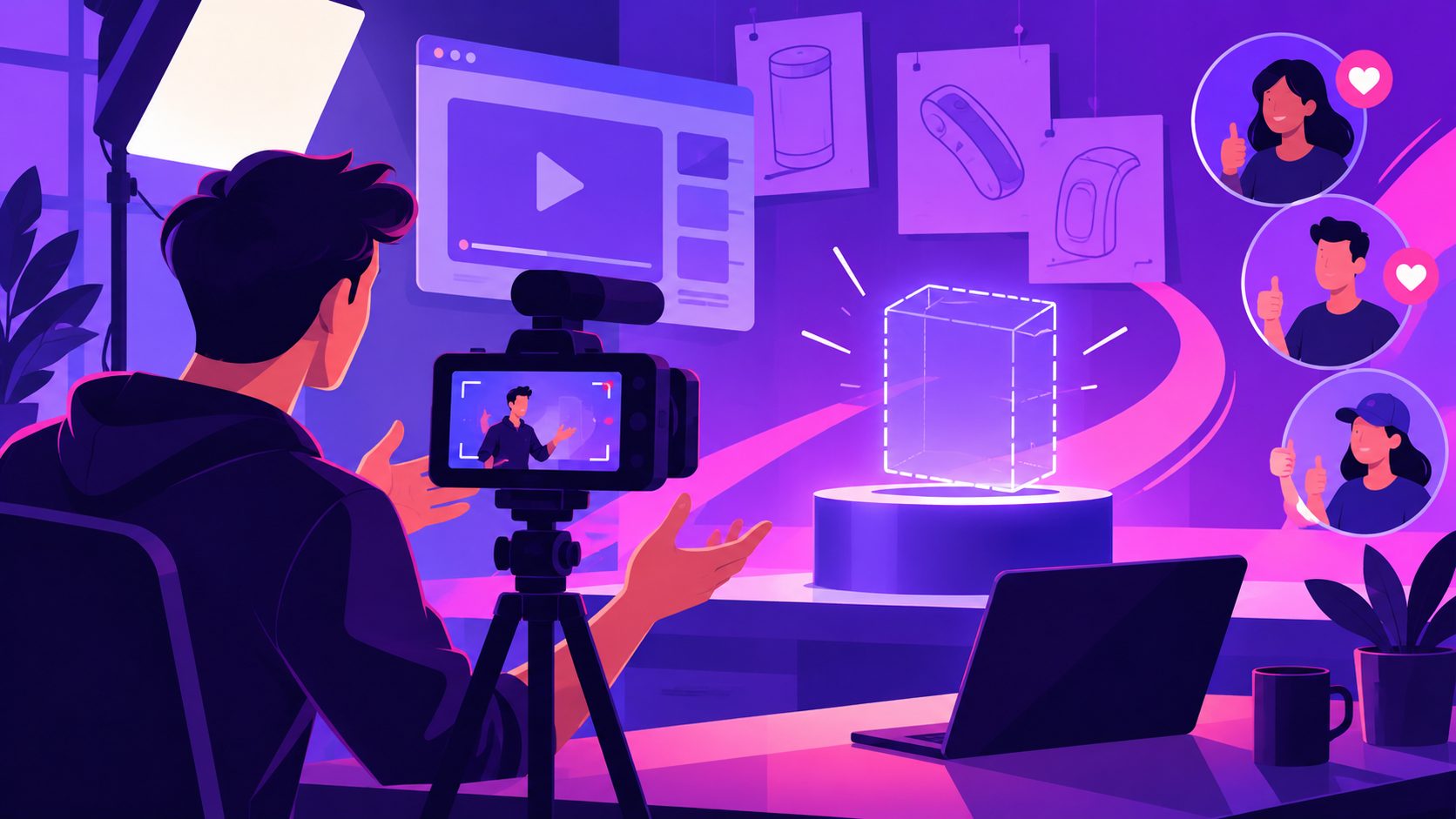
| 20–25 sec | Show the founder, CAD process, or development notes | “It is currently in development, and these visuals show the intended design—not a finished prototype.” |
| 25–30 sec | Landing-page preview and one CTA | “Join the early list, choose the feature that matters most, and follow the build.” |
The disclosure is deliberately inside the script rather than hidden in a caption. It reduces the risk that polished visuals will be mistaken for footage of a functioning product.
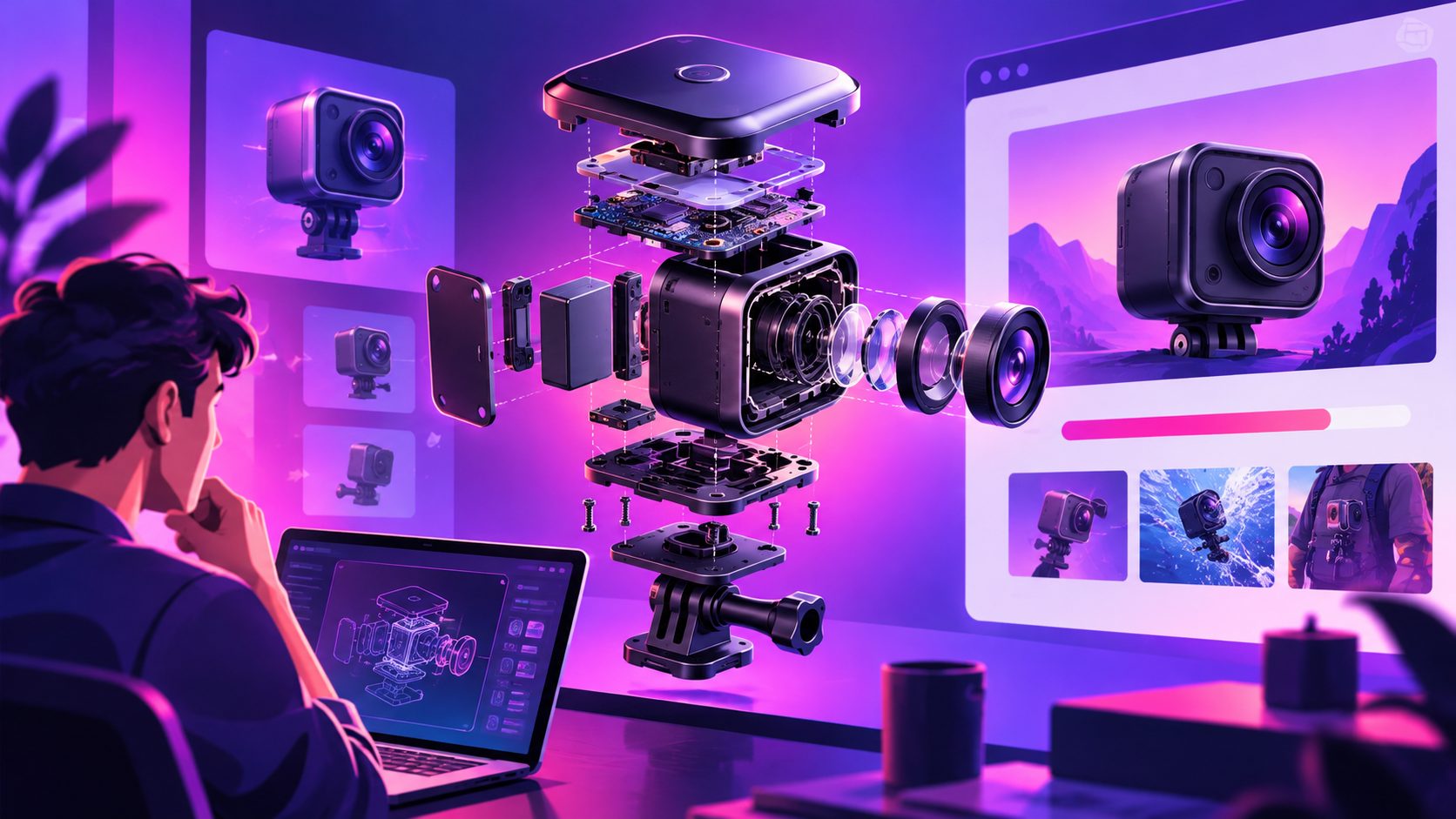
For products with complex internal components, this 3D exploded-view animation workflow offers a useful way to organize structural shots without presenting an imaginary performance test.
How Do You Show a Product That Does Not Exist Yet?
Use the lowest level of visual certainty needed to communicate each claim. A rough drawing can explain shape, a storyboard can explain a use case, and an exploded view can explain planned components. None of those assets proves speed, strength, safety, battery life, or compatibility.
Use this original Claim-to-Evidence Ladder when storyboarding:
| Intended claim | Honest visual evidence before a prototype |
|---|---|
| “This problem occurs” | Real footage of the existing problem |
| “This is the intended form” | Sketch, wireframe, or labeled CAD view |
| “This is the planned workflow” | Storyboard or clearly marked concept animation |
| “This component goes here” | Transparent or exploded-view diagram |
| “This performs better” | Do not claim it until comparative testing exists |
| “This is safe or compliant” | Do not imply approval without applicable test evidence |
Kickstarter permits design-process materials such as technical drawings, CAD designs, sketches, transparencies, wireframes, and exploded views, but warns against imagery that could confuse backers about the current state of a product. (kickstarter.com)
How Should You Test the Script Before Building a Prototype?
Test the promise, evidence style, and CTA separately so you can identify why one creative attracts stronger leads. Comparing two entirely different videos may produce a winner, but it rarely explains what caused the result.
Use a four-variant validation matrix:
| Variant | Opening hook | Evidence style | CTA |
|---|---|---|---|
| A | Time-saving problem | Founder plus sketches | Join the waitlist |
| B | Time-saving problem | CAD plus storyboard | Join the waitlist |
| C | Cost-saving problem | Founder plus sketches | Join the waitlist |
| D | Cost-saving problem | CAD plus storyboard | Join the waitlist |
Keep the audience, landing page, video length, and CTA unchanged. Measure:
- Three-second video hold rate
- Landing-page visits
- Visitor-to-sign-up rate
- Cost per qualified sign-up
- Feature-survey completion rate
- Percentage selecting “notify me at launch”
A cheap email is not automatically a qualified lead. Add one question after sign-up—such as “Which current alternative do you use?”—to distinguish curious viewers from people who recognize the problem.
When a concept reaches the prototype stage, replace animations with repeatable evidence. This 15-second load-proof framework illustrates how a product claim can be translated into a visible test sequence.
How Can AdsTurbo Support the Editing Workflow?
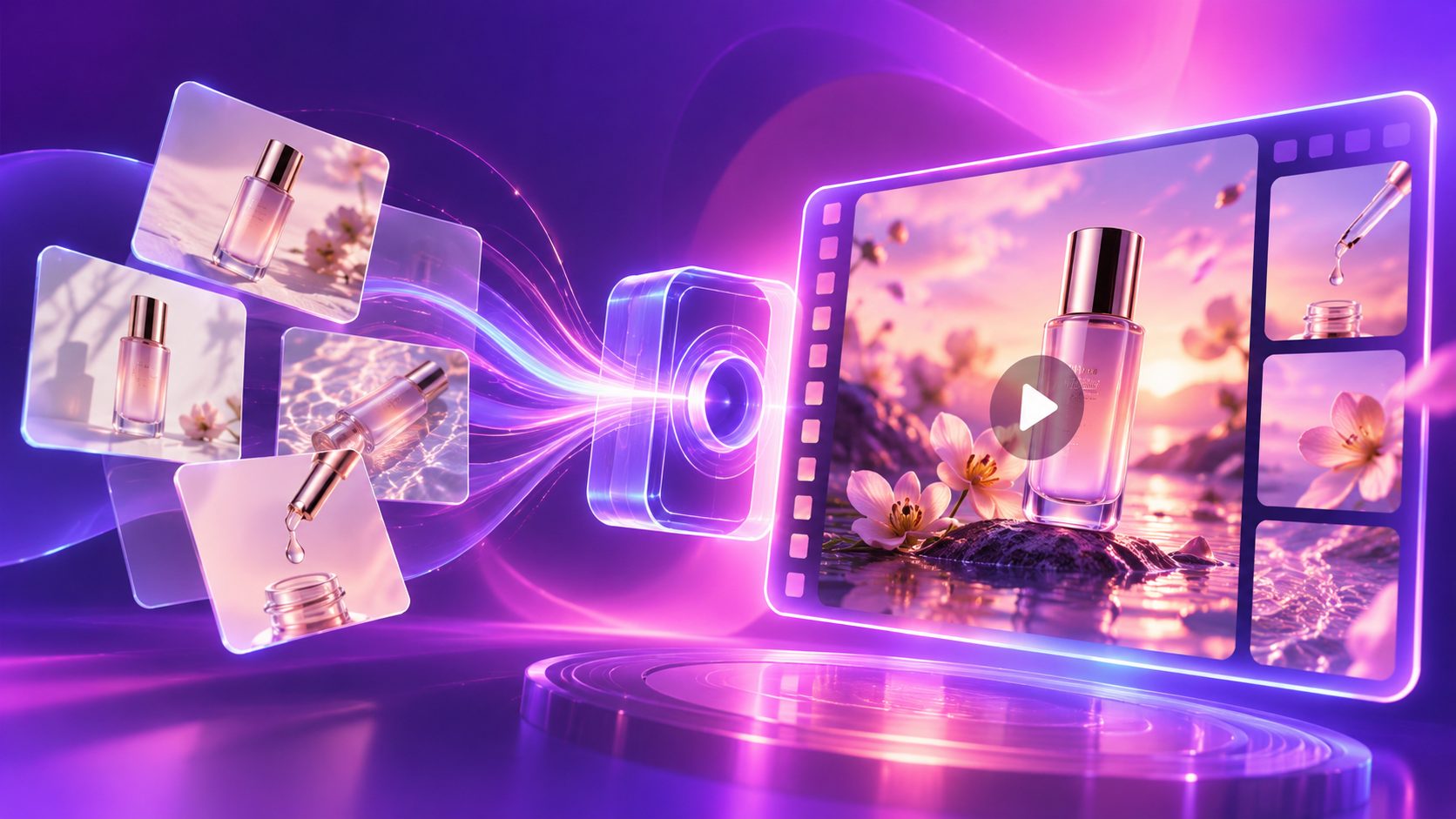
AdsTurbo can help assemble and adapt the creative once the script, disclosures, and approved source materials are ready. The platform provides Clip by Clip editing, video subtitles, background replacement, product-image generation, video upscaling, and API access.
A practical workflow is:
- Record the founder introduction and real problem footage.
- Export approved sketches, diagrams, or labeled concept scenes.
- Build each timestamped scene separately.
- Add synchronized captions for sound-off viewing.
- Export vertical and square variations for testing.
- Replace concept scenes with prototype footage as development progresses.
AdsTurbo Product Image accepts JPG and PNG uploads, while Video Subtitle can generate time-synchronized captions and export either a captioned video or a separate subtitle file. These tools should improve presentation—not make an undeveloped feature look functional.
Common Questions
Should the teaser say there is no prototype?
Yes. Use direct language such as “currently in development” or “concept visuals showing the intended design.” Place the disclosure in the narration or prominent on-screen text rather than in fine print.
Can I use a photorealistic 3D render?
It depends on the destination. Kickstarter restricts realistic product renderings and simulated functionality for relevant product projects. For off-platform validation or platforms that permit renders, label the asset clearly and check current platform rules before publishing.
Should the video ask viewers to preorder?
For early validation, a waitlist or feature vote usually creates a cleaner test because the product specifications and delivery plan may still change. Never imply guaranteed availability or a confirmed shipping date without a realistic production plan.
What should happen after the test?
Advance the strongest problem-and-audience combination into prototype development. Then produce a new campaign video using real demonstrations, founder footage, manufacturing information, risks, and an accurate delivery roadmap.