How to Hook Viewers in First 3 Seconds of Video Ads

Summarize with
Summary
Learn how to hook viewers in first 3 seconds of video ads with stronger visuals, silent-first captions, and a repeatable ecommerce testing framework. Build better openings with AdsTurbo.
By adsturbo.ai | Published 2026-11-17 | Updated 2026-11-17
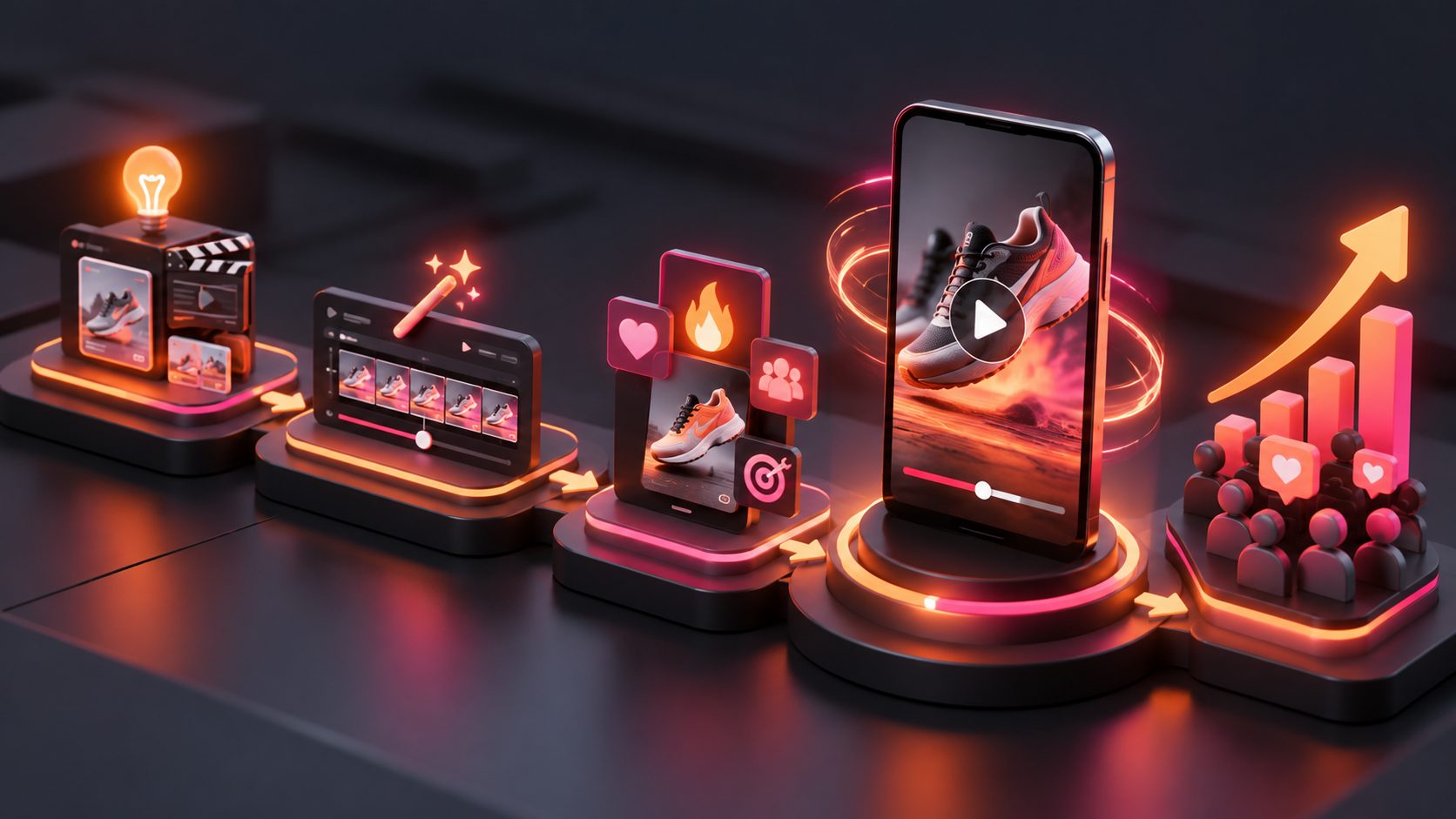
The best answer to how to hook viewers in first 3 seconds of video ads is simple: show a meaningful visual change, state the viewer’s problem or desired outcome, and make the message understandable without sound. The opening should earn the next few seconds—not explain the entire product.
TikTok recommends introducing the proposition within the first three seconds and treating the first three to six seconds as a critical hook window. Google’s ABCD guidance also recommends using more than two frames in the first five seconds to create early movement and attention. (ads.tiktok.com)
What makes the first three seconds so important?
The first three seconds are the viewer’s decision point in a scrolling feed. They decide whether the video appears relevant, surprising, or useful before they have enough context to understand the full offer.
A strong opening usually combines three signals:
- Recognition: “This is for someone like me.”
- Tension: “There is a problem, risk, or unanswered question.”
- Payoff: “The video may show me a useful result.”
The mistake many ecommerce advertisers make is opening with a logo animation, a slow product reveal, or a generic “Meet our new product” line. Those elements may be appropriate later, but they rarely give a cold viewer a reason to stop.
TikTok’s advertising guidance specifically emphasizes delivering value early, while Google’s creative framework recommends early visual changes and a clear message. These recommendations point to the same practical conclusion: the first frame should already contain the reason to keep watching. (ads.tiktok.com)
What should happen in each second?
A useful ecommerce opening can be planned as a three-beat sequence:
| Time | Viewer question | Creative job | Example |
|---|---|---|---|
| 0.0–1.0 seconds | “What am I looking at?” | Create visual interruption | Product already in use |
| 1.0–2.0 seconds | “Why should I care?” | State the problem or benefit | “Still dealing with this?” |
| 2.0–3.0 seconds | “What happens next?” | Preview proof or transformation | Before-and-after reveal |
This is not a rigid editing rule. It is a way to prevent the opening from spending all three seconds on setup.
The V-P-S hook framework
For repeatable production, use this structure:
- V — Visual disruption: open on a movement, contrast, close-up, mistake, transformation, or result.
- P — Promise: add one clear benefit or problem in short on-screen text.
- S — Setup for proof: show the action that will prove the promise in the next few seconds.
For example, a storage product might open with an overflowing drawer, the caption “More space in 10 seconds,” and a hand installing the organizer. The viewer immediately sees the problem, understands the promise, and has a reason to watch the demonstration.
This framework is an editorial model rather than a platform claim. Its value is operational: it gives a creative team three separate variables to test instead of treating “the hook” as one vague idea.
Which visual hooks work for ecommerce video ads?
The strongest visual hook depends on the product’s buying reason. Choose the opening format that makes the product’s value visible fastest.
1. Show the result before the process
Start with the finished outcome, then explain how it happened. This works well for beauty accessories, home organization, apparel, kitchen tools, and products with a visible transformation.
Opening pattern:
“Here is the result” → “Here is the problem” → “Here is how the product solves it.”
2. Start with the customer’s frustration
Use a recognizable mistake, inconvenience, or failed workaround. The product should enter quickly, rather than leaving the viewer in a problem-only scene.
Opening pattern:
“Still struggling with [problem]?” → product demonstration → benefit.
3. Use a close-up demonstration
Texture, fit, movement, soundless action, or a mechanical detail can create immediate visual interest. Close-ups are especially useful when the product’s advantage is hard to communicate with a wide shot.
4. Lead with a specific comparison
A side-by-side frame can communicate value faster than a spoken explanation.
Examples include:
- Ordinary result vs. improved result
- Before vs. after
- Old method vs. new method
- Product alone vs. product in use
5. Open with a direct audience callout
A clear callout can filter for the right viewer:
- “For small kitchens”
- “For runners who hate loose laces”
- “For anyone tired of tangled cables”
Avoid broad claims such as “The best product ever.” Specificity usually creates stronger relevance and more credible curiosity.
How should captions and audio work together?
Your hook should survive with the sound off. A caption can carry the core message while voiceover, product sound, or music adds emphasis.
Keep the first caption:
- Short enough to read immediately
- Large enough for a mobile screen
- Placed inside safe zones
- Focused on one idea
- Synchronized with the first visual change
Do not put the entire product pitch in the opening. A caption such as “A better way to organize your desk” is easier to process than a sentence containing the audience, product category, features, discount, shipping promise, and call to action.
A practical rule is to write the spoken hook and the visual caption separately, then check whether both communicate the same promise. If the voiceover says “save time” while the visual shows a lifestyle scene with no action, the opening becomes ambiguous.
For ads that need localization, captions can also preserve meaning when translated. AdsTurbo’s Video Subtitle workflow supports automatic transcription, synchronized subtitles, multilingual subtitle generation, and exports for platforms such as TikTok, Instagram Reels, and YouTube Shorts.
How do you test video ad hooks properly?
The most useful test changes the first three seconds while keeping the rest of the ad as consistent as possible. This isolates the effect of the opening instead of mixing hook performance with different offers, audiences, or product claims.
A four-cell hook test
Create four versions using the same body and CTA:
| Version | Hook mechanism | Example |
|---|---|---|
| A | Problem | “Your counter is not too small.” |
| B | Result | Finished organized counter in frame one |
| C | Demonstration | Product solves the issue immediately |
| D | Audience callout | “For renters with tiny kitchens” |
Track the following metrics together:
- Three-second video plays divided by impressions
- Hold rate at five or six seconds
- Average watch time
- Click-through rate
- Conversion rate or cost per purchase
A hook that earns three-second views but causes a sharp drop immediately afterward may be creating curiosity without delivering the promised experience. A slightly less dramatic hook with stronger six-second retention can be the better commercial choice.
Test one variable at a time
Do not change the opening visual, caption, voiceover, offer, and music in every version. Start with one controlled difference:
- Same shot, different caption
- Same caption, different first frame
- Same hook, different product angle
- Same opening, different audience callout
This creates a usable creative library. Over time, you can identify whether your audience responds more to transformation, pain-point recognition, proof, or identity.
For a broader production workflow, see this guide to short video ad variants for ecommerce products.
How can ecommerce teams produce more hook variations?
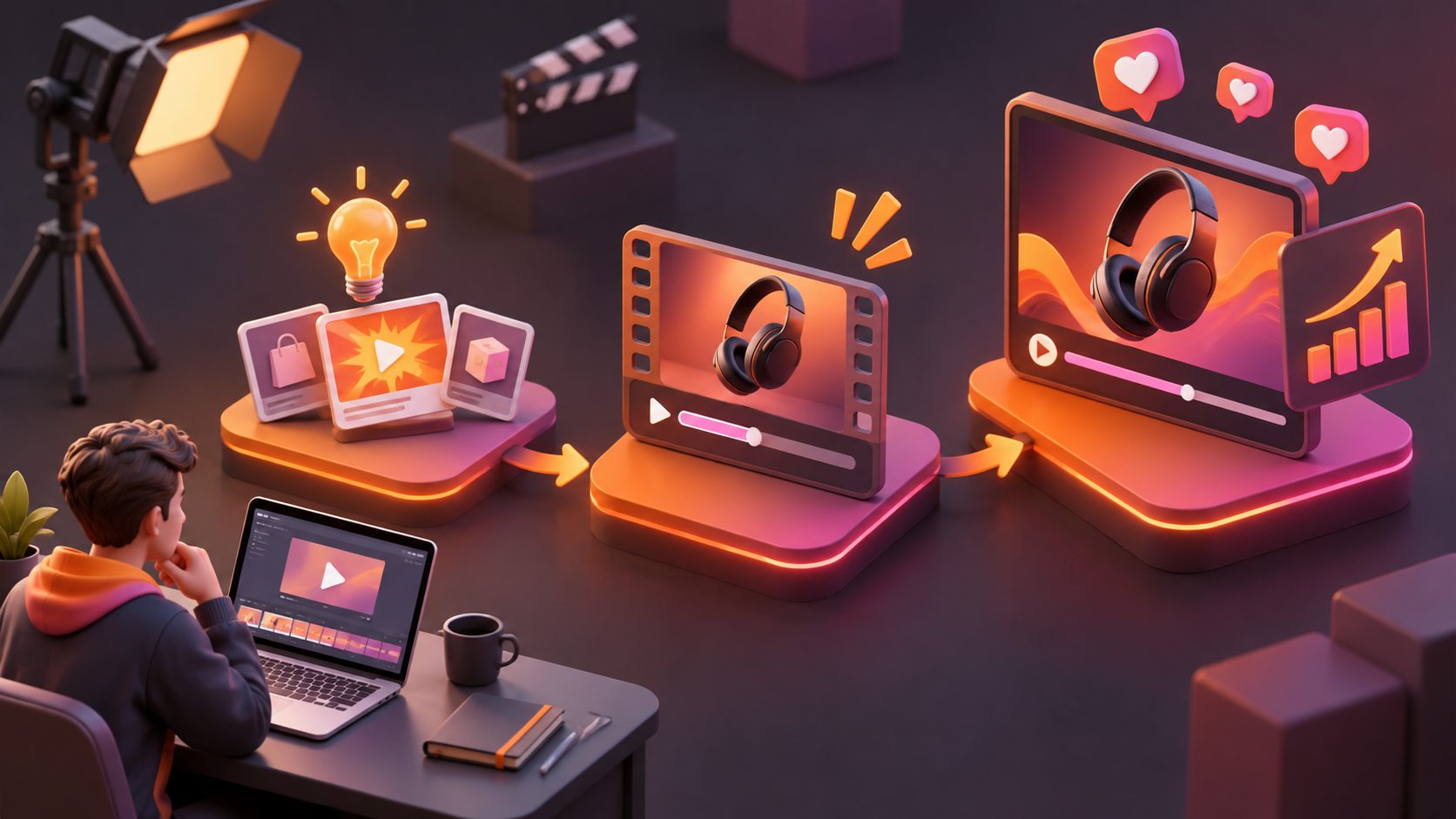
The fastest workflow is to keep the proven body of an ad and replace only the opening. This reduces production cost and gives testing a cleaner structure.
A practical batch includes:
- One product demonstration body
- Three visual openings
- Three caption angles
- Two audience callouts
- Two aspect-ratio exports
That creates multiple combinations without requiring a completely new ad each time. AdsTurbo supports product video creation from JPG or PNG product images, as well as ad cloning, subtitles, translation, motion control, and other video editing workflows. Its Ad Clone API can analyze reference videos up to 12 seconds and generate advertising variations in parallel.
If your source footage is soft, compressed, or difficult to read on a mobile feed, an AI video enhancer can improve clarity before you build new openings. The goal is not to make the first frame visually busy; it is to make the product and proof easier to recognize.
Common questions about video ad hooks
Is the first frame more important than the first line?
Neither works alone. A strong visual without a clear message can create confusion, while a strong line over a static or irrelevant image can feel like an interruption. Pair the first frame and first sentence around one promise.
Should every ad show the product immediately?
Not always. A problem, reaction, comparison, or outcome can be a stronger opening when it makes the product’s benefit obvious. The product should still appear early enough to connect the hook with a solution.
How long should a video ad hook be?
Treat the first one to three seconds as the primary hook, while recognizing that TikTok’s guidance extends the broader hook window to six seconds. The opening should create enough interest for the next scene to deliver proof. (ads.tiktok.com)
What is the biggest hook mistake?
The biggest mistake is making the viewer wait for the point. Long logo intros, vague claims, slow establishing shots, and captions that describe the brand instead of the customer’s need all delay relevance.
Can one hook work on every platform?
The core promise can be reused, but framing, captions, safe zones, pacing, and aspect ratio should be adapted. A single opening may need separate 9:16, 1:1, and 16:9 versions for different placements.