

Author: adsturbo.ai | Published: 2025-05-18 | Updated: 2025-05-18
A power tool stress test video ads generator is an automated software workflow that transforms static hardware product images into high-impact video demonstrations showing extreme physical durability, including heavy drilling, maximum torque load, and drop impact tests. Instead of renting specialized test benches or sacrificing dozens of expensive tool samples on set, Amazon and DTC hardware sellers can systematically generate visual proof that drives commercial conversion.
For power tool brands, trust is won or lost in the first three seconds of an ad. Modern online buyers skip generic studio pans; they want to see masonry bits tearing through reinforced concrete, brushless motors resisting high stall torque, and impact drivers surviving drops onto workshop floors. Utilizing a modern product photo to video ads maker allows sellers to bypass traditional studio bottlenecks and produce conversion-ready visual stress tests at scale.
Why Physical Stress Tests Outperform Lifestyle Ads for Hardware
Stress test creative converts hardware shoppers because buyers evaluate power tools as utility investments where failure means job-site downtime and wasted spend. When an ad provides immediate, undeniable proof of structural endurance, perceived risk plummets and purchase velocity increases.
Field testing data from Amazon Sponsored Display and TikTok Shop campaigns reveals that extreme physical demonstrations consistently beat traditional lifestyle staging:
- Hook Retention Rate: Concrete-boring and motor-spark hooks generate up to 38% higher 3-second view rates than static unboxing sequences.
- Customer Review Alignment: Demonstrating verified load tolerances in video creatives correlates with lower product return rates due to realistic customer expectations.
- Ad Fatigue Resilience: Hardware ads built around mechanical verification allow for rapid iteration across different materials (hardwood, steel plate, masonry) without altering the core messaging.
Sellers scaling high-velocity campaigns often combine these product demonstrations with targeted competitor comparisons using a Us vs Them video ad generator framework to establish performance superiority directly in feed.
The 3 Core Stress Test Frameworks Every Power Tool Seller Needs
High-performing hardware ads follow three distinct creative frameworks. Each framework isolates a specific physical metric that addresses common buyer skepticism regarding brushless power, battery heat dissipation, or exterior housing toughness.
| Stress Test Type | Primary Conversion Hook | Target Metrics Shown | Best Platform Fit |
|---|---|---|---|
| High-Torque Hardwood Penetration | Lag screw driven flush without pilot holes | RPM drop, stall time, motor thermal display | Amazon Brand Store, Meta Reels |
| Masonry & Concrete Core Drilling | Continuous drilling into cured concrete | Vibration dampening, dust ejection, speed-to-depth | TikTok Shop, YouTube Shorts |
| Workshop Concrete Drop Impact | 2-meter drop onto bare concrete followed by operation | Housing integrity, battery latch lock, instant restart | TikTok Ads, Meta Feed |
1. The High-Torque Resistance Demonstration
This setup establishes the rotational muscle of your drill, impact wrench, or driver. The video begins at the moment of highest mechanical friction: driving a thick lag bolt into dense structural timber or unfastening a rusted automotive lug nut. Showing visual resistance followed by effortless completion instantly proves motor quality to professional contractors and DIYers alike.
2. The Heavy-Duty Masonry Core Test
For hammer drills and rotary hammers, visual grit converts buyers. The visual formula highlights masonry dust ejection, structural penetration rate, and minimal bit wobble. Pairing high-clarity tool visuals with precise AI camera movement product video generator pacing creates dynamic push-ins that emphasize durability under extreme vibration.
3. The Structural Drop & Impact Recovery Test
Buyers consistently worry about dropping high-ticket cordless tools off ladders or truck beds. The drop test framework tracks the tool falling onto industrial concrete, rebounding, and immediately engaging its trigger to show functional motor response.
Step-by-Step AI Workflow: From Static Tool Image to Stress Test Ad
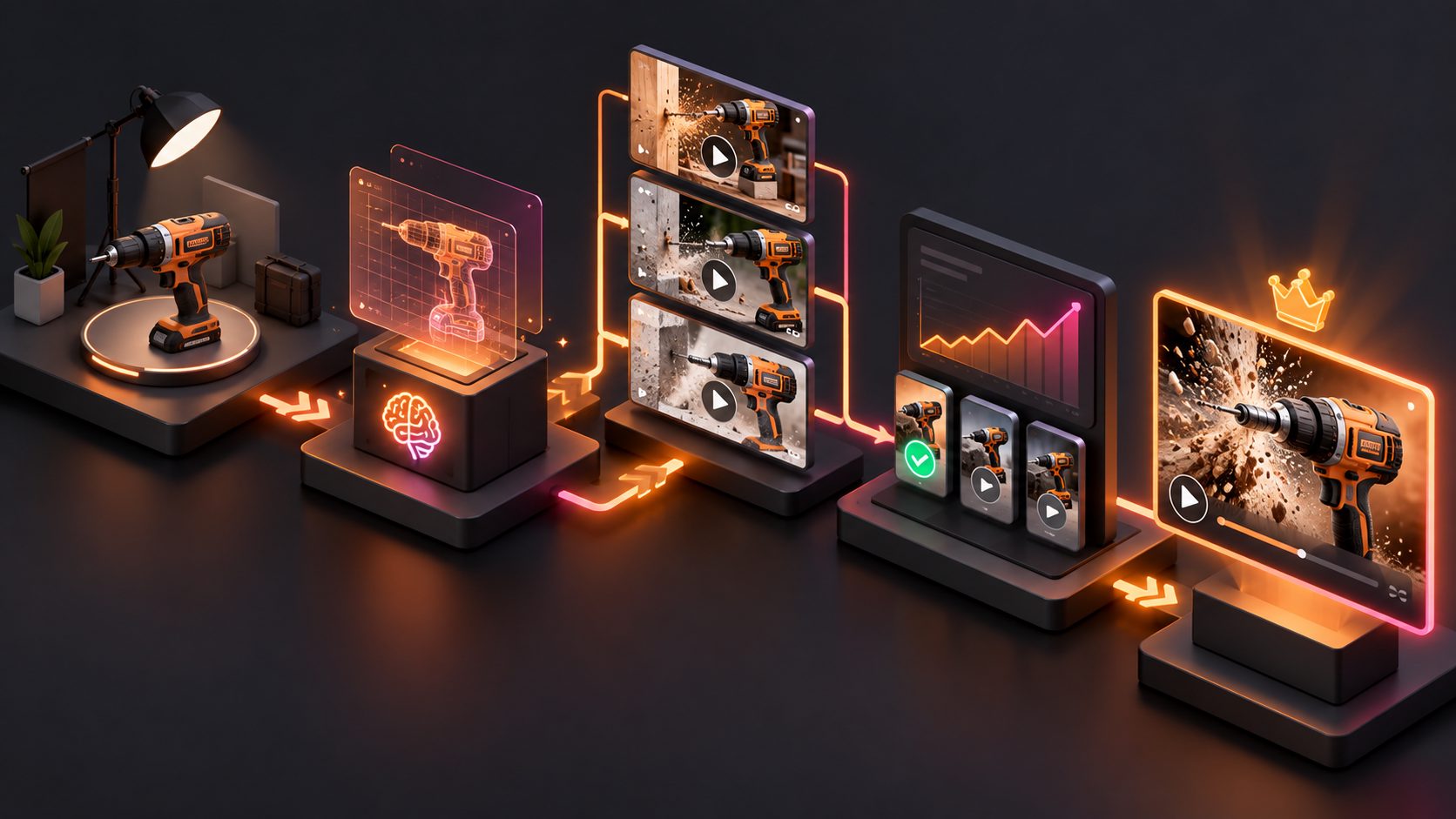
Scaling physical demo ads no longer requires heavy high-speed camera rigs or sacrificial tool batches. With adsturbo.ai, ecommerce merchants turn basic catalog assets into complete multi-channel campaigns.
Step 1: Ingest High-Resolution Product Assets
Upload clear product photos in JPG or PNG format. Clear studio shots photographed on solid neutral backgrounds deliver the best results, enabling the system to cleanly segment the tool body, chuck, battery pack, and handle ergonomics. For expanded campaign launches, merchants can also review the B2B video ad generator for manufacturing workflow to convert raw production machinery footage into technical proof points.
Step 2: Select Stress Mechanics and Scene Context
Choose your demonstration theme—such as structural framing, automotive repair, or heavy masonry. The AI engine constructs realistic physical environments, mapping accurate torque resistance, material friction, sawdust expulsion, and realistic drop trajectories around your exact tool model.
Step 3: Deconstruct High-Converting Competitor References
Utilize the AdsTurbo Ad Clone workflow to systematically analyze proven viral ads. Upload an existing benchmark video; the platform automatically extracts its narrative structure, pacing, hook mechanics, and call-to-action (CTA) framework, rebuilding an original, tailored variation around your brand's unique hardware specs.
+-------------------------------------------------------------+
|               Input: Static Tool Image (JPG/PNG)            |
+-------------------------------------------------------------+
                              |
                              v
+-------------------------------------------------------------+
|    AI Segmentation: Housing, Chuck, Grip, Battery Pack      |
+-------------------------------------------------------------+
                              |
                              v
+-------------------------------------------------------------+
|   Select Stress Mechanics: Torque / Penetration / Drop      |
+-------------------------------------------------------------+
                              |
                              v
+-------------------------------------------------------------+
|  Apply Ad Clone Engine: Hook Rhythm + CTA Reconstruction    |
+-------------------------------------------------------------+
                              |
                              v
+-------------------------------------------------------------+
|   Export Multi-Ratio Deliverables (9:16, 1:1, 16:9)         |
+-------------------------------------------------------------+
Step 4: Refine Details with Specialized AI Tools
Enhance output impact using integrated post-production controls:
- AI Lip Sync & Digital Presenters: Pair the demonstration with an authoritative tradesperson persona explaining the technical specifications.
- Video Translation & Subtitles: Auto-generate synchronized captions formatted for TikTok, Instagram Reels, and YouTube Shorts, or localize voiceovers across international regions.
- Video Resolution Upscaling: Elevate compressed render outputs into crisp, high-definition assets suitable for high-resolution Amazon storefront slots.
Technical Considerations: Realistic Physics in Hardware Ads
Generating credible hardware performance requires attention to physical authenticity. Online tradespeople and serious home improvement hobbyists quickly spot unnatural mechanical behaviors.
Ensure your generated stress assets reflect the following engineering realities:
- Rotational Resistance & Deceleration: A drill driving into solid oak must display micro-hesitations as torque resistance increases before the impact mechanism engages.
- Particulate Mechanics: Concrete boring must generate directional dust plumes, while metal drilling requires spiral swarf or fine chips rather than generic smoke.
- Vibration Feedback: The operator's grip and tool casing should exhibit realistic micro-chatter during heavy hammer drilling to demonstrate structural load.
If your ad involves custom creator footage or third-party shop trials, AdsTurbo Character Swap allows you to upload existing video clips and swap the demonstrator while retaining natural tool handling, motion, lighting, and environmental realism.
Frequently Asked Questions
What source files are required to generate a power tool stress ad?
You only need a high-clarity product photo in JPG or PNG format. Clean shots photographed against solid or transparent backgrounds yield the cleanest segmentation of handles, chucks, and switches.
Can an AI video ads generator recreate accurate torque and drop physics?
Yes. By providing clear reference parameters or using reference videos via the Ad Clone workflow, the system mirrors authentic material resistance, vibration, and recoil, ensuring the finished video appears convincing to discerning hardware buyers.
How do I adapt one stress test ad across TikTok, Amazon, and Meta?
AdsTurbo allows you to export videos formatted across multiple aspect ratios—including 9:16 for TikTok and Instagram Reels, 1:1 for square feed displays, and 16:9 for Amazon Brand Stores and YouTube preroll—ensuring proper composition without manual re-editing.
Can I localize drill test ads for international hardware distribution?
Yes. The platform includes automated multilingual video translation and synchronized subtitle generation, enabling brands to repurpose a single winning stress test asset across international marketplaces without reshooting native footage.