

By adsturbo.ai | Published 2026-09-30 | Updated 2026-09-30
If you want to turn organic TikTok into paid ad campaigns, do not simply put budget behind every video that receives views. The stronger approach is to identify posts that prove attention, product relevance, and buying intent, then convert them into Spark Ads with a clear destination and controlled creative tests.
TikTok describes Spark Ads as a native format that uses existing organic posts from a brand or authorized creator account. Likes, comments, shares, and follows generated during promotion remain attributed to the original post. (ads.tiktok.com)
What does it mean to turn an organic TikTok into a paid ad?
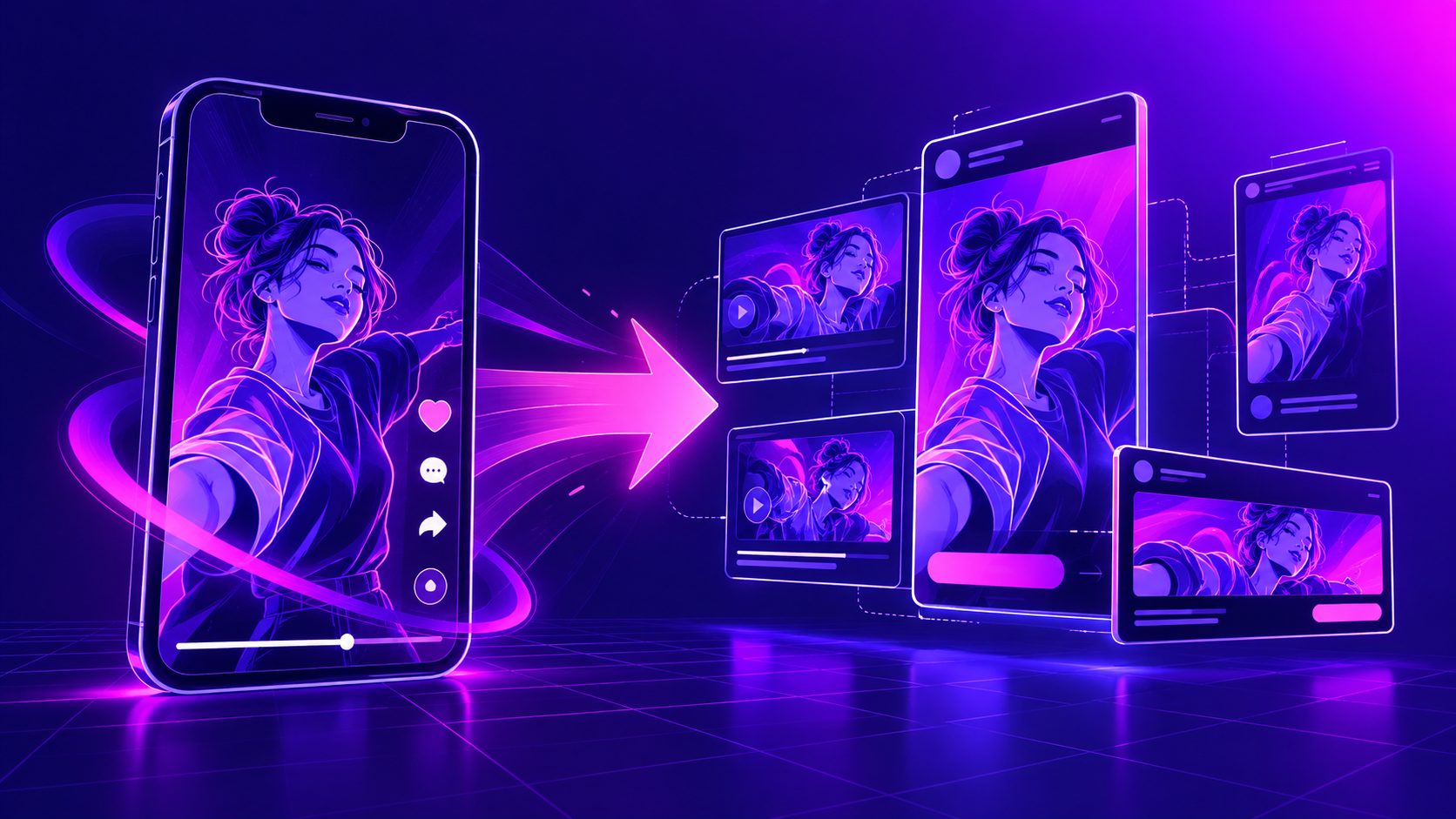
To turn an organic TikTok into a paid ad means using an existing TikTok post as the creative for a paid campaign instead of uploading the same video as a new dark post. On TikTok, this is usually done through Spark Ads, using your own post or a creator’s authorized post.
The key advantage is continuity. The video keeps its native account identity, comment history, and social proof. However, organic popularity alone does not prove that a post can sell. A funny video may earn high watch time but produce weak product clicks, while a smaller post may contain a stronger buying signal.
Organic post versus Spark Ad
| Element | Organic TikTok post | Spark Ad |
|---|---|---|
| Distribution | Algorithmic organic reach | Paid delivery with targeting and budget control |
| Social proof | Likes, comments, shares, follows | Existing proof can remain attached to the post |
| Main job | Discover what resonates | Scale a proven angle toward a business goal |
| Optimization | Content and audience signals | Campaign objective, delivery, creative, and landing destination |
| Best use | Creative discovery | Structured amplification and conversion testing |
TikTok’s official guidance recommends using organic content to learn what resonates, then boosting stronger content with Spark Ads. (ads.tiktok.com)
Which organic TikToks should you promote?
The best candidate is not necessarily the post with the most views. Select videos that combine attention quality, product clarity, and commercial intent.
A practical screening framework is the Signal-to-Scale Score:
Signal-to-Scale Score = retention evidence + product interaction + buyer intent − paid-media friction
Use the following checklist before spending:
- Retention evidence: Does the opening create enough curiosity to keep viewers watching?
- Product interaction: Do comments ask about price, size, use, shipping, or availability?
- Buyer intent: Are viewers tagging friends, saving the post, visiting the profile, or asking where to buy?
- Message clarity: Can a cold viewer understand the product benefit without knowing your brand?
- Paid-media friction: Does the post rely on a trend, inside joke, outdated offer, or unclear creator context?
A simple selection matrix
| Organic signal | What it may indicate | Paid decision |
|---|---|---|
| High views, low product comments | Broad entertainment value | Test cautiously |
| Moderate views, strong saves | Useful or problem-solving content | Strong candidate |
| High profile visits | Curiosity about the brand or product | Test with clear destination |
| Repeated “Where can I get this?” comments | Direct purchase intent | Prioritize |
| Strong watch time but weak clicks | Hook works, offer may not | Re-edit before scaling |
This approach adds an important distinction that many Spark Ads guides miss: organic engagement is a discovery signal, not a purchase guarantee. The promotion decision should be based on the type of engagement, not only its volume.
How should you rebuild the first three seconds?
When you turn organic TikTok into paid ad creative, the first three seconds often need a tighter commercial structure. Organic viewers may already understand the creator, trend, or context. Paid viewers usually do not.
Keep the original winning idea, but test a sharper opening:
- Show the product or outcome in the first frame.
- State the problem before explaining the solution.
- Replace vague curiosity with a specific benefit.
- Add readable on-screen text for silent viewers.
- Introduce the offer only after the viewer understands why the product matters.
For example, an organic hook such as “I did not expect this to work” can become:
“This compact organizer fixed the one drawer I kept avoiding.”
The goal is not to make the video sound like a traditional commercial. It is to remove context that only existing followers understand.
Use a three-version edit:
- Version A: Original Spark Ad — preserve the organic post exactly.
- Version B: Hook edit — improve the first three seconds while keeping the body.
- Version C: Conversion edit — add product proof, offer, and a clearer CTA.
AdsTurbo’s TikTok Shop bulk video generator workflow can support structured creative variation when sellers need to test multiple SKUs, hooks, or product angles.
How do you add a product link or CTA without damaging the post?
A strong Spark Ad still needs a clear next step. Match the CTA to the video’s level of buyer awareness.
- Problem-aware video: Send viewers to a product page with the main benefit visible above the fold.
- Product demonstration: Use a product destination that makes price, variants, and shipping easy to verify.
- Review or testimonial: Route to the exact item discussed, not a general storefront.
- Offer-led video: Make the discount, code, or end date consistent across the video and landing page.
Avoid adding a hard sales message that conflicts with the original tone. A creator-style product demonstration can remain conversational while the destination handles detailed purchase information.
Where available, TikTok’s paid and organic optimization feature can connect selected Spark Ads with destination links and delivery signals. TikTok currently notes that this feature is available in supported markets but excludes the United States, so US advertisers should confirm the option shown in their own Ads Manager before planning around it. (ads.us.tiktok.com)
What is the safest way to scale a winning Spark Ad?
Do not increase spend immediately after one strong result. First determine whether the result comes from the content, the audience, or a temporary organic spike.
Use a staged test:
- Validation: Run the original post with a controlled budget and one clear objective.
- Creative confirmation: Compare the original with one first-three-second edit.
- Offer confirmation: Test the same winning opening with different product benefits or CTAs.
- Audience expansion: Broaden targeting only after the creative remains stable.
- Scale: Increase budget gradually while monitoring cost per click, product-page actions, add-to-cart events, and purchases.
Keep the testing variables separated. If you change the hook, audience, landing page, and offer at the same time, you will not know what caused the result.
A useful rule is to scale angles before assets. If one post wins because it demonstrates speed, create several speed-focused variants. If it wins because it resolves a common frustration, build a problem-solution cluster rather than copying the same video frame by frame.
For sellers without a large creator network, how to make UGC ads from one product photo provides a complementary way to create additional product-led concepts before committing more media spend.
When should you avoid using a Spark Ad?
Spark Ads are not automatically the best format. Use a fresh ad creative when:
- The organic post contains an expired promotion.
- The creator’s identity is central but unavailable for paid authorization.
- The comments reveal confusion about the product.
- The video has strong entertainment value but weak product relevance.
- The original aspect ratio, music, or wording creates delivery or compliance problems.
- You need a different landing page, offer, or audience promise.
You can also use the original post as research rather than media. Extract its hook, pacing, shot order, and comment themes, then create a new version designed specifically for paid traffic.
AdsTurbo’s first ecommerce video ad workflow is useful when the organic post provides a concept but not enough product proof for conversion-focused traffic.
Frequently asked questions
Can I use someone else’s TikTok as a Spark Ad?
Yes. TikTok allows advertisers to use organic posts made by creators when the creator has authorized the promotion. The authorization process uses the creator’s post and permission settings, so obtain approval before planning a campaign around third-party content. (ads.tiktok.com)
Do Spark Ads keep the original likes and comments?
Spark Ads are designed to use the original organic post and preserve its native engagement attribution. Paid likes, shares, comments, profile visits, and other metrics can also be reported separately in Ads Manager. (ads.tiktok.com)
Should I promote the TikTok with the most views?
Not automatically. Prioritize product-related comments, saves, profile visits, click behavior, and evidence that viewers understand the offer. A high-view entertainment post may be weaker for sales than a smaller post with clear purchase intent.
Should I edit an organic TikTok before promoting it?
Start with the original version as a control. Then test a paid-media edit that improves the first three seconds, clarifies the product, or strengthens the CTA. This lets you compare the value of social proof against the value of a more direct sales structure.
Can one organic TikTok become several paid ads?
Yes. The same concept can produce multiple variations by changing the hook, product benefit, creator voice, language, subtitle treatment, CTA, or offer. AdsTurbo supports product video generation, video subtitles, translation, lip sync, face swap, resolution enhancement, and other editing workflows for producing structured creative variants.
The most reliable way to turn organic TikTok into paid ad campaigns is to treat organic content as a creative testing layer, not a final verdict. Use engagement to find promising ideas, rebuild the opening for cold traffic, connect the post to a relevant product destination, and scale only after the commercial signal survives paid testing.