

By adsturbo.ai | Published 2026-09-29 | Updated 2026-09-29
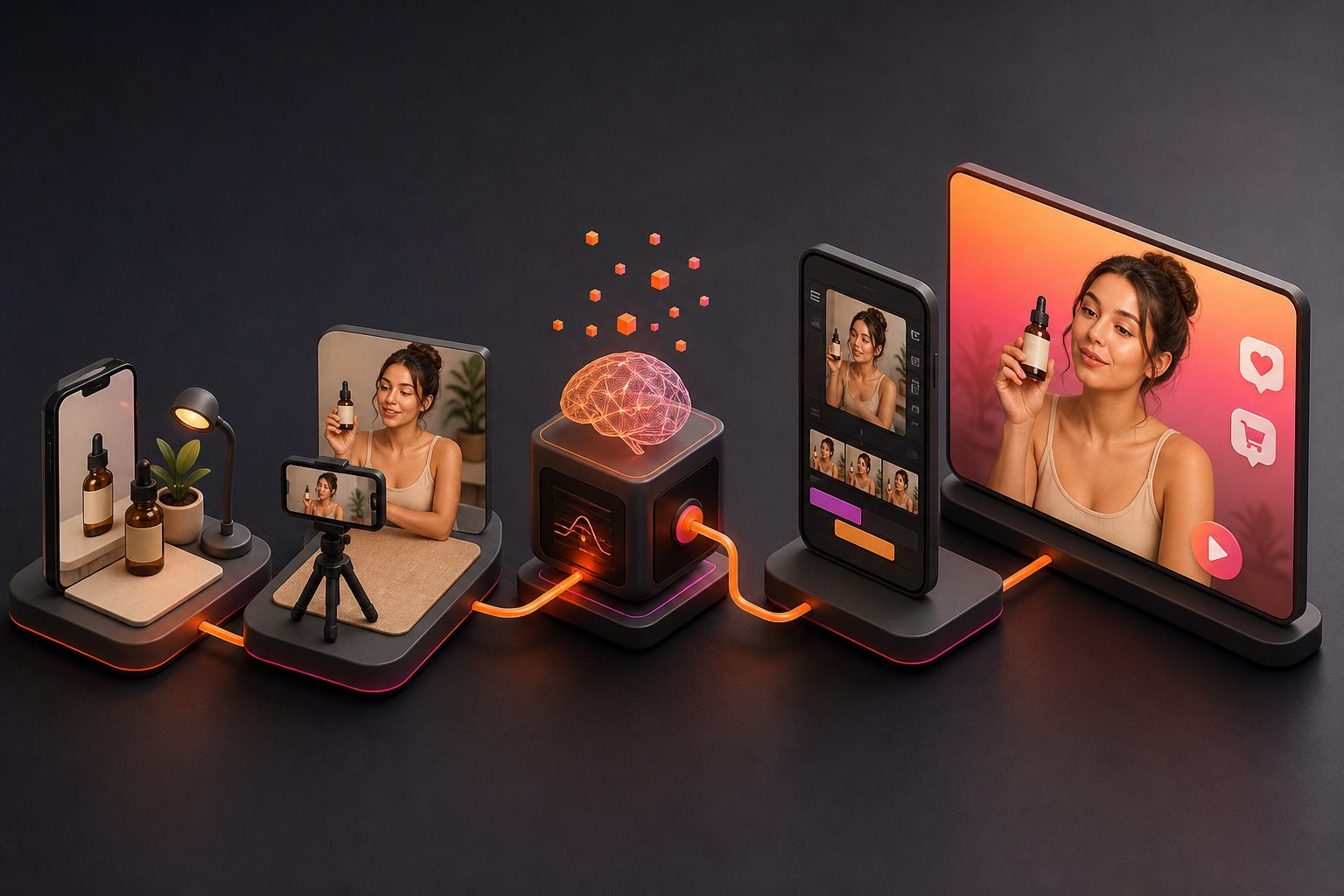
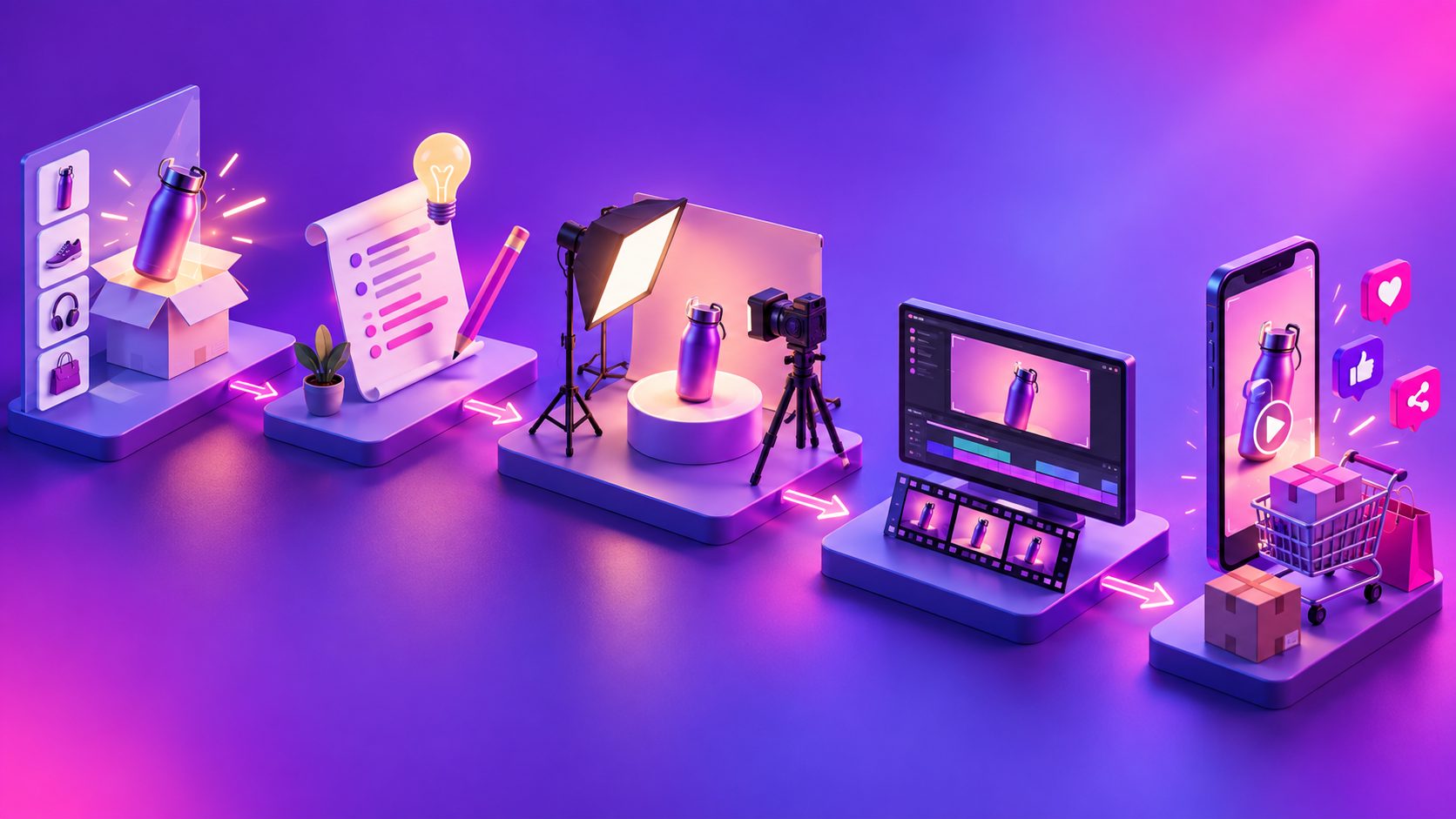
Learning how to make UGC ads without influencers starts with separating the format from the creator. A clear product photo, a believable customer problem, and several short scripts can become test-ready UGC-style videos without waiting for product shipping, filming, or influencer delivery.
This workflow is particularly useful when a contracted creator misses a deadline, a new SKU has no video assets, or a seller needs to validate an advertising angle before commissioning original customer content.
What Is a UGC Ad Without an Influencer?
A UGC-style ad without an influencer is a brand-produced video that uses the visual language of customer content—direct hooks, casual narration, product demonstrations, captions, and vertical framing—without depending on a paid social media personality.
It is important to distinguish genuine UGC from UGC-style advertising. Genuine UGC comes from an actual customer. A brand-generated product video may imitate the format, but it should not invent a customer experience or present a synthetic actor as a verified buyer.
The safest creative direction is to focus on demonstrable facts:
- What the product is designed to do
- Which problem or task it addresses
- How it looks, fits, opens, installs, or operates
- What is included in the package
- The brand’s documented offer and conditions
This product-first approach is also easier to scale because the same source image can support several hooks without fabricating testimonials.
Which Product Photo Should You Use?
The best input is a sharp JPG or PNG image that shows the entire product against a plain background. Avoid compressed screenshots, obstructed packaging, harsh reflections, and images in which important product details are cropped.
AdsTurbo Product Video supports JPG and PNG product images up to 10 MB. It analyzes the uploaded image and can generate product review, introduction, or demonstration-style videos. If the source catalog is all you have, this single-image ecommerce video workflow explains how to prepare existing listing assets.
Use this five-point Photo-to-UGC Readiness Score before generation:
| Check | Pass condition |
|---|---|
| Silhouette | Product edges are easy to identify |
| Accuracy | Color, shape, and packaging match the listing |
| Legibility | Essential labels remain readable |
| Separation | Product does not blend into the background |
| Completeness | No handles, accessories, or key components are cropped |
A photo scoring four or five passes is ready. With three or fewer, retake or clean the image before generating video; otherwise, every variation may repeat the same visual defect.
How Do You Write a 15-Second UGC-Style Script?
A short script should move through four jobs: interrupt the scroll, identify a familiar problem, show the product’s role, and give the viewer one next step. One sentence should perform one job.
Use this structure:
- Hook, 0–3 seconds: Name the situation or frustration.
- Problem, 3–6 seconds: Explain why the usual approach is inconvenient.
- Product proof, 6–12 seconds: Show one visible feature or action.
- CTA, 12–15 seconds: Ask for one specific action.
For example:
“Still carrying three containers for one afternoon snack? This compact organizer keeps each item separated in one pack. Open, fill, close, and place it in your bag. See the available colors.”
This script does not pretend to quote a customer. It describes a situation, demonstrates a product function, and uses a low-friction CTA. For unboxing angles, adapt the pacing from this 30-second ecommerce unboxing script framework.
How Can One Photo Produce a Useful Test Batch?
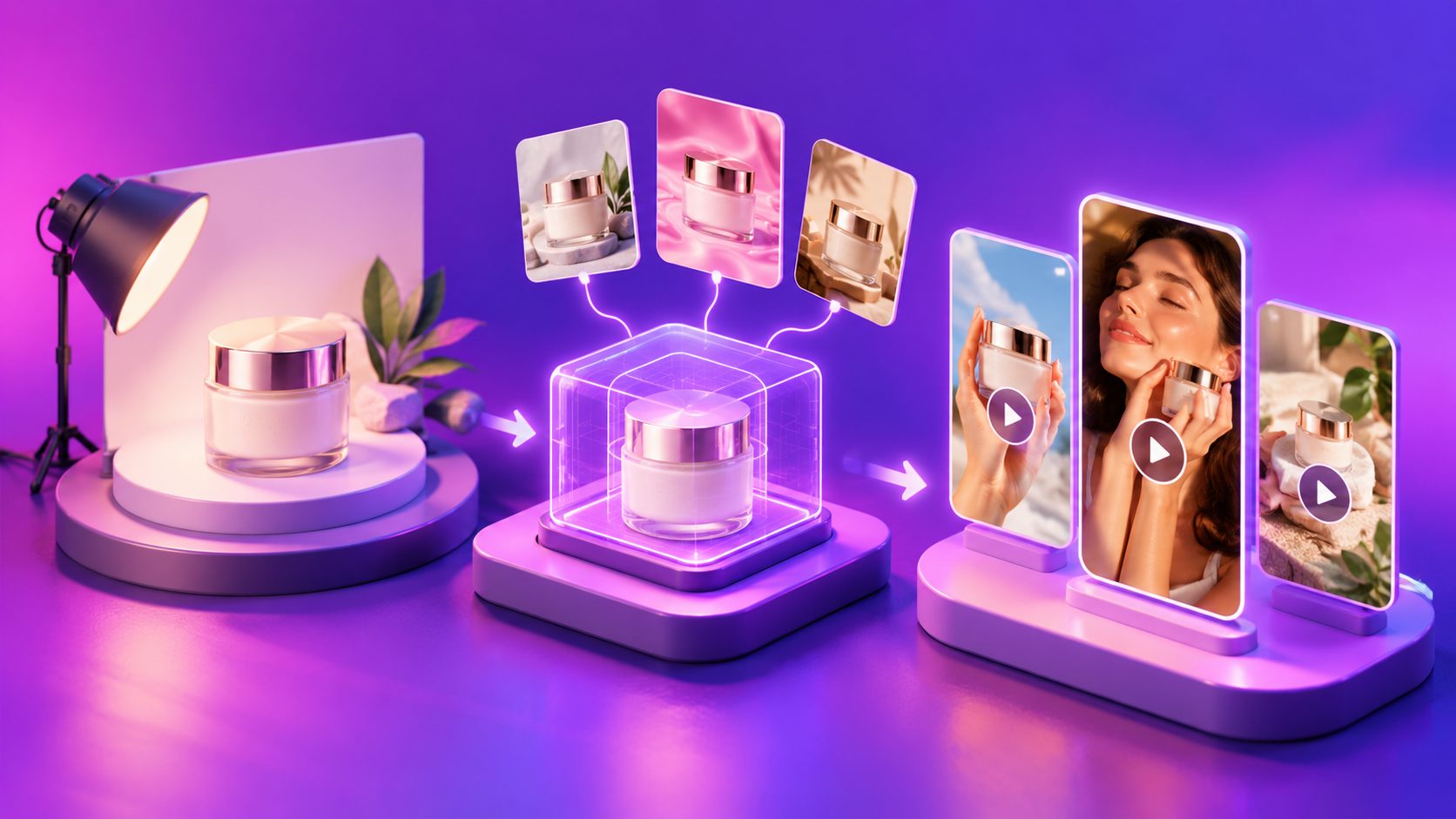
Do not generate twelve unrelated videos. Build a controlled matrix in which each variation changes one meaningful creative variable while the product, offer, and landing page remain consistent.
The original 12-cell Photo-to-UGC Test Grid combines:
- Three hooks: pain point, curiosity, and direct benefit
- Two proof styles: product close-up and use-case sequence
- Two CTAs: discover the product and shop the offer
That creates 3 × 2 × 2 = 12 variations. It is large enough to expose patterns but structured enough to identify what caused the difference.
Generate the body sequence once, then replace the opening three seconds, proof shot, or final CTA. AdsTurbo can generate a UGC short video from a product image with optional selling points and promotion details. Its clip-by-clip editing, subtitles, background replacement, and video upscaling tools can then refine individual sections.
For early product research, pair this matrix with a single-image product validation workflow rather than investing immediately in one polished commercial.
Which Metrics Should Determine the Winner?
A winning video must attract qualified attention and move shoppers toward purchase. Evaluate the sequence of the funnel instead of selecting the ad with the most views.
Review results in this order:
| Metric | What it diagnoses | Likely next action |
|---|---|---|
| Opening retention | Strength of the first shot and hook | Replace the opening |
| Average watch time | Pacing and message clarity | Shorten or reorder clips |
| Click-through rate | Offer relevance and CTA strength | Test benefit or CTA |
| Landing-page conversion | Product-page alignment | Match ad promise to page |
| Cost per acquisition | Commercial viability | Scale or discontinue |
Keep spend, audience, placement, and landing page as consistent as the ad platform allows. If several high-retention videos receive few clicks, the problem is probably the offer transition—not the hook. If clicks are strong but purchases are weak, inspect price, shipping, page speed, and message consistency before producing more videos.
This diagnostic order prevents a common mistake: repeatedly changing the entire creative when only one section is underperforming.
How Do You Avoid Fake-Testimonial and Rights Problems?
Use synthetic people as presenters or demonstrators, not fictional customers claiming personal results. Product claims should be truthful, supportable, and consistent with the listing or evidence held by the advertiser.
The FTC’s guidance on reviews, testimonials, and AI stock avatars states that AI avatars are not subject to a blanket prohibition. However, an avatar may create a deceptive testimonial if viewers are led to believe it reflects a real person’s product experience. (ftc.gov)
Follow four practical rules:
- Do not write “I used this for 30 days” unless it is an authorized, truthful testimonial.
- Do not copy an influencer’s face, voice, footage, or recognizable persona without permission.
- Label generated or altered media when required by the publishing platform.
- Keep records supporting performance, comparison, health, or savings claims.
If an old creator agreement has ended, rebuild the concept instead of reusing restricted likenesses. This guide to replacing expired influencer video ads shows how to preserve a winning structure without preserving the creator.
Frequently Asked Questions
Can UGC ads work without showing a face?
Yes. Faceless UGC-style ads can combine product close-ups, hands-in-frame demonstrations, text overlays, voiceover, screen recordings, and timed subtitles. The opening situation and visible proof matter more than forcing a talking head into every concept.
Can I create an ad from only one product image?
Yes, provided the image clearly represents the product. A plain-background photo generally gives the generation system cleaner information about shape, color, and category. Additional angles remain useful when fit, installation, texture, or moving parts affect the purchase decision.
How many variations should I make first?
Start with 12 controlled variations: three hooks, two proof styles, and two CTAs. Do not change the audience, offer, editing style, and script simultaneously. Controlled changes produce clearer lessons for the next creative batch.
Should AI UGC replace real customer content?
No. AI-generated UGC-style videos are best used for rapid concept testing, creative continuity, localization, and asset gaps. Genuine customer footage remains valuable when firsthand experience, community trust, or detailed product use is central to the buying decision.
Turn Influencer Delays Into a Testing Window
The fastest replacement for a missing influencer deliverable is not a rushed imitation of that creator. It is a controlled product-photo workflow that turns one accurate image into several measurable advertising hypotheses.
Prepare the photo, write three honest hooks, generate a reusable product sequence, and test the 12-cell matrix. Once the data identifies a promising message, improve that direction with stronger product footage, verified customer proof, or commissioned creator content.