How to Avoid Unoriginal Content Flag on TikTok Ads


Summarize with
Summary
Learn how to avoid unoriginal content flag on TikTok ads with a practical originality checklist, editing workflow, and ecommerce preflight process.
By adsturbo.ai | Published 2026-11-20 | Updated 2026-11-20
If you are searching for how to avoid unoriginal content flag on TikTok ads, the key is not adding random effects or hiding reused footage. TikTok evaluates whether your ad adds genuine creative value, uses authorized media, clearly presents the product, and provides a complete viewing experience. A strong submission should look like a new advertisement—not a lightly edited copy of an existing video.
What does “unoriginal content” mean on TikTok?
Unoriginal content is imported or reused media that has not received meaningful new creative treatment. TikTok identifies visible watermarks, copied clips, duplicated videos, static presentations, and content that simply reproduces another creator’s work as common risk signals. TikTok Shop guidance also warns against recreating another creator’s actions without adding a genuinely distinct concept. (seller-us.tiktok.com)
For advertisers, originality has two layers:
- Rights ownership: You have permission to use the footage, music, images, voice, and creator likeness.
- Creative contribution: Your brand adds a new script, product demonstration, point of view, edit, narration, or visual structure.
A video can be legally usable but still feel repetitive or low-value. Conversely, changing the crop, speed, or color grade does not automatically make third-party footage original.
Which elements most often trigger an originality problem?
The highest-risk pattern is a video that looks imported, minimally edited, or disconnected from the promoted product. Review your asset against these triggers:
| Risk signal | Why it creates concern | Better approach |
|---|---|---|
| Another platform’s watermark or logo | Suggests the media was downloaded or reposted | Export a clean master from your owned project |
| Reused creator footage with no new narration | Adds little creative value | Add a new product-specific script and demonstration |
| Static product images with limited movement | May appear low-effort or incomplete | Use motion, close-ups, benefits, and clear product context |
| Copied hook, captions, and shot order | Can resemble a duplicate even without a watermark | Keep the insight but rebuild the execution |
| Black bars, overlays, or inserted frames | Can look like detection evasion | Maintain one continuous visual narrative |
| AI visuals replacing a real product demonstration | May confuse shoppers or misrepresent the product | Show accurate product details and real-use context |
TikTok specifically advises against layered videos, irrelevant frame insertion, and format disguises intended to bypass content detection. (seller-us.tiktok.com)
The important distinction: inspiration versus duplication
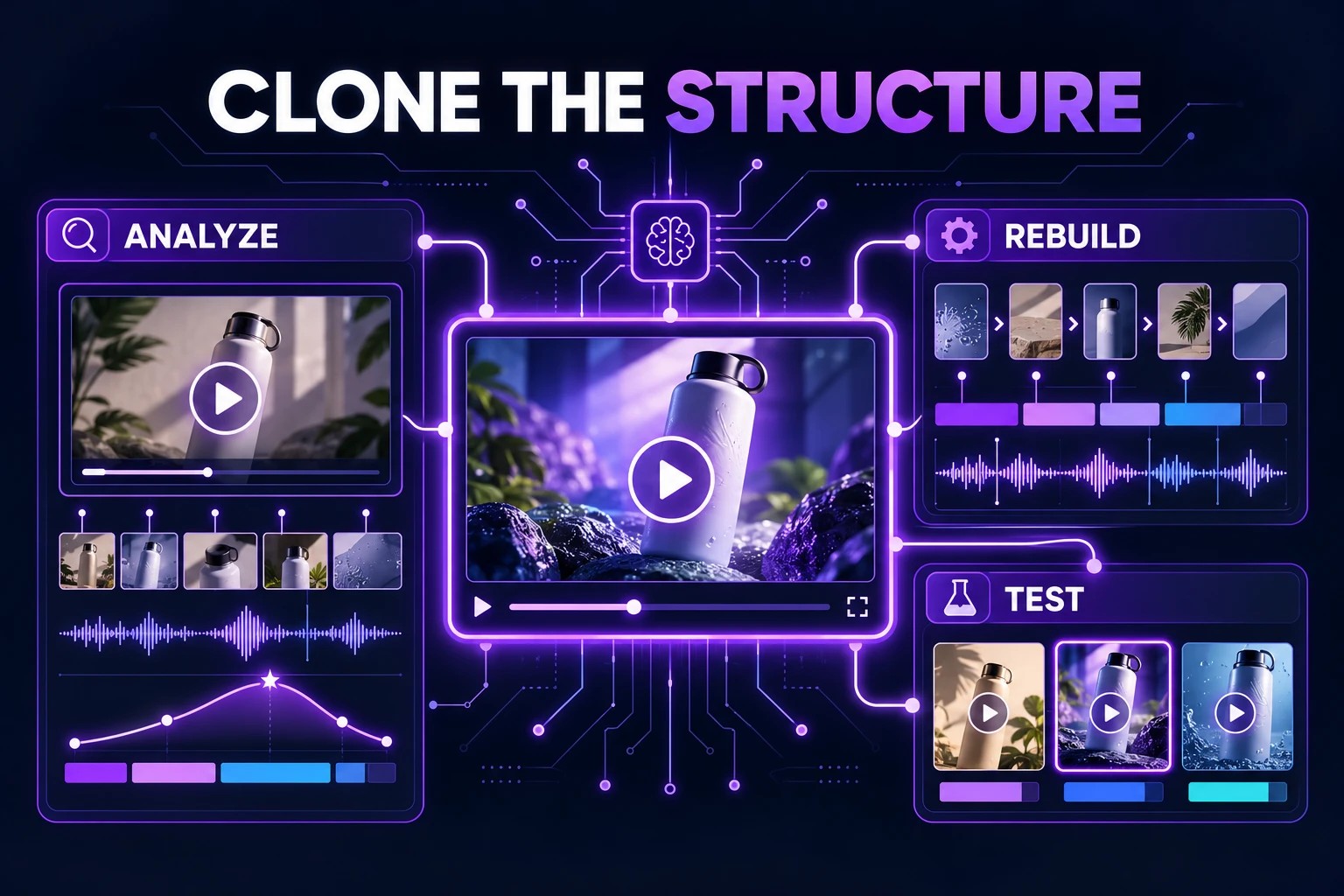
You may study a successful ad’s hook, pacing, or problem-solution structure. The safer approach is to rebuild the concept around your own product evidence.
For example, do not copy a competitor’s sequence of “problem → reaction → product reveal → CTA.” Instead, use the same broad marketing logic with:
- Your own opening problem
- Your own product demonstration
- Your own voiceover or on-screen explanation
- Your own offer and landing page
- A different shot sequence and visual treatment
This preserves strategic learning without producing a near-duplicate.
How to prepare original TikTok ad assets
Start with a clean source library rather than editing a downloaded ad. Keep original camera files, product photos, audio licenses, creator permissions, and project files in one folder. This gives your team an audit trail if a review issue occurs.
For ecommerce sellers, an original ad usually needs four visible contributions:
- Product evidence: Show the actual item, its packaging, texture, size, use, or result.
- Brand perspective: Explain why the product exists and who it serves.
- Distinct storytelling: Use a new hook, script, sequence, or demonstration.
- Clear commercial information: Make the offer, product identity, and destination consistent.
TikTok’s ad-format policy requires ad text, captions, images, video, CTA, and landing-page content to be consistent with the promoted product. Landing pages also need sufficient original information rather than a page dominated by ads or incomplete details. (ads.us.tiktok.com)
If you use AI production tools, treat them as editing and variation aids—not substitutes for accurate product communication. AdsTurbo can support product videos, subtitles, translation, ad cloning, and creative variations, but every generated version should still be checked against the actual product and approved brand assets.
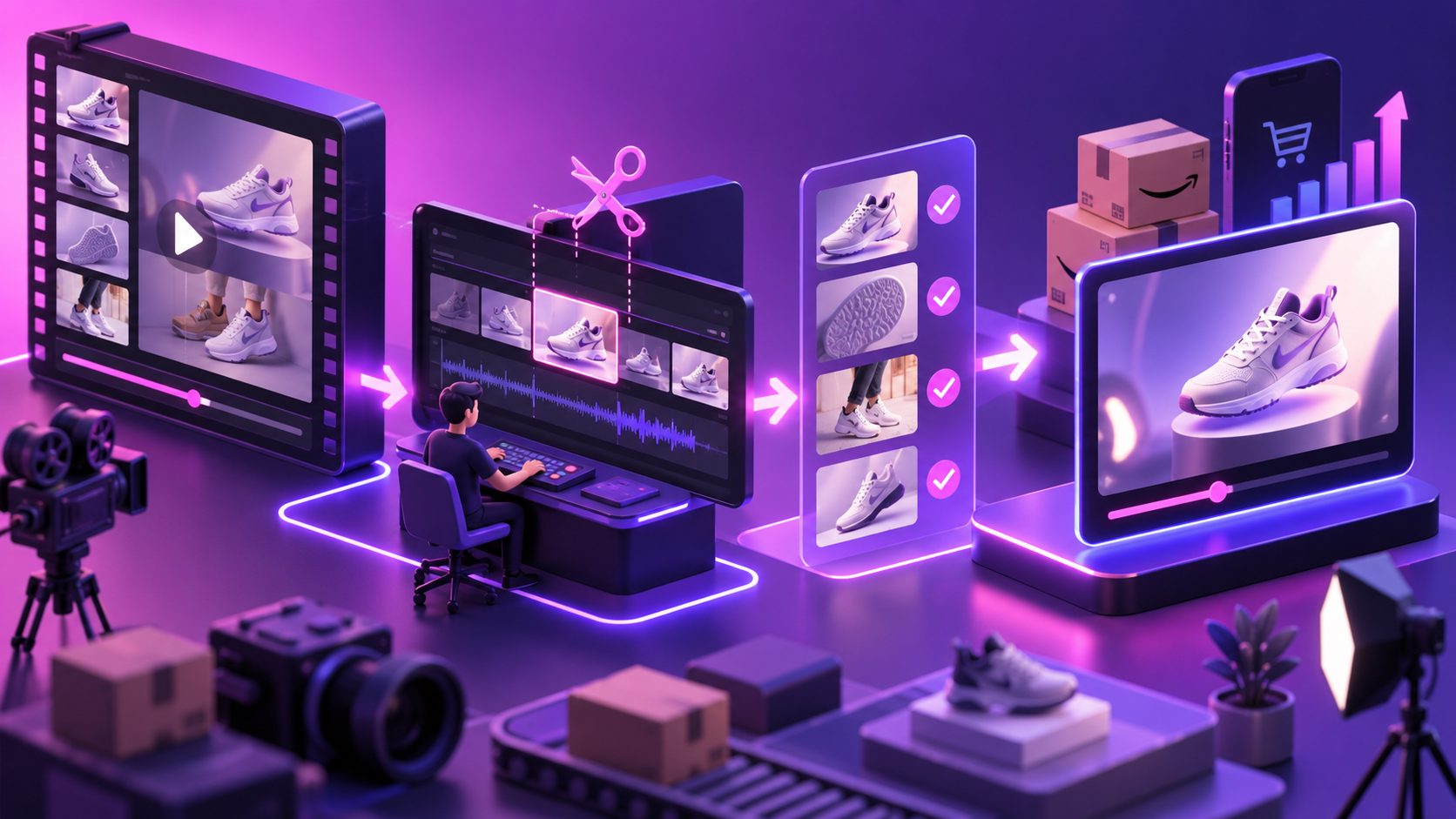
A practical five-step originality workflow
1. Build a rights-cleared source pack
Before editing, confirm the origin of every asset:
- Product footage and photos
- Music and sound effects
- Creator or actor footage
- Voice recordings
- Fonts, graphics, and logos
- Customer testimonials
Do not assume that crediting the original creator gives you advertising rights. Permission should cover commercial use and the intended markets.
2. Write a new product-specific script
A script is one of the clearest ways to show creative contribution. Include a product problem, a concrete feature, a demonstration, and a reason to act.
Avoid generic AI-generated claims that could apply to any product. Replace “This changes everything” with observable details such as how the product is used, what it contains, how it fits, or what the buyer receives.
3. Rebuild the visual sequence
Even when using a reference ad for strategic inspiration, change the actual execution:
- Film or generate new opening footage
- Use different framing and camera movement
- Demonstrate the product from another angle
- Add original captions and graphics
- Use your own pacing and CTA
- Match the landing page language
For localized campaigns, changing the voice alone is usually not enough. Adapt examples, captions, product benefits, and visual context for the target audience. When people or presenters need to be adapted across versions, use a properly authorized workflow such as character swap, while preserving truthful product presentation and usage rights.
4. Add meaningful audio and captions
TikTok’s commercial content quality guidance emphasizes clear sound, synchronization, visual clarity, and storytelling that captures attention early. (ads.tiktok.com)
Use captions that explain what viewers are seeing rather than simply repeating a slogan. Check that the captions match the spoken words, do not cover the product, and remain readable in the 9:16 frame.
If the source footage is soft or heavily compressed, an AI video enhancer can improve clarity before export. Upscaling should support legitimate footage quality; it should not be used to disguise a watermark or make copied content appear original.
5. Run a preflight review before upload
Use this original-content scorecard:
- Ownership: Can you document the rights for every asset?
- Product proof: Does the video clearly show the promoted product?
- Creative contribution: Are the script, narration, edit, or demonstration meaningfully new?
- Visual integrity: Is there no third-party watermark, logo, or suspicious overlay?
- Narrative continuity: Does the video tell one coherent story from opening to CTA?
- Destination match: Does the landing page support the claims and offer?
- Technical quality: Are the video, audio, captions, and framing clear?
A useful internal rule is to reject any draft that fails two or more categories. This is not a TikTok scoring formula; it is a practical production gate designed to catch preventable problems before submission.
What to do if your ad is flagged
First, identify whether the problem is originality, quality, intellectual property, product claims, or landing-page inconsistency. Do not repeatedly resubmit the same file with a new filename.
Instead:
- Remove third-party watermarks and unauthorized media.
- Replace copied or minimally edited sections.
- Add a new script, voiceover, or product demonstration.
- Check captions, CTA, offer, and landing page for consistency.
- Export a clean version with continuous visual storytelling.
- Keep records of permissions and source files.
- Submit an appeal only when you can explain the correction clearly.
Avoid technical tricks such as inserting irrelevant frames, adding hidden layers, or changing the aspect ratio to confuse automated review. TikTok identifies these tactics as risky editing behavior rather than genuine originality. (seller-us.tiktok.com)
Frequently asked questions
Can I use a competitor ad as a reference?
Yes, you can study broad creative principles, but do not reproduce its footage, script, captions, shot order, or distinctive execution. Use the reference to develop a new concept based on your own product and evidence.
Does adding a logo make an ad original?
No. A logo is branding, not necessarily creative transformation. TikTok may still view the video as reused if the underlying footage, structure, or presentation comes from another source.
Can AI-generated video be flagged as unoriginal?
AI-generated content can still be low-quality, repetitive, misleading, or disconnected from the product. Use AI to create useful variations, but verify that the product appearance, claims, voice, and demonstration are accurate.
Should I edit everything inside TikTok?
Native editing may help maintain a clean upload workflow, but originality depends on the content—not simply where it was edited. Whether editing internally or externally, preserve a coherent narrative and avoid manipulative formatting.
What is the safest creative strategy for ecommerce ads?
Create several genuinely different concepts from the same product facts: a demonstration, a comparison, a problem-solution story, a testimonial-style explanation, and a use-case video. Vary the opening, evidence, narration, and CTA—not just the font or background.
Conclusion
The most reliable way to avoid an unoriginal-content flag is to build ads from owned or licensed assets and add visible, meaningful creative value. Remove watermarks, avoid copied structures, show the real product, write a distinct script, maintain visual continuity, and verify that the landing page supports the ad.
Originality is not a decorative layer added after production. It is a property of the entire creative workflow—from source materials to product proof, storytelling, editing, and destination.