Ecommerce Video Ad Production Cost Breakdown

Summarize with
Summary
Ecommerce video ad production cost breakdown comparing DIY, creators, agencies, and AI workflows, plus a practical budget model for creative testing.
By adsturbo.ai | Published 2026-11-23 | Updated 2026-11-23
The ecommerce video ad production cost breakdown is easier to understand when you separate production price from testing capacity. A short ad may cost less than $100 to generate, $150–$1,500 through a creator or freelancer, or several thousand dollars through an agency or commercial shoot. The right budget depends on how many concepts, hooks, formats, revisions, and usage rights you need—not only the final video length.
What does ecommerce video ad production cost?
A practical US budget range is $50–$300 for a simple AI-assisted ad, $150–$1,500 for freelance or creator production, and $3,000–$15,000 or more for an agency-led campaign. These ranges are directional rather than fixed quotes because talent, locations, creative strategy, editing, and licensing can change the total substantially. (atharvsankpal.com)
| Production route | Typical cost per finished ad | Best fit | Main cost risk |
|---|---|---|---|
| DIY phone video | Your time plus editing tools | Early validation and founder-led content | Opportunity cost and inconsistent quality |
| AI-assisted production | About $50–$300 | Hook, angle, and format testing | Revision time and weak creative direction |
| Freelance editor or creator | About $150–$1,500 | Human-led UGC and product demonstrations | Usage rights and coordination |
| Agency or production company | About $3,000–$15,000+ | Hero campaigns and brand launches | High fixed cost before performance data |
| Full commercial production | Often $10,000–$50,000+ | Large launches and premium brand films | Crew, location, talent, and post-production |
These figures describe creative production, not media spend. Advertising budget, influencer fees, shipping samples, music licenses, and platform management may be billed separately.
What costs are included in a video ad quote?
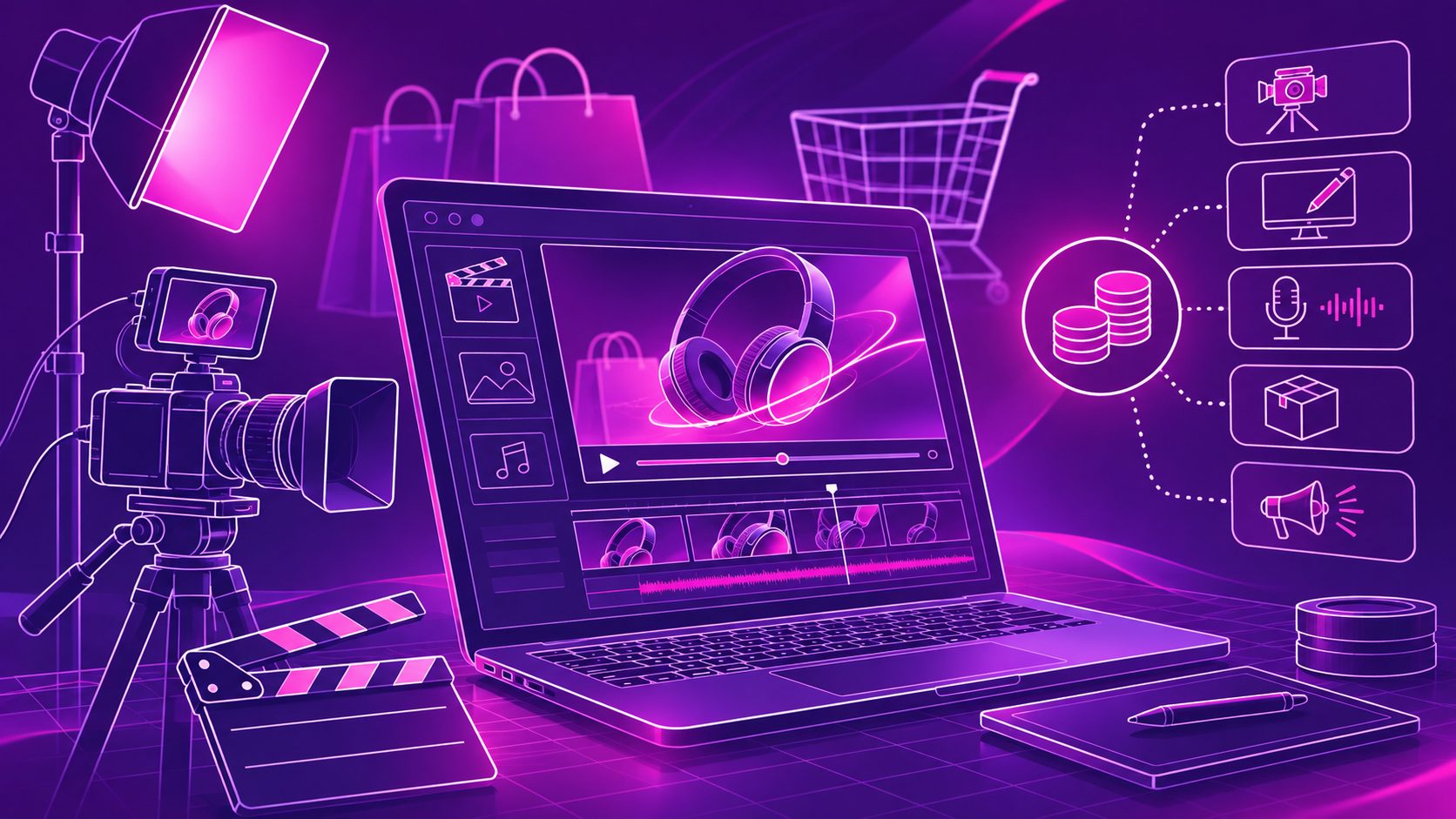
The visible video fee is only one part of the production budget. A reliable quote should identify at least seven cost layers:
- Concept development: research, angle selection, hook writing, and offer framing.
- Script and storyboard: spoken lines, on-screen text, shot order, and CTA.
- Talent: creator, actor, voiceover artist, or digital presenter.
- Production: camera, lighting, location, props, product samples, and crew.
- Post-production: editing, captions, sound design, color correction, and resizing.
- Rights and licensing: paid-media usage, whitelisting, music, likeness, and territory.
- Versioning: alternate hooks, CTAs, languages, aspect ratios, and product variants.
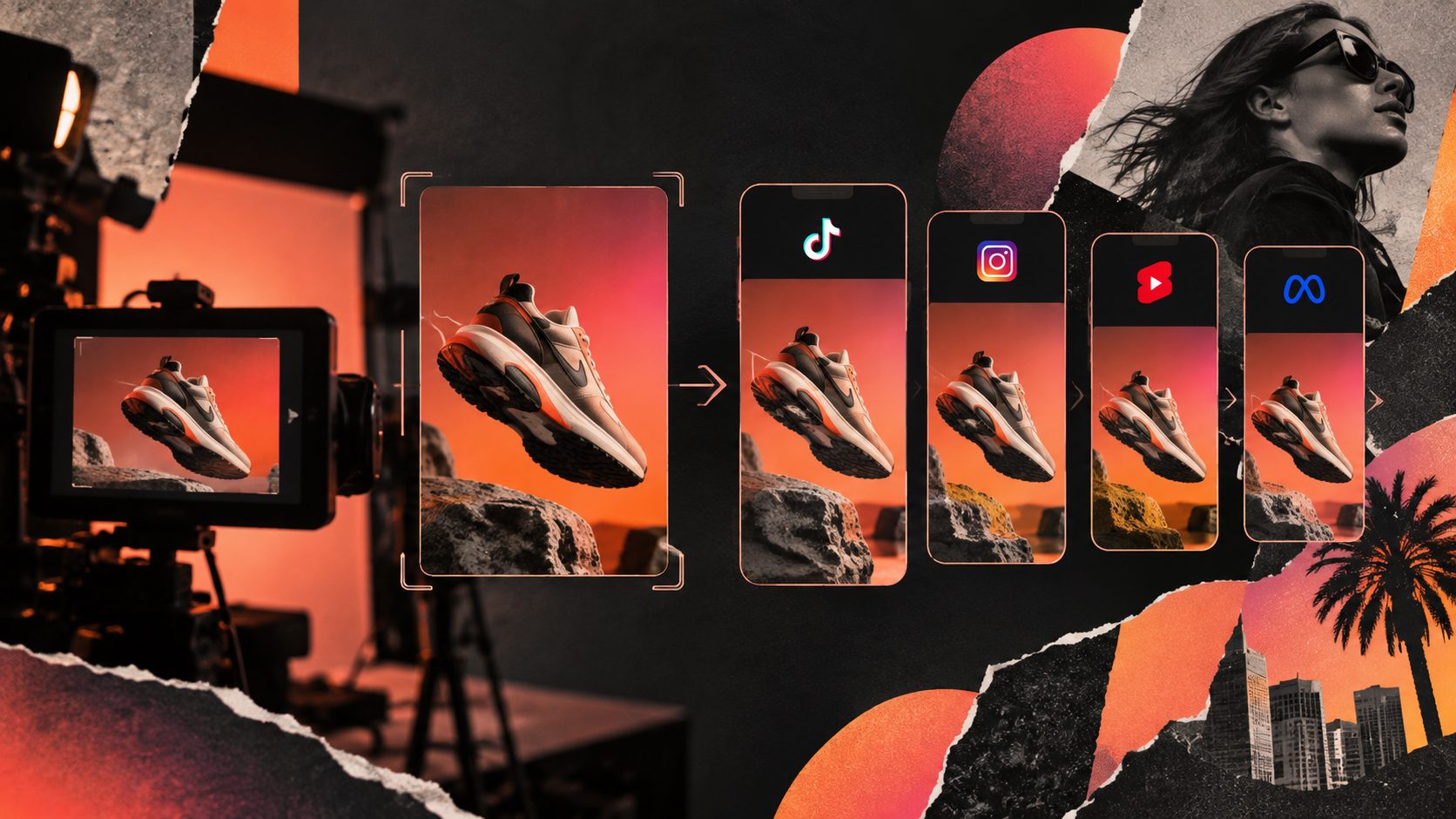
The most frequently underestimated item is versioning. A 20-second ad exported in 9:16, 1:1, and 16:9 is not automatically three new concepts, but it still creates additional editing, safe-zone, caption, and quality-control work.
For cross-border campaigns, translation and localization add another layer. AdsTurbo’s video tools include translation, lip sync, subtitles, motion control, resolution enhancement, and other post-production endpoints, which can reduce the need to rebuild every version from the beginning.
How much does a real creator or UGC ad cost?
A creator-made UGC ad commonly falls between $150 and $500 before more complex usage, licensing, or talent requirements. Higher-profile creators, specialized categories, paid-ad rights, exclusivity, and multiple revisions can push the total higher. Public creator pricing references also show that usage rights are often negotiated separately from the base production fee. (bframestudio.com)
Human UGC is often valuable when the product depends on trust, personal experience, or nuanced demonstration. It can also produce natural delivery that is difficult to reproduce with templated scripts.
However, creator production has hidden coordination costs:
- Finding and briefing the right creator
- Shipping the product
- Waiting for filming and reshoots
- Reviewing claims and brand compliance
- Negotiating paid usage
- Requesting alternate hooks or edits
- Managing different creators for different markets
That makes creator UGC powerful but less predictable for rapid testing. If the goal is to test ten angles in two weeks, buying one polished creator video may not be the most efficient first move.
How does AI video production compare with live-action shoots?
AI-assisted production usually lowers the cost of producing variations, while live-action production often provides stronger physical realism and brand control. The best choice depends on whether the campaign needs volume, credibility, or a flagship visual asset.
A live-action shoot may include:
- Pre-production and creative planning
- Studio or location rental
- Camera and lighting equipment
- Director, crew, talent, and makeup
- Product styling and set design
- Editing, sound, color, and motion graphics
- Reshoots and final format exports
AI workflows move more of that budget into software usage, creative direction, review, and iteration. They are particularly useful when an ecommerce team needs multiple product angles, audience variations, languages, or platform formats.
AdsTurbo supports product video generation from JPG or PNG product images, with optional selling points and promotional information. Its Ad Clone workflow can also analyze a reference video’s structure and help reconstruct variations around its pacing, shot logic, and CTA. This is useful for testing the creative structure of an ad without commissioning a new shoot for every product or market.
For product pages and paid social, an AI video enhancer can also be useful when existing footage is compressed, soft, or too low-resolution for a new export. Enhancement does not replace strong creative strategy, but it can extend the value of footage a brand already owns.
What is the cheapest way to produce useful video ads?
The cheapest useful method is not always the lowest-cost video. It is the method that produces enough usable learning per dollar.
A practical testing system is:
- Choose one product and three distinct selling angles.
- Write two hooks for each angle.
- Create one short version for each hook.
- Export the strongest concepts for the required platforms.
- Retain the winning structure and replace only one variable at a time.
This produces six initial creative directions instead of one expensive “perfect” ad.
An original budgeting model: cost per learning cycle
A better comparison than cost per video is:
Cost per learning cycle = total production cost ÷ number of distinct concepts tested
For example:
- A $4,000 shoot that creates one concept equals $4,000 per learning cycle.
- Six AI-assisted concepts at $150 each equal $900 total, or $150 per learning cycle.
- Four creator ads at $350 each equal $1,400 total, or $350 per learning cycle.
This does not mean the AI option will always perform better. It means the brand can learn faster before committing its largest budget. Once one angle shows traction, a higher-production version can justify its cost.
What budget should an ecommerce brand set?
Use the production route that matches the campaign stage:
Early validation: $300–$1,000
Create several simple concepts using product images, existing footage, founder content, or AI-assisted production. Focus on hooks, objections, demonstrations, and offers rather than cinematic polish.
Growth testing: $1,000–$5,000
Combine AI or freelance production for volume with one or two human-led assets for credibility. Allocate budget for alternate hooks, subtitles, aspect ratios, and localization instead of spending everything on one master video.
Major launch: $5,000–$20,000+
Use a structured campaign: concept development, creator or live-action production, paid usage rights, multiple edits, and platform-specific deliverables. Keep a portion of the budget for post-launch iterations because the first cut is not guaranteed to be the strongest performer.
AdsTurbo also supports product images, event posters, subtitles, background replacement, ad cloning, and API access. Higher-level plans support team workflows, API access, and custom workflows, which can matter when creative production becomes a repeatable operating process rather than a one-off project.
Frequently asked questions
Does video length determine production cost?
Not by itself. A 15-second ad with several scenes, actors, and revisions may cost more than a simple 45-second product demonstration. Complexity and the number of deliverables usually matter more than runtime.
Is AI video cheaper than hiring a creator?
Often, yes for producing many variations, but the comparison is incomplete. Creative direction, review time, revisions, rights, and quality control still have costs. AI is most valuable when it increases testing volume without weakening the message.
Should a small brand choose one expensive video or several cheaper ads?
Several cheaper ads are usually better for early learning. A premium production becomes easier to justify after the brand knows which product angle, audience problem, and CTA deserve further investment.
Are subtitles and translations included in production pricing?
Not always. Some vendors include them, while others charge per language, duration, or export. Confirm whether subtitle files, burned-in captions, translated voiceover, and platform-specific formatting are included.
What should be measured after production?
Track more than views. Compare thumb-stop rate, watch-through, click-through rate, add-to-cart rate, conversion rate, and cost per purchase. The winning production method is the one that creates profitable learning and usable variations—not simply the one with the lowest invoice.