Camper Van Conversion Showcase Video AI: A Practical Ad Workflow

Summarize with
Summary
Learn how to create camper van conversion showcase video AI content with before-and-after proof, feature demos, and platform-ready ad variations. Build your workflow.
By adsturbo.ai | Published 2026-11-15 | Updated 2026-11-15
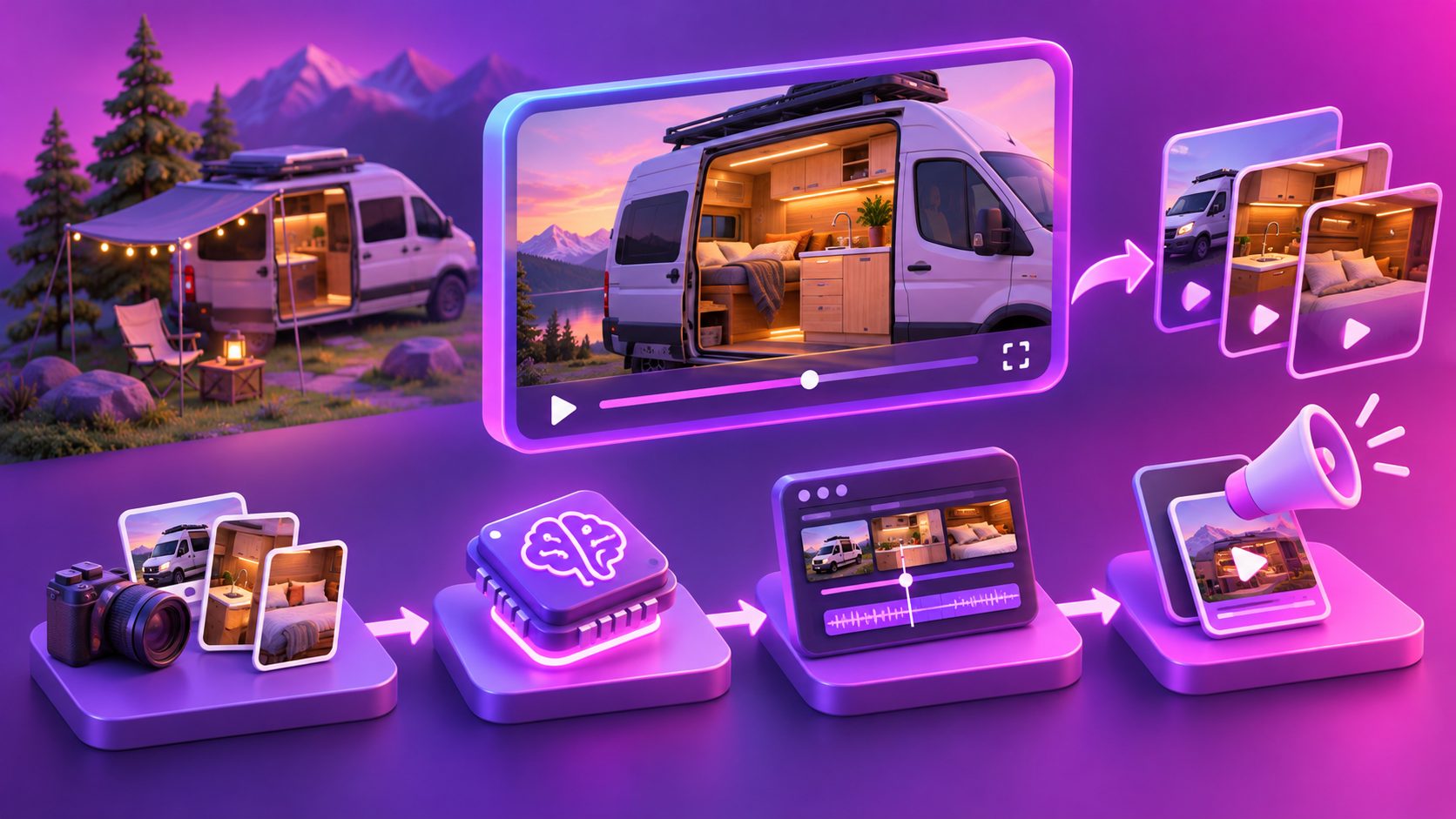
A camper van conversion showcase video AI workflow helps builders turn renovation footage, product images, reference ads, and selling points into short videos that explain the transformation clearly. The strongest version is not just a cinematic van tour: it proves what changed, demonstrates how the interior works, and gives buyers a reason to request a quote.
What should a camper van conversion showcase video include?
A high-performing showcase video should answer three questions quickly: What did the van look like before? What was changed? Why does the finished layout matter? A useful structure combines a before-and-after reveal, close-up demonstrations, practical specifications, and a clear next step.
Search results and current van-conversion ad examples consistently emphasize the same visual proof points: the unfinished floor, wiring or infrastructure, the completed interior, and space-saving features. A recent teardown of active van-conversion ads found that builders often use these elements to build trust before asking viewers to inquire. (sprites.ai)
For a 20–30 second social video, use this sequence:
- Hook: Show the finished interior first or contrast an empty cargo van with the completed build.
- Transformation: Cut through insulation, flooring, cabinetry, electrical work, and installation stages.
- Feature proof: Demonstrate the bed, kitchen, storage, lighting, shower, seating, or modular mechanism.
- Lifestyle payoff: Show how the layout supports sleeping, cooking, working, or weekend travel.
- CTA: Invite viewers to request a consultation, explore available layouts, or send their vehicle details.
How do you plan the before-and-after story?
The most effective before-and-after video is not a simple timeline. It is a problem-to-solution story.
Start by listing the buyer’s likely concerns:
- The van feels empty or impractical.
- Storage is limited.
- The bed takes too long to set up.
- The interior looks unfinished.
- The electrical or water systems are difficult to understand.
- The conversion does not seem suitable for daily driving.
Then match each concern to one visual demonstration. For example, show the empty rear area, cut to the installed storage system, and finish with the storage being opened during a real use case.
An original planning framework for conversion sellers is the SPACE test:
| Element | What to show | Buyer question answered |
|---|---|---|
| S — Starting point | Empty or outdated van | What problem did you solve? |
| P — Process | Key construction stages | Was the work thoughtful and durable? |
| A — Access | Drawers, doors, bed, kitchen | Is the layout easy to use? |
| C — Capacity | Storage, gear, sleeping area | Will it fit my lifestyle? |
| E — End state | Finished tour and CTA | What should I do next? |
This framework prevents a common mistake: spending most of the video on attractive shots while failing to demonstrate usability.
How can AI turn conversion footage into a short showcase?
AI is most useful when it reduces repetitive editing rather than inventing details about the build. Gather the source material first:
- Exterior photos from consistent angles
- Empty-van images or early construction footage
- Finished interior images
- Close-ups of high-value features
- Short clips showing mechanisms in use
- A list of dimensions, materials, options, and customer benefits
- Brand colors, logo, and preferred CTA
Then create a short script with one message per scene. For example:
- “From empty cargo space to a compact weekend home.”
- “A foldaway bed preserves daytime floor space.”
- “Dedicated storage keeps outdoor gear organized.”
- “Built around the owner’s travel routine.”
AdsTurbo supports product video creation from JPG or PNG product images, with optional selling points and promotional information. For a conversion business, the “product” can be treated as the completed van, a modular interior package, or a specific feature such as a kitchen system.
For sharper footage from compressed phone clips, use an AI video enhancer to improve the visual presentation before adding captions or assembling variations. Upscaling should support proof, not hide poor evidence: keep original shots when they are needed to show authentic construction details.
Which shots prove the value of a van conversion?
A showcase video should prioritize motion and interaction over static beauty shots. The following demonstrations usually communicate more than a slow interior pan:
- Open and close every major storage compartment.
- Convert the seating area into a bed.
- Extend a table, drawer, or slide-out kitchen.
- Turn on task lighting or demonstrate charging access.
- Show walking space from the side door to the rear.
- Place typical travel items inside storage areas.
- Compare the same camera angle before and after conversion.
- Show the exterior profile before revealing the interior.
A practical editing rule is one feature, one action, one benefit. Do not show a cabinet without opening it. Do not mention storage without placing something inside. Do not claim flexibility without demonstrating the conversion mechanism.
This is also where a reference-video workflow can help. AdsTurbo Ad Clone can analyze a reference video of up to 12 seconds and generate advertising variations based on its structure. Sellers can use the pacing and CTA logic of a strong reference while replacing the message with their own build details. The result should preserve the conversion’s real features rather than imitate another company’s claims.
For related renovation storytelling, the before-and-after renovation video framework offers a useful structure for presenting the transformation clearly.
How should you adapt the video for TikTok, Reels, and YouTube Shorts?
Use the same core story, but change the opening and information density by placement.
| Channel | Recommended approach |
|---|---|
| TikTok | Start with the most surprising transformation or feature |
| Instagram Reels | Use clean visual pacing, branded captions, and lifestyle context |
| YouTube Shorts | Make the first seconds understandable without prior context |
| Product or landing page | Add more specifications, dimensions, and build details |
Vertical 9:16 is usually the most practical master format for short-form social content. Keep important text away from the edges, use large captions, and show the van’s most distinctive feature before the viewer scrolls.
AdsTurbo Video Subtitle can automatically transcribe speech, create synchronized captions, and export either a video with embedded subtitles or a separate subtitle file. This is useful when the same conversion story needs English captions, translated versions, or silent-viewing support.
How do you create multiple ad variations without reshooting?
Build a variation matrix instead of making one generic video. Change one variable at a time:
- Hook: “Empty van makeover” vs. “A full kitchen in a compact layout”
- Audience: Weekend travelers vs. remote workers
- Feature: Storage vs. sleeping system vs. off-grid equipment
- Proof style: Timelapse vs. walkthrough vs. feature demonstration
- CTA: Request a quote vs. book a consultation vs. explore layouts
This creates clearer learning during paid testing. If every version changes the hook, footage, voiceover, and offer, performance data becomes difficult to interpret.
A useful production package might include one 30-second showcase, three 15-second feature cuts, one silent-caption version, and one longer walkthrough for a product or service page. AdsTurbo supports clip-by-clip editing, video translation, subtitles, background replacement, and multi-format creative production for this type of repurposing workflow.
Common questions about AI camper van showcase videos
Can AI show my actual camper van conversion?
Yes, when the workflow uses your own photos and footage as the visual foundation. Use AI for sequencing, captions, localization, enhancement, and creative variations, while keeping critical construction proof grounded in real source material.
Should the video show the conversion process or only the finished van?
Show both. The finished van creates desire, while selected process shots create trust. Focus on stages that explain craftsmanship, layout decisions, and practical outcomes rather than documenting every task.
How long should a conversion showcase video be?
Create a 15–30 second version for social testing and a longer walkthrough for buyers who need more detail. The short version should communicate one transformation and one primary benefit.
Can one video be localized for different markets?
Yes. You can adapt voiceover, subtitles, screen text, presenter style, and CTA by market. Verify every translated specification, measurement, and offer before publishing.
What should sellers avoid?
Avoid unsupported claims, unreadable captions, excessive cinematic filler, and AI-generated layouts that do not match the real vehicle. Buyers need to see what the conversion actually does.
Final checklist before publishing
Before exporting, confirm that the video:
- Shows a clear before-and-after contrast
- Demonstrates at least two functional features
- Uses accurate dimensions and product claims
- Includes captions for sound-off viewing
- Keeps the CTA visible and specific
- Has versions for vertical and wider placements
- Uses real footage for construction and finish details
- Creates separate variations for different buyer motivations
The best camper van conversion showcase video AI workflow combines authentic build evidence with faster editing, localization, and testing. When every scene connects a visible feature to a buyer benefit, the video becomes more than a tour: it becomes a practical sales asset.