

By adsturbo.ai | Published 2026-10-01 | Updated 2026-10-01
Indiegogo campaign video production is the process of turning a product idea, prototype, or launch offer into a video that helps strangers understand, trust, and support the campaign. For hardware and DTC teams, the strongest approach combines a founder-led story, visible product proof, clear reward information, and short localized versions for paid and organic promotion.
The main campaign video is not just a product commercial. It is a trust asset that must explain what the product does, why it matters, how far development has progressed, and what backers will receive.
What should an Indiegogo campaign video achieve?
An effective campaign video should answer four questions quickly: What is the problem, how does the product solve it, why should people trust this team, and what should they do next?
Indiegogo’s campaign guidance recommends a concise pitch video, a clear explanation of the project, a personal connection with the creator, a product preview, supporting music, and a direct call to action. Its campaign video guide also emphasizes that the tone and production quality should match the product and brand rather than simply maximizing cinematic polish. (entrepreneur.indiegogo.com)
For a hardware or DTC campaign, the video normally needs to perform five jobs:
- Create immediate relevance: Show the problem or use case before introducing technical detail.
- Demonstrate the product: Use real footage, close-ups, diagrams, or controlled animations.
- Establish credibility: Introduce the founder, team, prototype status, testing process, or manufacturing plan.
- Explain the offer: Present early-bird rewards, bundles, shipping expectations, or campaign milestones.
- Convert attention into action: End with a specific instruction such as backing the campaign or joining the launch list.
The key distinction is that a polished video without proof can feel like a commercial, while a proof-heavy video without a story can feel like a technical manual.
What is the best structure for a 90-second to three-minute pitch?
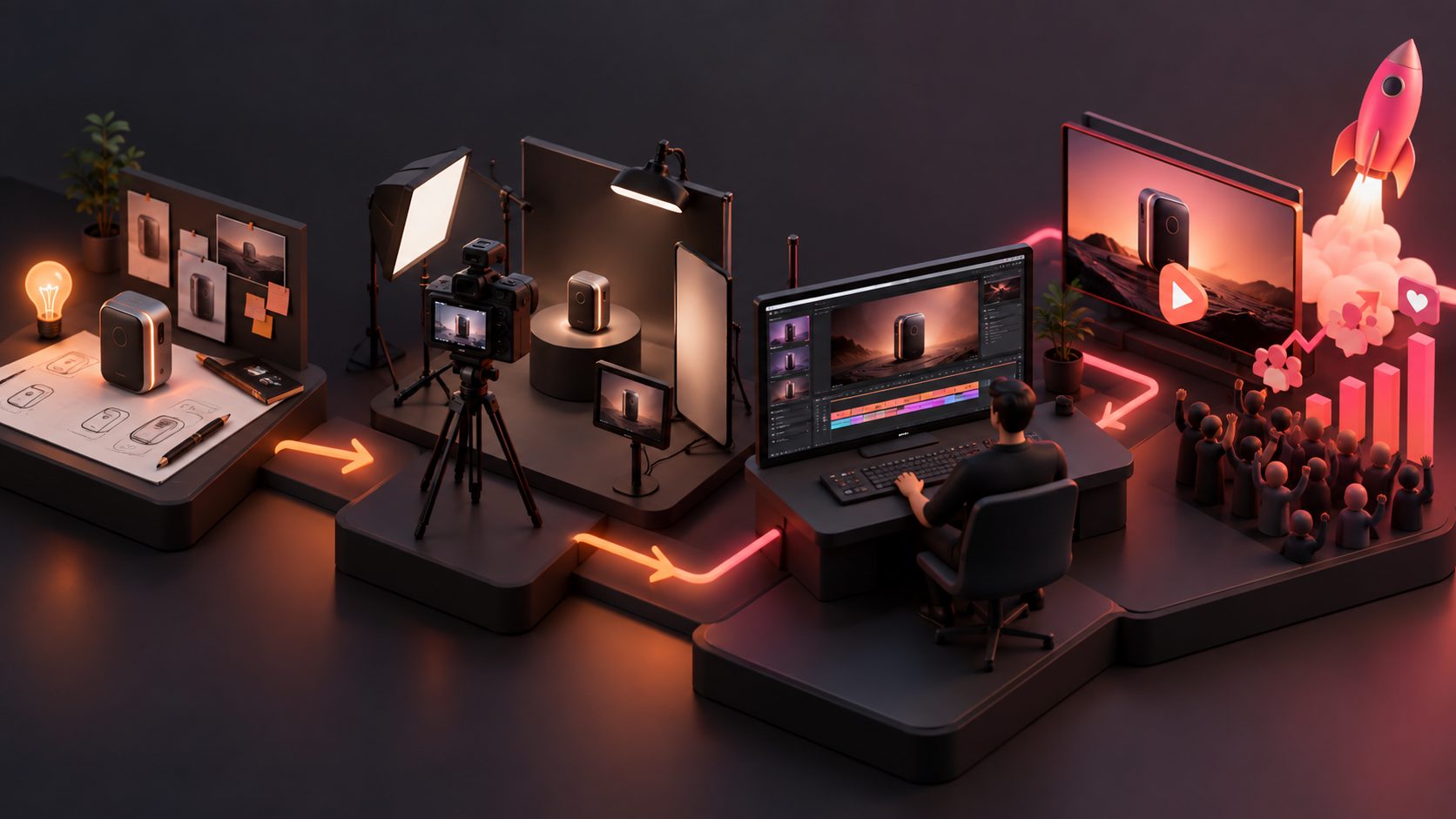
A reliable structure is Hook → Problem → Demonstration → Proof → Offer → CTA. The first ten seconds should show the most understandable visual evidence, not a long logo animation or abstract mission statement.
| Section | Suggested role | What to show |
|---|---|---|
| Hook | Establish attention | The product solving a visible problem |
| Problem | Create relevance | The frustrating current alternative |
| Demonstration | Explain function | Product in use from several angles |
| Proof | Reduce risk | Prototype, testing, materials, team, or process |
| Offer | Make backing concrete | Reward tier, launch price, or campaign benefit |
| CTA | Direct the next action | “Back the campaign” or “Join the launch” |
A hardware team can use a simple script such as:
“Most [target users] struggle with [specific problem]. We built [product] to make [desired result] easier. Here is how it works. We have already completed [available proof]. Back the campaign to help us move from [current stage] to [next milestone].”
This framework is more useful than starting with a generic brand story because it forces every scene to support either understanding, trust, or action.
How should hardware teams film product proof?
Product proof should be designed before the shoot. Create a proof map with three columns: claim, visual evidence, and risk if misunderstood.
For example:
- “Faster setup” → timed setup demonstration.
- “Portable” → product placed beside familiar objects or used in a real environment.
- “Durable” → material close-up, test footage, or transparent explanation of limits.
- “Easy to clean” → show the cleaning process rather than relying on an adjective.
- “Ready for production” → explain the prototype stage, supplier status, and remaining work.
This approach creates an important information gain over the usual “feature montage.” It treats every product claim as a visual question: What would a skeptical backer need to see before believing this?
For products that are still in development, avoid presenting concept renders as if they were final units. Label prototypes, simulations, and expected specifications clearly. Trust is especially important because campaign backers are evaluating both the product and the team’s ability to deliver.
A founder appearance can help make the campaign personal, but it does not need to carry the entire video. A strong hybrid often combines a short founder introduction with product demonstrations, customer scenarios, animated callouts, and manufacturing visuals.
How can one campaign video become a full launch asset system?
The most efficient production model is to plan the main video and its derivative assets together. Instead of creating one three-minute video and starting over for every channel, build a modular asset library.
A practical campaign asset system includes:
- One main campaign video.
- Three to five feature-specific clips.
- A 15-second problem-and-solution teaser.
- A founder or team introduction.
- A reward-tier or early-bird explainer.
- Vertical versions for TikTok, Reels, and Shorts.
- Square or landscape cuts for ads, email, and landing pages.
- Subtitle files and burned-in caption versions.
AdsTurbo’s Product Video workflow for ecommerce sellers can help teams turn product images and selling points into short-form promotional concepts. For existing footage, long-form video repurposing into captioned short videos can support teaser production and social distribution.
The planning rule is simple: capture more reusable evidence than the main video strictly needs. Close-ups, alternate demonstrations, founder soundbites, packaging footage, and objections answered on camera can later become retargeting creatives or campaign updates.
How should international teams localize an Indiegogo campaign?
Localization should change more than subtitles. Different markets may require different narration, on-screen text, examples, product benefits, and calls to action.
A practical localization workflow has four layers:
- Translate the script: Preserve the intended meaning, not just individual words.
- Localize the voice track: Match the language and tone to the target audience.
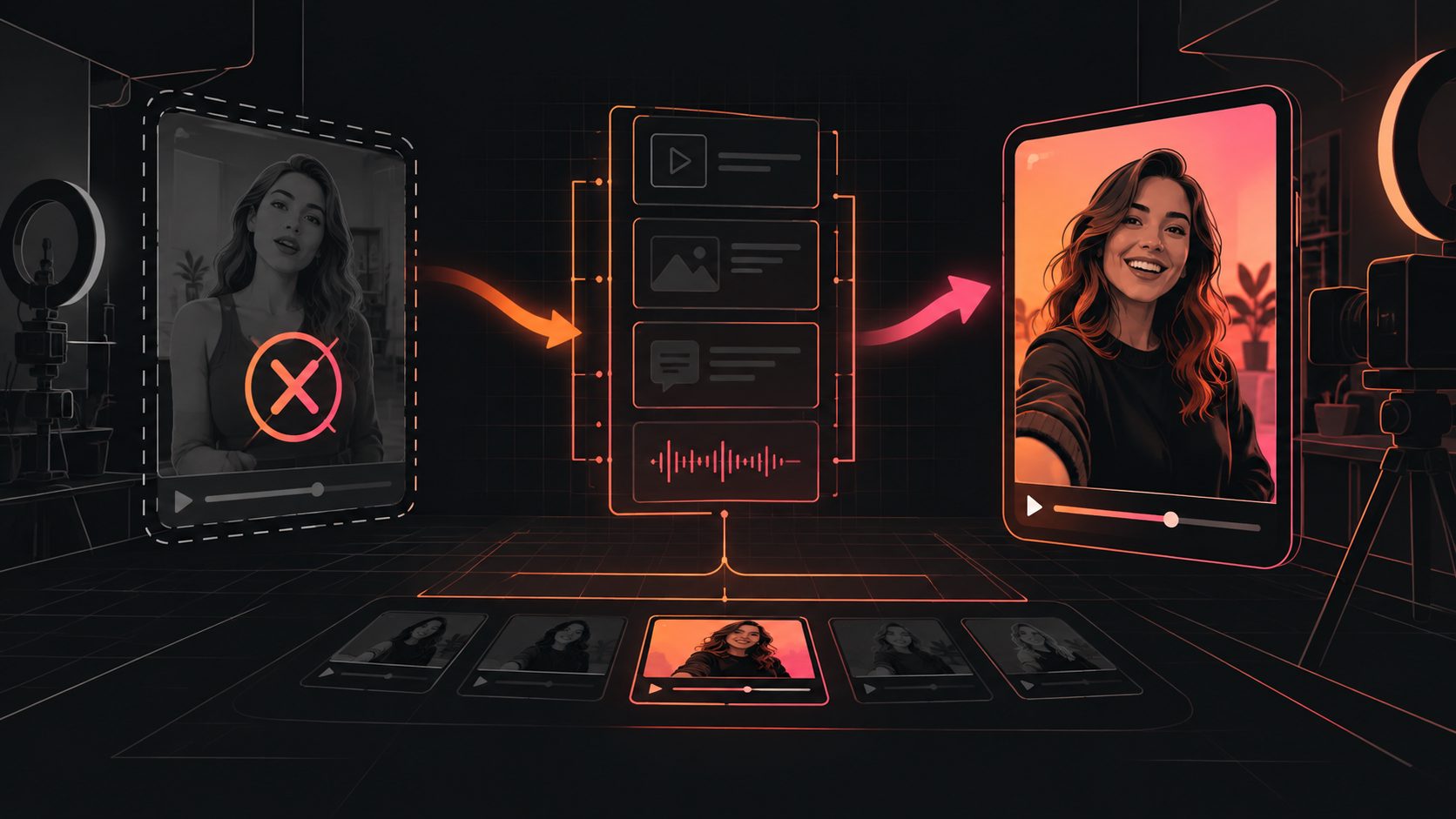
- Synchronize the speaker: Use lip sync when the on-camera presenter speaks directly to viewers.
- Rebuild text and CTA elements: Replace captions, offer details, currencies, and campaign instructions.
AdsTurbo provides video translation, AI lip sync, character replacement, subtitles, and resolution enhancement. Its Video Subtitle tool can automatically transcribe speech, generate time-synced captions, and export either a subtitled video or a separate subtitle file. For campaign teams, this makes it possible to create language-specific versions without rebuilding every visual sequence.
Use AI video subtitle workflows for social formats when preparing captioned cuts for vertical placements. If the original footage is compressed or recorded in inconsistent conditions, video upscaling can improve clarity before exporting campaign variants.
What should teams measure before launch?
Measure the video as a communication system, not only as a finished file. Before launch, run a small comprehension review with people who are unfamiliar with the product.
Ask each reviewer to answer:
- What problem does the product solve?
- Who is it for?
- What proof did you see?
- What would you receive by backing it?
- What action should you take next?
Record the answers without explaining the product beforehand. If reviewers repeat different interpretations, the script or visual hierarchy needs work.
A useful internal scoring model is:
- Comprehension: Can a new viewer explain the product after one viewing?
- Proof density: Does each major claim have visible evidence?
- Trust clarity: Are prototype status, team, risks, and next milestones clear?
- Offer clarity: Can viewers distinguish the reward or early-bird option?
- Reuse value: Can the footage produce several short-form campaign assets?
This five-part review is an original pre-launch filter for campaign teams. It prevents a common mistake: approving a video because the founders understand it, even though first-time viewers do not.
Common mistakes in campaign video production
Is a cinematic video always better?
No. Production quality should support the product’s positioning and credibility. Indiegogo’s campaign guide notes that a lower-fi style may suit a maker-led project, while premium or trust-sensitive products may justify professional production. (entrepreneur.indiegogo.com)
Should the founder appear on camera?
Usually, yes, at least briefly. A founder appearance can make the campaign more personal and show accountability. The founder does not need to deliver every technical explanation; a short introduction followed by clear product proof is often more effective.
How long should the campaign video be?
Aim for the shortest runtime that fully explains the product and offer. Many campaign guides recommend approximately one to three minutes for the main pitch, while shorter cuts should handle social distribution and retargeting. (enterprise.indiegogo.com)
Can AI replace a product shoot?
AI can accelerate concepting, localization, editing, subtitles, background changes, and creative variation. It should not replace evidence that only the real product, prototype, founder, or manufacturing process can provide. Use AI to multiply trustworthy source material, not to hide missing proof.
What should the final call to action say?
Use one direct action. For example: “Back us on Indiegogo,” “Choose your early-bird reward,” or “Join the launch list.” Avoid ending with several competing instructions.
Final checklist
Before publishing, confirm that the video:
- Shows the product or prototype in a believable context.
- States the problem within the opening seconds.
- Demonstrates the most important function clearly.
- Includes founder, team, or development proof.
- Explains what backers receive.
- Acknowledges the current development stage and major risks.
- Uses readable captions and platform-appropriate framing.
- Has localized versions where the campaign audience requires them.
- Produces reusable short clips for launch promotion.
- Ends with one clear call to action.
The strongest Indiegogo campaign video is not necessarily the most expensive one. It is the one that reduces uncertainty fastest, proves the product honestly, and gives the campaign enough modular content to keep communicating after launch.