

By adsturbo.ai | Published 2026-10-03 | Updated 2026-10-03
An AI foundation shade match video generator can turn verified product photos, real swatches, model references, and benefit copy into short ads comparing shade, undertone, blend, and coverage. The critical word is verified: AI should scale the presentation, not invent cosmetic results or replace physical shade testing.
What Is an AI Foundation Shade Match Video Generator?
An AI foundation shade match video generator is a creative-production tool for building foundation comparison videos from product imagery, reference footage, scripts, and digital talent. It can visualize application, organize shade comparisons, add narration, and resize ads, but it should not be treated as a clinical or color-accurate matching instrument without validated source data.
This distinction is easy to miss. A customer-facing shade finder recommends a specific SKU from a selfie or questionnaire. A video generator produces marketing assets that explain or demonstrate shades. The first requires calibrated matching logic; the second requires truthful visual evidence and consistent creative execution.
Lighting is especially important. Research on illumination quality in beauty-product recommendations found that poorly illuminated face images can undermine skin-tone analysis. Use evenly exposed source photos, disable beauty filters, and preserve the same white balance across every comparison. (arxiv.org)
Which Inputs Produce a Credible Foundation Comparison?
The best inputs are a clean packshot, verified swatches, unfiltered skin references, precise shade labels, and substantiated coverage claims. AI can animate or reformat these assets, but ambiguous colors and unsupported promises will remain unreliable regardless of production quality.
Prepare this source package before generation:
- A front-facing JPG or PNG product image on a plain background
- Physical swatches photographed under one lighting setup
- Shade names, depth categories, and undertones from the product catalog
- Bare-skin and applied-product references with permission to use them
- Confirmed claims such as finish, wear time, and coverage level
- Brand fonts, logo files, CTA, disclaimer, and destination URL
AdsTurbo Product Video accepts JPG or PNG product images up to 10 MB and can generate product review, introduction, or demonstration videos. A clean packshot also supports a broader product-photo-to-video workflow for short-form commerce.
Do not correct one model’s complexion more heavily than another. Smoothing, exposure shifts, or warm color grading can make the same formula appear to have different coverage and undertones.
How Do You Structure a 15-Second Shade-Match Ad?
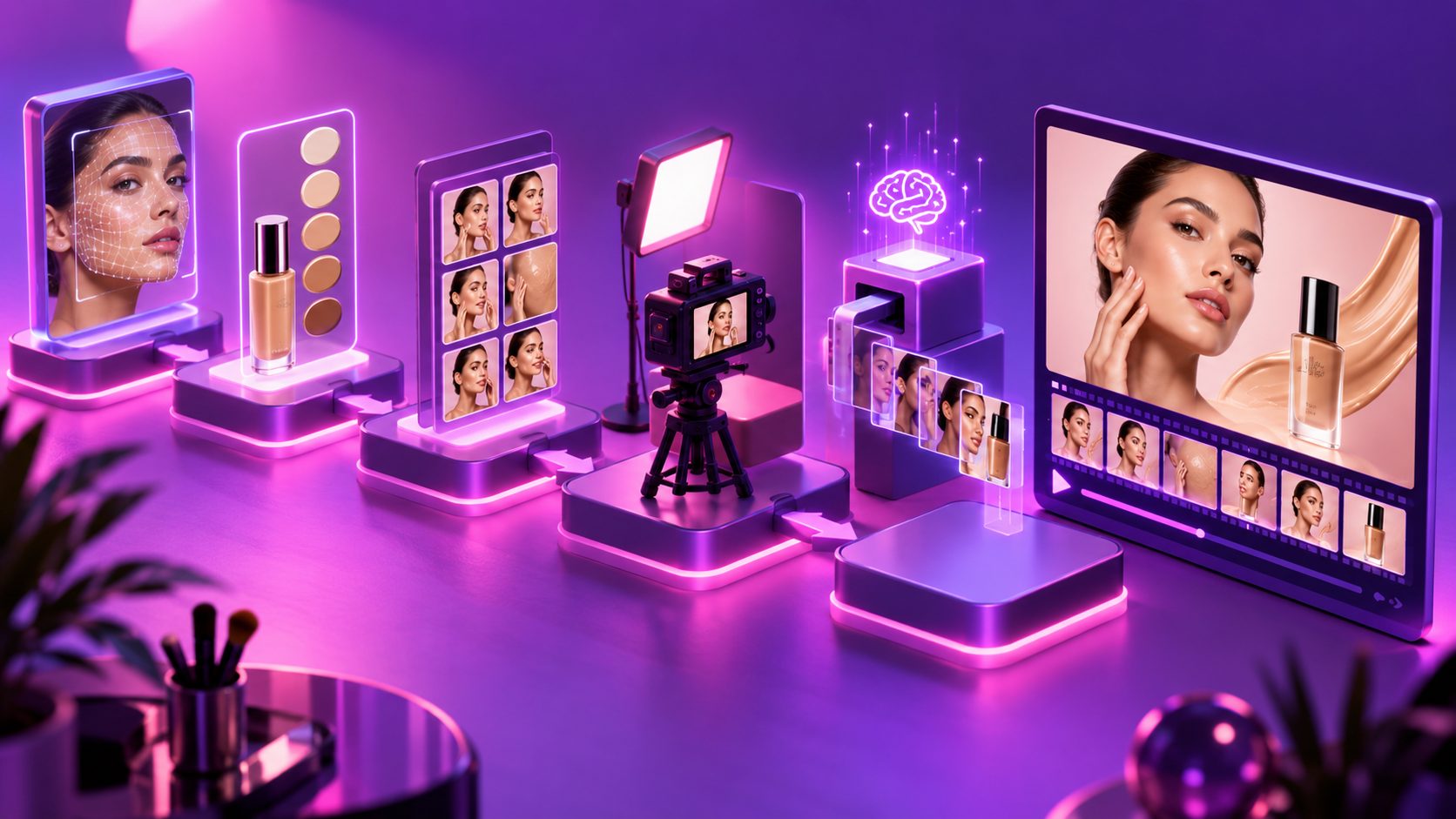
A high-clarity foundation ad should establish the shade problem, show an unaltered baseline, demonstrate application, prove the blend, compare skin tones, and end with a specific shopping action. Each shot should answer one question instead of combining several claims.
| Time | Shot | Visual evidence | Suggested on-screen copy |
|---|---|---|---|
| 0–2 sec | Pattern interrupt | Three close shade options beside one face | “Which undertone disappears?” |
| 2–4 sec | Baseline | Bare cheek and jawline in neutral light | “Unfiltered skin” |
| 4–7 sec | Application | One controlled swipe or half-face blend | “Shade N4 · neutral” |
| 7–10 sec | Coverage proof | Same angle before and after blending | “Buildable medium coverage” |
| 10–13 sec | Inclusion grid | Equivalent proof on several skin depths | “Find your depth + undertone” |
| 13–15 sec | Product and CTA | Packshot, shade range, landing-page action | “Compare your match” |
Keep shade labels visible long enough to read. For Reels, Meta recommends vertical video, audio, and important elements inside the safe zone; its published testing found lower cost per result for properly built 9:16 Reels creative than image ads in the compared campaigns. (facebook.com)
How Can Multiple Skin Tones Be Covered Without Tokenism?
Use a repeatable evidence matrix rather than a fast montage of diverse faces. The same application step, camera distance, lighting, caption format, and viewing duration should be used for every represented skin depth so viewers can make a meaningful comparison.
A practical original framework is the 12-cell Foundation Proof Matrix:
- Four depth groups: fair/light, medium, tan, and deep
- Three proof states: raw swatch, half-face blend, and finished close-up
- Undertone labels: warm, cool, neutral, or olive where applicable
The matrix does not claim that four models represent every complexion. Its purpose is to reveal gaps before publishing. If the tan group has only a finished beauty shot while the light group receives swatch and blend evidence, the creative is visually diverse but informationally unequal.
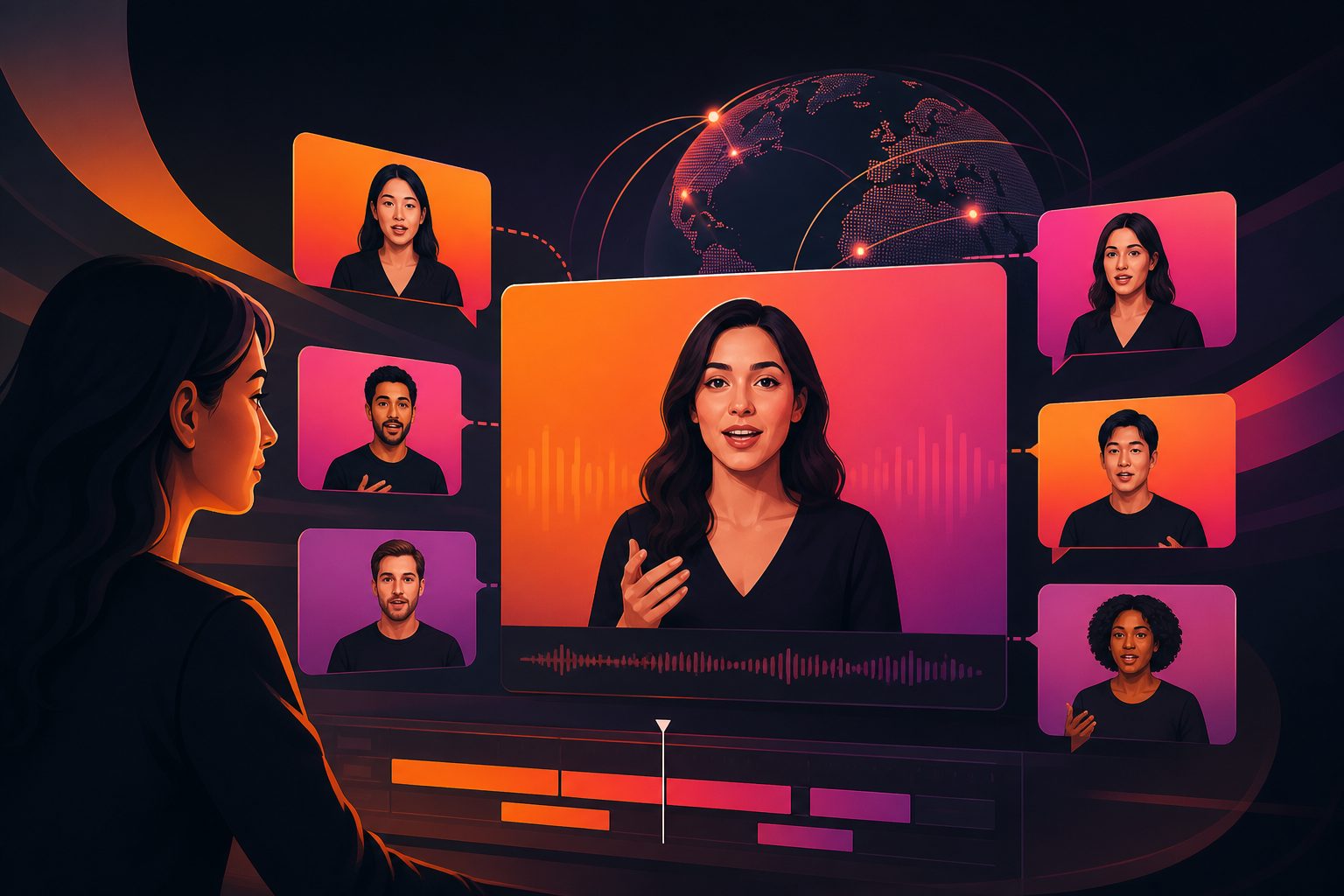
Create separate variants when 12 cells would overload one video. AdsTurbo supports more than 300 AI actors, character replacement, lip synchronization, subtitles, and video translation. Those tools can help adapt presentation and narration, while verified product footage remains the source of truth.
How Should AI Be Used in the Production Workflow?
Use AI to scale editing, localization, formatting, and creative variation—not to fabricate the shade result. Lock the verified color evidence first, then generate alternative hooks, presenters, backgrounds, voiceovers, subtitles, and calls to action around it.
- Build the evidence layer. Select the approved swatches, shade labels, application footage, and claims.
- Create the master cut. Assemble the six shots in a 9:16 timeline with neutral color treatment.
- Generate controlled variants. Change one variable at a time: hook, opening shade problem, presenter, CTA, or offer.
- Localize the message. Translate narration and captions without changing shade names or visual proof. The multilingual ecommerce video workflow explains how to separate translation from brand and product controls.
- Finish the asset. Use background replacement only outside skin-evidence frames. Apply AI video upscaling after color and text QA.
AdsTurbo also provides clip-by-clip editing, Product Image, Product Video, Ad Clone, Lip Sync, Character Swap, Video Translation, Video Subtitle, background replacement, and resolution enhancement. Generated tasks run asynchronously, with completion available through status polling or Webhook callbacks for API workflows.
What Quality Checks Prevent Misleading Beauty Ads?
A foundation ad passes QA only when viewers can distinguish the real product evidence from generated presentation. Check color consistency, claim support, model consent, readable disclosures, and platform-safe composition before evaluating click-through rate or conversion.
Score every export from 0 to 2 across five controls:
| Control | 0 points | 1 point | 2 points |
|---|---|---|---|
| Color continuity | Visible shifts | Minor variance | Consistent white balance |
| Evidence parity | Unequal comparisons | Some missing states | Same proof for all groups |
| Claim support | Unverified | Partly documented | Fully supported |
| Skin realism | Heavy smoothing | Light processing | Texture preserved |
| Label clarity | Missing | Brief or small | Readable and persistent |
A score below 8 out of 10 should return to editing. This is a production threshold, not a scientific accuracy rating.
The FTC’s advertising guidance states that objective claims must be truthful, non-misleading, and adequately substantiated. Visual before-and-after sequences can communicate implied claims, so an AI-generated complexion change should never be presented as measured product performance. (ftc.gov)
Frequently Asked Questions
Can AI accurately choose a customer’s foundation shade?
Not from a marketing video alone. Reliable shade recommendations require controlled images, validated matching methods, accurate product-color data, and often user confirmation. Present generated videos as product education unless the recommendation system has been separately tested.
Can one product photo create the entire ad?
One clear product image can support packshots, scenes, and product-video generation. However, credible shade and coverage demonstrations still require verified swatches or real application references.
Should foundation ads use before-and-after scenes?
Yes, when both frames use the same lighting, lens, exposure, angle, and retouching rules. Clearly identify simulations, avoid exaggerated transformations, and retain documentation supporting objective coverage claims.
Which creative variables should be A/B tested?
Test hooks, shade-selection questions, swatch order, presenter, CTA, and video length separately. Do not change lighting or complexion grading between test cells, because that alters the product evidence rather than the advertising concept.