How to Make Original TikTok Ads With AI Video

Summarize with
Summary
Learn how to make original TikTok ads with AI video using a practical originality framework, product-led workflows, disclosure checks, and testing steps.
By adsturbo.ai | Published 2026-11-23 | Updated 2026-11-23
The best way to learn how to make original TikTok ads with AI video is to use AI for production speed while keeping the product insight, point of view, proof, and creative decisions distinctly yours. AI can generate scripts, presenters, scenes, subtitles, and variations—but originality comes from the concept and evidence behind the ad, not from pressing a generate button.
TikTok’s rules also separate originality from AI use. Realistic AI-generated or significantly AI-edited content may require disclosure, while unoriginal or low-effort content can still create recommendation or ad-quality problems. TikTok says original content should reflect the creator’s own point of view, creative thought, and effort. (support.tiktok.com)
What makes an AI TikTok ad original?
An original AI TikTok ad has a unique combination of commercial insight, product evidence, visual direction, and editing choices. It does not need to use completely new camera shots or invent a never-seen format. It needs to make a meaningful creative contribution rather than reproduce another creator’s finished video.
A useful originality test is:
| Layer | Original question | Weak signal |
|---|---|---|
| Insight | Does the ad address a specific customer problem or buying objection? | Generic “you need this” hook |
| Evidence | Does it show the actual product, use case, result, or offer? | Stock visuals unrelated to the product |
| Point of view | Does the brand make a clear claim or demonstrate a distinct angle? | Copying a competitor’s wording |
| Execution | Are the scenes, pacing, captions, and CTA adapted to this product? | Replacing a logo inside the same video |
| Transparency | Is AI use disclosed when required? | Making synthetic content appear fully real |
This five-layer check is more useful than asking whether a video “looks AI-made.” A polished video can still be derivative, while a simple product demonstration can be original if it contains genuine brand-specific information.
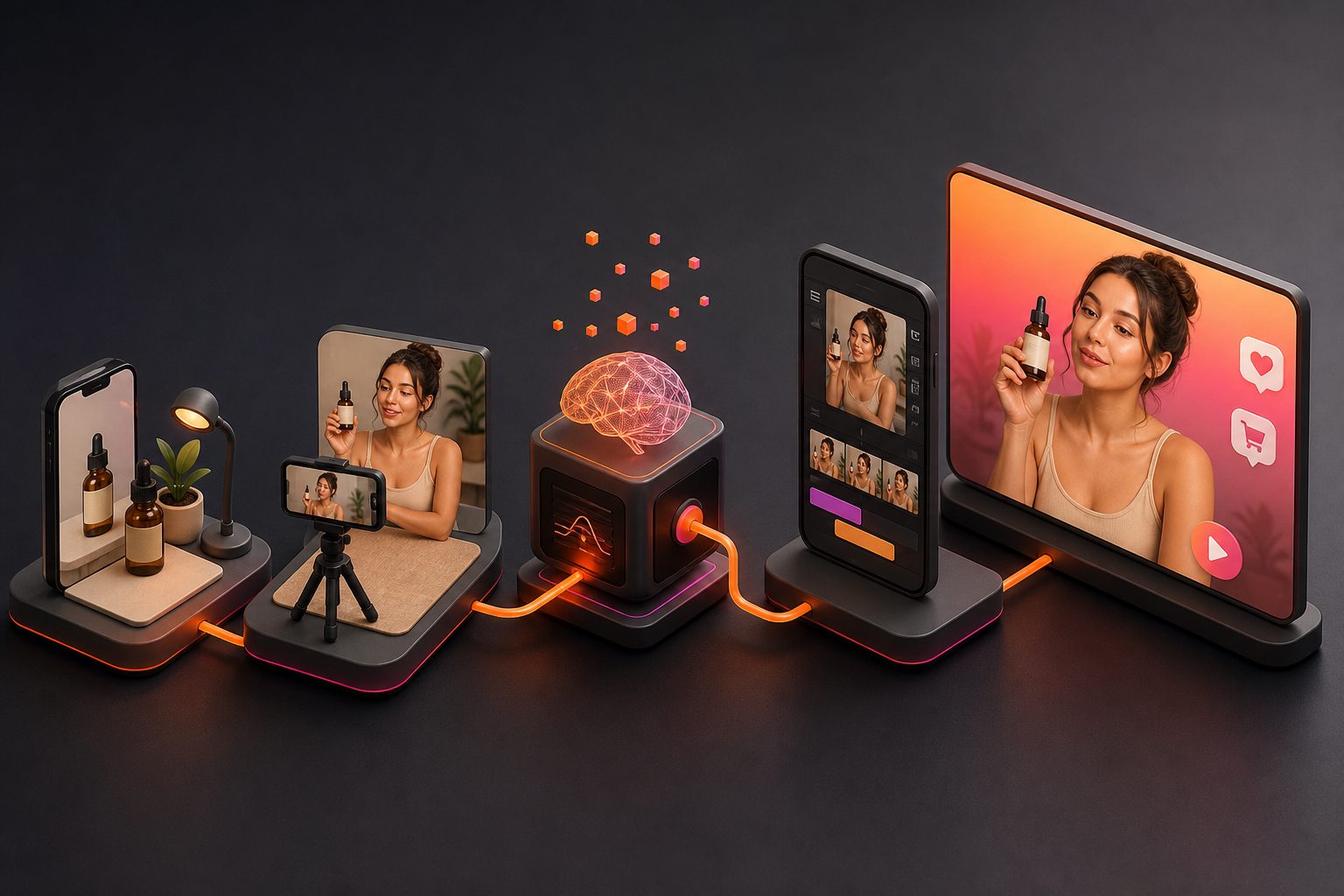
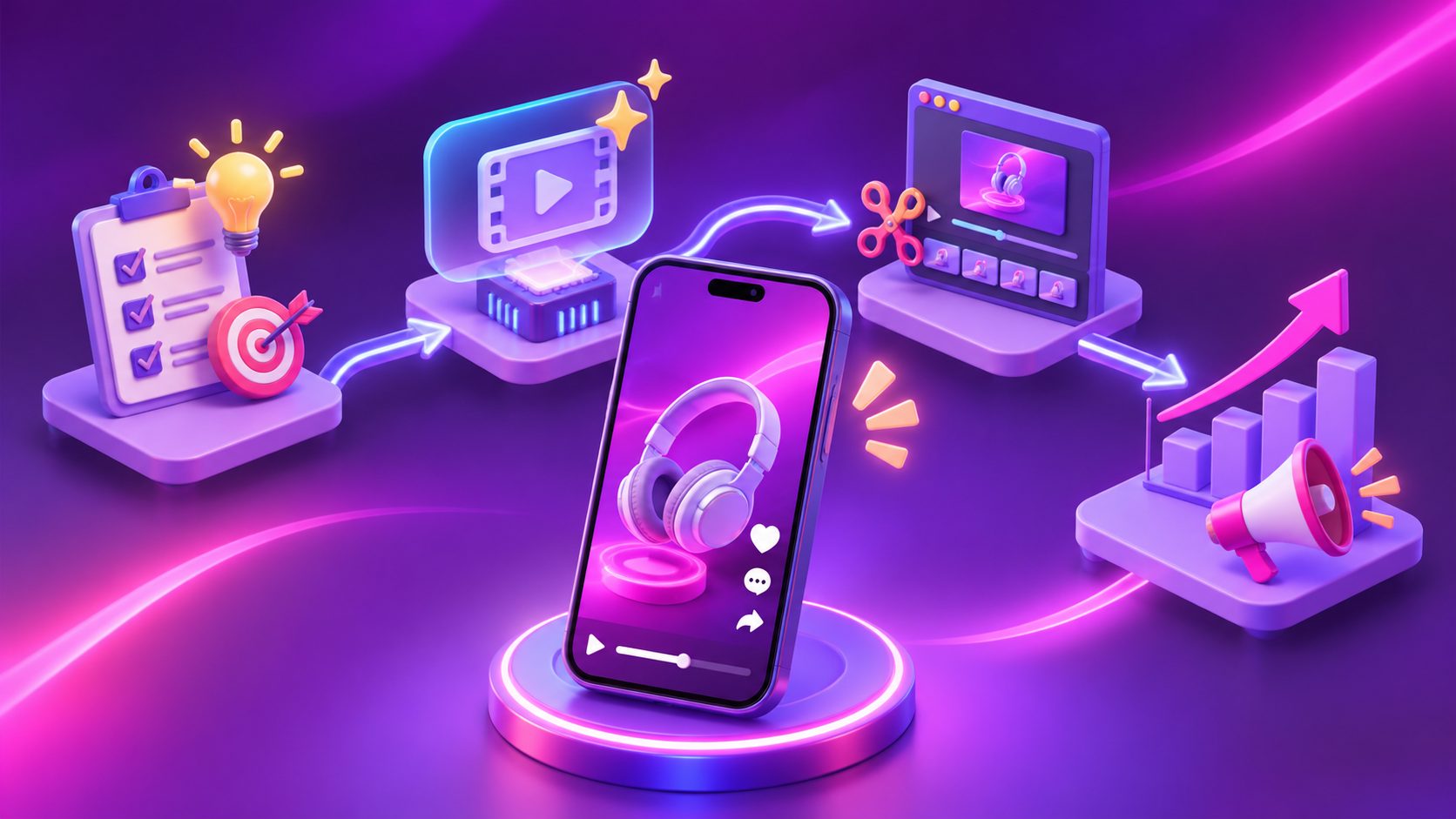
How to make original TikTok ads with AI video: a seven-step workflow
1. Start with a product-specific customer tension
Do not begin with a prompt such as “make a viral TikTok ad.” Begin with one buying tension:
- “This product looks difficult to use.”
- “The customer cannot tell which size to choose.”
- “The product solves a daily annoyance, but the benefit is hard to see.”
- “The shopper wants the result without adding another complicated routine.”
Then turn the tension into a visual question: What can the viewer see in the first three seconds that proves this problem matters?
For ecommerce sellers, a product image, a real screen recording, packaging detail, demonstration, or comparison often provides stronger originality than a generic AI lifestyle scene.
2. Build a brief before generating anything
A compact brief keeps AI from producing interchangeable ads. Include:
- Product and category
- Target buyer
- One problem
- One believable benefit
- One proof point
- Offer or CTA
- Visual restrictions
- Required disclosure
For example:
Create a 20-second vertical ad for a compact kitchen organizer. Show the clutter problem first, demonstrate how the product changes the drawer layout, and end with a close-up of the product plus a clear offer. Use a practical, slightly skeptical tone. Do not claim guaranteed results.
The brief should describe what the viewer must understand—not merely the style you want to imitate.
3. Use reference ads for structure, not duplication
Reference videos are valuable for studying hook type, scene length, objection handling, and CTA placement. They become risky when the new ad preserves the same script, shot order, wording, character performance, and visual identity with only the product swapped.
A safer method is to extract a structural pattern:
- Pattern A: problem → failed alternative → product demonstration → CTA
- Pattern B: customer question → close-up proof → objection answer → offer
- Pattern C: before state → three-step use case → final result → product detail
Then rebuild every layer for your own product. AdsTurbo’s TikTok ad creative testing system can support a batch workflow, but each variation should change a meaningful variable such as the customer tension, proof type, narrator perspective, or CTA—not only the background.
4. Generate product-led scenes instead of generic UGC
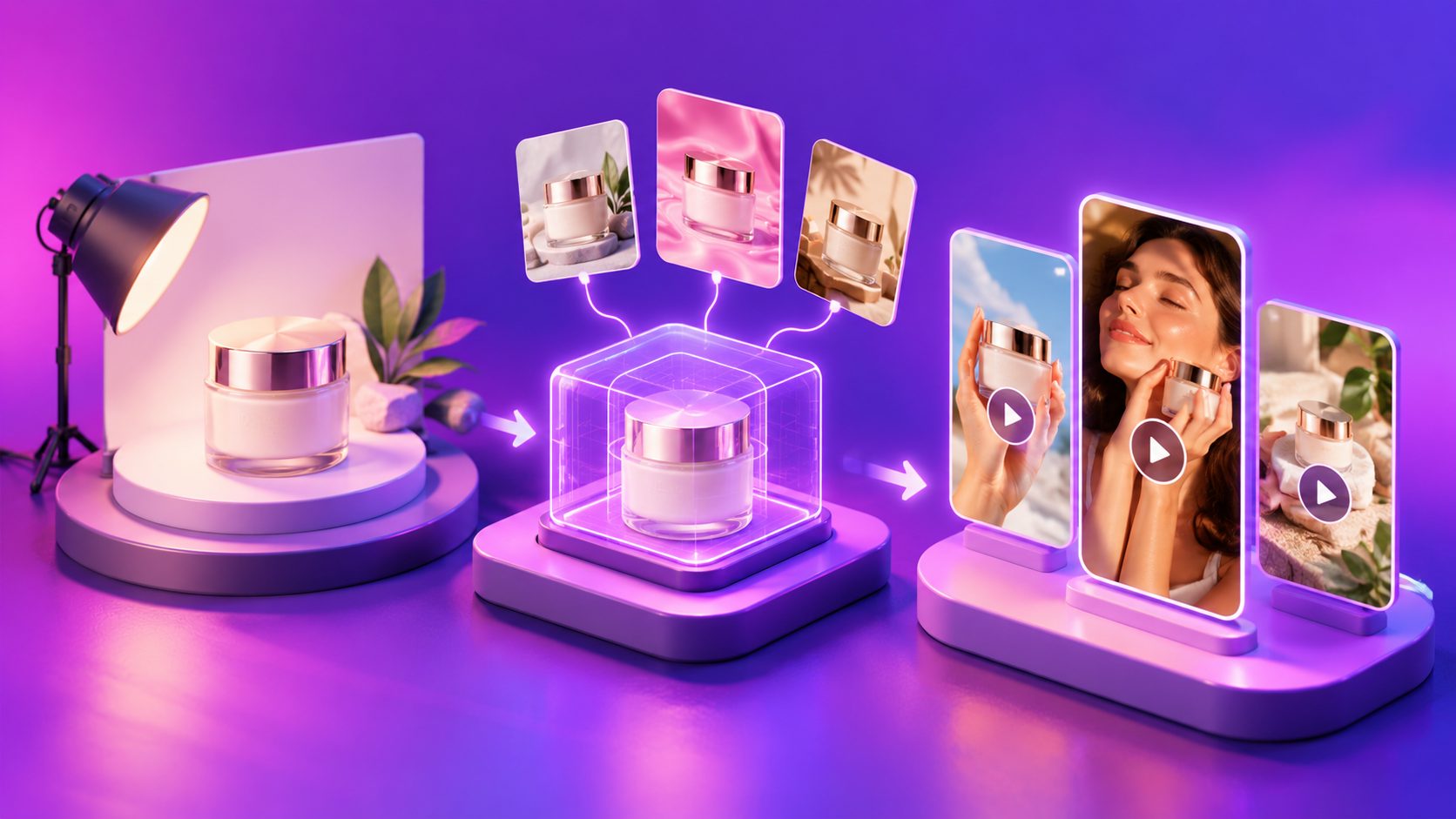
AI presenters can help create UGC-style ads, but the product must remain the center of the story. Use clear JPG or PNG product images, preferably with the product isolated against a plain background. This gives the generation process a stronger visual reference.
A practical scene plan is:
- 0–2 seconds: show the problem or unexpected outcome
- 2–7 seconds: introduce the product in use
- 7–14 seconds: demonstrate one concrete benefit
- 14–18 seconds: answer the most likely objection
- 18–22 seconds: show the product, offer, and CTA
This is not a fixed TikTok formula. It is a production control that prevents the avatar from becoming the entire ad. The more important the product action is, the less the creative depends on synthetic personality.
5. Create variation packs with controlled differences
Originality and testing improve when each variation has a clear reason to exist. Create a small matrix rather than dozens of near-identical outputs.
| Variable | Version 1 | Version 2 | Version 3 |
|---|---|---|---|
| Hook | Frustration | Question | Demonstration |
| Narrator | First-time buyer | Practical expert | Skeptical shopper |
| Proof | Product use | Close-up detail | Side-by-side comparison |
| CTA | Shop now | See how it works | Claim the offer |
Keep the product claim consistent while changing the creative angle. This makes performance data more useful because you can identify whether the hook, proof, or audience framing caused the difference.
For larger production systems, AdsTurbo supports product video generation, ad cloning, subtitles, translation, motion control, and API-based workflows. Its API tasks run asynchronously, allowing completion events to be received through polling or webhooks. That matters when a team is generating many creative versions rather than producing one video manually.
6. Make captions and editing part of the original concept
Captions should not simply repeat the voiceover. Use them to emphasize the product’s logic:
- Voiceover: “I thought this would take up more space.”
- Caption: “The drawer problem was the packaging—not the product.”
- Visual: Show the product fitting into the drawer.
Use native-looking vertical framing, readable text, and enough contrast for mobile viewing. TikTok’s creative guidance emphasizes vertical video, high-resolution footage, safe UI areas, and frequent creative refreshes. (ads.tiktok.com)
If source footage is soft or heavily compressed, an AI video enhancer can improve clarity before export. Enhancement should preserve the original product details; it should not fabricate proof or alter the product’s appearance.
7. Run a compliance and originality review before publishing
Before uploading, ask:
- Is the product shown accurately?
- Does the ad make a claim that can be supported?
- Did any AI-generated person, voice, or scene require disclosure?
- Did the ad copy another video’s wording or distinctive sequence?
- Is there a visible watermark from another platform?
- Are captions and CTA elements inside safe areas?
- Does the first frame communicate the product problem?
TikTok requires disclosure for realistic AI-generated content and significant AI edits, including synthetic faces, voices, and realistic scenes that could be mistaken for real footage. TikTok also states that disclosure itself does not reduce distribution when the content follows its rules. (support.tiktok.com)
How is an AI TikTok ad different from a copied ad?
An AI TikTok ad can be inspired by a successful format, but it should not reproduce the source asset’s expressive details. The distinction is easiest to see in this comparison:
| Acceptable adaptation | Risky duplication |
|---|---|
| Rewriting the hook around your product’s real objection | Reusing the same spoken hook |
| Changing the scene order to fit your proof | Keeping the same shot sequence |
| Using your own product demonstration | Replacing the product inside copied footage |
| Creating new captions and CTA language | Preserving distinctive on-screen text |
| Using a different narrator and visual concept | Mimicking the creator’s identity or voice |
A reference video can teach you how an ad communicates. It should not become a template for reproducing another advertiser’s finished creative.
Common mistakes that make AI ads feel unoriginal
Copying the “viral” surface
A trending sound, avatar, caption style, or camera movement cannot compensate for a missing product insight. Surface-level imitation is easy for competitors to reproduce and difficult for shoppers to remember.
Generating before collecting product evidence
If the input contains only a product name, AI tends to fill the video with generic lifestyle scenes. Add product photos, packaging details, use instructions, customer objections, and approved claims first.
Publishing too many minor variations
Changing only the shirt color or background does not create a useful testing system. Vary the promise, proof, narrator perspective, or first three seconds.
Treating disclosure as a substitute for quality
An AI label improves transparency, but it does not make a weak or copied ad original. Disclosure and creative quality are separate requirements.
Frequently asked questions
Can AI-generated TikTok ads be original?
Yes. AI-generated ads can be original when the brand supplies the product insight, claims, evidence, creative direction, and final editorial decisions. The use of AI alone does not determine whether an ad is original.
Do AI TikTok ads need an AI label?
Realistic AI-generated content and significant AI edits may need disclosure. TikTok provides creator and advertising disclosure methods, and advertisers should review the applicable posting or Ads Manager settings before publishing. (support.tiktok.com)
Can I use a winning TikTok ad as a reference?
You can study its structure, such as the hook, pacing, objection, and CTA. Reproducing its script, footage, distinctive sequence, or creator identity creates a substantially higher originality and intellectual-property risk.
What is the best length for an AI TikTok ad?
The right length depends on the product and proof required. A short ad should communicate one problem, one benefit, and one action without rushing the demonstration. Test several durations only after the message is clear.
How many variations should an ecommerce seller create?
Start with a focused batch of three to six variations. Change one major creative variable at a time so performance results reveal whether the hook, proof, narrator, or offer is doing the work.