Claude
 Cursor
What Are UGC Creators? A Practical Guide for Ecommerce Brands

Summarize with
Summary
What are UGC creators? Learn what they make, how they differ from influencers, how brands hire them, usage rights, costs, and AI UGC alternatives.
By AdsTurbo | Published 2026-11-20 | Updated 2026-11-20
UGC creators are paid content producers who make customer-style videos, photos, or reviews for brands. They are usually hired for the quality and usefulness of the content—not for access to a large personal audience. Brands can publish the content on their own social accounts, product pages, email campaigns, or paid advertising channels.
The term can be confusing because “user-generated content” traditionally means content made organically by customers. In modern ecommerce marketing, however, a UGC creator often means a freelance creator who produces content that looks and feels like a real customer experience.
What is the UGC creator meaning?
The simplest UGC creators meaning is: a person hired to create brand content in a natural, social-first style.
A UGC creator may produce:
- Product unboxing videos
- First-impression reactions
- How-to demonstrations
- Product reviews or comparisons
- Problem-and-solution videos
- Voice-over product explainers
- Testimonials based on an approved script
- Lifestyle photos and short-form videos
- TikTok, Instagram Reels, or YouTube Shorts-style ads
The creator does not always need to publish the content on their own account. In many arrangements, the brand receives the finished files and uses them through its own channels or advertising accounts.
That distinction matters. The creator is often selling production, presentation, and creative execution, while an influencer is primarily selling distribution to an existing audience.
UGC creators vs. influencers: What is the difference?
UGC creators make content for a brand to use. Influencers publish content to their own audience. Some people do both, but the commercial value is different.
| Factor | UGC creator | Influencer |
|---|---|---|
| Main product sold | Content assets | Audience access and distribution |
| Follower count | Often not essential | Usually important |
| Where content appears | Brand channels, ads, product pages | Influencer’s social account |
| Typical goal | Produce creative for testing or conversion | Reach, awareness, trust, or traffic |
| Payment factors | Deliverables, revisions, usage rights | Reach, engagement, platform, campaign scope |
A creator with 2,000 followers may be a strong UGC partner if they can explain a product clearly on camera. An influencer with 200,000 followers may be a better choice when a brand needs immediate reach. The right choice depends on whether the campaign needs an asset, an audience, or both.
This asset-versus-audience distinction is a useful screening framework: if the brand plans to run the video as a paid ad from its own account, prioritize creative skill and usage rights over follower count.
What do UGC content creators do for brands?
UGC content creators translate a product’s benefits into a format that resembles everyday social content. Their work usually begins with a brief containing the product, target customer, key claims, required shots, tone, deadline, and deliverables.
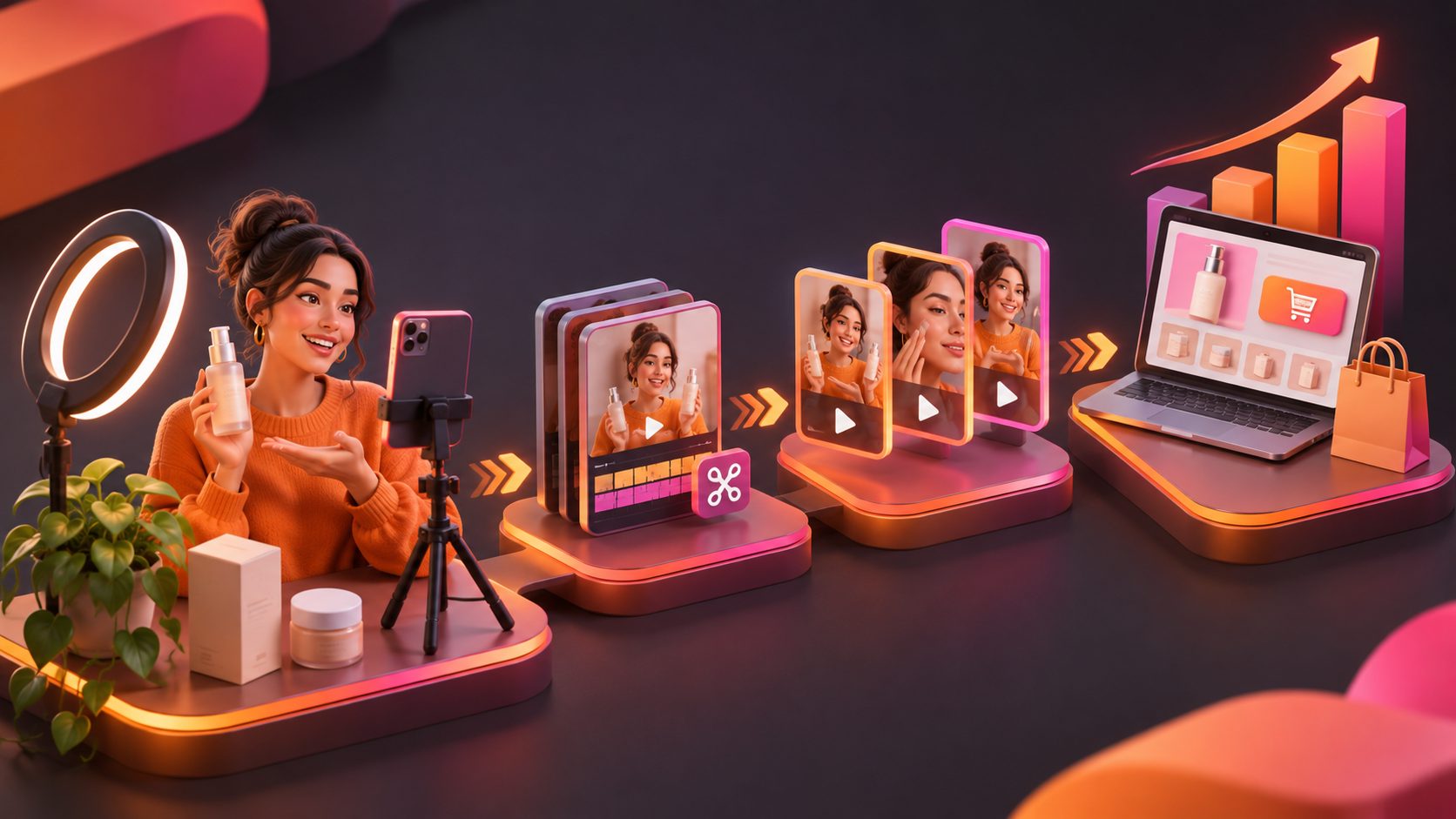
A typical workflow looks like this:
-
The brand defines the campaign goal.
The goal might be product education, conversion, a new-product launch, or creative testing. -
The brand selects a creator or creator group.
Selection can be based on appearance, language, niche knowledge, filming style, or the ability to speak to a specific customer segment. -
The brand sends a structured brief.
The brief should explain the audience, core problem, product differentiator, prohibited claims, call to action, format, and delivery requirements. -
The creator records and edits the content.
Deliverables may include several hooks, one main explanation, multiple calls to action, raw footage, captions, or alternate aspect ratios. -
The brand reviews the files and confirms usage.
Paid advertising rights, organic usage, duration, platforms, whitelisting, exclusivity, and revision limits should be agreed in writing. -
The marketing team tests and iterates.
The strongest opening, product angle, creator style, and CTA can be reused in future variations.
For ecommerce teams, the most important part is often not the creator’s appearance. It is whether the creator can communicate the product’s value within the first few seconds without making the video feel like a traditional commercial.
How do brands hire UGC creators?
Brands can hire UGC creators through creator marketplaces, freelance platforms, talent agencies, direct outreach, or creator communities. The hiring channel affects speed, vetting, fees, and the amount of campaign management required.
A practical hiring process is:
1. Define the deliverable before searching
Avoid starting with “find a UGC creator.” Start with a production request such as:
- Three 20–30 second product videos
- Five alternative hooks
- One unboxing and one demonstration
- Vertical video for paid social
- Raw footage included
- Paid advertising rights for a defined period
Specific deliverables make proposals easier to compare.
2. Review portfolios for behavior, not only aesthetics
Look for creators who can:
- Open with a clear problem or curiosity hook
- Show the product in use
- Explain one benefit without overloading the viewer
- Maintain natural pacing
- Deliver clean audio and readable framing
- Adapt their style to different products
A polished portfolio is useful, but a creator’s ability to follow a brief is often more valuable for performance advertising.
3. Confirm rights separately from production
The base content fee may not include paid media usage, perpetual rights, exclusivity, raw footage, whitelisting, or additional edits. These terms can materially change the total cost.
4. Start with a controlled test
Instead of committing to a large package immediately, test a small group of creators or creative angles. Compare the opening hook, clarity of the product demonstration, and the audience response before scaling production.
How much does it cost to hire UGC creators?
UGC pricing varies by deliverables, creator experience, product category, filming complexity, revisions, turnaround time, and usage rights. A simple organic video usually costs less than a campaign asset intended for long-term paid advertising.
Brands may pay per video, per bundle, per project, or through an ongoing retainer. Additional charges can apply for:
- Paid advertising rights
- Extended or perpetual usage
- Raw footage
- Multiple hooks or CTAs
- Product demonstrations requiring special setup
- Exclusivity
- Posting on the creator’s own account
- Rush delivery or extra revisions
Treat the creator fee and the media budget as separate costs. A lower production price is not automatically better if the content requires heavy editing or cannot be legally reused in the intended channels.
What are the pros and cons of UGC creators?
Advantages
- More natural than many studio-produced ads
- Useful for testing different customer perspectives
- Can help brands produce content without building an in-house studio
- Works across paid social, organic social, product pages, and email
- Allows brands to match creators to specific audiences or languages
Limitations
- Quality and reliability vary between creators
- Revision cycles can slow down testing
- Usage rights may be unclear without a written agreement
- One creator’s style may not represent the entire target market
- Scaling many concepts can become expensive and operationally complex
UGC works best when it is treated as a repeatable creative system rather than a one-off testimonial. Brands should build a library of hooks, product angles, objections, demonstrations, and CTAs.
What are AI UGC creators?
AI UGC creators are AI-generated actors or personas used to produce UGC-style videos without coordinating a separate human shoot for every variation. They can help ecommerce teams test different presentations, languages, personalities, and product angles more quickly.
AI UGC does not replace every human creator. Human creators can provide genuine product experience, original reactions, and personal credibility. AI actors are more useful when a brand needs repeatable production and many controlled variations.
AdsTurbo provides AI actors for video ads, allowing brands to choose an actor by personality and create UGC-style product videos. To turn a product link or photo straight into a UGC-style ad, use the AI ad generator. Its broader workflow can also support product video creation, ad cloning, lip sync, video translation, subtitles, and video enhancement. For footage that needs clearer detail before reuse, an AI video enhancer can improve the source video before it enters a new creative workflow.
The key compliance principle is transparency: an AI actor should not be presented as a real customer or used to fabricate a genuine personal experience. Use AI-generated content as a creative production tool, and make claims only when they are accurate and supportable.
A simple decision framework for ecommerce brands
Use this three-part framework before choosing a production method:
-
Need authentic experience?
Hire a human UGC creator who can genuinely use or understand the product. -
Need reach?
Consider an influencer whose audience matches the target customer. -
Need many variations quickly?
Consider AI actors, reusable templates, and structured creative testing.
Many brands will use a hybrid model: human creators for flagship assets and customer insight, then AI-assisted production for localization, new hooks, and rapid testing. AdsTurbo’s video templates can help organize repeatable creative formats, while its guide to the best AI UGC ad tools provides a broader comparison framework.
Frequently asked questions
Do UGC creators need many followers?
No. UGC creators are generally paid for the content they produce, not the size of their audience. Follower count matters more when the brand also wants the creator to publish the content on their own account.
Is UGC the same as a customer testimonial?
No. A customer testimonial usually comes from a real customer sharing an actual experience. UGC-style content may be produced by a paid creator who presents a product in a customer-like format. Brands should not imply personal use or results that are not genuine.
Where can brands find UGC creators?
Brands can use creator marketplaces, freelance platforms, agencies, direct outreach, and creator communities. The best channel depends on the required niche, budget, rights, turnaround time, and level of vetting.
Should brands hire UGC creators or use AI actors?
Use human creators when authentic experience and personal credibility are central. Use AI actors when the priority is rapid production, controlled variations, localization, or testing multiple creative directions.