

By adsturbo.ai | Published 2026-10-06 | Updated 2026-10-06
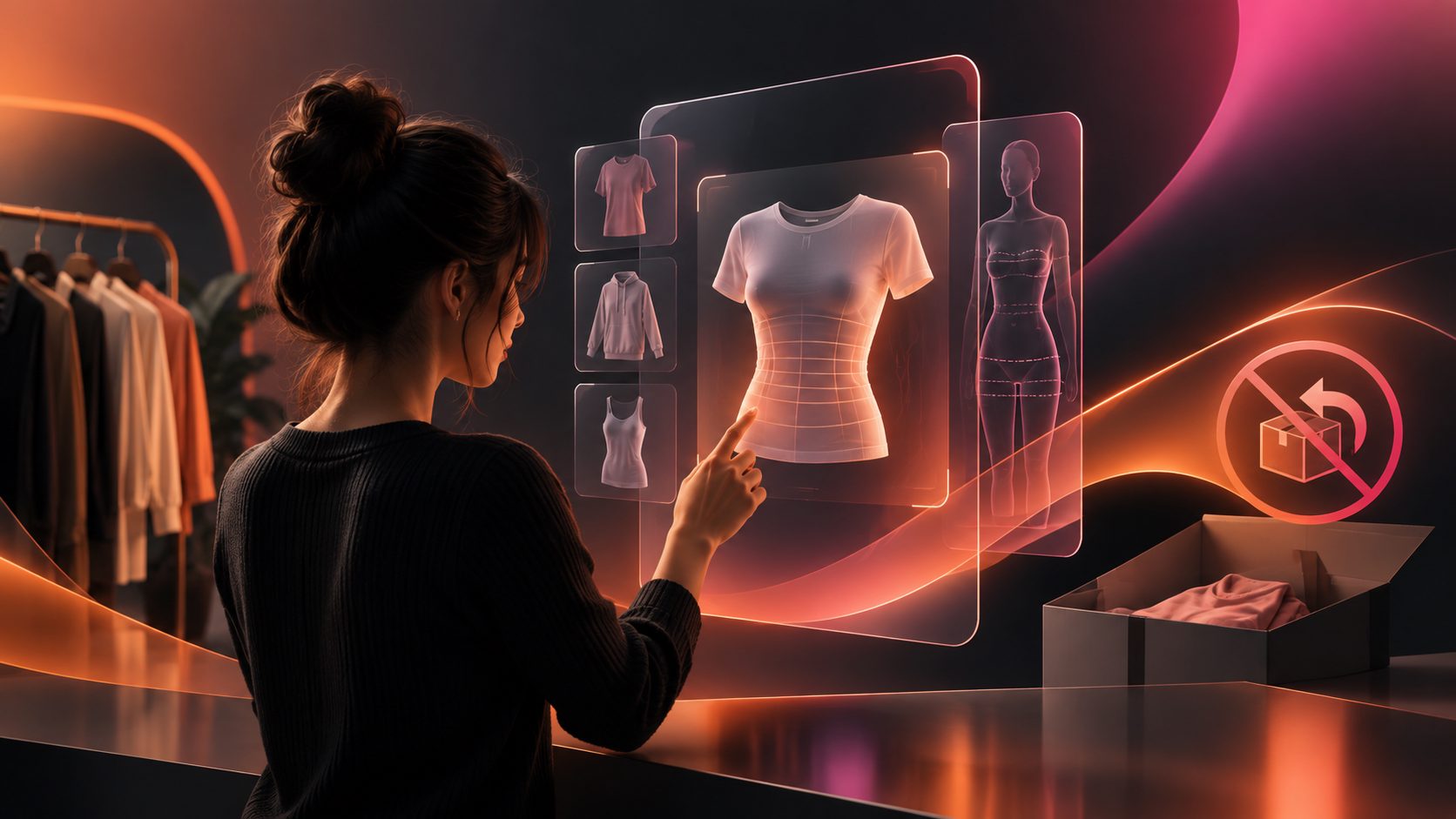
A size chart video reduce ecommerce returns strategy combines verified measurements, visible garment movement, and model-specific fit notes in one short product-page video. It helps shoppers translate abstract chart numbers into a realistic expectation of length, ease, stretch, and silhouette before ordering.
The opportunity is substantial: the National Retail Federation’s 2025 returns research estimated that 19.3% of online sales would be returned. For apparel sellers, the practical goal is not to eliminate every return, but to prevent purchases based on avoidable fit uncertainty. (nrf.com)
Why Does a Static Size Chart Leave Shoppers Uncertain?
A static chart tells shoppers the available measurements, but it rarely shows how those measurements behave on a moving body. Customers still have to guess whether “medium” means fitted or relaxed, where the hem will land, and whether the fabric stretches when they sit or reach.
Baymard Institute found that 83% of desktop apparel sites and 87% of mobile apparel sites in its benchmark did not provide sufficient sizing information. Its usability testing also showed that sizing uncertainty can cause shoppers to abandon a product page. (baymard.com)
The underlying problem has three parts:
- Label ambiguity: A medium in one style may fit like a small in another.
- Measurement ambiguity: Shoppers may confuse body measurements with finished-garment measurements.
- Behavior ambiguity: A table cannot demonstrate drape, compression, transparency, rise, or stretch recovery.
A useful fit video does not replace the chart. It converts the chart into visible evidence.
What Should a Return-Reduction Fit Video Show?
An effective size-guide video should answer the shopper’s next sizing question at the exact moment it appears. That requires more than a model walking toward the camera in an attractive campaign clip.
Use this Fit Evidence Ladder, an original framework for auditing each video:
| Evidence layer | What to show | Question answered |
|---|---|---|
| 1. Identity | Model measurements and worn size | “Is this body comparable to mine?” |
| 2. Dimensions | Chest, waist, hip, rise, inseam, or length overlays | “Where will this item sit?” |
| 3. Movement | Walking, sitting, reaching, bending, and turning | “Will it pull, cling, ride up, or restrict me?” |
| 4. Comparison | Two sizes or body types shown side by side | “Should I size up or down?” |
Add text such as “Model wears M,” but pair it with relevant body measurements. Height alone is insufficient because two people of the same height can have different torso, hip, and inseam proportions.
For stretch garments, display both the relaxed garment measurement and a verified comfortable stretch range. Never animate measurements that were estimated from an image or generated without checking the physical sample.
How Do You Script a 15-Second Dynamic Size Guide?
A concise size video can cover identity, dimensions, motion, and selection guidance without slowing the purchase journey. The sequence below is designed for silent autoplay with captions.
-
0–3 seconds — Establish the fit.
Show the full front view. Overlay the model’s relevant measurements, worn size, and the product’s stated fit: slim, regular, relaxed, or oversized. -
3–6 seconds — Mark key dimensions.
Animate measurement lines at category-specific points. For jeans, prioritize waist, rise, inseam, and hip. For jackets, show chest, shoulder, sleeve, and back length. -
6–11 seconds — Run a movement test.
Include a turn plus one demanding motion, such as sitting in trousers or reaching overhead in a fitted top. Keep the camera far enough away to preserve body proportions. -
11–15 seconds — Give a selection rule.
End with one actionable note: “Choose your usual size for a close fit” or “Size up if you prefer layering room.”
Place the video beside the size selector rather than hiding it near the bottom of the page. Baymard’s research recommends making sizing guidance prominent and positioning the size-guide link close to size options. (baymard.com)
Which Products Should Receive Fit Videos First?
Start with SKUs where better evidence can change a purchase decision. High sales volume alone is not enough; prioritize products with recurring, diagnosable fit complaints.
Calculate a Fit Evidence Priority Score for each SKU:
Priority score = delivered units × fit-return rate × return handling cost
Then increase priority when return comments contain repeated signals such as “waist too tight,” “sleeves too short,” “unexpectedly sheer,” or “runs large.” Separate these reasons from vague labels such as “didn’t like it.”
A sensible first production batch includes:
- Best sellers with above-average size-related returns
- Styles frequently ordered in two adjacent sizes
- Products with unusual cuts, compression, or stretch
- International listings that convert between US, UK, EU, and Asian sizing
- Products whose factory measurements recently changed
This return-reason-first approach avoids spending equally on every SKU. It also reveals whether the real issue is the content, the chart, inconsistent manufacturing, or the garment pattern itself.
How Can Apparel Teams Produce Videos at Scale?
Create one verified master sequence per product, then adapt its captions, aspect ratio, language, and opening frame for each channel. Measurement accuracy must remain locked while creative elements can change.
AdsTurbo Product Video supports JPG and PNG product-image uploads up to 10MB and can generate product review, introduction, and demonstration videos. AdsTurbo also provides Clip by Clip editing, video subtitles, translation, resolution upscaling, and product-image workflows. These tools can accelerate assembly, but physical measurements and fit claims should still be checked against the actual garment.
Teams producing creator-style assets can use a structured AI UGC video testing playbook and build controlled variants with an AI ad creative variation matrix. For regional campaigns, keep measurements consistent while adapting language and presentation through a cross-market video localization workflow.
How Should You Measure Whether the Video Reduces Returns?
Run a product-level controlled test rather than comparing one month with another. Seasonality, promotions, customer mix, and inventory availability can otherwise create a false result.
Split eligible traffic between:
- Control: Existing images and static size chart
- Variant: The same page plus the fit video near the size selector
Measure results after the normal return window closes. Use delivered orders—not page views—as the denominator:
Fit-return rate = orders returned for fit or size reasons ÷ delivered orders
Track total returns, fit-related returns, conversion rate, exchanged sizes, and multi-size orders. A successful video should reduce fit-related returns without causing a material conversion decline. Also inspect performance by device, product, first-time versus repeat customer, and selected size.
Do not pool every garment into one headline result. A fit video may help fitted dresses while adding little value to one-size accessories. For broader post-sale prevention, pair this work with a post-purchase how-to video return-reduction playbook.
Common Questions
Can a fit video replace the written size chart?
No. The chart provides searchable numeric detail, while video demonstrates proportion and movement. Use both, ensure they show the same verified measurements, and position them close to the size selector.
Should a video show weight as well as height?
Use measurements that directly affect the garment, such as chest, waist, hip, inseam, and height. Weight alone does not describe body proportions and may be less useful than category-specific measurements.
How many models should appear?
Begin with two models or two meaningfully different fit references for high-return products. If only one model is available, show two adjacent sizes when feasible and explain how the silhouette changes.
Can AI-generated models demonstrate accurate fit?
They can support creative visualization, but they should not be treated as measurement proof unless the rendered fit has been validated against the physical garment. Verified dimensions and real movement evidence should control customer-facing sizing claims.
Where should the video appear on a product page?
Place it in the main media gallery and provide a clearly labeled entry point beside the size selector. Shoppers should encounter fit evidence before choosing a size, not after adding the item to the cart.